
A ghost drifts beyond the ripple of a shimmering net; the shade of Kohada Koheiji seems to materialize from the inky void, his form a specter intertwined with fear and deep-seated legend. In another scene, the figure of Shoki the Demon Queller materializes, his stern gaze fixed with unwavering resolve as he surveys a turbulent world, riding his majestic tiger with a confidence born of ancient strength. These moments, captured in the lush splendor of Ukiyo-e, are not merely images—they are portals to the legends that shape the landscape of Japan's ethereal heritage.
During the Edo and Meiji periods, masters such as Katsushika Hokusai and Utagawa Kuniyoshi honed the art of woodblock printing to immortalize the elusive realm of yokai—the supernatural beings that haunt the folklore of Japan. These artists, wielders of precision and imagination, carved tales of samurai and spirits into cherry wood blocks, layering pigments to breathe vivid life into ephemeral figures. The publisher's seal on each print stands as a testament to a lineage of artistry, a signature of quality that collectors covet.
Why do these images endure? Perhaps because they speak to the core of human experience—our encounters with honor, the specter of mortality, and the ever-present dance with the supernatural. When faced with Utagawa Kuniyoshi's depictions of fearless samurais like Kamada and Gongsun, we glimpse bravery and duty, themes as eternal as the earth itself. Each print, imbued with mono no aware—the poignant awareness of impermanence—resonates with an enduring yugen, a profound sense of mystery that lies just beyond the veil of comprehension.
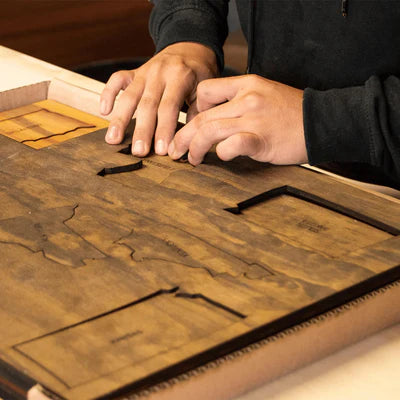
To transform these iconic works onto wooden jigsaw puzzles is to invite a dialogue between inked edges and the organic texture of timber. As one's fingers trace bold linework against the grain, each piece becomes an echo of the past; and thus, the act of piecing together "The Ghost Behind the Net" by Hokusai or "Shoki the Demon Queller" by Kawanabe Kyosai becomes a tactile form of scholarship. These puzzles are meticulously crafted gateways to understanding, not merely indulgences or pastimes.
Assembling these puzzles is a meditative ritual—restoring the frightful countenance of a yokai piece by piece, feeling the tumult of Hokusai's wave as assembly transforms chaos into calm. This is a practice that offers a quiet reverence for tradition, a solitary act of devotion to the ever-present whispers of history.
For the connoisseur of Japanese art, why not grace your collection with these wooden transcriptions? Frame them as heirlooms that blend the mythos of the past with the tactile pleasure of the present. For the mythology enthusiast or dedicated history collector, these puzzles are enduring mementos that refine your understanding and appreciation of Japan's artistic heritage.
To explore more of these magnificent works, you are invited to discover our Japanese Art Collection, where each piece serves as a bridge between epochs, connecting those who choose to assemble with narratives woven into the very fabric of time.
Venture into the realm of legends and discover more about these storied puzzles here, here, and here.
Consider each piece as more than wood and ink—it is a chapter waiting to be written in the grand book of your collection.