In the hushed halls of art history, where the echoes of canvas and color whisper tales of human existence, the journey from Hieronymus Bosch to Pieter Bruegel the Elder stands as a narrative of creativity pushing the boundaries of imagination and reality. These artists, each a custodian of their era, gifted the world with works that transcend time, inviting us into landscapes of mystery and contemplation.
A Dance of Imagination and Symbolism
Hieronymus Bosch, a visionary artist of the late medieval period, unfurled a universe teeming with allegorical richness and otherworldly imagery. His works, typified by tumultuous depictions of morality and the surreal, captured the complexities of human nature during a time rife with religious and societal upheaval. The Haywain, for instance, illustrates the vanity of human pursuits, rendering a vivid tableau that confronts viewers with the folly of earthly ambitions.
Leap forward through time and we find Pieter Bruegel the Elder, whose keen eye for detail and sociological depth captures the zeitgeist of the Northern Renaissance. His paintings, such as The Triumph of Death, unfold intimately human narratives set against vast landscapes, echoing themes of life, death, and societal change with poignant clarity.
The Timeless Appeal of Bosch and Bruegel
Why do these artworks, etched centuries ago, still captivate and intrigue us today? Perhaps it is the universality of the themes—a silent dialogue between past and present—where Bosch's ethereal visions and Bruegel's earthly recordings resonate with the eternal human condition. Their symbolism and narrative depth encourage viewers to delve beyond surface observation, imbuing each piece with a relevance that transcends historical context.
Crafting Memories Through Tactile Art
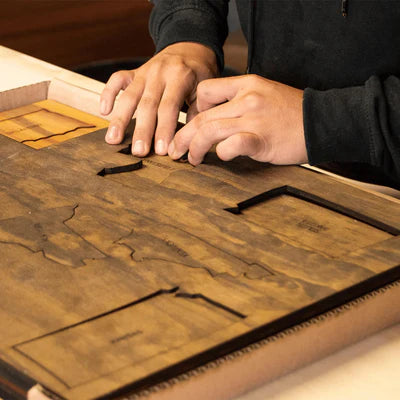
Translating such rich visual stories into a tactile form, What A Woodwork has crafted wooden puzzles that invite enthusiasts into a slow, meditative exploration of these masterpieces. Using advanced UV-printing technology, the once-flat masterpieces are now lifted into textured depth, captured on 2.5 thick MDF pieces that mirror the detail and integrity of the original works.
Imagine immersing yourself in the quiet process of piecing together Mad Meg, and feeling the palpable weight of Bruegel's social critique in your hands. Each fragment of the puzzle is an invitation to slow down and reconnect with art as a mindful ritual.
A Gift of Meaning and Beauty
In an age where the digital interface often dilutes the tactile pleasures of art, gifting a wooden puzzle based on these classical masterpieces is akin to offering a timeless bridge between eras. For the art-minded collector, these puzzles are not mere pastimes, but pieces of an heirloom lineage, each turn of the puzzle's edge representing a moment of history, intimate and personal.
As you carefully place the last piece of The Last Judgment by Pieter Huys, the care invested in this masterpiece becomes your own, a legacy shared.
Concluding Invitation
We invite you to experience this thoughtful intersection of art and craftsmanship. Let your fingers trace the contours of Bosch's spectral visions and Bruegel's narrative depth, each puzzle piece a testament to enduring beauty and reflection. Here lies an opportunity to become part of art's eternal dialogue, a collector of both history and experience.
Visit What A Woodwork to discover these tangible connections with the past, reminders of humanity's unending dance with creativity.