In the hallowed hush of a museum gallery or the intimate glow of a reading lamp at home, an art piece is never quite static. It's alive, whispering sepia-toned stories of its time, reforming images out of the past to cast on our present. The works of Hieronymus Bosch and Pieter Bruegel the Elder do just that, with scenes that are as enigmatic and multi-layered as the human experience itself. Here, we delve into their genius, tracing art history from Bosch to Bruegel, while transforming their canvas stories into tactile puzzle adventures.
Enigmatic Visionaries: Bosch and Bruegel
Hieronymus Bosch, born Jeroen Anthoniszoon van Aken around 1450, conjured a fantastical realm that simultaneously repelled and fascinated the medieval mind. Known for narratives that brim with moral allegory, his work The Haywain is a layered critique of human folly. In Bosch's universe, grotesque creatures vie for our eye's attention—a deliberate chaos which, fascinatingly, holds deeper truths about societal values. The image wasn't merely intended to allure; it was a sermon in oil painting.
Bosch's legacy paved the way for artists like Pieter Bruegel the Elder, whose talent for capturing the quintessence of 16th-century life remains unrivaled. Bruegel possessed a rare duality; he was both a master observer and a social commentator. The Triumph of Death and Children's Games are more than mere illustrations; they are time capsules preserving humanity's gallant and futile dances with joy and demise.
Why It Matters Today
The art of Bosch and Bruegel speaks not just to its epoch but echoes to ours. Their portrayal of what it means to grapple with existential dread, revel in the innocence of play, or critique society resonates still. Bosch’s moral mazes and Bruegel's bucolic yet introspective landscapes offer a tableau distinct yet hauntingly familiar. As modern viewers, there is solace in their candid representation of life's cycle—a permanence in an ever-volatile world.
Crafting Art as Puzzle
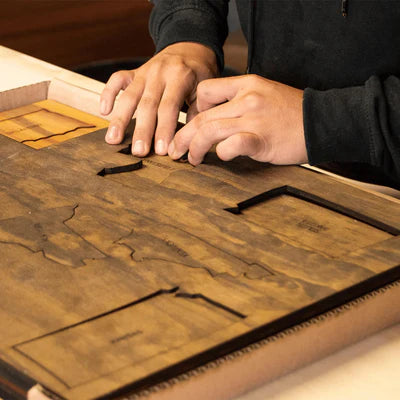
Transforming such historic images into a tangible journey, What a Woodwork presents a thoughtful interface for art immersion. Each 2.5 thick MDF piece of The Haywain by Bosch puzzle link to product and The Triumph of Death by Bruegel puzzle link to product is directly UV-printed, capturing the subtle, painterly nuances that define their work. It's an artful bond of image and medium, echoing the craftsmanship that went into these original masterpieces.
The Mindful Ritual of Puzzling
Unlike the rapid consumption of digital media, a puzzle invites us into a slow symphony of engagement. The tactile sound of pieces clicking together is a meditative diversion, a slow art connoisseur's retreat into solitude. It demands patience, an almost forgotten art, revealing the image piece by piece, much like how Bosch and Bruegel constructed their compositions—section by section, metaphor by metaphor.
Collecting Joy, Giving Imagination
Each puzzle becomes an heirloom, a meld of classic art and skilled craftsmanship. For the discerning eye, it’s both a mindful exercise in assembling beauty and a living link to history. As a gift, these puzzles speak volumes, inviting the recipient to not only admire the art but to play a part in its recreation—a generous act that connects givers and receivers through shared awe and appreciation.
With these wood-enclosed moments captured from Bosch’s and Bruegel's storied past, the journey doesn’t end with the final click of the pieces. Instead, it begins anew, offering fresh perspectives and connections with each gathering.
To enrich your collection or gift a meaningful paragon of art history, explore our range here. Step quietly into the world where Bosch’s churches rise and Bruegel’s fields whisper timeless tales.