In a world teeming with the ephemeral, the artworks of Pieter Bruegel the Elder stand as iridescent treasures, eternal witnesses to the follies and grandeur of humanity. Couched within the meticulous lines, colors, and contours of Bruegel's oeuvre is a vision both piercing and playful—a vision that modern artists strive to emulate, yet scarcely replicate. To engage with Bruegel is to journey through the past, propelled by the rich, tactile elegance of his renderings.
Bruegel emerged during a flowering of cultural confluence, a chapter in European history aged in the spirit of Renaissance exploration and intellectual rebirth. Born early in the 16th century, and schooled in the tradition of Netherlandish painting, Bruegel's mastery in translating the vitality of everyday life into enthralling narratives places him alongside Hieronymus Bosch. Like Bosch, who unraveled the tumultuous world through Hieronymus Bosch art history, Bruegel wielded his brush with both fervor and finesse—imbuing allegory with a precision that would mesmerize viewers centuries hence.
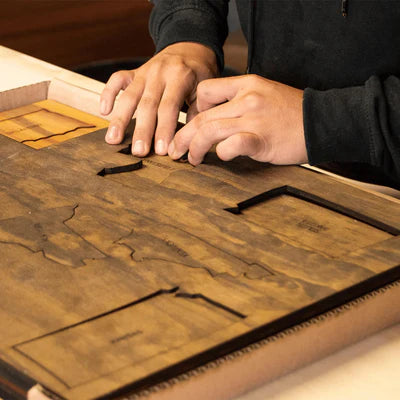
Today, Bruegel's works such as The Fall of the Rebel Angels, The Triumph of Death, and Babel Tower resonate beyond their painted surface, finding new life in forms as tangible as the wooden jigsaw puzzles available at What a Woodwork. These puzzles translate Bruegel's labyrinthine compositions into a 2.5 mm thick MDF medium, directly UV-printed to capture every nuanced hue and intricate detail. The tactile engagement inherent in assembling such a puzzle mirrors the slow, deliberate pleasure of unspooling a medieval tale, pieced together with as much care as the original painting itself.
Yet what, you might wonder, imparts Bruegel's medieval landscapes and chaos-ridden imaginings with their enduring appeal? The answer lies perhaps in their universality—the timeless, meticulous capture of life's tribulations and triumphs, rendered with an uncanny prescience that appeals both to the intellect and to the spirit. In many ways, to engage with Bruegel today is to hold a mirror to our modern world and ourselves, reflecting the unvarnished truth and grandiosity inherent to the human condition.
Immerse yourself further into the labyrinthine mysteries of Bruegel’s vision with The Triumph of Death Wooden Jigsaw by Pieter Bruegel the Elder, where chaos reigns with a grim choreography of skeletal dance. Or capture the allegorical ascent and collapse in Pieter Bruegel 'Babel Tower' | Medieval Wooden Jigsaw Puzzle. Both allow you to explore the artistic complexities afforded by classically-informed abstraction.
The act of puzzling itself becomes not just an exercise in assembly but a reflective ritual—a meditation on art, craftsmanship, and history. Within each piece of Bruegel’s work lies a microcosm of contemplation, a pause that invites the mind to wander through time's mural.
A Bruegel-inspired puzzle also offers itself as a profound and thoughtful gift, an opportunity to share a narrative-rich experience with those who cherish art, intellect, and the quiet, tactile pleasures of a bygone era. Through the gift of understanding art anew, or the joy of gifting such a refined experience, these puzzles transform history into heirlooms—tangible reminders of the interwoven tapestries of our shared past.
Thus, we invite you to explore What a Woodwork's offerings. Delve into the depths of Bruegel’s expertly rendered world, and allow the echoes of art’s grand tradition to resonate within your own, to be cherished not only in the aftermath of assembly but as an ongoing, enriching dialogue with history itself.