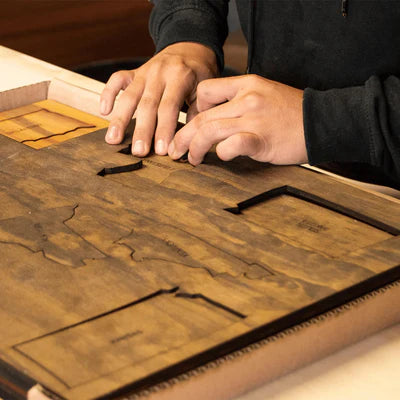
In the alchemy of fine art and craft, there lies an enchanting intersection where history whispers through the tactile engagement of puzzle pieces. The captivating worlds of Hieronymus Bosch and Pieter Bruegel the Elder find new life in the meticulously crafted wooden puzzles from What a Woodwork. These splendid challenges extend beyond mere relaxation, offering a journey into the narrative tapestries and haunting allegories that have beckoned art connoisseurs for centuries.
The Masters of Mischief and Morality
Hieronymus Bosch and Pieter Bruegel are titans of the Northern Renaissance, renowned for their intricate compositions and profound symbolism. Bosch, a visionary artist from the late 15th century, painted a carnival of grotesques and phantasmagorical landscapes—a tapestry of moral questioning intricately detailed in works like The Haywain. Bosch’s art is a dreamscape of allegory, where the moral follies of mankind are laid bare in surreal elegance.
Bruegel, arriving in the artistic landscape during the mid-16th century, grounded Bosch’s airy allegories in the everyday. His masterstrokes like Children's Games and The Fall of the Rebel Angels brim with both the raucousness and solemnity of human life. His world teems with life, where the divine cohabits with the mundane, and the whimsical becomes a stage for profound engagement.
Enduring Tapestries of Human Nature
What endears Bosch and Bruegel to modern sensibilities is their timeless ability to mirror the human experience. Their works resonate with today's audiences, offering a lens into the follies and triumphs of humanity. The symbolic richness of Bosch’s The Haywain, soon transforming into a wooden puzzle A journey of reflection, bids us a unique gaze into medieval psyche—a canvas of sin and redemption. In Bruegel’s Mad Meg, find a narrative filled with chaos yet veiled with a quiet melancholy that speaks to the universal human plight Unlock the narrative.
From Canvas to Craft
The art of translation—from canvas to 2.5 thick MDF—requires nothing short of reverence and precision. Each piece is directly UV-printed onto the wood’s surface, capturing the vibrant colors and intricate details that defined Bosch and Bruegel’s masterpieces. These puzzles are tactile odes to their craft, a ceremony of touch and observation where each interlocking section invites the solver to partake in the artistry of centuries past.
Mindful Puzzling: A Ritual of Engagement
Engage with these puzzles slowly, allowing each moment to become its own conversation with history. This deliberate practice benefits not only the mind but the spirit, immersing solvers in a meditative ritual that echoes the original contemplative nature of the artworks themselves. In completing Bruegel's bustling Children's Games, one might find solace in the intricacies of youthful delight Experience the joy.
A Thoughtful Gift of History and Art
To gift or collect these artworks in their puzzle form is to offer a meaningful experience—a traversal of history and the human spirit wrapped in the familiar embrace of craftsmanship. Perfect for the discerning art enthusiast, these pieces speak to the heart of collectors and seekers of historical nuance. They stand not just as objects, but as bridges to an era where paint and brush met myth and morality.
An Invitation to Explore
Invite yourself, or a beloved, to step into worlds once imagined by Bosch and Bruegel. Through each carefully crafted piece, connect with the legacy of these artistic pioneers. Let What a Woodwork guide you through realms of creativity and introspection, where imagination becomes a puzzle piece worth cherishing.