


Amaterasu — Goddess of the Rising Sun | Kawanabe Kyosai Wooden Puzzle
Amaterasu — Goddess of the Rising Sun | Kawanabe Kyosai Wooden Puzzle
- Regular price
- Price: $115.00
- Regular price
- List Price: $0.00
- Sale price
- Price: $115.00
- Unit price
- per
Key Features:
Key Features:
- Premium Quality: Crafted from durable 3mm (.14in) composite wood board for lasting enjoyment.
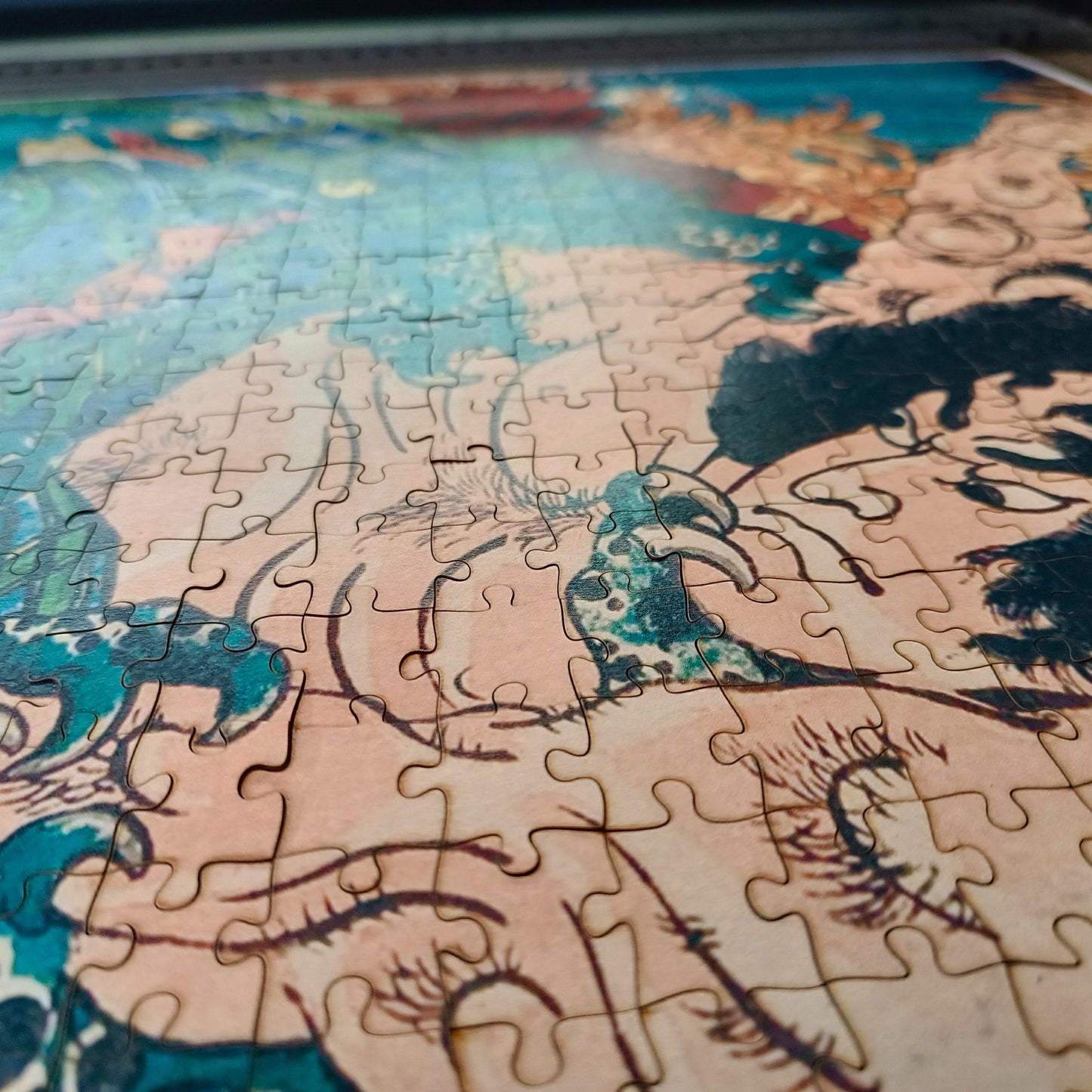
- Vibrant Imagery: High-resolution UV printing directly on the wood—no paper laminate—for stunning detail and vibrant colors.
- Eco-Conscious: Made with environmentally friendly materials.
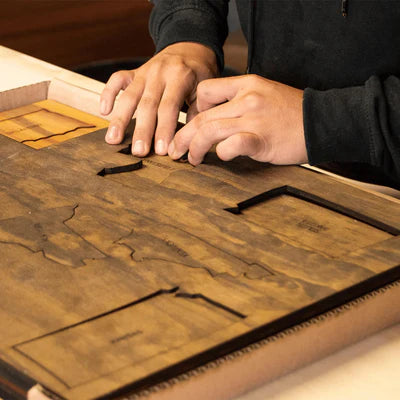
- Heirloom Keepsake: Your puzzle arrives beautifully packaged in a handcrafted wooden box, perfect for gifting or storing your masterpiece.
Craftsmanship and Care:
Craftsmanship and Care:
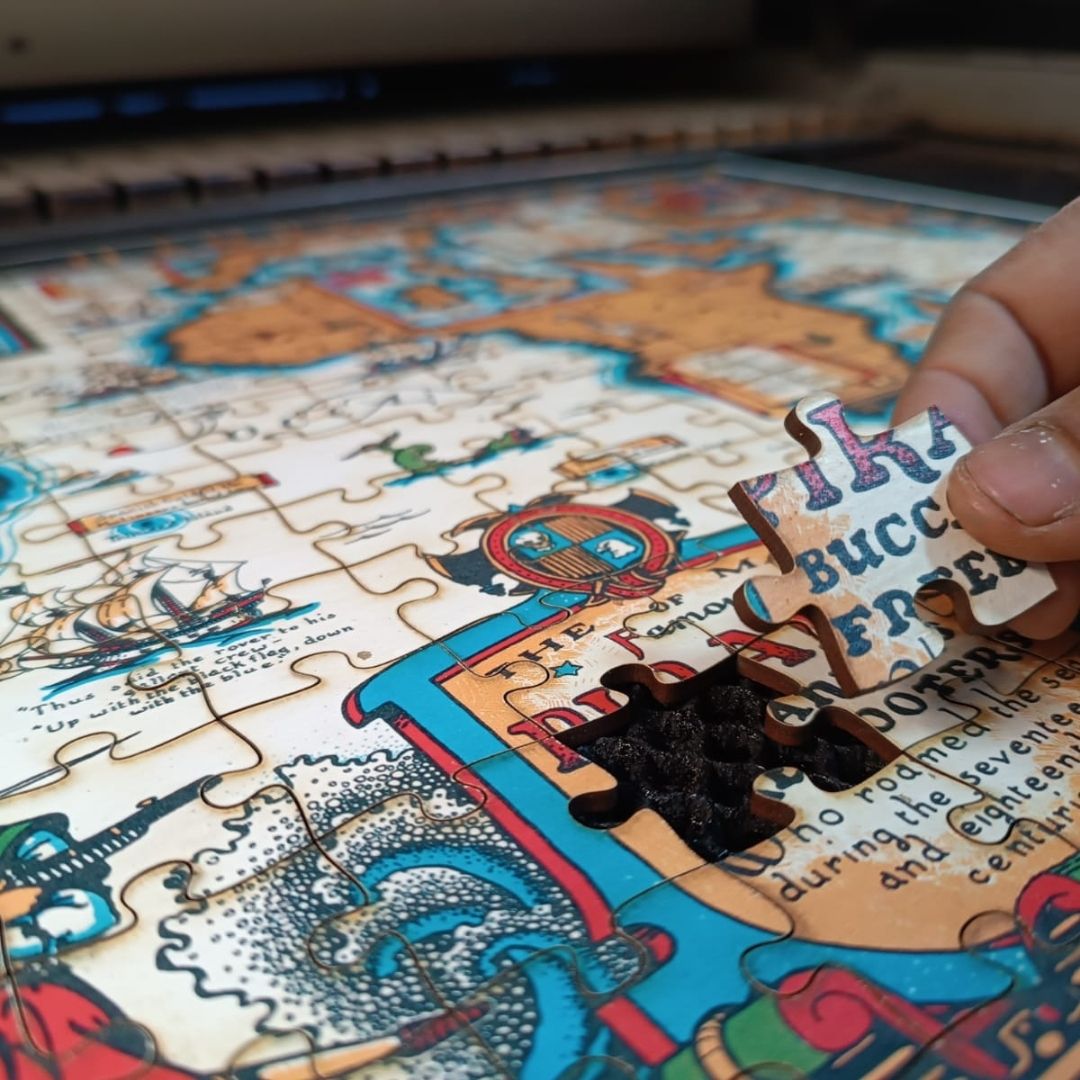
Experience the satisfying click of perfectly interlocking pieces. Our state-of-the-art laser cutting ensures precise fit and a smooth, seamless puzzle-solving experience. The perfect upgrade from cardboard without breaking the bank.
- Natural Laser Residue: A small amount of harmless black residue from the laser cutting process may be present. Simply wipe it away with a damp cloth.
- Hand-Finished Details: Each puzzle board, each wooden box are all carefully hand-stained, painted, and glued.
Satisfaction Guaranteed:
Satisfaction Guaranteed:
We are confident in the quality of our puzzles. If you are not completely satisfied, we offer a full refund or exchange.
PLEASE NOTE:
Each puzzle is crafted to make the most of your chosen size. Artwork may be subtly adjusted to meet our material and production standards while honoring the original work. Planning to frame yours? Email info@whatawoodwork.com for final measurements.
Couldn't load pickup availability
In stock
 PRODUCT DESCRIPTION
Amaterasu, the Sun Goddess — Kawanabe Kyosai — Wooden Jigsaw Puzzle
Vincent van Gogh owned a scroll by Kawanabe Kyosai. Not a print of Hokusai's wave, not a Hiroshige landscape — a scroll specifically by Kyosai, depicting Amaterasu emerging from the cave. Van Gogh collected hundreds of Japanese prints. He kept this one.
When the Sun Goddess hid, the world went dark. Kyosai captures the moment light returned — Japan's greatest creation myth as a premium handcrafted wooden puzzle.
📖 The Story Behind This Piece
The image dates to around 1870, during a period when Kyosai was working in both traditional woodblock and Western-influenced formats simultaneously. The version that circulated most widely appeared as a color reproduction in The Connoisseur magazine in 1925, labeled a print "after Kyosai" — meaning his original design had already been copied, reprinted, and recirculated for decades before it reached a Western audience. What survives is a composition built around Amaterasu's re-emergence from the cave where she hid, plunging the world into darkness. The reds and golds aren't decoration. In Shinto, they carry specific ritual meaning: light restored, divine order reinstated.
Kyosai trained under Utagawa Kuniyoshi at age seven and later studied Kano school painting formally, then spent the rest of his career breaking both traditions open. He was arrested twice for political satire embedded in his work. His nickname was "Painting Demon." The vigorous, almost violent energy in his brushwork wasn't stylistic preference. It was a worldview: that restraint was a kind of dishonesty, and that mythological subjects required mythological force to render them properly.
Kyosai's reds and golds are the section that stops puzzlers first. At the 1000-piece scale, the gradations within Amaterasu's radiant burst — which read as a single warm field on screen — break into dozens of subtly distinct tones. UV printing directly onto the wood surface means those gradations stay separated and sharp; no paper laminate to blur where one color bleeds into the next. The surrounding darkness of the cave interior, by contrast, resolves slowly and deliberately. Puzzlers working that section are holding pieces that all look nearly identical until the grain of the wood underneath gives them an edge.
🎁 Who Gets One of These
A specific kind of buyer ends up here. A few of them:
✔️ The Japanophile who has been to Ise Jingu — You've walked the path to the inner shrine. Amaterasu is the deity enshrined there. You know what this image means in context, not just aesthetically.
✔️ The art history reader who knows Kyosai's name already — You've encountered him in the margins of books about Meiji-era Japan or Western Japonisme. Here's a chance to spend real time with one of his compositions.
✔️ The van Gogh collector who didn't know about the scroll — Van Gogh's Japanese print collection is well documented. His Kyosai scroll is less discussed. The connection is real and it changes what you're looking at.
✔️ The mythology reader who has moved past Greece and Rome — Shinto mythology is structurally distinct from Western traditions. Amaterasu's cave story is one of the foundational texts. The image carries the whole narrative in one frame.
✔️ The gift-giver who needs something that won't be forgotten — Not because the packaging is elaborate, though the wooden box is genuinely beautiful, but because nobody else is giving this.
Works well as a birthday gift for anyone who collects Japanese art or objects, a milestone gift for someone returning from time spent in Japan, or a holiday gift for the person in your life who reads about mythology seriously.
🧩 Puzzle Specifications
✔️ Precision laser-cut wooden pieces
✔️ 3mm MDF core — rigid, warp-resistant, built to last
✔️ UV printing directly on wood — no paper laminate, no peeling
✔️ Traditional grid-cut design
✔️ Handcrafted wooden keepsake box included
✔️ Made to order — ships in 3–4 weeks
💎 Why This Puzzle Lasts
Most wooden puzzle makers charge $300–$500. The craft justifies it. WAWW gets there differently: direct manufacturing, no wholesale chain, made-to-order. Same materials, no markup. The price difference isn't a compromise. It's a structural one.
The 3mm MDF core is what keeps a puzzle worth keeping. Cardboard warps, absorbs humidity, and starts to delaminate at the edges within a few years. MDF holds its shape across decades — pieces click together the same way on year one as on year twenty. UV printing goes directly onto that wood surface, with no paper layer between the image and the substrate. No paper means no peeling at the corners, no fading from light exposure, no soft edges where colors bleed.
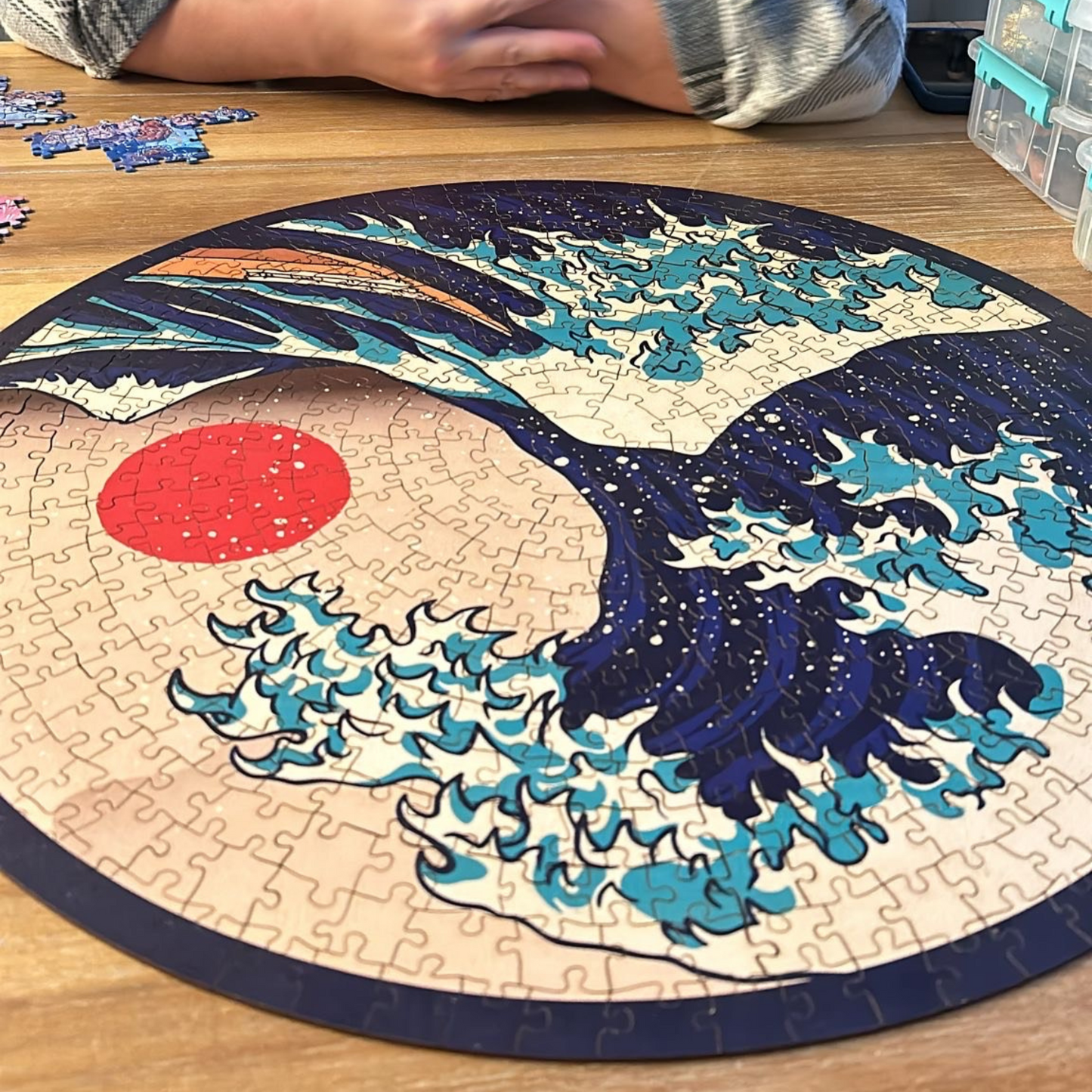
The traditional grid cut means pieces lock together with a clean, definite click. There are no gimmick shapes interrupting the solve — just the image, the pieces, and the satisfaction of a fit that's either right or wrong with no ambiguity. When the puzzle is finished, it goes back into the handcrafted wooden box it arrived in. That box is made to be kept: solid, finished, the kind of object that ends up on a shelf rather than in a recycling bin. Every puzzle is built after you order it. Nothing sits in a warehouse. The 3–4 week lead time is the cost of that, and it's worth it.