


Ascidiae by Haeckel - Premium Wooden Jigsaw Puzzle
Ascidiae by Haeckel - Premium Wooden Jigsaw Puzzle
- Regular price
- Price: $115.00
- Regular price
- List Price: $0.00
- Sale price
- Price: $115.00
- Unit price
- per
Key Features:
Key Features:
- Premium Quality: Crafted from durable 3mm (.14in) composite wood board for lasting enjoyment.
- Vibrant Imagery: High-resolution UV printing directly on the wood—no paper laminate—for stunning detail and vibrant colors.
- Eco-Conscious: Made with environmentally friendly materials.
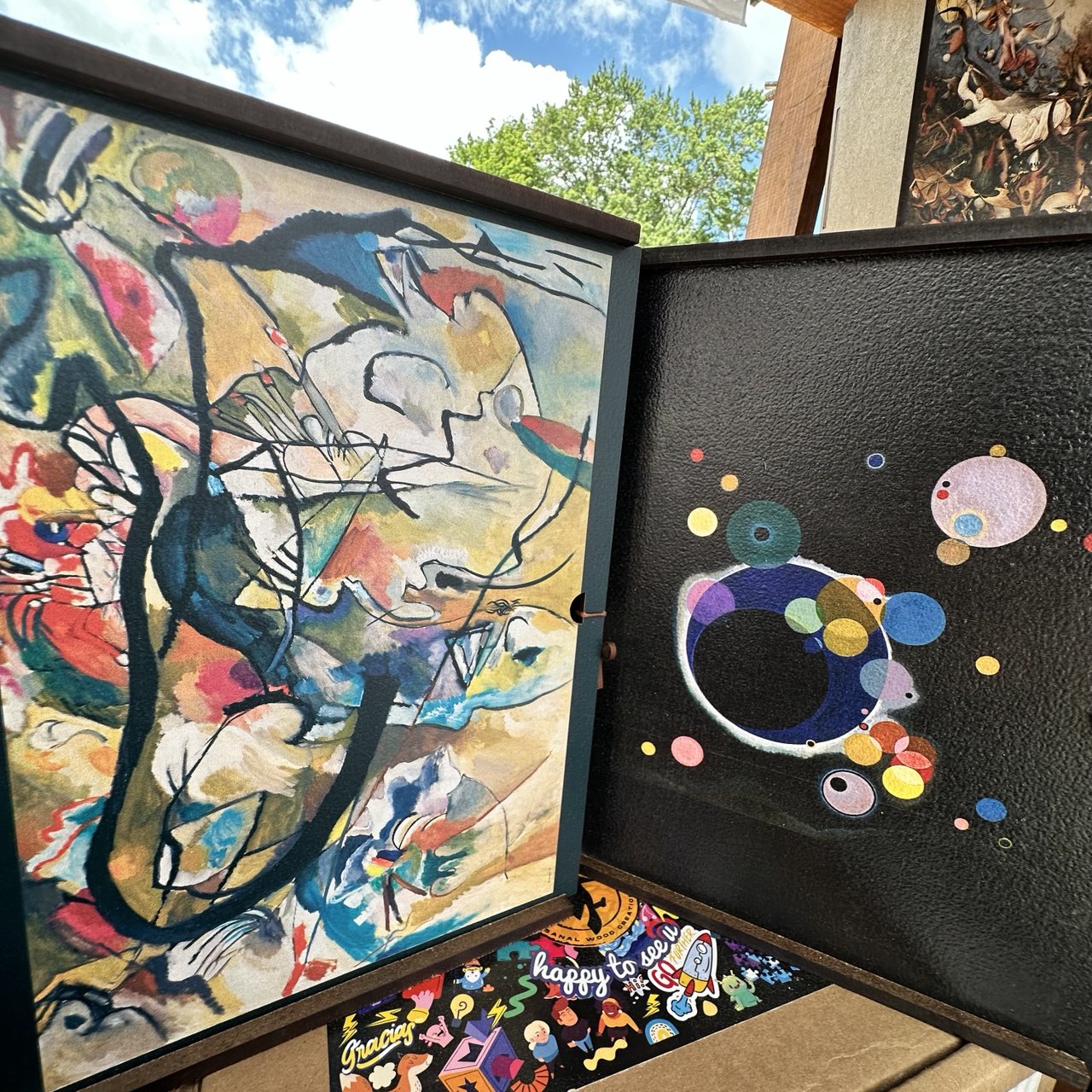
- Heirloom Keepsake: Your puzzle arrives beautifully packaged in a handcrafted wooden box, perfect for gifting or storing your masterpiece.
Craftsmanship and Care:
Craftsmanship and Care:
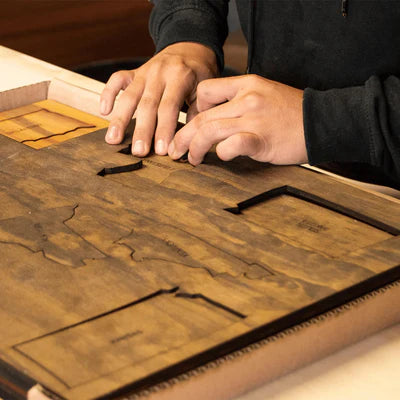
Experience the satisfying click of perfectly interlocking pieces. Our state-of-the-art laser cutting ensures precise fit and a smooth, seamless puzzle-solving experience. The perfect upgrade from cardboard without breaking the bank.
- Natural Laser Residue: A small amount of harmless black residue from the laser cutting process may be present. Simply wipe it away with a damp cloth.
- Hand-Finished Details: Each puzzle board, each wooden box are all carefully hand-stained, painted, and glued.
Satisfaction Guaranteed:
Satisfaction Guaranteed:
We are confident in the quality of our puzzles. If you are not completely satisfied, we offer a full refund or exchange.
PLEASE NOTE:
Each puzzle is crafted to make the most of your chosen size. Artwork may be subtly adjusted to meet our material and production standards while honoring the original work. Planning to frame yours? Email info@whatawoodwork.com for final measurements.
Couldn't load pickup availability
In stock
 PRODUCT DESCRIPTION
Kunstformen der Natur, Plate 85: Ascidiae — Wooden Jigsaw Puzzle
Sea squirts look like nothing until you look closely. Ernst Haeckel looked closely. What he found and documented in 1904 were creatures so geometrically exact, so radially symmetrical, that lithographer Adolf Giltsch needed a second pass to render them accurately. Plate 85 from Art Forms in Nature isn't a loose interpretation. It's a technical document that happens to be beautiful.
📖 The Story Behind This Piece
Kunstformen der Natur — known in English as Art Forms in Nature — is a landmark series of 100 lithographic prints by German biologist Ernst Haeckel, originally published between 1899 and 1904. Plate 85 arranges ascidiae — the marine filter feeders known as sea squirts or tunicates — into a composition of near-perfect radial symmetry. The arrangement isn't artistic license. Haeckel documented what was actually there: organisms whose internal architecture follows the same geometric logic as a cathedral window.
The deep jewel tones — burgundies and golds pressing against dark backgrounds — came directly from the animals themselves. Giltsch translated Haeckel's field sketches into lithographs, and the precision required to do so is evident in every printed line.
Haeckel's work was directly influential on Art Nouveau artists, including René Binet, Karl Blossfeldt, and Émile Gallé — Plate 85 predates most of what's on your wall and directly influenced it. This is the original source material, not a derivation.
Haeckel spent decades arguing that natural forms contained their own aesthetic order — that beauty wasn't imposed on nature but derived from it. He called this monism: the idea that organic and inorganic life share one underlying structural logic. Plate 85 is that argument made visible.
🎁 Who Gets One of These
✔️ The marine biologist who keeps art on the office wall — Haeckel got the anatomy right. Someone in your field will notice, and that's part of the point. ✔️ The Art Nouveau collector who already owns the posters — Plate 85 is the original source, not a derivation. ✔️ The natural history museum member who shops the gift shop seriously — you know what good scientific illustration looks like. ✔️ The person who reads popular science and frames the covers — Haeckel's tunicates have appeared in biology textbooks for over a century. Owning the original plate in puzzle form is a different relationship with that image. ✔️ The gift-giver who has run out of ideas for the person who owns everything — a 1904 German lithograph of radially symmetric marine invertebrates, laser-cut in wood, is not something they have.
Strong for birthdays, World Oceans Day (June 8), and winter holidays. Also a genuine option for science-focused graduation gifts or retirement presents for anyone who spent a career in biology, conservation, or natural history.
🧩 Why this works as a puzzle
Assembly reveals something reproduction flattens. The dark background across most of this plate runs nearly uniform at digital scale, but on the UV-printed wood surface the tonal variation in those near-black passages becomes tactile information. You're sorting pieces by distinctions that exist only at close range — between a deep navy and a near-black, between two segments of a tunicate's translucent outer casing that photograph as identical but read differently in hand.
The printed pigment bonds directly to the wood grain, so those distinctions stay sharp. No paper layer to dull them.
💎 Why This Puzzle Lasts
Most wooden puzzle makers charge $300 to $500. The craft justifies it. WAWW gets to the same place differently: direct manufacturing, no wholesale markup, made to order with zero warehouse inventory. Same materials. Honest price.
The 3mm MDF core is what separates a puzzle you keep from one you recycle. Cardboard warps, absorbs humidity, and starts losing edge definition within a few years. MDF doesn't. Pieces cut from it fit the same way on assembly number twenty as they did on assembly number one — a satisfying click that comes from dimensional stability, not a soft press-together.
UV printing bonds pigment directly into the wood surface rather than applying it through a paper laminate. No peeling at the edges after repeated handling. No fading over years of display. For a plate like Haeckel's Ascidiae, where the color depth in those dark backgrounds carries real visual weight, that matters.
The puzzle was made to order specifically for you, which is why the wait is three to four weeks. Nothing sat in a warehouse. Nothing was made speculatively.