


Dandelion with Hawk Moth by Dietzch - Wooden Jigsaw Puzzle
Dandelion with Hawk Moth by Dietzch - Wooden Jigsaw Puzzle
- Regular price
- Price: $115.00
- Regular price
- List Price: $0.00
- Sale price
- Price: $115.00
- Unit price
- per
Key Features:
Key Features:
- Premium Quality: Crafted from durable 3mm (.14in) composite wood board for lasting enjoyment.
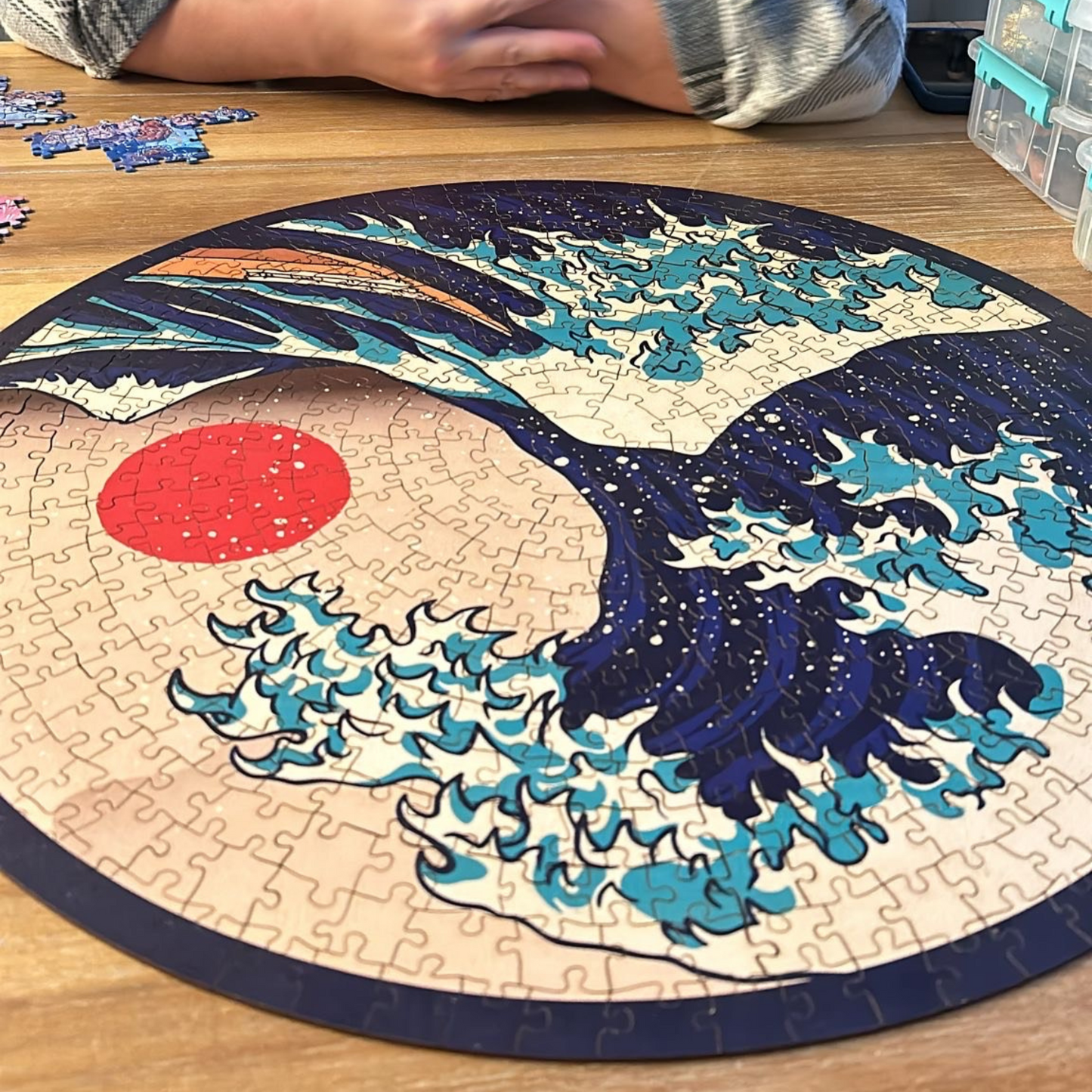
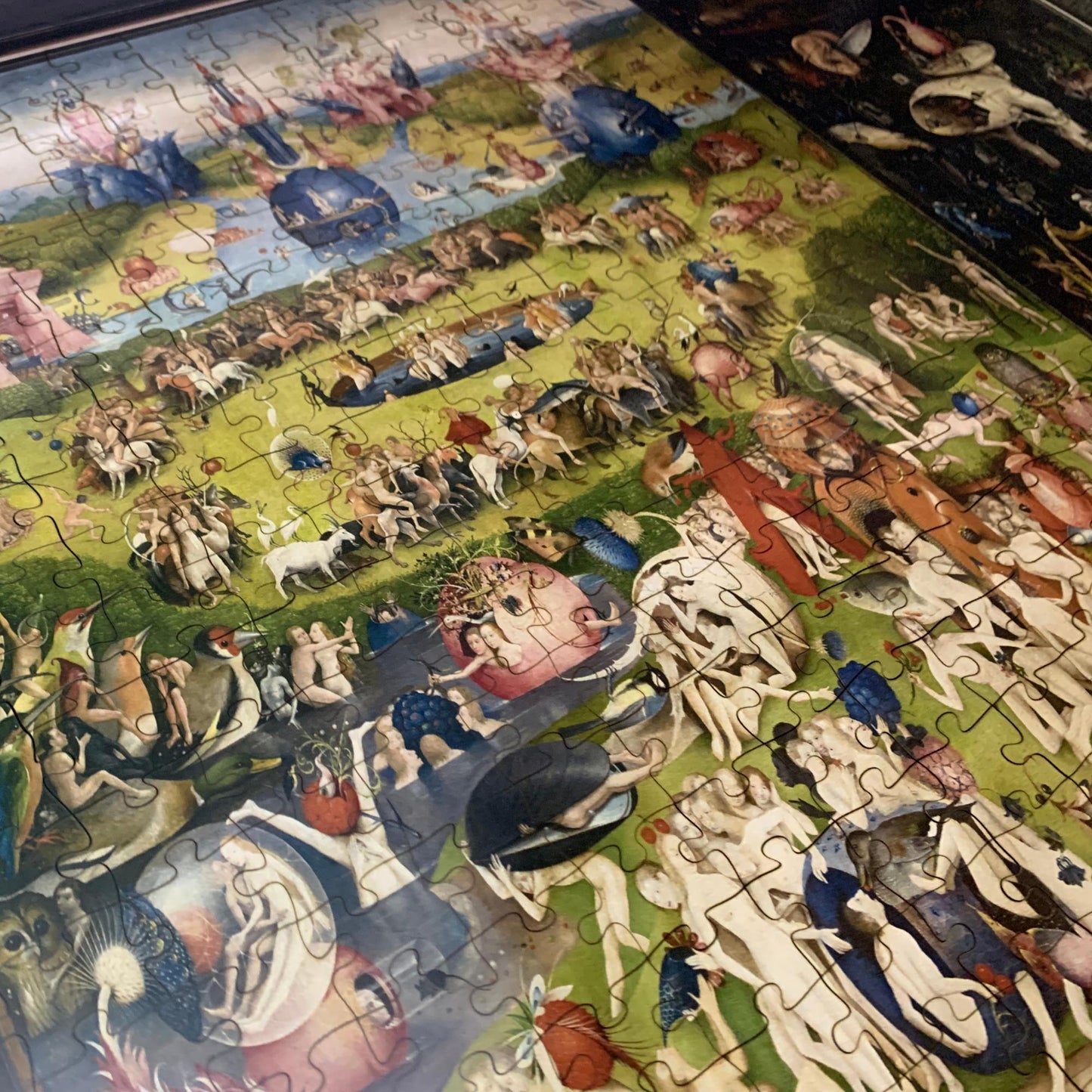
- Vibrant Imagery: High-resolution UV printing directly on the wood—no paper laminate—for stunning detail and vibrant colors.
- Eco-Conscious: Made with environmentally friendly materials.
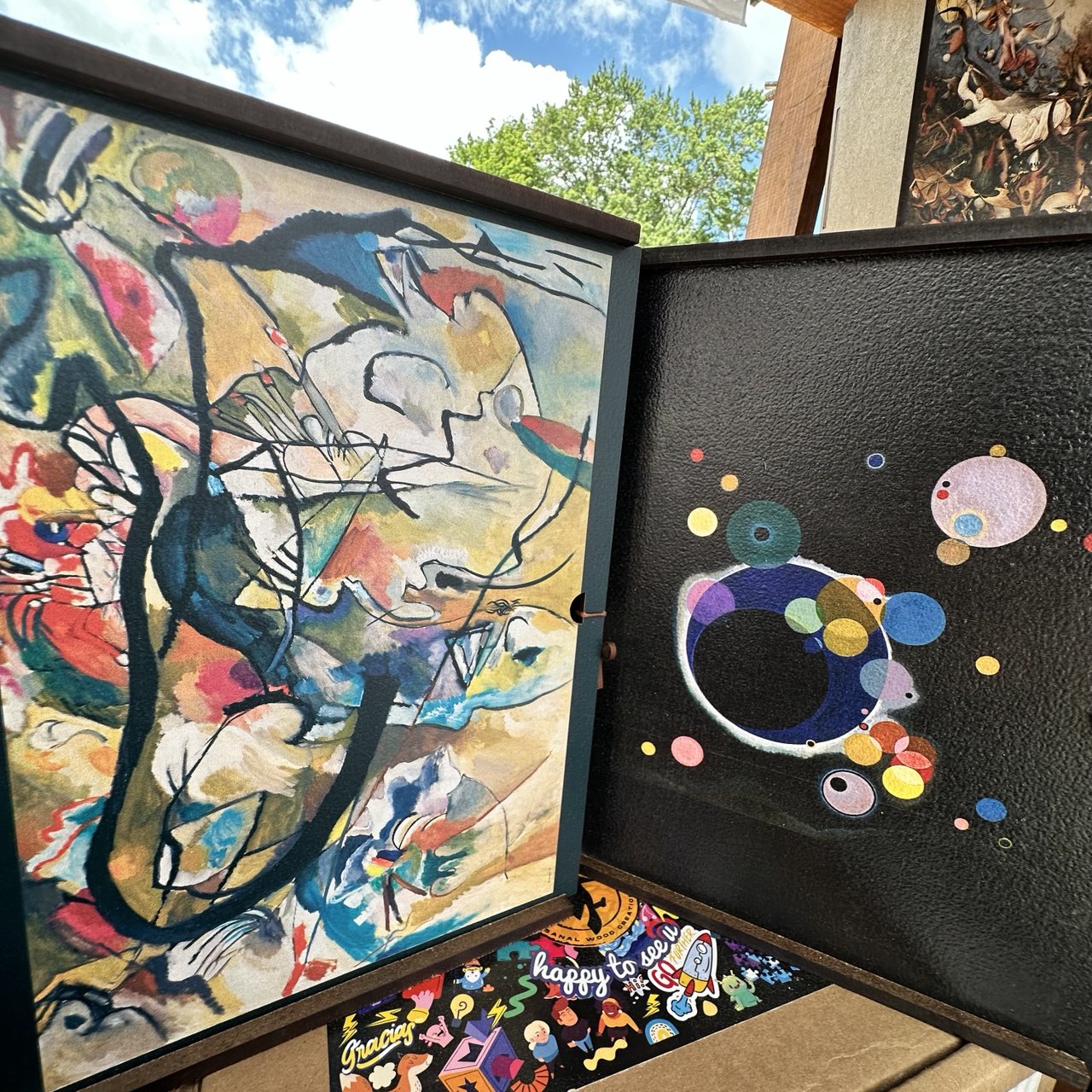
- Heirloom Keepsake: Your puzzle arrives beautifully packaged in a handcrafted wooden box, perfect for gifting or storing your masterpiece.
Craftsmanship and Care:
Craftsmanship and Care:
Experience the satisfying click of perfectly interlocking pieces. Our state-of-the-art laser cutting ensures precise fit and a smooth, seamless puzzle-solving experience. The perfect upgrade from cardboard without breaking the bank.
- Natural Laser Residue: A small amount of harmless black residue from the laser cutting process may be present. Simply wipe it away with a damp cloth.
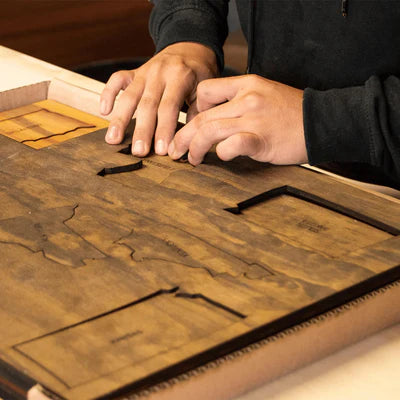
- Hand-Finished Details: Each puzzle board, each wooden box are all carefully hand-stained, painted, and glued.
Satisfaction Guaranteed:
Satisfaction Guaranteed:
We are confident in the quality of our puzzles. If you are not completely satisfied, we offer a full refund or exchange.
PLEASE NOTE:
Each puzzle is crafted to make the most of your chosen size. Artwork may be subtly adjusted to meet our material and production standards while honoring the original work. Planning to frame yours? Email info@whatawoodwork.com for final measurements.
Couldn't load pickup availability
In stock
 PRODUCT DESCRIPTION
Dandelion & Death's Head Hawk Moth Wooden Puzzle — Barbara Dietzsch | Nuremberg, 18th century — Wooden Jigsaw Puzzle
A dandelion going to seed. A moth with a skull on its back. One of them is a symbol of fleeting time. The other starred in Silence of the Lambs.
📖 The Story Behind This Piece
This watercolour and bodycolour on vellum — Dandelion with a Death's Head Hawk Moth and a Green Silver Lines Moth — is held in the British Museum and attributed to Elizabeth Christina Matthes, an 18th-century Nuremberg artist working in the tradition established by Barbara Regina Dietzsch, the most celebrated botanical painter of her era in Germany. Where Dietzsch characteristically painted against pure black backgrounds, Matthes placed her subjects in a full atmospheric landscape: a rocky bank, fir trees, and a dusky pink sky that gives the scene an almost theatrical quality — nature observed not just scientifically, but dramatically.
The composition is built around contrast. The dandelion, shown at full seed-head, is all lightness and fragility — a perfect sphere of filaments ready to disperse on the next breath of wind. Against it, Acherontia atropos, the Death's Head Hawk Moth, is massive, richly patterned in deep amber, black, and terracotta, its thorax bearing the pale skull-shaped marking that gave it its name and, for centuries, its fearsome reputation. European folklore treated the appearance of this moth as an omen of plague and death. Beekeepers dreaded it — it raided hives for honey, and its squeaking cry unnerved the colonies. It is the largest moth found in Europe, and one of the most visually spectacular. The small pale Pseudoips prasinana, the Green Silver Lines Moth, resting quietly on a leaf in the middle ground, throws the Death's Head into even sharper relief.
Dietzsch's committed to painting insects and plants exactly as they were — life-size, observed, not imagined. The dandelion's seed head is rendered with individual achene filaments visible. The hawk moth's wing-scale texture is captured with the same care given to the finest Flemish still life. This is natural history illustration at the threshold where science becomes art.
🎁 Who Gets One of These
✔️ The natural history illustration collector — Nuremberg was the center of European botanical and entomological painting in the 18th century. Matthes worked directly in that tradition. This is not a decorative print — it is a piece of that history.
✔️ The moth and entomology enthusiast — The Death's Head Hawk Moth is the most iconic moth in European culture. This is its finest portrait: life-size, anatomically exact, placed in full dramatic landscape.
✔️ The puzzle buyer who wants maximum visual challenge — The dandelion seed head alone — hundreds of near-identical white filaments against a pale sky — will test anyone. The dark wing pattern of the hawk moth immediately below is a completely different visual problem. Two puzzles in one image.
✔️ The gothic or dark-natural-history collector — A skull-marked moth beside a dandelion clock, painted at dusk, on vellum, in 18th-century Nuremberg. This image doesn't need to try to be atmospheric. It just is.
Strong occasion fits: birthdays for naturalists, entomology enthusiasts, botanical art collectors, and anyone who finds beauty in the more unsettling corners of the natural world.
🧩 Puzzle Specifications
✔️ Precision laser-cut wooden pieces
✔️ 3mm MDF core — rigid, warp-resistant, built to last
✔️ UV printing directly on wood — no paper laminate, no peeling
✔️ Traditional grid-cut design
✔️ Sizes: 15"x23", 18"x24", 23"x31"
✔️ Piece counts: 300–1000
✔️ Handcrafted wooden keepsake box included
✔️ Made to order — ships in 3–4 weeks
💎 Why This Puzzle Lasts
Most wooden puzzle makers charge $300–$500. The craft justifies it. WAWW gets to $115–$170 differently: direct manufacturing, no wholesale chain, no retail margin, made to order. The materials are the same. The markup isn't there.
The 3mm MDF core is the part you notice by feel. Pieces are rigid in a way cardboard never manages, and they stay that way — no warping after humidity cycles, no softening at the edges after repeated handling. A piece that clicked cleanly on the first assembly will click the same way in twenty years. UV printing goes directly onto the wood surface, so there's no paper laminate to bubble, peel, or yellow. The dark background in this painting depends entirely on color fidelity — any degradation in the deepest tones would flatten the whole composition. The printing method prevents that.
The traditional grid cut means pieces have real resistance and real click. Assembly feels like solving something rather than approximating it. When the puzzle is finished and broken back down, it goes into the handcrafted wooden box that came with it — which is not packaging, and doesn't get thrown away. Made to order means your puzzle doesn't exist yet when you buy it. Production starts when you place the order, which is why the wait is three to four weeks and why there's no warehouse sitting on unsold inventory.