


Great Barrier Reef Fishes by Saville-Kent - Wooden Jigsaw Puzzle
Great Barrier Reef Fishes by Saville-Kent - Wooden Jigsaw Puzzle
- Regular price
- Price: $115.00
- Regular price
- List Price:
- Sale price
- Price: $115.00
- Unit price
- per
Key Features:
Key Features:
- Premium Quality: Crafted from durable 3mm (.14in) composite wood board for lasting enjoyment.
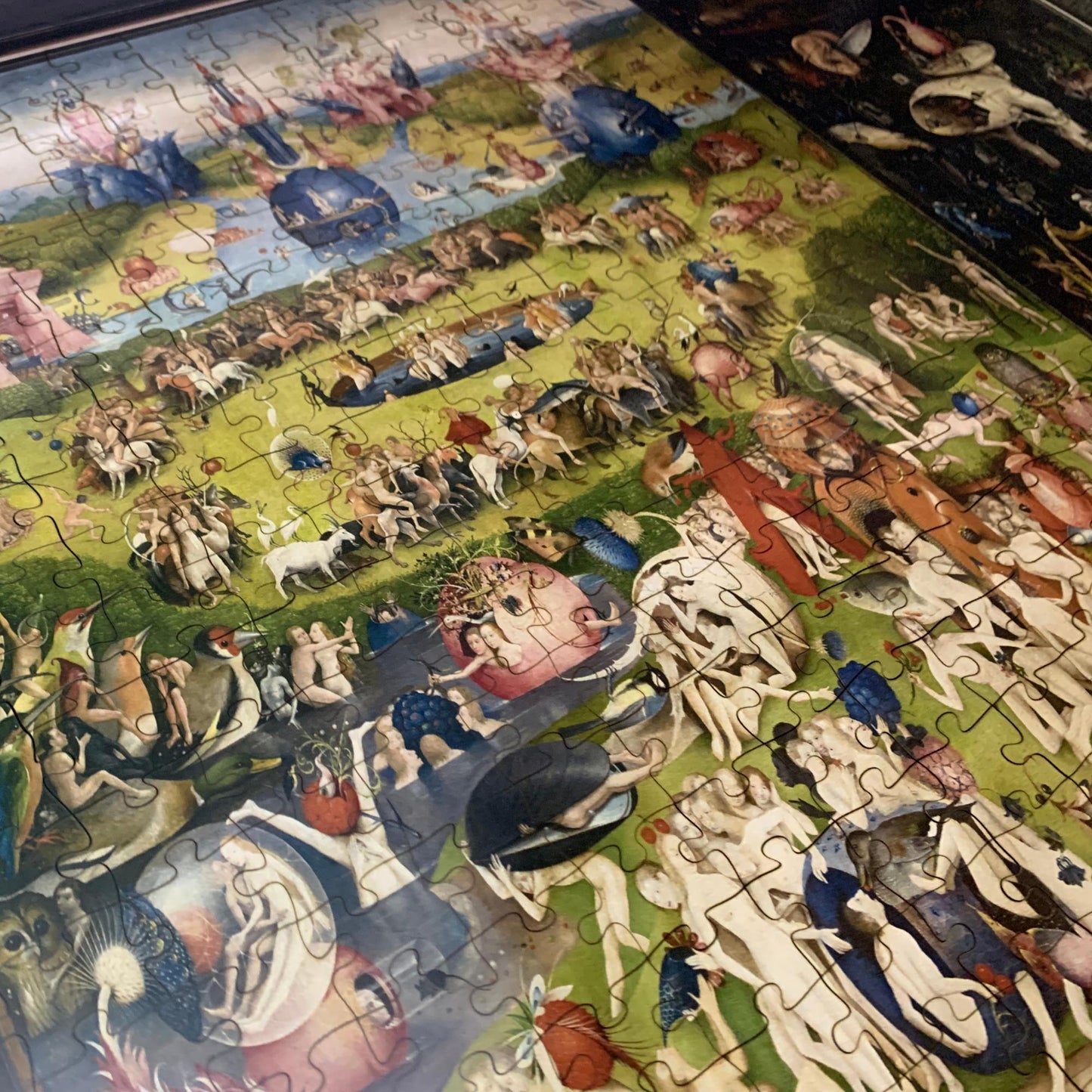
- Vibrant Imagery: High-resolution UV printing directly on the wood—no paper laminate—for stunning detail and vibrant colors.
- Eco-Conscious: Made with environmentally friendly materials.
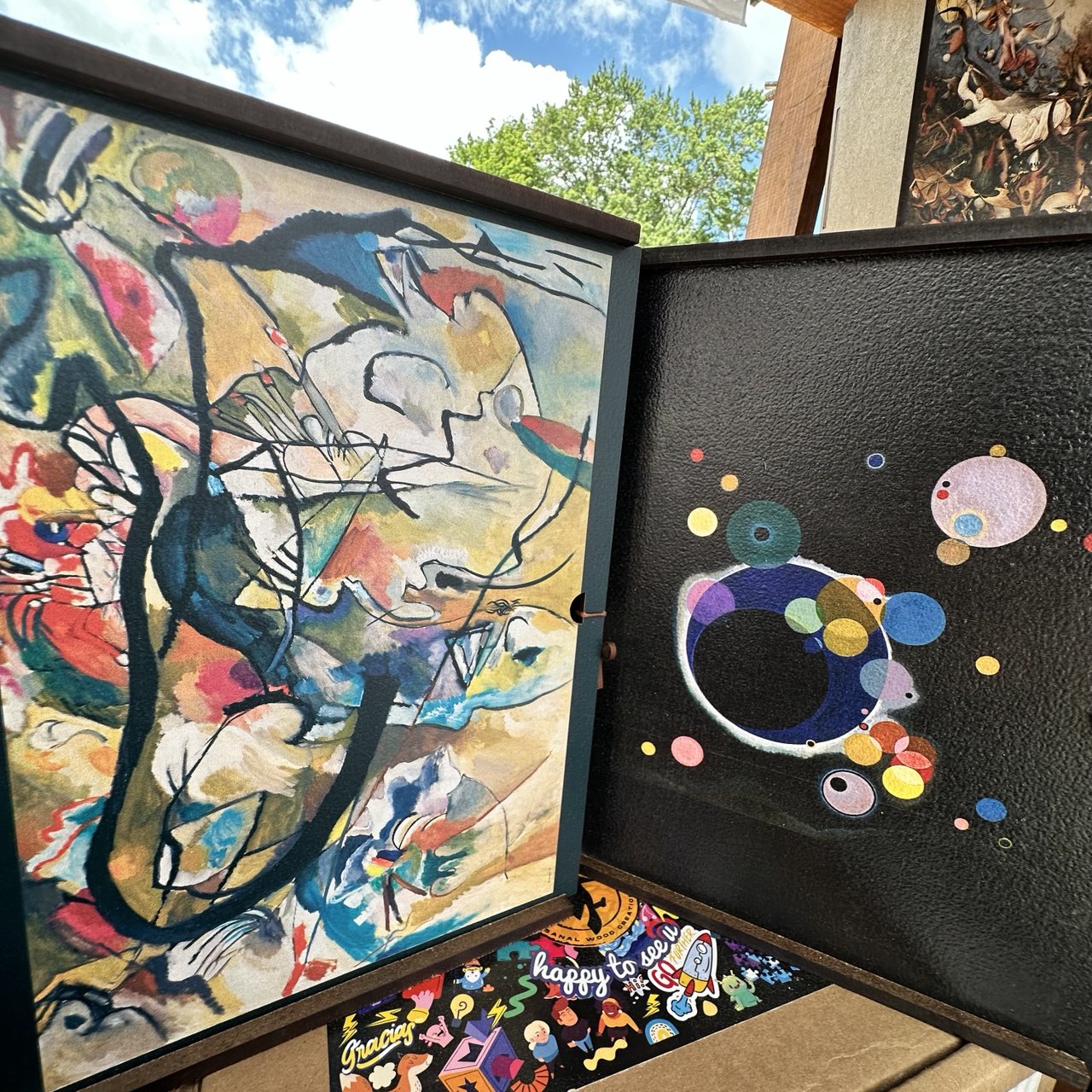
- Heirloom Keepsake: Your puzzle arrives beautifully packaged in a handcrafted wooden box, perfect for gifting or storing your masterpiece.
Craftsmanship and Care:
Craftsmanship and Care:
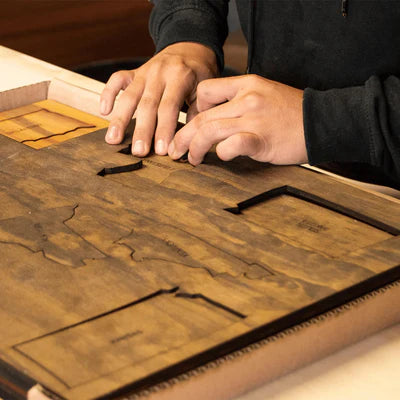
Experience the satisfying click of perfectly interlocking pieces. Our state-of-the-art laser cutting ensures precise fit and a smooth, seamless puzzle-solving experience. The perfect upgrade from cardboard without breaking the bank.
- Natural Laser Residue: A small amount of harmless black residue from the laser cutting process may be present. Simply wipe it away with a damp cloth.
- Hand-Finished Details: Each puzzle board, each wooden box are all carefully hand-stained, painted, and glued.
Satisfaction Guaranteed:
Satisfaction Guaranteed:
We are confident in the quality of our puzzles. If you are not completely satisfied, we offer a full refund or exchange.
PLEASE NOTE:
Each puzzle is crafted to make the most of your chosen size. Artwork may be subtly adjusted to meet our material and production standards while honoring the original work. Planning to frame yours? Email info@whatawoodwork.com for final measurements.
Couldn't load pickup availability
In stock
 PRODUCT DESCRIPTION
Great Barrier Reef Fishes from The Great Barrier Reef of Australia (1893) — Wooden Jigsaw Puzzle
William Saville-Kent spent years studying preserved specimens at the British Museum before deciding that dead fish in jars weren't telling him enough. He moved to Australia to study living reefs instead. The book he produced in 1893 was one of the first to document the Great Barrier Reef in comprehensive detail, and the color plates inside it — chromolithographs engraved by Riddle and Couchman from Saville-Kent's own watercolors — showed Victorian readers fish colors they had no framework to believe were real.
📖 The Story Behind This Piece
In 1893, most people in Britain and America had no visual reference for what lived inside a coral reef. Saville-Kent's chromolithograph plate from "The Great Barrier Reef of Australia: Its Products and Potentialities" gave them one. The parrotfish and wrasse arranged across the composition carry the specific neon saturation of living reef fish — not the muted tones of museum-preserved specimens that most scientific illustration relied on at the time. The image was based on Saville-Kent's direct field observation, which made it unusual and, to many viewers, almost unbelievable.
Saville-Kent made a professional bet that most scientists of his era wouldn't. He left a prestigious post at the British Museum to study ecosystems that were still alive. The decision shaped everything about the 1893 publication. Because he was working from living subjects in Australian waters rather than archived collections, the colors and behaviors he recorded were documented from direct observation. That distinction is visible in the plate. The fish don't look pinned.
When assembling the 1000-piece version, the section where three or four parrotfish overlap in the center of the plate presents a specific problem: the chromolithography technique produced colors that are closely related but not identical, and the UV printing on wood renders those subtle differences with more fidelity than any screen reproduction. Where a digital image flattens the turquoise scaling into a single tone, the printed wood surface holds the variation. Puzzlers report noticing details in that section — the fine dark outlining on individual scales — that weren't visible when they first looked at the reference image on the box.
🎁 Who Gets One of These
A few types of people tend to end up with this one.
✔️ Marine biologists and reef scientists — anyone who has spent time on or near the Great Barrier Reef and has a specific relationship to its documented history before mass bleaching events.
✔️ Natural history art collectors — people who already own 19th-century scientific illustration prints and want something in three dimensions that engages with the same tradition.
✔️ Conservation donors and advocates — someone who gives annually to reef or ocean conservation organizations and would find the 1893 documentation layer genuinely meaningful rather than decorative.
✔️ Museum shop regulars — the person who always leaves the natural history museum with something from the gift shop, has outgrown the posters, and wants an object with more weight to it.
Works well as a gift for Earth Day, marine biology graduations, or a significant birthday for someone who has visited or dived the reef. The historical framing makes it appropriate where a generic ocean print wouldn't be.
🧩 Puzzle Specifications
✔️ Precision laser-cut wooden pieces
✔️ 3mm MDF core — rigid, warp-resistant, built to last
✔️ UV printing directly on wood — no paper laminate, no peeling
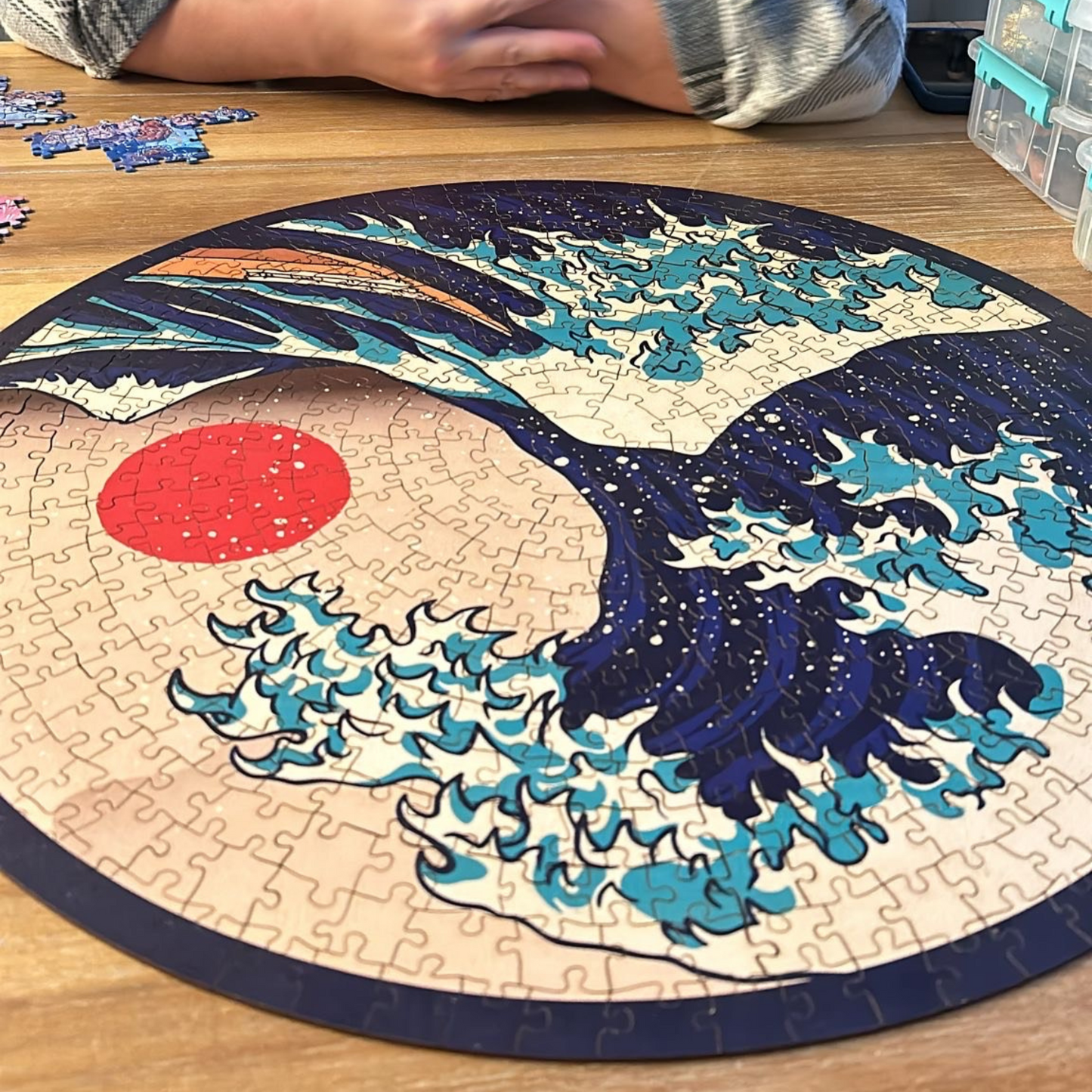
✔️ Traditional grid-cut design
✔️ Sizes: 15"x23", 18"x24", 23"x31"
✔️ Piece counts: 300–1000
✔️ Handcrafted wooden keepsake box included
✔️ Made to order — ships in 3–4 weeks
💎 Why This Puzzle Lasts
Most wooden puzzles at this quality level sell for $300 to $500. WAWW makes them for $115 to $170 because the manufacturing is direct and there's no wholesale chain in between. The price difference doesn't reflect a difference in materials or craft. It reflects a business structure.
The 3mm MDF core is rigid in a way cardboard never manages to stay. Pick up a finished section of 20 pieces and it holds its shape. Cardboard puzzles develop flex within a few years as humidity works on the paper backing; MDF doesn't absorb moisture the same way, which means pieces still seat cleanly a decade from now. The UV printing process bonds ink directly to the wood surface rather than applying a paper laminate on top. No laminate means no peeling at the edges, no bubbling, no color shift as the paper separates from the substrate over time. The neon saturation in Saville-Kent's chromolithograph plates is exactly what UV on wood was made for.
The traditional grid cut produces pieces with a consistent, satisfying snap when they connect — no wobble, no loose fit. Sorting and placing feels clean rather than tentative. When the puzzle is finished, the handcrafted wooden storage box is what keeps it in the house. Flat-pack cardboard boxes get discarded; the wooden box gets put on a shelf. Every puzzle is made to order, with no warehouse inventory. The 3 to 4 week production window exists because your specific puzzle is cut and printed after you buy it, not pulled from a stack made six months ago.
The 300-piece, 15"x23" starts at $115. The 1000-piece, 23"x31" runs $170.
🖼️ After You Finish It
Most people frame it. UV printing on wood holds color without fading, so expensive UV-protective glass isn't a requirement. Standard framing works fine. The finished puzzle is dense and flat enough that it mounts without drama. A few people disassemble and solve it again. The wooden box makes that straightforward. Either way, the object doesn't disappear into a closet.
⚠️ Important Notes
Puzzles may have light laser residue on the surface — a damp cloth handles it. There's a natural wood scent when the box first opens; it fades within a few days. Made-to-order production means your puzzle ships in 3–4 weeks. If anything arrives damaged, we replace or refund. No questions.