


Horikiri Iris Garden — Hiroshige Woodblock Wooden Puzzle
Horikiri Iris Garden — Hiroshige Woodblock Wooden Puzzle
- Regular price
- Price: $115.00
- Regular price
- List Price: $0.00
- Sale price
- Price: $115.00
- Unit price
- per
Key Features:
Key Features:
- Premium Quality: Crafted from durable 3mm (.14in) composite wood board for lasting enjoyment.
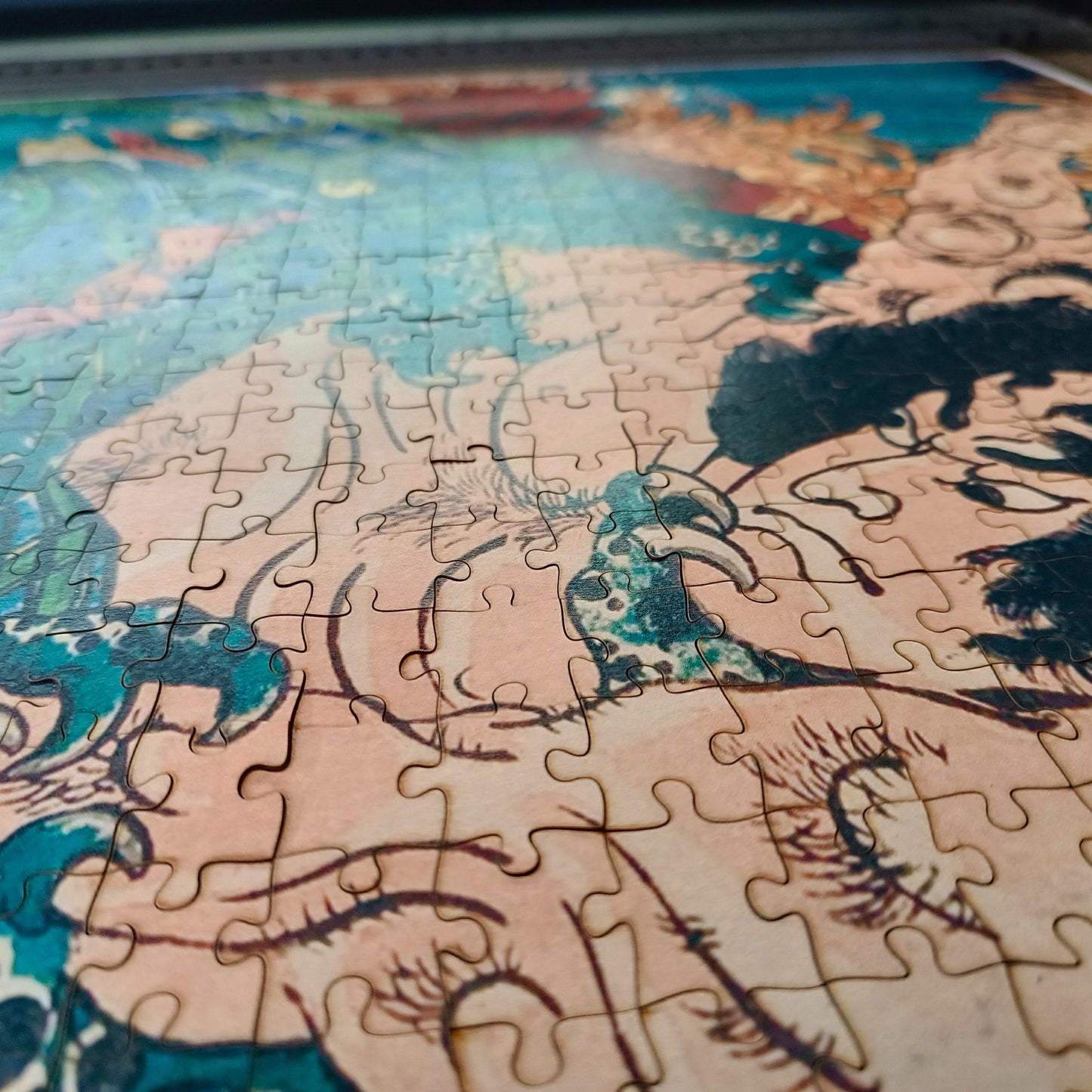
- Vibrant Imagery: High-resolution UV printing directly on the wood—no paper laminate—for stunning detail and vibrant colors.
- Eco-Conscious: Made with environmentally friendly materials.
- Heirloom Keepsake: Your puzzle arrives beautifully packaged in a handcrafted wooden box, perfect for gifting or storing your masterpiece.
Craftsmanship and Care:
Craftsmanship and Care:
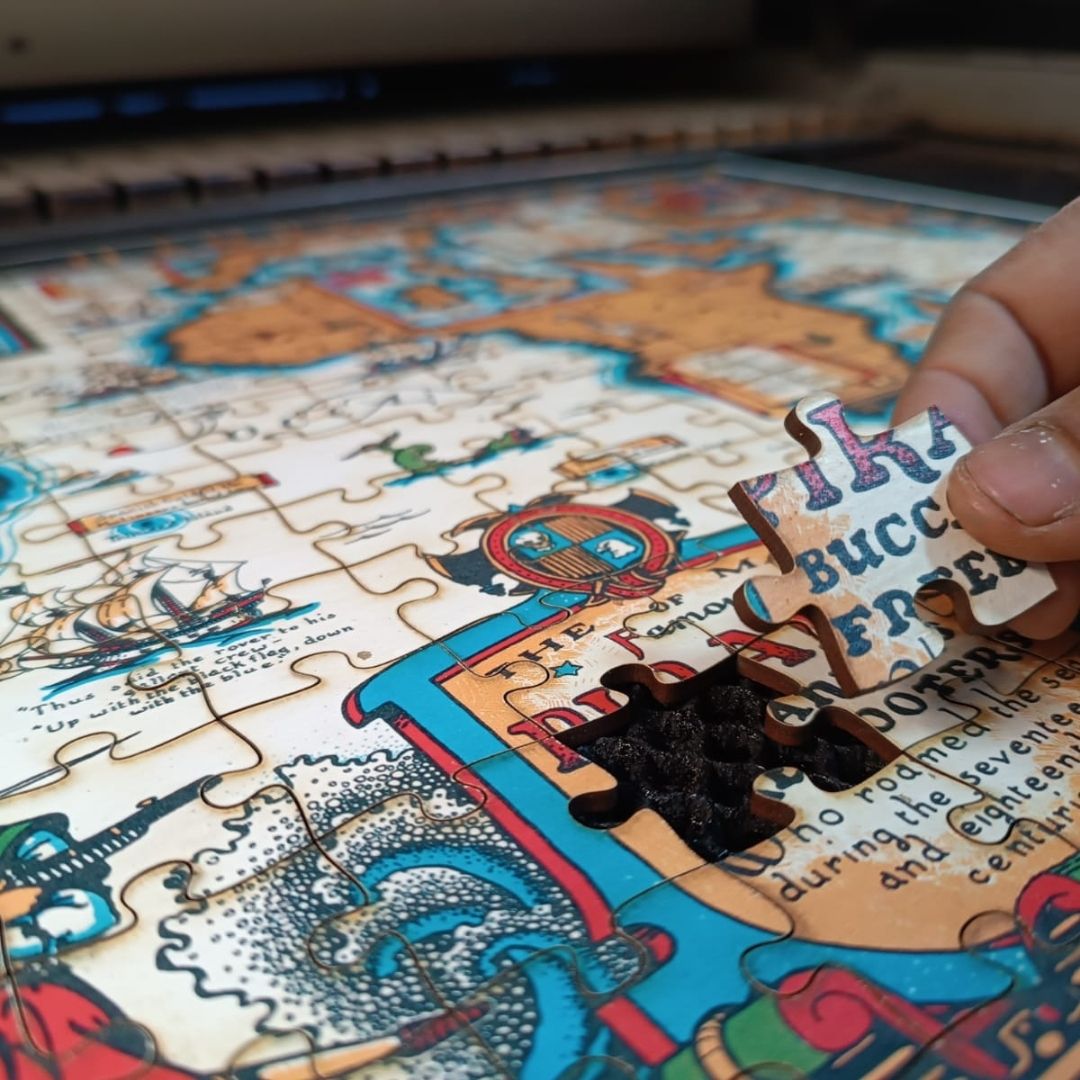
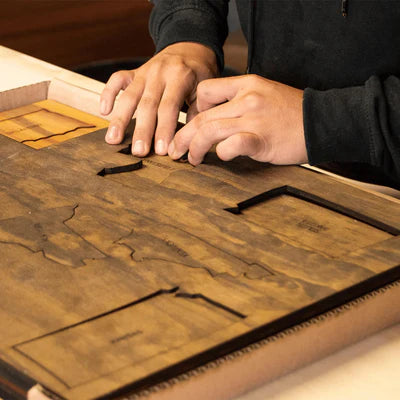
Experience the satisfying click of perfectly interlocking pieces. Our state-of-the-art laser cutting ensures precise fit and a smooth, seamless puzzle-solving experience. The perfect upgrade from cardboard without breaking the bank.
- Natural Laser Residue: A small amount of harmless black residue from the laser cutting process may be present. Simply wipe it away with a damp cloth.
- Hand-Finished Details: Each puzzle board, each wooden box are all carefully hand-stained, painted, and glued.
Satisfaction Guaranteed:
Satisfaction Guaranteed:
We are confident in the quality of our puzzles. If you are not completely satisfied, we offer a full refund or exchange.
PLEASE NOTE:
Each puzzle is crafted to make the most of your chosen size. Artwork may be subtly adjusted to meet our material and production standards while honoring the original work. Planning to frame yours? Email info@whatawoodwork.com for final measurements.
Couldn't load pickup availability
In stock
 PRODUCT DESCRIPTION
Horikiri Iris Garden — Wooden Jigsaw Puzzle
In 1857, Hiroshige put the flowers in front of the people. Not beside them, not framed by them — in front, filling the foreground so completely that the visitors who came to see those irises are barely visible in the distance. It was a compositional choice that upended how Japanese artists used space, and it went on to unsettle painters in Paris who had never heard of Horikiri.
📖 The Story Behind This Piece
Published in the intercalary fifth month of 1857, "Horikiri Iris Garden" is the 64th view in Hiroshige's "One Hundred Famous Views of Edo." The Horikiri district in what is now Katsushika Ward, Tokyo, was a marshy stretch of land cultivated specifically for hanashōbu, the Japanese iris, and during bloom season it pulled crowds from across Edo. Hiroshige doesn't show you the crowd. He shows you what they came to see, pressed so close to the picture plane that the petals and stems block nearly everything behind them. The humans are afterthoughts at the far edge of the composition.
Hiroshige made a structural decision here that most artists of his era wouldn't have risked. Placing large foreground objects between the viewer and the scene meant accepting that the viewer would feel slightly obstructed, slightly inside the image rather than outside looking in. That discomfort was the point. European Post-Impressionists, including Monet, studied how he did it. The flattened depth, the radical cropping, the color used not to describe light but to build sensation — those ideas moved west and didn't stop moving.
During assembly, the iris section in the lower half will occupy more sorting time than any other part. The blooms share a narrow range of purple-blue, but Hiroshige's color gradations are precise enough that UV printing on wood catches distinctions that look nearly identical on a screen. The ink sits in the wood grain rather than on top of a laminate layer, so the tonal shifts between petal and shadow read with a quiet depth that a paper print can't hold. You'll find yourself separating pieces by a shade difference of about three percent before you understand why it matters.
🎁 Who Gets One of These
A few specific people buy this one, and they're not hard to spot.
✔️ The ukiyo-e collector who owns prints but no puzzles — You know the "One Hundred Famous Views" series. Rebuilding view 64 by hand, petal by petal, is a different relationship with a work you already respect.
✔️ The Monet devotee who traces influence backward — Hiroshige's compositional logic fed directly into the work you love. Spending time with the source changes what you see in Giverny.
✔️ The person who has moved past cardboard — You've finished puzzles that curled at the edges and pieces that never quite clicked. The 3mm MDF core here doesn't do that. Neither does the box it comes in.
✔️ The gift-giver who needs something specific, not just good — A puzzle of a famous Hiroshige print from 1857, housed in a wooden keepsake box, is a thing with a story attached. It explains itself.
✔️ The museum member who buys from the gift shop thoughtfully — You've stood in front of ukiyo-e prints behind glass. Spending a few evenings with one spread across a table is not the same experience, and you know it.
Works especially well as a gift for spring birthdays, wedding anniversaries, and art-focused housewarmings. The iris bloom connection makes spring timing feel considered rather than coincidental.
🧩 Puzzle Specifications
✔️ Precision laser-cut wooden pieces
✔️ 3mm MDF core — rigid, warp-resistant, built to last
✔️ UV printing directly on wood — no paper laminate, no peeling
✔️ Traditional grid-cut design
✔️ Sizes: 15"x23", 18"x24", 23"x31"
✔️ Piece counts: 300–1000
✔️ Handcrafted wooden keepsake box included
✔️ Made to order — ships in 3–4 weeks
💎 Why This Puzzle Lasts
Most wooden puzzle makers charge $300 to $500. The craft justifies it. We arrive at a different number through direct manufacturing, no wholesale chain, and zero warehouse inventory. Same materials, no markup built in for a middleman who never touched the puzzle.
The 3mm MDF core stays flat. Cardboard expands and contracts with humidity, which is why old cardboard puzzles stop fitting together cleanly. MDF doesn't move that way. Pieces cut in 2024 fit the same way in 2044. UV printing bonds ink directly to the wood surface rather than to a paper layer glued on top, which means no peeling at the edges and no fading from light exposure. The color Hiroshige put on this image stays the color Hiroshige put on this image.
The traditional grid cut means every piece has a clear orientation and a satisfying mechanical click when it seats correctly. No gimmick shapes to second-guess, no ambiguous fit. When you're done, the image goes into a handcrafted wooden box sized for it — not a cardboard sleeve, not shrink wrap. The box is part of the object. Made to order means no pre-built inventory sitting in a warehouse. Your puzzle is cut after you order it, which also means nothing is gathering shelf dust waiting to be yours.