
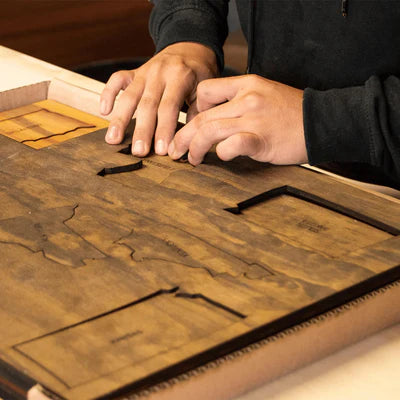


Haeckel Hummingbirds — Art Forms in Nature Plate 99 Wooden Puzzle
Haeckel Hummingbirds — Art Forms in Nature Plate 99 Wooden Puzzle
- Regular price
- Price: $115.00
- Regular price
- List Price: $0.00
- Sale price
- Price: $115.00
- Unit price
- per
Key Features:
Key Features:
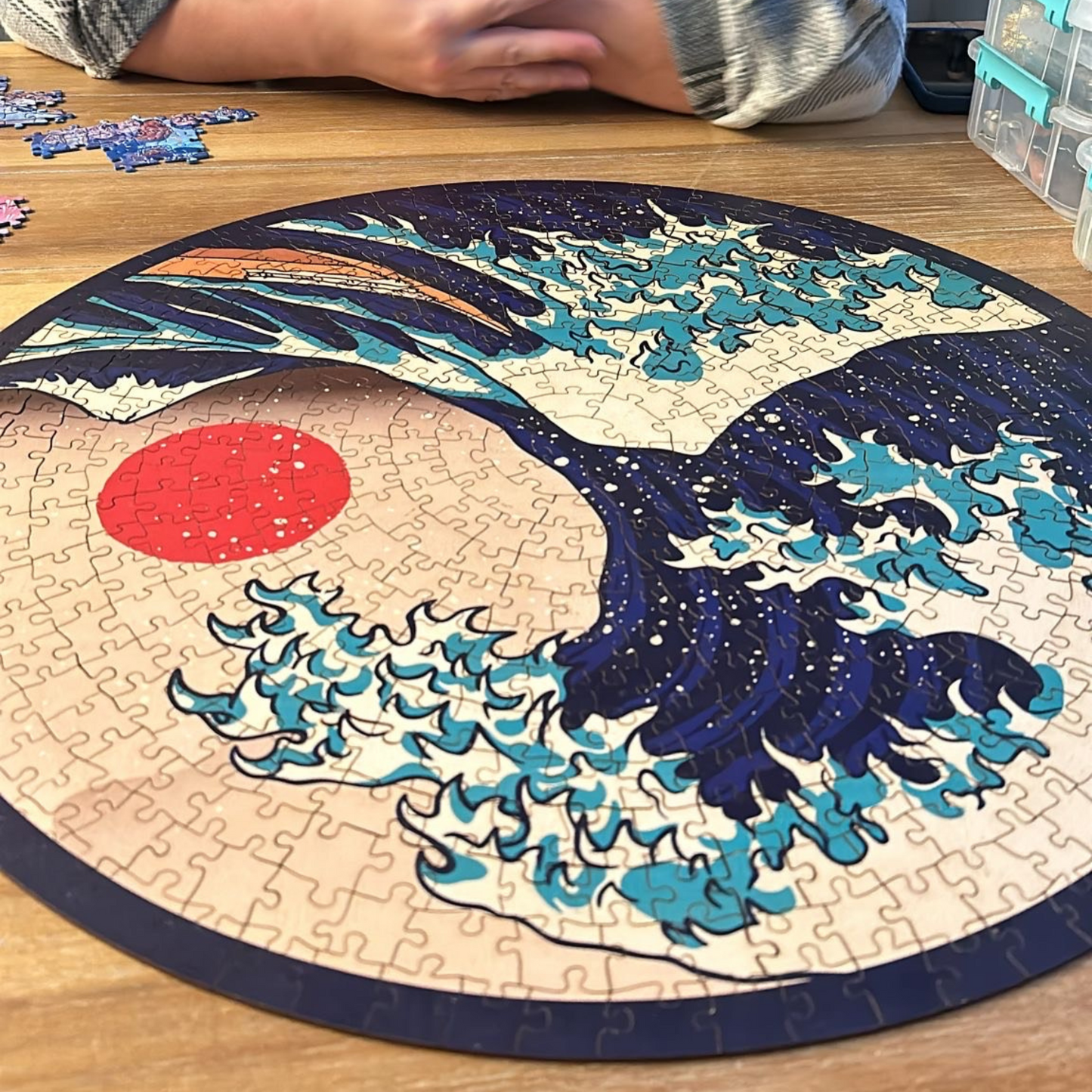
- Premium Quality: Crafted from durable 3mm (.14in) composite wood board for lasting enjoyment.
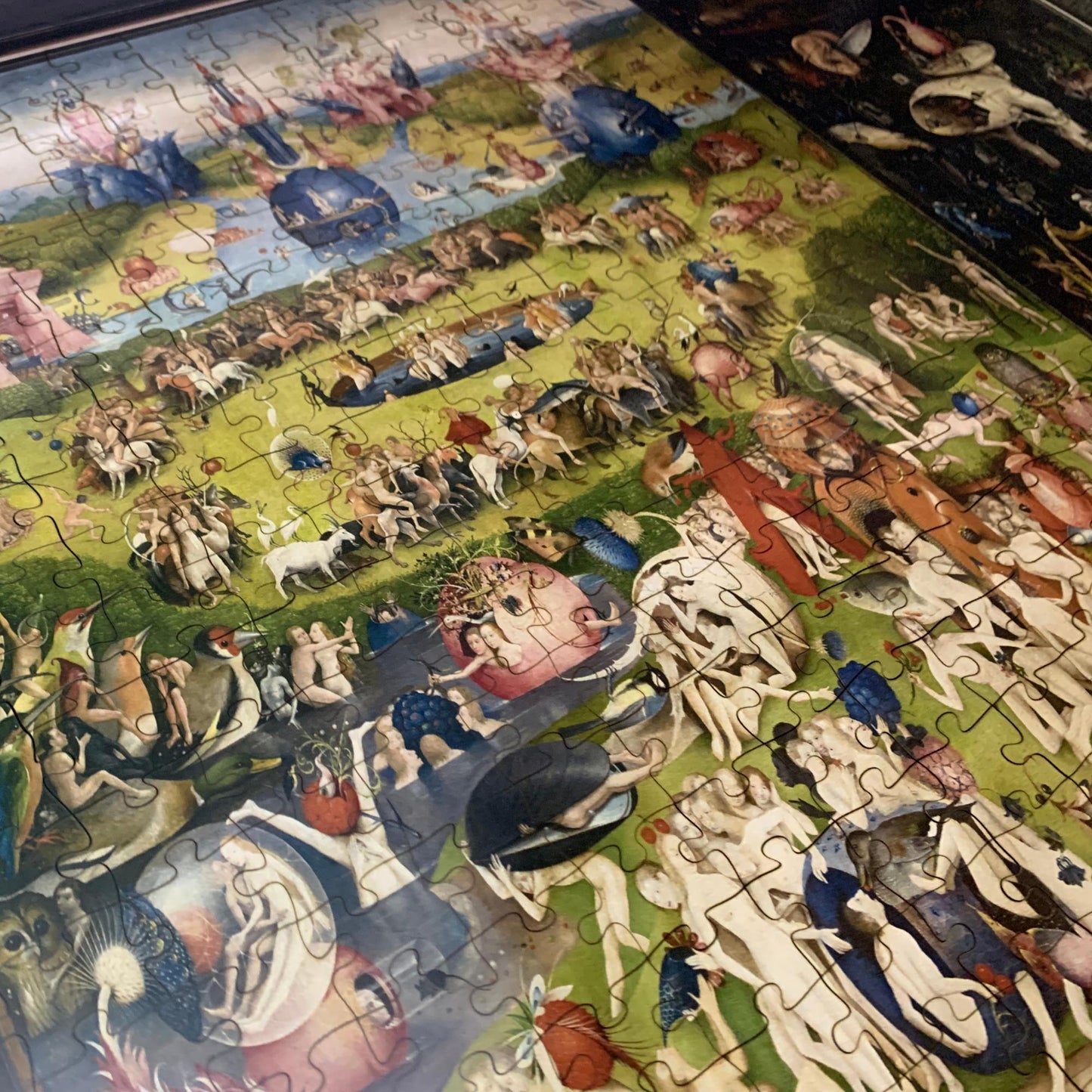
- Vibrant Imagery: High-resolution UV printing directly on the wood—no paper laminate—for stunning detail and vibrant colors.
- Eco-Conscious: Made with environmentally friendly materials.
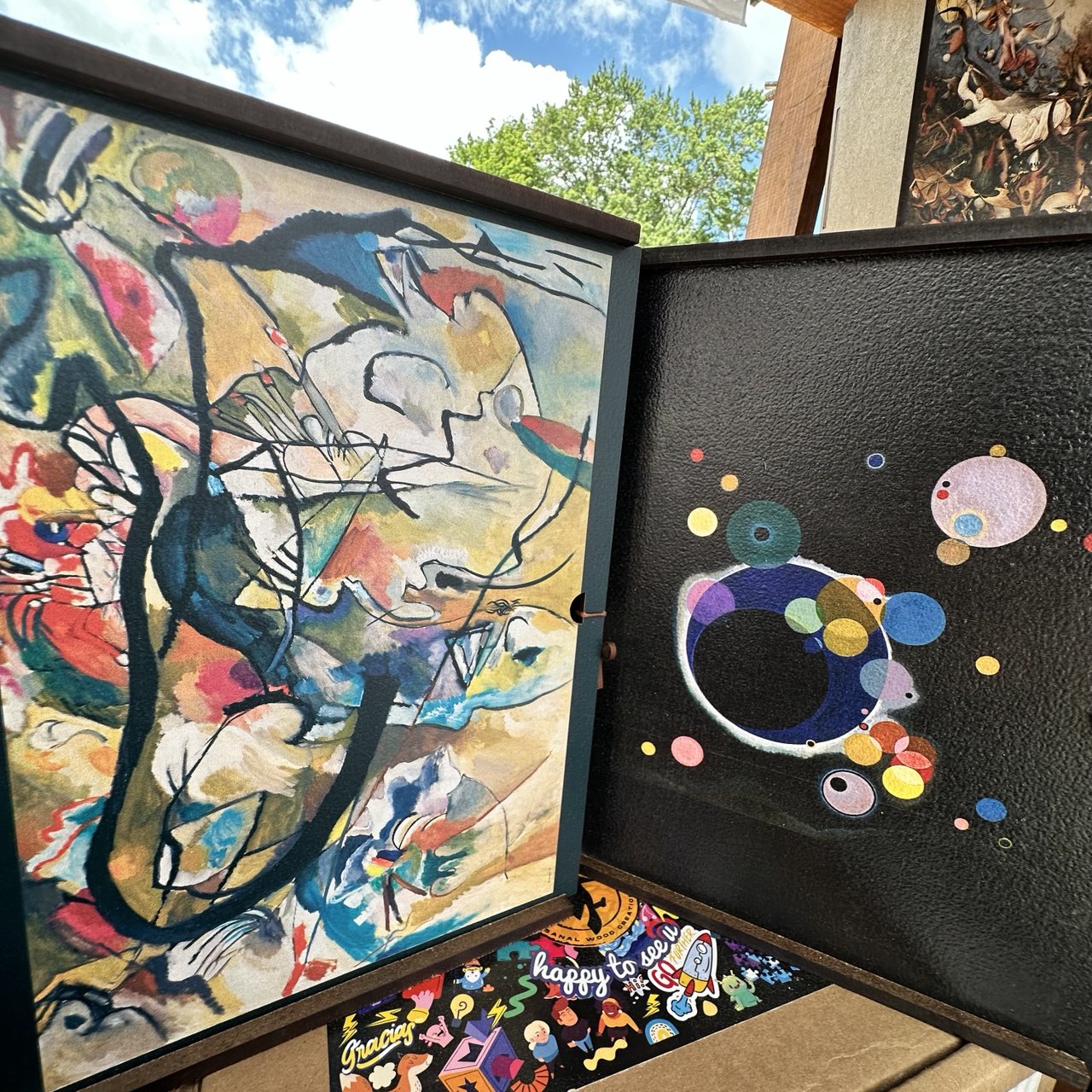
- Heirloom Keepsake: Your puzzle arrives beautifully packaged in a handcrafted wooden box, perfect for gifting or storing your masterpiece.
Craftsmanship and Care:
Craftsmanship and Care:
Experience the satisfying click of perfectly interlocking pieces. Our state-of-the-art laser cutting ensures precise fit and a smooth, seamless puzzle-solving experience. The perfect upgrade from cardboard without breaking the bank.
- Natural Laser Residue: A small amount of harmless black residue from the laser cutting process may be present. Simply wipe it away with a damp cloth.
- Hand-Finished Details: Each puzzle board, each wooden box are all carefully hand-stained, painted, and glued.
Satisfaction Guaranteed:
Satisfaction Guaranteed:
We are confident in the quality of our puzzles. If you are not completely satisfied, we offer a full refund or exchange.
PLEASE NOTE:
Each puzzle is crafted to make the most of your chosen size. Artwork may be subtly adjusted to meet our material and production standards while honoring the original work. Planning to frame yours? Email info@whatawoodwork.com for final measurements.
Couldn't load pickup availability
In stock
 PRODUCT DESCRIPTION
A Hummingbird Wooden Jigsaw Puzzle: Haeckel spent forty years arguing that biology and beauty were the same subject. Plate 99 is where most people finally believe him.
Haeckel never saw most of these birds alive. He worked from museum specimens, pressed skins, and field notes sent by naturalists across three continents. The sword-billed hummingbird in Plate 99 has a beak longer than its own body. He drew it anyway with the same precision he'd give a mathematical proof. The lithograph came out in 1904. The science held up. The art aged even better.
📖 The Story Behind This Piece
Plate 99 of Kunstformen der Natur arranges twelve hummingbird species into a composition that reads more like a jeweler's display than a field guide. Published in Leipzig in 1904, the plate was produced as a lithograph with engraver Adolf Giltsch, who translated Haeckel's drawings into print. The species range from the ruby-throated hummingbird, found along the eastern seaboard of North America, to the sword-billed hummingbird of the Andes, whose bill is the only one in the world longer than its skull. Haeckel didn't group them by geography or taxonomy. He grouped them by visual rhythm.
Haeckel was, first, a biologist. He coined the word "ecology" and spent years cataloguing radiolarians — single-celled ocean organisms — with the same devotion most people reserve for major life decisions. What drove Kunstformen der Natur was a conviction that biological form and aesthetic form were the same thing. He wasn't illustrating nature. He was arguing that evolution had always been an artist. The hummingbirds are his evidence.
During assembly, the mid-section of the plate is where the image gets genuinely difficult. Six birds overlap at the center, their iridescent throat patches rendered in deep reds and greens that shift against each other with almost no edge contrast. On a paper print, those patches flatten. On wood with UV printing, the ink sits directly in the grain, giving each color a slight depth that makes adjacent pieces read differently depending on how the light catches them. Sorting the throat patches from the wing feathers is a real problem. Haeckel made it that way on purpose.
🎁 Who Gets One of These
A few kinds of people end up with this one.
✔️ The natural history collector who has Haeckel prints on the wall already — You know the radiolarian plates, the jellyfish, the sea anemones. The hummingbird plate is the one people always stop at in the book. Now it's three-dimensional.
✔️ The ornithologist or serious birder — Twelve species, including the sword-billed and ruby-throated, rendered at a scale where you can study the bill morphology while you sort pieces. A different kind of field guide.
✔️ The person who studied Art Nouveau in school and actually retained it — Haeckel's compositions fed directly into Mucha, Gallé, and the entire decorative arts movement of that decade. The symmetry in this plate isn't decorative instinct. It's a formal argument.
✔️ The gift-giver who's done giving things that disappear — Books get read and shelved. Candles burn down. A handcrafted wooden puzzle of a 120-year-old lithograph ends up framed or kept in its box on a desk indefinitely.
✔️ The parent or grandparent who wants something to build with someone else — The center of this image is genuinely hard. The outer birds are easier. It distributes naturally across two people working toward the middle.
Works well for birthdays for anyone who reads natural history or keeps binoculars by the window. Mother's Day if she grew up identifying birds. A strong anniversary gift when the person already owns art and doesn't need more objects.
🧩 Puzzle Specifications
✔️ Precision laser-cut wooden pieces
✔️ 3mm MDF core — rigid, warp-resistant, built to last
✔️ UV printing directly on wood — no paper laminate, no peeling
✔️ Traditional grid-cut design
✔️ Sizes: 15"x23", 18"x24", 23"x31"
✔️ Piece counts: 300–1000
✔️ Handcrafted wooden keepsake box included
✔️ Made to order — ships in 3–4 weeks
🧩 Why This Plate Works as a Puzzle
During assembly, the mid-section is where the image gets genuinely difficult. Six birds overlap at the center, their iridescent throat patches rendered in deep reds and greens that shift against each other with almost no edge contrast. Males often have a colorful gorget — small, stiff, highly reflective colored feathers on the throat and upper chest — that may look sooty black until a hummer turns its head to catch the sun and display the intense metallic spectral color. On a paper print, those patches flatten. On wood with UV printing, the ink sits directly in the grain, giving each color a slight depth that makes adjacent pieces read differently depending on how the light catches them. Sorting the throat patches from the wing feathers is a real problem. Haeckel made it that way on purpose.
💎 Why This Puzzle Lasts
Most wooden puzzle makers charge $300 to $500. The craft justifies it. WAWW gets to the same place differently: direct manufacturing, no wholesale chain, made to order only. Same materials. No markup layered in for a middleman who never touched the puzzle.
The core is 3mm MDF. Pick up a finished piece and you feel the difference from cardboard immediately — it has actual weight and holds flat. Cardboard warps with humidity; over years, the pieces stop fitting cleanly. MDF doesn't move. The puzzle you assemble now fits the same way in two decades. UV printing goes directly onto that wood surface, with no paper laminate between the ink and the material. There's nothing to peel, bubble, or yellow. The iridescent reds and greens in Haeckel's throat patches stay exactly as printed.
The laser cut follows a traditional grid pattern, which means every piece has a distinct shape and a clean snap. No ambiguous fits, no pieces that seem right until you're three rows past them. The wooden keepsake box is made to the puzzle's dimensions and finished to match. Most people don't throw it away. After the puzzle goes to a frame, the box stays on a shelf or a desk because it's a well-made object in its own right. And because every puzzle is made to order, nothing sits in a warehouse. Your order goes into production when you place it.