


1833 Leonid Meteor Storm by Weiß - Premium Wooden Puzzle
1833 Leonid Meteor Storm by Weiß - Premium Wooden Puzzle
- Regular price
- Price: $115.00
- Regular price
- List Price: $0.00
- Sale price
- Price: $115.00
- Unit price
- per
Key Features:
Key Features:
- Premium Quality: Crafted from durable 3mm (.14in) composite wood board for lasting enjoyment.
- Vibrant Imagery: High-resolution UV printing directly on the wood—no paper laminate—for stunning detail and vibrant colors.
- Eco-Conscious: Made with environmentally friendly materials.
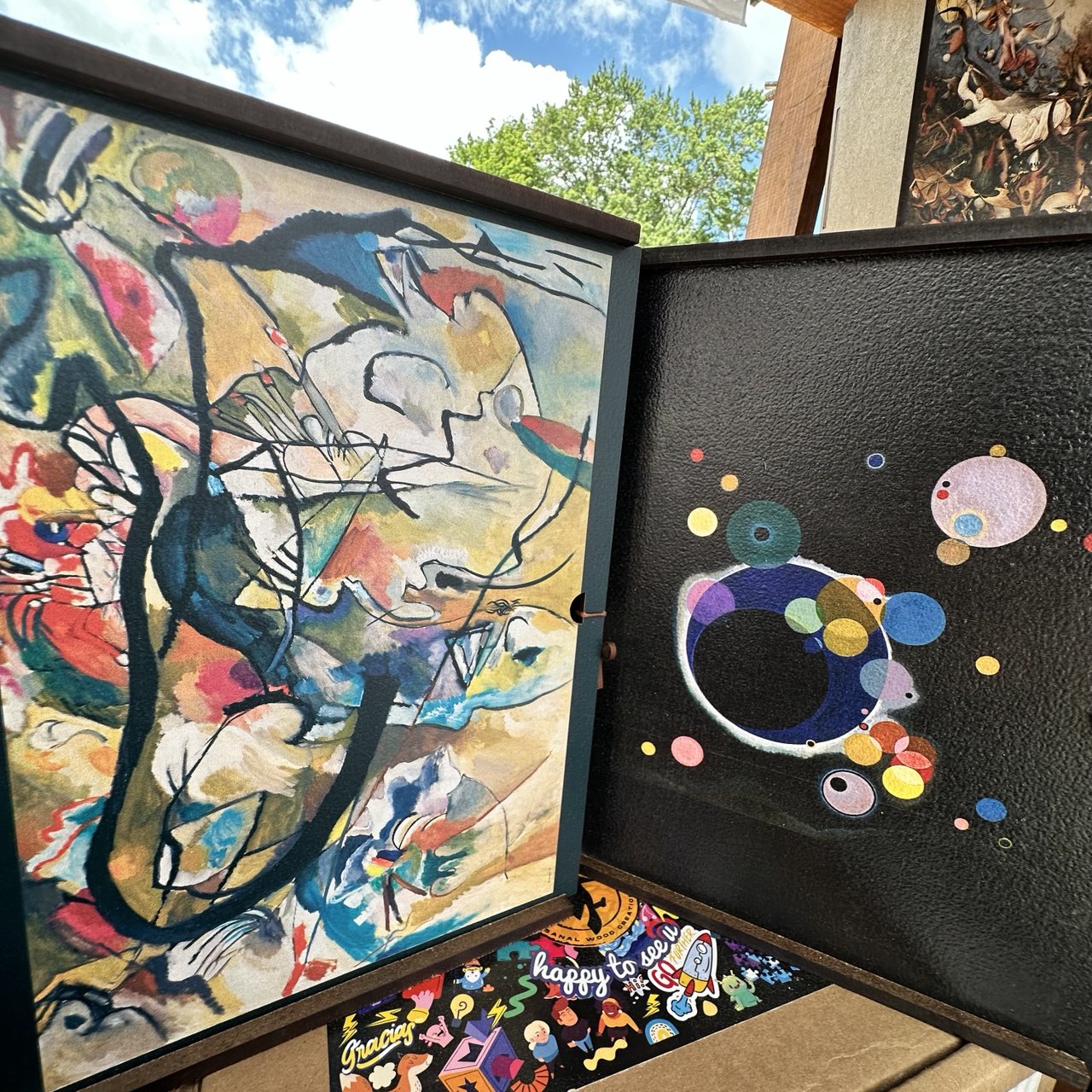
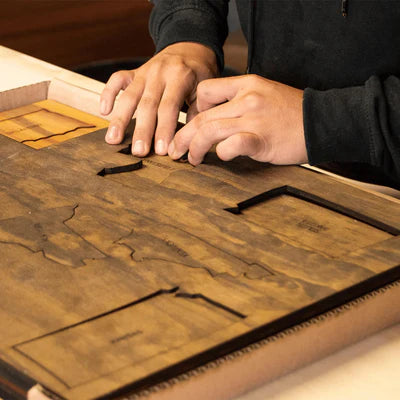
- Heirloom Keepsake: Your puzzle arrives beautifully packaged in a handcrafted wooden box, perfect for gifting or storing your masterpiece.
Craftsmanship and Care:
Craftsmanship and Care:
Experience the satisfying click of perfectly interlocking pieces. Our state-of-the-art laser cutting ensures precise fit and a smooth, seamless puzzle-solving experience. The perfect upgrade from cardboard without breaking the bank.
- Natural Laser Residue: A small amount of harmless black residue from the laser cutting process may be present. Simply wipe it away with a damp cloth.
- Hand-Finished Details: Each puzzle board, each wooden box are all carefully hand-stained, painted, and glued.
Satisfaction Guaranteed:
Satisfaction Guaranteed:
We are confident in the quality of our puzzles. If you are not completely satisfied, we offer a full refund or exchange.
PLEASE NOTE:
Each puzzle is crafted to make the most of your chosen size. Artwork may be subtly adjusted to meet our material and production standards while honoring the original work. Planning to frame yours? Email info@whatawoodwork.com for final measurements.
Couldn't load pickup availability
In stock
 PRODUCT DESCRIPTION
Leonid Meteor Storm: On the night of November 12–13, 1833, the sky over North America produced between 50,000 and 150,000 meteors per hour. People woke their neighbors. Some thought it was the end of the world.
What it actually was: the moment meteor science began. Denison Olmsted traced every streak back to a single point in Leo, and for the first time, humanity understood where shooting stars come from.
📖 The Story Behind This Piece
Edmund Weiß made this woodcut in 1888, fifty-five years after the storm it documents. He wasn't working from memory or imagination — he was working from scientific records and eyewitness accounts gathered across decades, and he knew exactly what he was trying to do: give a mass audience a visual vocabulary for cosmic phenomena they'd never be able to see for themselves.
Weiß wasn't a freelance illustrator hired to make science look pretty. He was director of the Vienna Observatory. The Bilderatlas der Sternenwelt — Atlas of the Starry World — was his own scientific publication, and he treated visualization as part of the scientific work, not decoration added after.
The landscape below the storm is Niagara Falls — a deliberate choice, and not only his. By 1888, placing Niagara beneath a meteor storm had become a recognized visual convention: illustrators across multiple publications had reached for the same landmark independently, because it solved the same problem. Weiß needed something large enough to feel humbled by what was above it, and Niagara was the one American landmark that already meant enormous. He wasn't being unoriginal. He was using the shared visual language of his moment.
The sky in this image is almost entirely dark. When you're sorting pieces in the early stages, you'll spend a long time working through near-identical blacks and deep grays, and then you'll start to notice that they aren't identical at all — Weiß drew the darkness in layers, with faint cross-hatching that only becomes visible once the surrounding pieces lock in. UV printing directly onto wood preserves those fine engraved lines at a fidelity that paper laminate can't hold. The detail was always there. Most reproductions just couldn't show it.
🎁 Who Gets One of These
A few people who tend to end up with this one:
✔️ The amateur astronomer with a telescope in the garage — You know what a radiant point is, and you know why 1833 matters. Weiß got the geometry right.
✔️ The person who studies 19th-century scientific illustration — The Bilderatlas sits in that specific window when scientific publishing and fine engraving were the same craft. Worth studying at puzzle scale.
✔️ The history teacher who makes things tangible — November 1833 is in a lot of curricula. A framed version of this on the classroom wall is a different kind of primary source.
✔️ The collector who already has star maps on the walls — Star maps are static. A storm is an event. The two don't compete; they have a conversation.
✔️ The gift-giver who needs something for someone impossible to shop for — If they care about science history, or astronomy, or dramatic Victorian engraving, this lands. If they care about all three, you're done looking.
Father's Day and milestone birthdays are the obvious occasions. A gift that references a specific historical night tends to feel less generic than one that doesn't.
🧩 Puzzle Specifications
✔️ Precision laser-cut wooden pieces
✔️ 3mm MDF core — rigid, warp-resistant, built to last
✔️ UV printing directly on wood — no paper laminate, no peeling
✔️ Traditional grid-cut design
✔️ Sizes: 15"x23", 18"x24", 23"x31"
✔️ Piece counts: 300–1000
✔️ Handcrafted wooden keepsake box included
✔️ Made to order — ships in 3–4 weeks
💎 Why This Puzzle Lasts
Most wooden puzzle makers charge $300–$500. The craft justifies it. We get there differently: direct manufacturing, no wholesale chain, made to order. Same materials. No markup. The gap between their price and ours isn't quality — it's overhead we don't carry.
The 3mm MDF core is the reason a piece you set down in 2025 clicks into the same spot cleanly in 2040. Cardboard compresses, absorbs humidity, warps. MDF doesn't. You feel the difference the first time you fit a piece — there's a solidity to the snap that cardboard puzzles never quite manage.
UV printing bonds the image directly into the wood surface, so there's no laminate layer to bubble or peel at the edges. For an engraving this fine — Weiß's cross-hatching runs at a density that most reproductions flatten out — the printing method matters. Every line he cut into the original block is present in the wood under your hands.
The traditional grid cut means pieces that interlock cleanly and release cleanly, without the forced difficulty of novelty shapes. The wooden keepsake box isn't packaging — it's where the puzzle lives between assemblies, or permanently, on a shelf. Made to order means no warehouse sitting on stock. Your puzzle is cut after you place the order, which is why the wait is three to four weeks and why the box arrives in the condition it's supposed to.
Weiß published this image in 1888 to help people understand something that had happened fifty-five years before that.