


Memento mori - 18th Century Premium Wooden Jigsaw Puzzle
Memento mori - 18th Century Premium Wooden Jigsaw Puzzle
- Regular price
- Price: $145.00
- Regular price
- List Price: $0.00
- Sale price
- Price: $145.00
- Unit price
- per
Key Features:
Key Features:
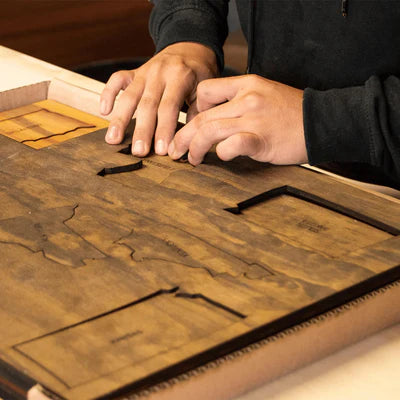
- Premium Quality: Crafted from durable 3mm (.14in) composite wood board for lasting enjoyment.
- Vibrant Imagery: High-resolution UV printing directly on the wood—no paper laminate—for stunning detail and vibrant colors.
- Eco-Conscious: Made with environmentally friendly materials.
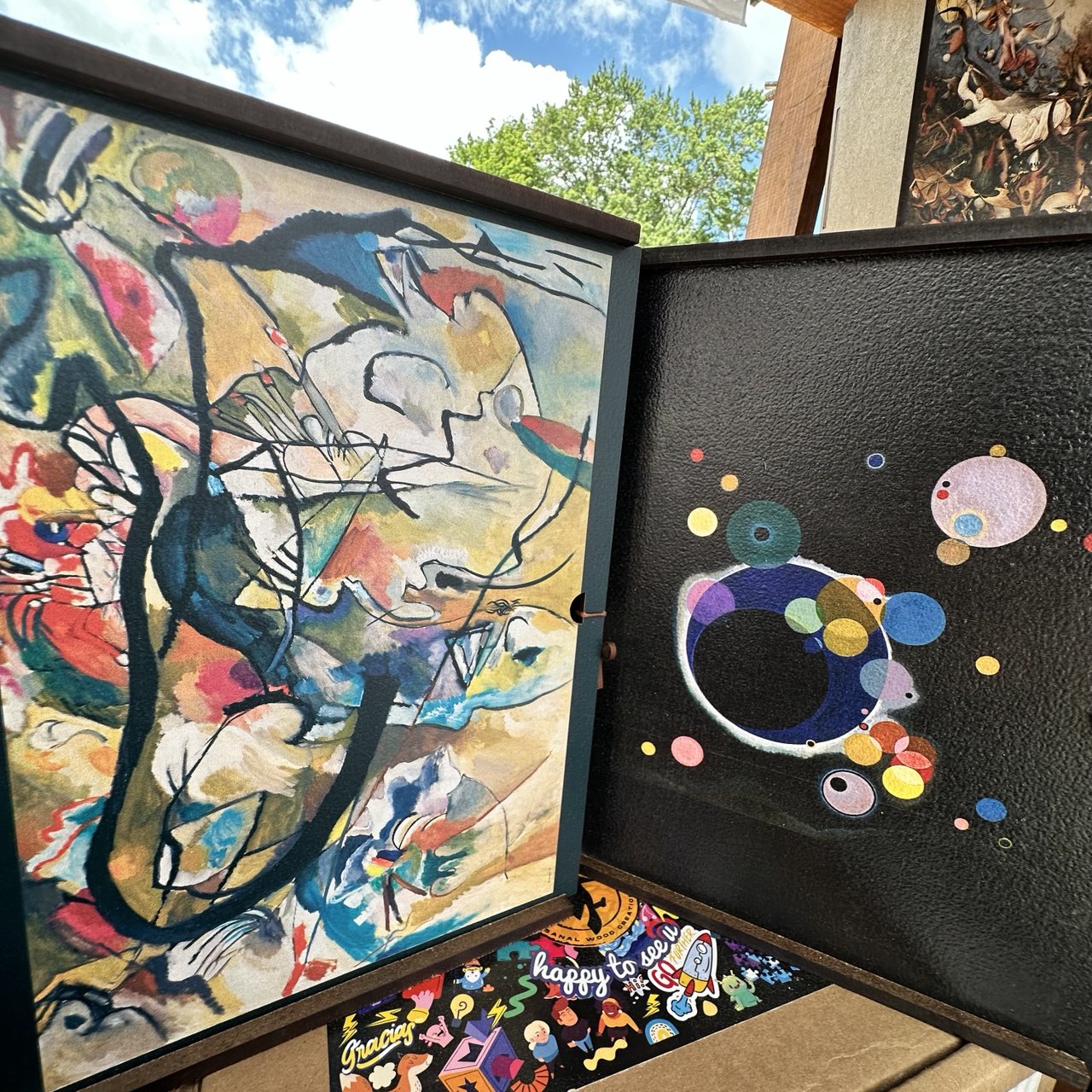
- Heirloom Keepsake: Your puzzle arrives beautifully packaged in a handcrafted wooden box, perfect for gifting or storing your masterpiece.
Craftsmanship and Care:
Craftsmanship and Care:
Experience the satisfying click of perfectly interlocking pieces. Our state-of-the-art laser cutting ensures precise fit and a smooth, seamless puzzle-solving experience. The perfect upgrade from cardboard without breaking the bank.
- Natural Laser Residue: A small amount of harmless black residue from the laser cutting process may be present. Simply wipe it away with a damp cloth.
- Hand-Finished Details: Each puzzle board, each wooden box are all carefully hand-stained, painted, and glued.
Satisfaction Guaranteed:
Satisfaction Guaranteed:
We are confident in the quality of our puzzles. If you are not completely satisfied, we offer a full refund or exchange.
PLEASE NOTE:
Each puzzle is crafted to make the most of your chosen size. Artwork may be subtly adjusted to meet our material and production standards while honoring the original work. Planning to frame yours? Email info@whatawoodwork.com for final measurements.
Couldn't load pickup availability
In stock
 PRODUCT DESCRIPTION
Memento Mori — "Remember to die" Wooden Jigsaw Puzzle
The face is split down the center. The left side is a living woman, rendered with care — her skin soft, her eye open. The right side is a skull. One snake connects them both, coiled around an apple. A guild workshop in Stary Sącz, Poland painted this in the 18th century, and nobody recorded the painter's name. The inscription they did record: Hodie mihi, cras tibi. Today me, tomorrow you.
📖 The Story Behind This Piece
Painted in the 1700s in Stary Sącz, a small town in southern Poland, this oil painting now lives in the District Museum in Nowy Sącz. The structure is tripartite and deliberate. At the top, the Expulsion from Eden on one side, the Crucifixion on the other. Below both, the Vanitas allegory: a clock, a guttering candle, scattered jewelry, and that split face. The composition doesn't leave you room to look at one symbol without being redirected to another. Every object in the lower panel is there to cancel the pleasure suggested by the objects beside it.
A local guild workshop made this, which means it wasn't a commission by a noble patron or a church hierarchy. Guild workshops made art for community use, religious instruction, and moral emphasis. Anonymity was built into the work. No single name, no signature ego. The painters who built this image were working inside a tradition that considered the message more important than the messenger — and the message here is unambiguous enough that it didn't need a famous hand to carry it.
When you're assembling the lower Vanitas section, the split face arrives in pieces. You'll build the living side first and think the portrait is complete, then realize the skull section belongs directly beside it with no gap or border between them. UV printing on bare wood deepens the ochres and bone-whites in a way a screen flattens out — the aged cracking of the paint surface, the dim candlelight in the background, the dull sheen of the jewelry, all read differently when they sit on wood grain rather than backlit pixels. The clock face is about two inches across in the assembled puzzle and still legible.
🎁 Who Gets One of These
A few specific kinds of people find this one and don't let go of it.
✔️ The Baroque collector who owns prints but not puzzles — You've spent time with Vanitas still lifes in Amsterdam and Vienna. Reassembling one from a Polish guild workshop, piece by piece, is a different kind of looking.
✔️ The philosophy or classics professor — The Latin inscription Hodie mihi, cras tibi has a long history before this painting. Holding a piece with half a skull on it while tracing that lineage is its own seminar.
✔️ The person who is done with cardboard — You've finished a few puzzles and kept none of them. The box here is wood. The pieces don't bend. Something about this one stays on the shelf.
✔️ The museum member who wants to own a piece of the collection — The original hangs in Nowy Sącz. Getting there takes some planning. Getting this doesn't.
✔️ The thoughtful gift-giver facing a hard occasion — Retirement, a significant birthday, the year someone loses a parent. Memento mori isn't a morbid gift. It's an honest one, from someone who didn't reach for something easy.
Works well as a retirement gift — the inscription lands differently at that threshold. Also a considered choice for a significant birthday or for someone who collects religious or philosophical art and has run out of wall space.
🧩 Puzzle Specifications
✔️ Precision laser-cut wooden pieces
✔️ 3mm MDF core — rigid, warp-resistant, built to last
✔️ UV printing directly on wood — no paper laminate, no peeling
✔️ Traditional grid-cut design
✔️ Handcrafted wooden keepsake box included
✔️ Made to order — ships in 3–4 weeks
💎 Why This Puzzle Lasts
Most wooden puzzle makers charge $300–$500. The craft justifies it. WAWW gets to the same place differently: direct manufacturing, no wholesale chain, made to order only. Same materials. No markup layered in for a middleman.
The 3mm MDF core is what keeps pieces clicking cleanly long after cardboard has gone soft and imprecise. You can feel the difference in the first handful — there's no flex, no give at the edges. A cardboard puzzle assembled ten years from now has lost something. An MDF puzzle hasn't. UV printing fires ink directly into the wood surface rather than bonding a paper laminate on top. No laminate means nothing to peel, bubble, or fog. The aged palette of this painting — its dark grounds, its bone whites, its dull golds — stays exactly as printed.
Traditional grid cutting means the pieces connect the way puzzle pieces are supposed to connect: with a click you can feel. No gimmick shapes, no forced whimsy. When a piece seats, it seats. The keepsake box is solid wood, not the cardboard tube some makers ship in — after the puzzle is done, the box holds the pieces, or it holds something else entirely. People keep them. Made to order means your puzzle doesn't exist until you buy it. No warehouse shelf, no old stock. It's cut and printed for you specifically, which is why the wait is three to four weeks.
🖼️ After You Finish It
Most people frame it. A painting this compositionally dense — the split face, the Eden scene above it, the skull and the clock side by side — reads better on a wall than on a table. Hodie mihi, cras tibi is the kind of image that generates a real conversation, not a polite one.