


Orchids by Ernst Haeckel - Premium Wooden Jigsaw Puzzle
Orchids by Ernst Haeckel - Premium Wooden Jigsaw Puzzle
- Regular price
- Price: $115.00
- Regular price
- List Price: $0.00
- Sale price
- Price: $115.00
- Unit price
- per
Key Features:
Key Features:
- Premium Quality: Crafted from durable 3mm (.14in) composite wood board for lasting enjoyment.
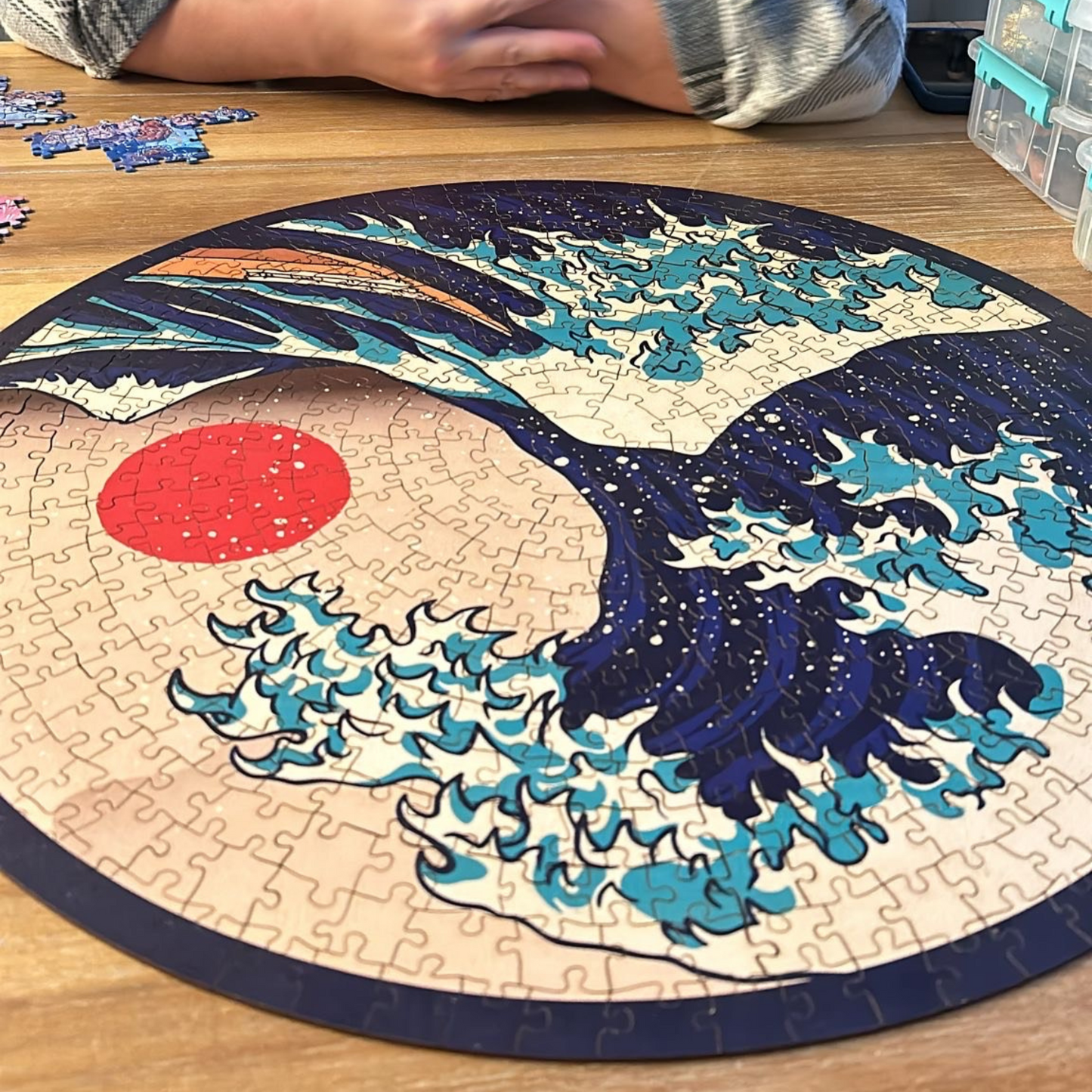
- Vibrant Imagery: High-resolution UV printing directly on the wood—no paper laminate—for stunning detail and vibrant colors.
- Eco-Conscious: Made with environmentally friendly materials.
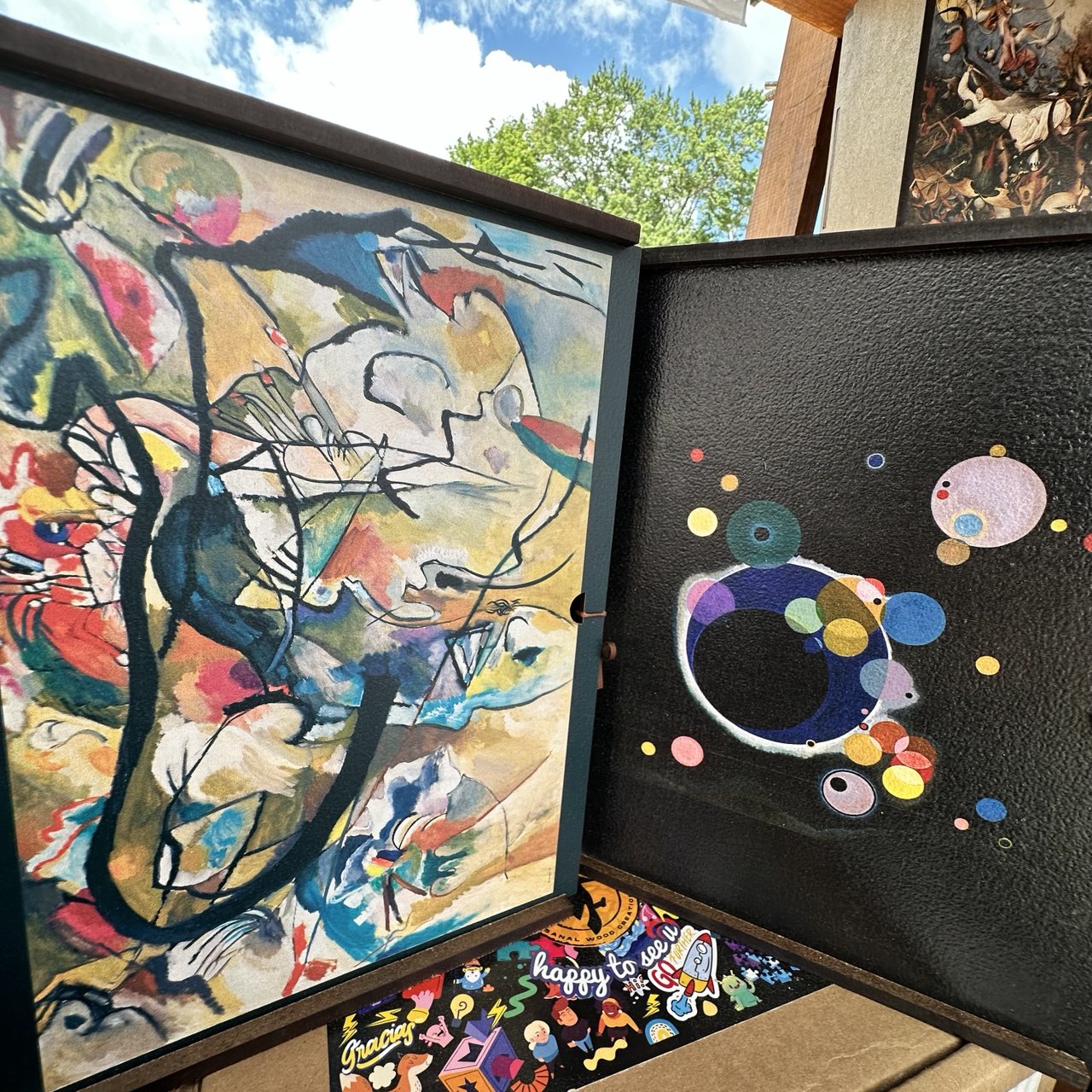
- Heirloom Keepsake: Your puzzle arrives beautifully packaged in a handcrafted wooden box, perfect for gifting or storing your masterpiece.
Craftsmanship and Care:
Craftsmanship and Care:
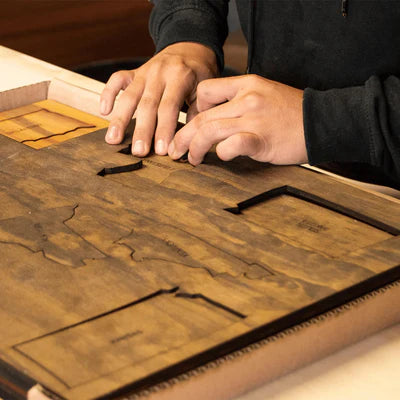
Experience the satisfying click of perfectly interlocking pieces. Our state-of-the-art laser cutting ensures precise fit and a smooth, seamless puzzle-solving experience. The perfect upgrade from cardboard without breaking the bank.
- Natural Laser Residue: A small amount of harmless black residue from the laser cutting process may be present. Simply wipe it away with a damp cloth.
- Hand-Finished Details: Each puzzle board, each wooden box are all carefully hand-stained, painted, and glued.
Satisfaction Guaranteed:
Satisfaction Guaranteed:
We are confident in the quality of our puzzles. If you are not completely satisfied, we offer a full refund or exchange.
PLEASE NOTE:
Each puzzle is crafted to make the most of your chosen size. Artwork may be subtly adjusted to meet our material and production standards while honoring the original work. Planning to frame yours? Email info@whatawoodwork.com for final measurements.
Couldn't load pickup availability
In stock
 PRODUCT DESCRIPTION
Orchidae — Wooden Jigsaw Puzzle
Haeckel published Plate 74 in 1904, and the orchids he drew weren't arranged for scientific accuracy alone. The composition is symmetrical in a way that nature never quite manages. He knew that. The symmetry was the argument: that biological forms follow the same organizing logic as art. Botanists disagreed. Art Nouveau designers didn't.
📖 The Story Behind This Piece
Plate 74 from Kunstformen der Natur appeared in the final installment of Haeckel's ten-year publication project, completed in 1904. The plate arranges multiple orchid species — including Odontoglossum naevium and Cattleya ballantiniana — into a radial composition that reads less like a botanical field record and more like architectural drafting. The color palette is restrained: deep greens, muted purples, the occasional ivory white. Not decorative restraint. Scientific restraint that happens to look beautiful.
Haeckel was a biologist first, but he was also a committed monist — he believed that matter, life, and consciousness were all expressions of the same underlying nature. That belief is what separates his illustrations from standard scientific plates of the era. He wasn't documenting specimens. He was making a philosophical argument in visual form: that the geometry of a living orchid and the geometry of a Gothic arch come from the same source.
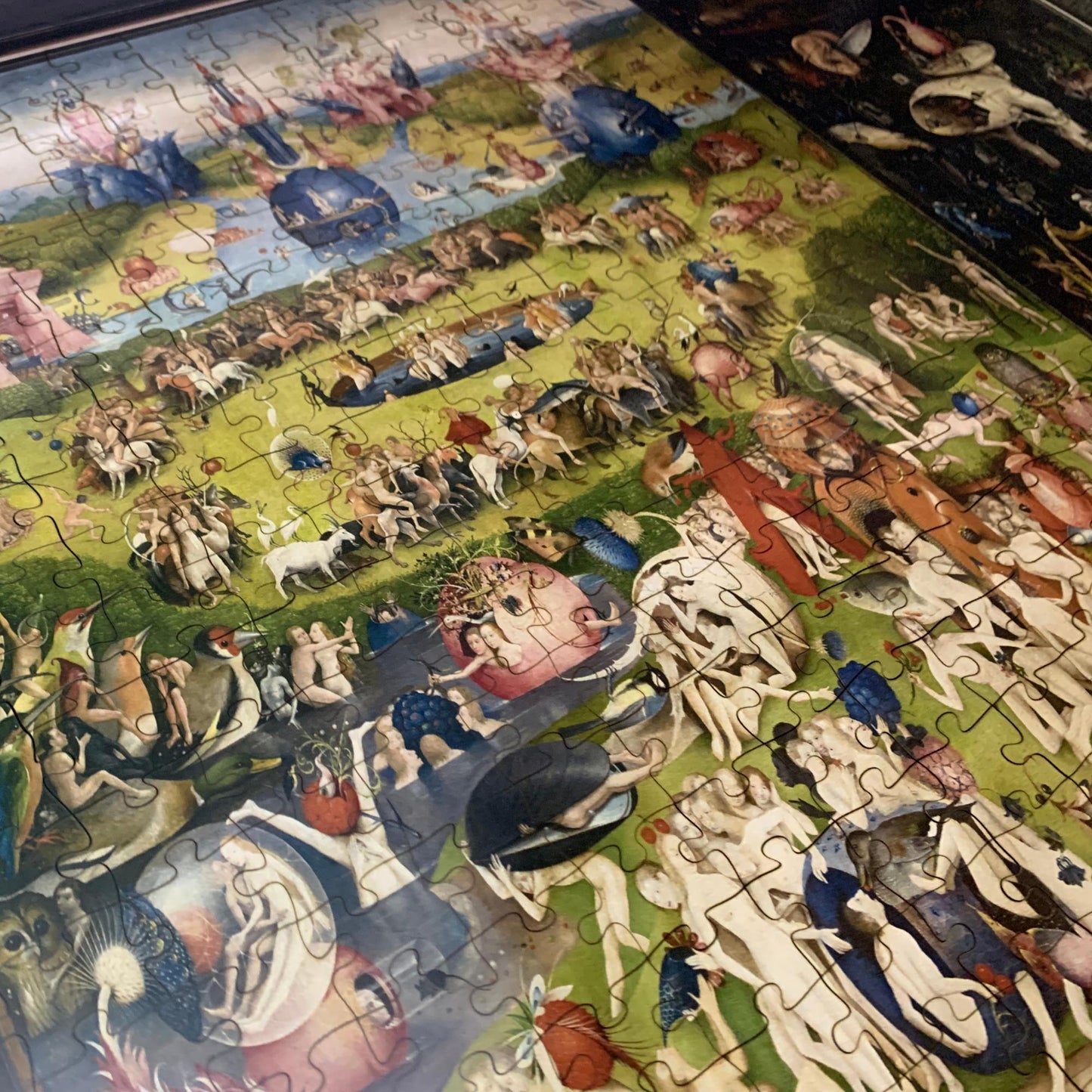
During assembly, the dark background reveals something that thumbnail images don't prepare you for. The laser cut runs through MDF that's been UV-printed directly on the wood surface, so the blacks in Haeckel's composition stay absolute — no paper layer to diffuse the contrast, no laminate sheen to flatten the detail. The fine linework separating each petal becomes visible as the piece count climbs and the flower centers start to cohere. That's when the biological precision of it lands differently than it does on a screen.
🎁 Who Gets One of These
A few specific people keep coming to mind when this plate comes up.
✔️ The botanist or biologist who also owns art — You've spent time with actual orchid specimens. Haeckel's rendering of Cattleya ballantiniana is precise enough to hold up to that familiarity, and strange enough to reward it.
✔️ The Art Nouveau collector — Haeckel's plates were source material for Mucha, for Gallé, for the movement's entire visual vocabulary. Owning one of the originals in puzzle form is closer to primary research than decoration.
✔️ The natural history museum member who shops the gift shop seriously — You already own the Audubon print. Plate 74 sits in a different tradition: German scientific illustration at its most formally ambitious.
✔️ The person who frames completed puzzles — At 23"x31", the 1000-piece version holds at that scale. Haeckel's composition was designed for a printed page of similar proportions. It fills a wall the way he intended it to fill a book.
✔️ The gift-giver who needs something with a real story behind it — Not "botanical illustration." A specific plate, from a specific philosophical project, published in 1904 by a biologist who thought orchids and Gothic cathedrals were made by the same logic.
Works well as a birthday gift for anyone in the natural sciences or design history. Strong fit for Mother's Day if she's the one with the orchid collection on the windowsill. The wooden keepsake box makes it present-ready without additional wrapping.
🧩 Puzzle Specifications
✔️ Precision laser-cut wooden pieces
✔️ 3mm MDF core — rigid, warp-resistant, built to last
✔️ UV printing directly on wood — no paper laminate, no peeling
✔️ Traditional grid-cut design
✔️ Sizes: 15"x23", 18"x24", 23"x31"
✔️ Piece counts: 300–1000
✔️ Handcrafted wooden keepsake box included
✔️ Made to order — ships in 3–4 weeks
💎 Why This Puzzle Lasts
Most wooden puzzle makers charge $300–$500. The craft justifies it. WAWW gets there differently: direct manufacturing, no wholesale chain, no retail markup, made to order in small runs. Same 3mm MDF core, same UV printing process. The saving is structural, not material.
The 3mm MDF core is what keeps pieces clicking cleanly years after the first solve. Cardboard compresses at the edges over time; MDF doesn't. The fit stays the same on the twentieth assembly as on the first. UV printing bonds color directly to the wood surface, so there's no paper laminate to bubble, peel, or yellow. Haeckel's blacks stay black. The fine linework in the orchid stems doesn't soften or blur with age.
The traditional grid cut means pieces have a satisfying, definite click when they seat — no ambiguity about whether a piece belongs somewhere. The wooden keepsake box that ships with every puzzle is built to the same standard as the puzzle itself; most people keep it on a shelf after the puzzle is framed. Each puzzle is made to order, which means there's no pre-built inventory waiting in a warehouse. The 3–4 week lead time is the cost of that. It also means your puzzle hasn't been sitting in a box for six months before it reaches you.