
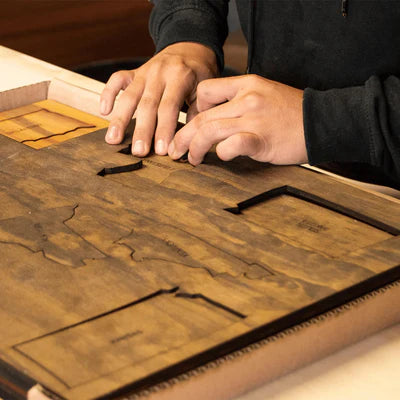


William Blake Wooden Puzzle — Urizen Beneath the Fallen Sun | Song of Los 1795
William Blake Wooden Puzzle — Urizen Beneath the Fallen Sun | Song of Los 1795
- Regular price
- Price: $115.00
- Regular price
- List Price: $0.00
- Sale price
- Price: $115.00
- Unit price
- per
Key Features:
Key Features:
- Premium Quality: Crafted from durable 3mm (.14in) composite wood board for lasting enjoyment.
- Vibrant Imagery: High-resolution UV printing directly on the wood—no paper laminate—for stunning detail and vibrant colors.
- Eco-Conscious: Made with environmentally friendly materials.
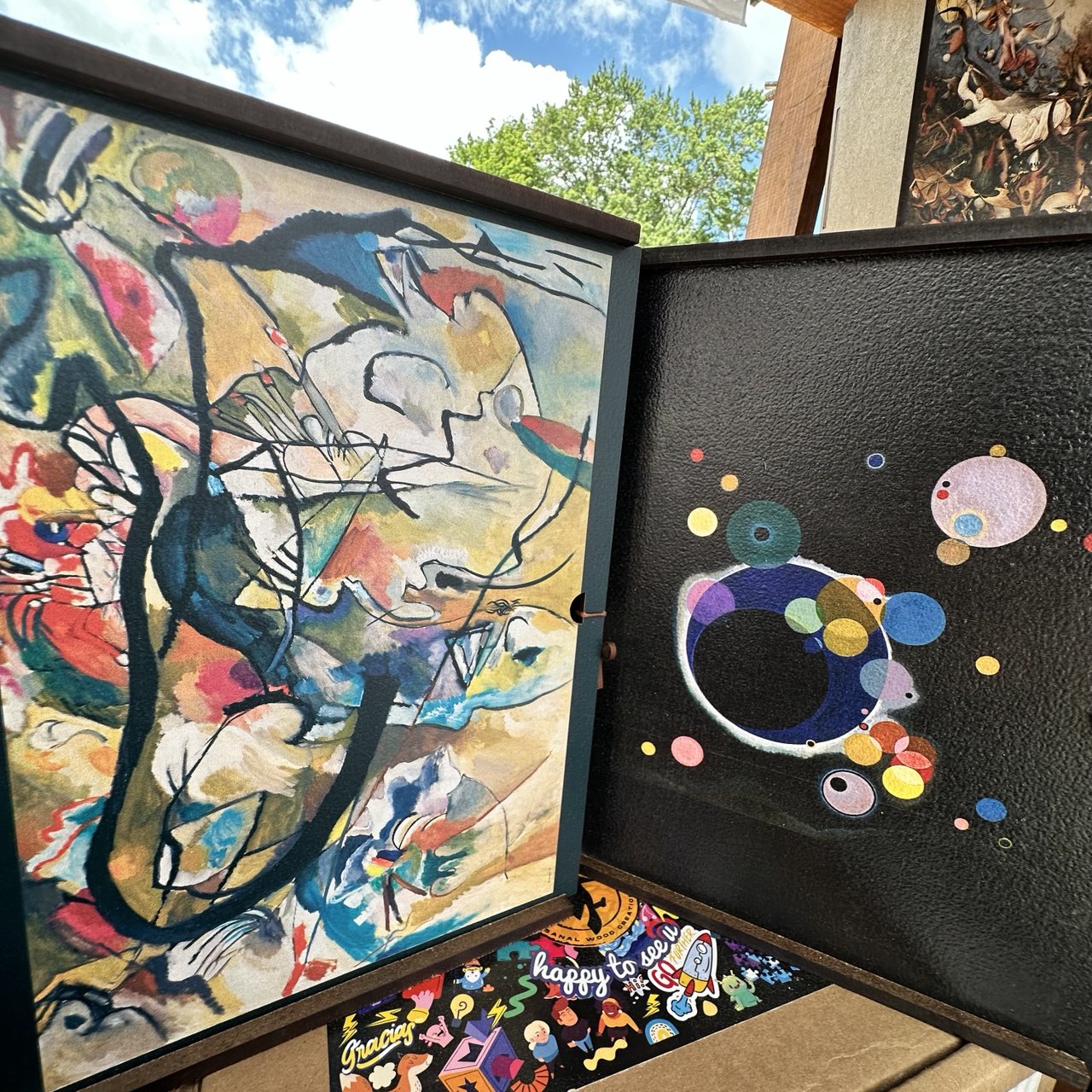
- Heirloom Keepsake: Your puzzle arrives beautifully packaged in a handcrafted wooden box, perfect for gifting or storing your masterpiece.
Craftsmanship and Care:
Craftsmanship and Care:
Experience the satisfying click of perfectly interlocking pieces. Our state-of-the-art laser cutting ensures precise fit and a smooth, seamless puzzle-solving experience. The perfect upgrade from cardboard without breaking the bank.
- Natural Laser Residue: A small amount of harmless black residue from the laser cutting process may be present. Simply wipe it away with a damp cloth.
- Hand-Finished Details: Each puzzle board, each wooden box are all carefully hand-stained, painted, and glued.
Satisfaction Guaranteed:
Satisfaction Guaranteed:
We are confident in the quality of our puzzles. If you are not completely satisfied, we offer a full refund or exchange.
PLEASE NOTE:
Each puzzle is crafted to make the most of your chosen size. Artwork may be subtly adjusted to meet our material and production standards while honoring the original work. Planning to frame yours? Email info@whatawoodwork.com for final measurements.
Couldn't load pickup availability
In stock
 PRODUCT DESCRIPTION
Only six copies of The Song of Los exist. Blake printed them himself in 1795 in Lambeth, one at a time, using a technique he invented. Discover his artwork in the form of a wooden jigsaw puzzle.
The robed figure kneeling before the darkened orb wasn't labeled — Blake left that deliberately open. Two centuries of scholars still disagree on whether it's Urizen, a priest, or something Blake never named at all.
📖 The Story Behind This Piece
Blake printed The Song of Los in 1795 as part of his Continental Prophecies, a series attacking the interlocking grip of religious doctrine and political power. The frontispiece known as Sconfitta — Italian for "Defeat" — shows a gowned figure collapsed in submission before a dark, opaque globe where the sun should be. The globe doesn't radiate. It absorbs. What you're looking at is Blake's argument that dogma doesn't illuminate — it occludes. The Library of Congress holds one of the six surviving copies in the Lessing J. Rosenwald Collection.
Blake never trusted institutions to carry his work. He hand-printed and hand-colored every copy himself using color-printed relief etching, a process he developed without a patron, without a publisher, and largely without an audience during his lifetime. The technique produces a painterly surface that sits somewhere between printing and painting — the kind of thing that doesn't reproduce cleanly in a book or on a screen. You have to see the original to understand what he was doing, or you have to build it piece by piece.
The dark orb at the center of Sconfitta is nearly monochromatic — brown-black, with just enough variation to keep it from going flat. In a digital image, that section reads as a simple dark circle. On a UV-printed wooden puzzle, the grain of the MDF surface breaks up under the ink in a way that makes the tonal variation visible. When you're sorting through pieces, you'll find yourself holding two that look identical until the light hits them at an angle and reveals that one has a faint warm edge. That moment is specific to Blake's original printing method, and specific to this medium.
🎁 Who Gets One of These
A few kinds of people reliably end up with this one.
✔️ The Blake reader who owns the Erdman edition — You've annotated the Continental Prophecies. Assembling Urizen's defeat from 500 interlocking pieces is a slower, stranger way to sit with the same argument.
✔️ The art history professor who teaches Romanticism — One of six surviving copies lives in the Rosenwald Collection. A faithful wooden reproduction of it on your office shelf is harder to explain than a poster, which is why it works.
✔️ The literary estate executor who needs a serious gift — For the scholar, writer, or collector who has every Blake print in a catalog but nothing you can actually do with your hands.
✔️ The museum member who has been to the Tate twice — You've seen Blake's originals behind glass. Building one at your kitchen table is a different relationship with the same image.
✔️ The philosophy reader who keeps returning to questions of perception and authority — Blake's darkened sun is a specific argument about what institutional power does to individual sight. Spending real time with that image tends to sharpen the argument.
Works well as a gift for graduation from an art history or English literature program, for a milestone birthday given to someone who collects deliberately, or for a significant anniversary with someone whose bookshelves already include Blake.
🧩 Puzzle Specifications
✔️ Precision laser-cut wooden pieces
✔️ 3mm MDF core — rigid, warp-resistant, built to last
✔️ UV printing directly on wood — no paper laminate, no peeling
✔️ Traditional grid-cut design
✔️ Sizes: 15"x23", 18"x24", 23"x31"
✔️ Piece counts: 300–1000
✔️ Handcrafted wooden keepsake box included
✔️ Made to order — ships in 3–4 weeks
💎 Why This Puzzle Lasts
Comparable wooden puzzle makers charge $300 to $500. The craft justifies that price. WAWW gets to $115–$170 through direct manufacturing and no wholesale chain. Same materials. No middleman markup.
The 3mm MDF core is rigid enough that pieces click into place with a resistance cardboard can't produce — and holds that resistance years from now, not just the first time through. UV printing goes directly onto the wood surface, no paper laminate between the ink and the substrate. Nothing peels, nothing fades, nothing separates. The image you assemble today will look the same in a decade.
The grid cut is traditional — no novelty shapes, no irregular edges for their own sake. Pieces interlock cleanly, which means the solving experience is governed by the image itself rather than the cut pattern. The wooden keepsake box ships as part of the object, not as packaging; most buyers keep it on a shelf after the puzzle is framed or stored. Every puzzle is made to order, which means no warehouse inventory and no version of this that sat in a box for eight months before it reached you. The 3–4 week production window is the cost of that.