


Ivan Bilibin Wooden Puzzle — Flight Over the Sea | Tale of Tsar Saltan 1904
Ivan Bilibin Wooden Puzzle — Flight Over the Sea | Tale of Tsar Saltan 1904
- Regular price
- Price: $115.00
- Regular price
- List Price: $0.00
- Sale price
- Price: $115.00
- Unit price
- per
Key Features:
Key Features:
- Premium Quality: Crafted from durable 3mm (.14in) composite wood board for lasting enjoyment.
- Vibrant Imagery: High-resolution UV printing directly on the wood—no paper laminate—for stunning detail and vibrant colors.
- Eco-Conscious: Made with environmentally friendly materials.
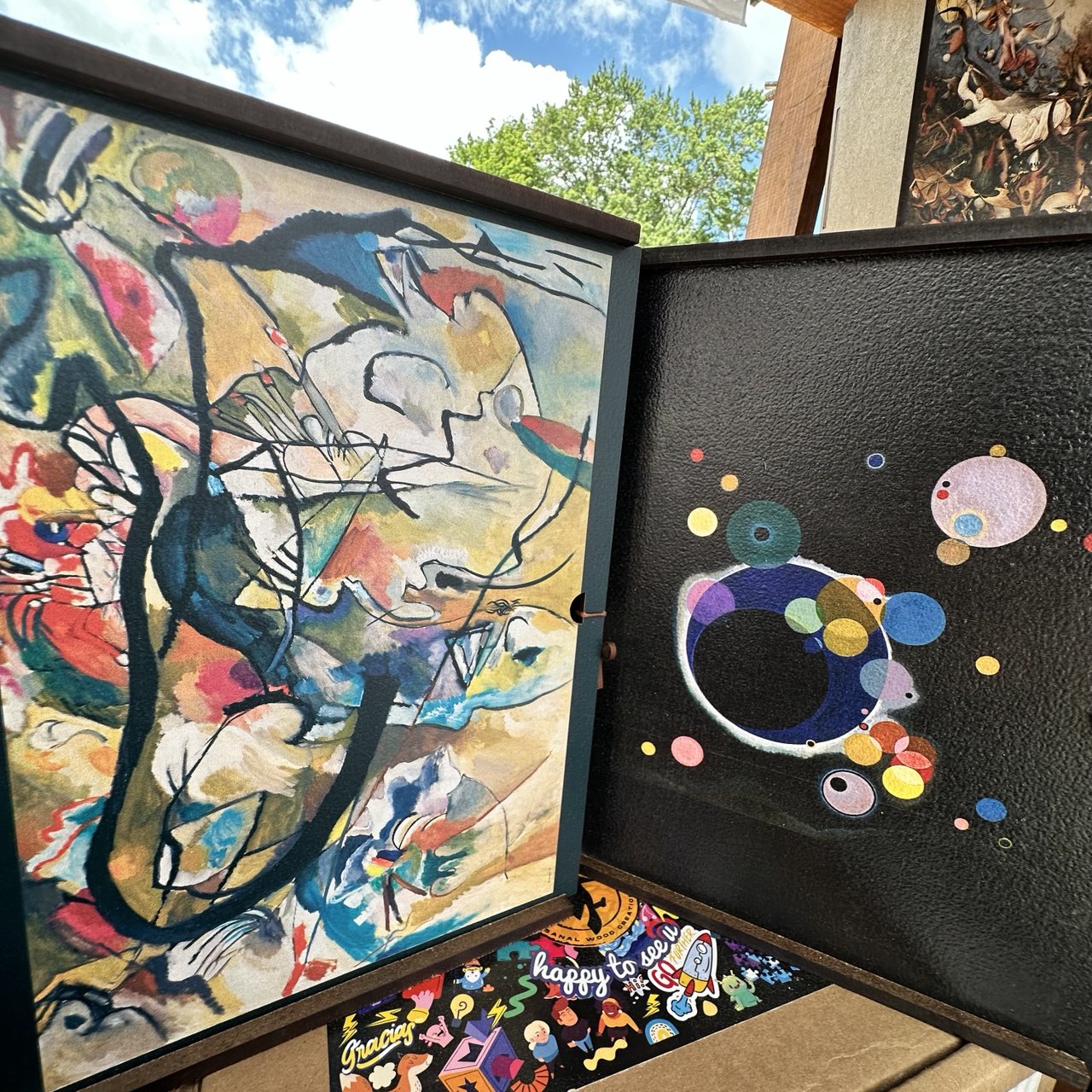
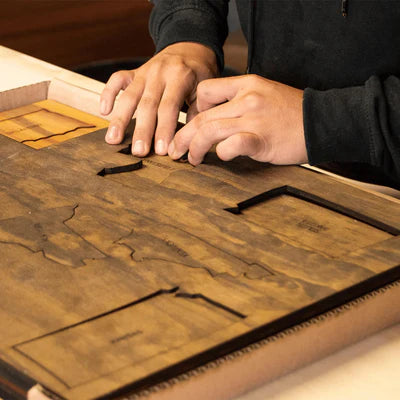
- Heirloom Keepsake: Your puzzle arrives beautifully packaged in a handcrafted wooden box, perfect for gifting or storing your masterpiece.
Craftsmanship and Care:
Craftsmanship and Care:
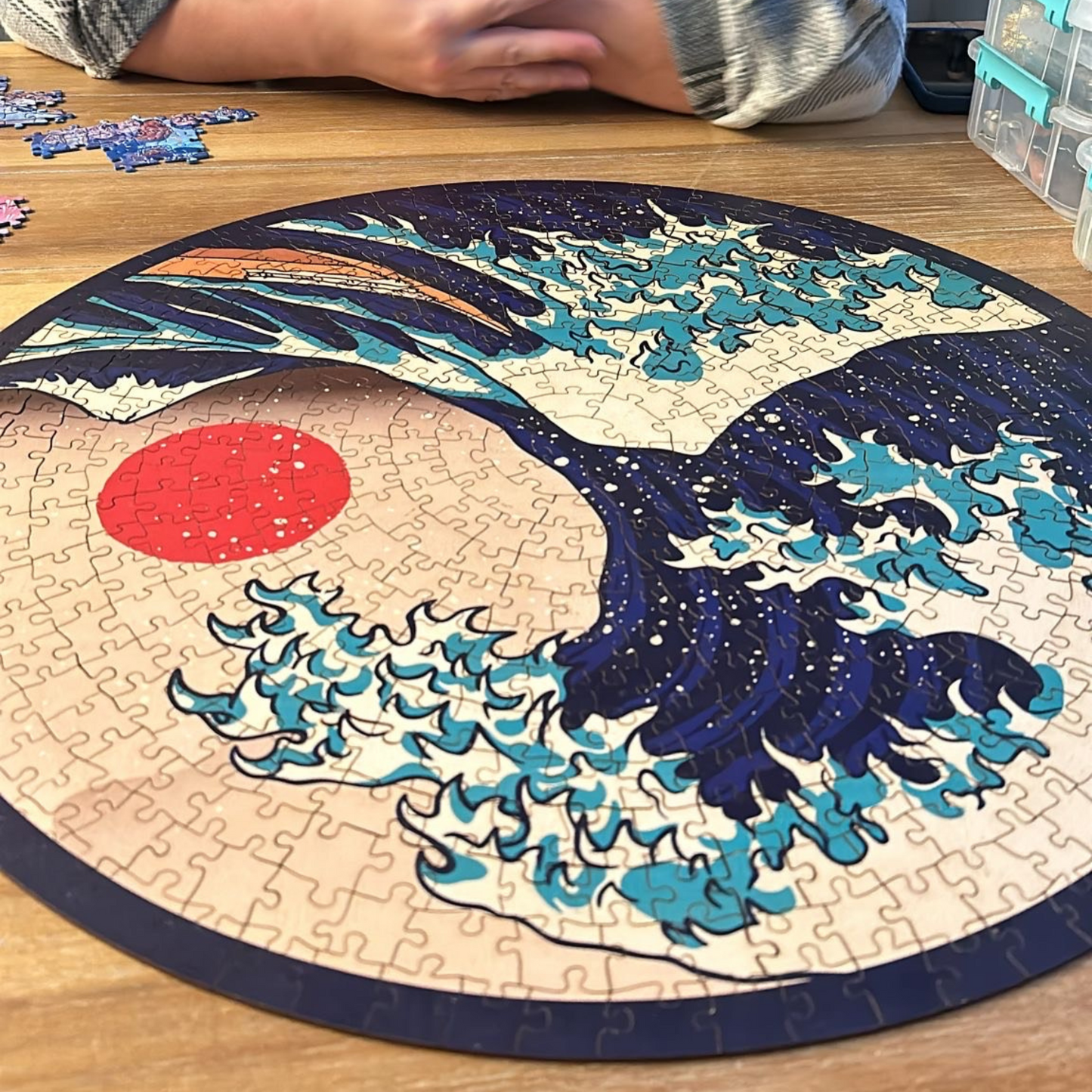
Experience the satisfying click of perfectly interlocking pieces. Our state-of-the-art laser cutting ensures precise fit and a smooth, seamless puzzle-solving experience. The perfect upgrade from cardboard without breaking the bank.
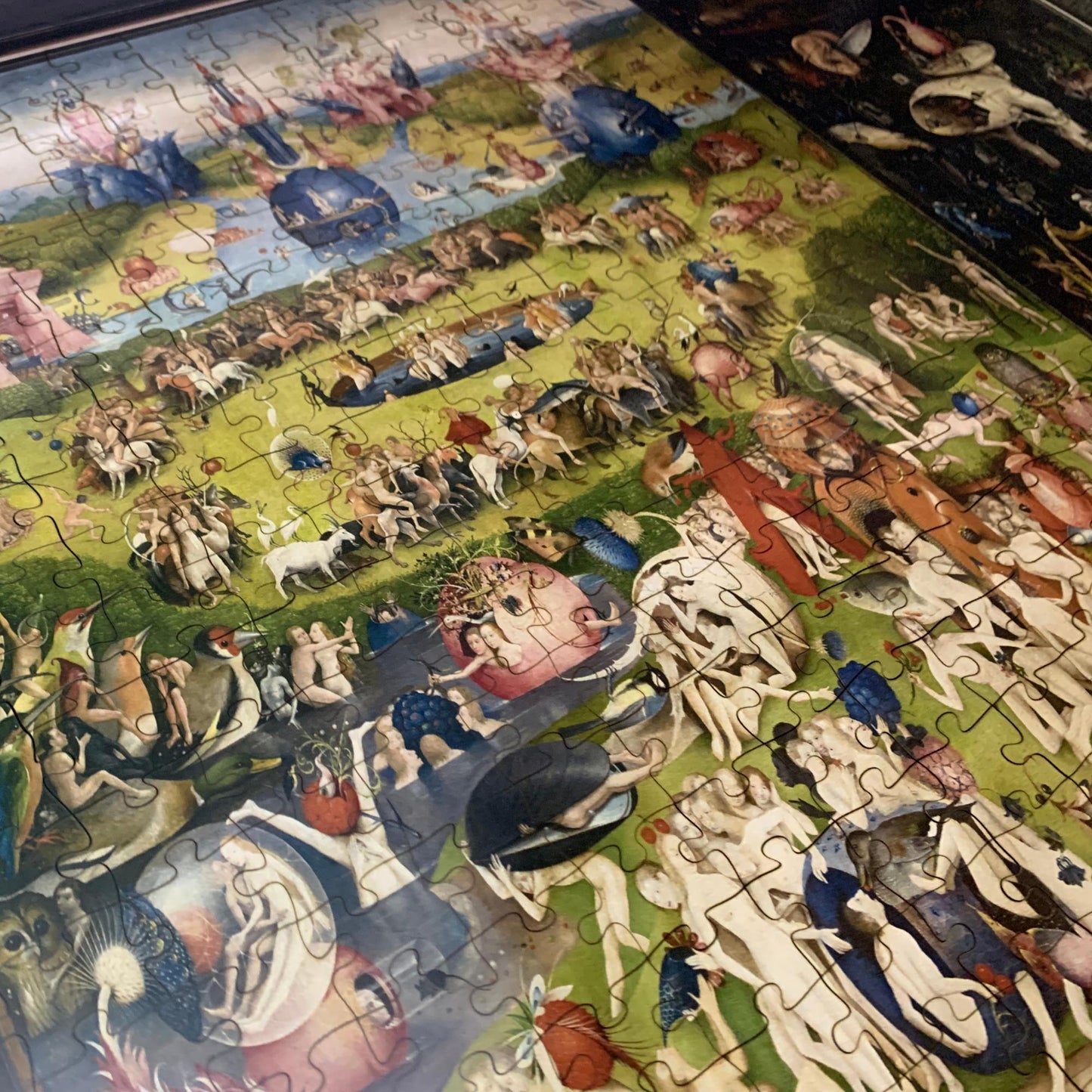
- Natural Laser Residue: A small amount of harmless black residue from the laser cutting process may be present. Simply wipe it away with a damp cloth.
- Hand-Finished Details: Each puzzle board, each wooden box are all carefully hand-stained, painted, and glued.
Satisfaction Guaranteed:
Satisfaction Guaranteed:
We are confident in the quality of our puzzles. If you are not completely satisfied, we offer a full refund or exchange.
PLEASE NOTE:
Each puzzle is crafted to make the most of your chosen size. Artwork may be subtly adjusted to meet our material and production standards while honoring the original work. Planning to frame yours? Email info@whatawoodwork.com for final measurements.
Couldn't load pickup availability
In stock
 PRODUCT DESCRIPTION
Bilibin built a visual language from three sources at once: Art Nouveau line work, traditional Russian lubok woodcuts, and Japanese woodblock printing.
Nobody had combined those three things before: Skazka o Tsarie Saltane Pl.08 (1905)
Bilibin designed the borders himself. Not just the central illustration, but every floral frame, every typographic ornament surrounding Pushkin's text. The 1905 edition was published by the Russian state printing office, which meant Bilibin had institutional backing and near-total artistic control.
📖 The Story Behind This Piece
In 1905, the Imperial Department for the Production of State Documents in St. Petersburg published Bilibin's illustrated edition of Pushkin's "The Tale of Tsar Saltan." Plate 08 likely shows the Korabelshchiki, the sea merchants, whose repeated visits to Tsar Saltan drive the plot forward. The image works in layers: the central scene framed by dense botanical borders that Bilibin drew separately and with equal care. Flat watercolor washes, sharp black outlines, almost no shading. The flatness is the technique, not a limitation of it.
Bilibin made a decision early in his career that most illustrators don't make: he refused Western academic painting conventions entirely. Instead, he spent years studying lubok prints, the cheap folk woodcuts sold at Russian markets for centuries. He believed those crude, vivid images carried something that polished oil painting had lost. The "Bilibino style," as critics labeled it, is what happens when that folk directness gets filtered through Art Nouveau discipline and Japanese compositional restraint.
Assembling this particular image, the botanical borders become a puzzle within the puzzle. Bilibin repeated motifs, mirrored them, varied them just enough to look identical until you're close. Two pieces of deep indigo border will look interchangeable on a table. Under the UV-printed surface on wood, though, the ink sits directly in the grain rather than behind a paper laminate, and slight texture variations become visible at assembly distance. The difference between a solved border section and an almost-solved one becomes tactile before it becomes visual.
🎁 Who Gets One of These
A few specific people reliably end up with this one.
✔️ The Russian literature reader who owns the Penguin Classics Pushkin — You know the tale. Bilibin's 1905 plates are the closest thing to canonical images for a story that predates photography by centuries.
✔️ The decorative arts collector with a specific interest in Art Nouveau book arts — Bilibin is cited alongside Mucha and Beardsley in the serious surveys. His illustrated editions rarely surface affordably.
✔️ The museum professional or Slavic studies faculty member — The originals are in the State Russian Museum and the Pushkin State Museum of Fine Arts. Getting close to the image any other way requires Moscow.
✔️ The person who gifts deliberately and hates giving something forgettable — Folklore, 1905 St. Petersburg, hand-built borders, state printing office commission. There is a lot to say about this object at a dinner table.
✔️ The puzzler who has finished the European landscapes and wants a reason to think while assembling — The flat color technique means no gradient to follow. You work from structure, not from shading.
Works well as a holiday gift for anyone with a serious interest in Russian cultural history or illustrated book arts. Also lands well for milestone birthdays — the kind where you want to give something with a story rather than something with a price tag.
🧩 Puzzle Specifications
✔️ Precision laser-cut wooden pieces
✔️ 3mm MDF core — rigid, warp-resistant, built to last
✔️ UV printing directly on wood — no paper laminate, no peeling
✔️ Traditional grid-cut design
✔️ Sizes: 15"x23", 18"x24", 23"x31"
✔️ Piece counts: 300–1000
✔️ Handcrafted wooden keepsake box included
✔️ Made to order — ships in 3–4 weeks
💎 Why This Puzzle Lasts
Most wooden puzzle makers charge $300–$500. The craft justifies it. WAWW gets to the same materials through direct manufacturing and no wholesale chain. No retail markup, no distributor margin, no warehouse overhead. Made to order, which means no inventory sitting in a climate-controlled facility adding cost to the final price.
The 3mm MDF core is what keeps pieces clicking cleanly years from now. Cardboard compresses at the joints; MDF doesn't. Pieces cut from it hold their shape through humidity changes that would warp a standard cardboard puzzle in a single season. When you pick up a piece, it has weight. You feel the difference before you see it.
UV printing bonds ink directly to the wood surface rather than printing onto paper that's then laminated on top. For Bilibin's flat watercolor washes, that matters: there's no laminate layer to soften or yellow the pigment over time, and no edge to peel when the border pieces get handled repeatedly. The grid cut is traditional rather than novelty-shaped, which means the solving logic stays with the image rather than fighting it. When the puzzle is finished and framed or stored, the handcrafted wooden box holds up to use. People keep them on shelves. The box often outlasts the occasion it was bought for. Production is made to order, which means your puzzle doesn't exist until you order it. The 3–4 week wait is built into the process, not a delay.
The 300-piece, 15"x23" starts at $115. The 1000-piece, 23"x31" runs $170.
🖼️ After You Finish It
Most people frame it. The wooden box ends up nearby, on a shelf or a desk, because it's too well made to discard. Visitors ask about the image first, then the borders, then who Bilibin was and what the State Printing Office had to do with a fairy tale. Pl.08 of the 1905 "Skazka o Tsarie Saltane" has been in major Russian museum collections for over a century. Rebuilding it from a table is a different kind of attention.
⚠️ Important Notes
Puzzles may have light laser residue on the surface — a damp cloth handles it. There's a natural wood scent when the box first opens; it fades within a few days. Made-to-order production means your puzzle ships in 3–4 weeks. If anything arrives damaged, we replace or refund. No questions.