
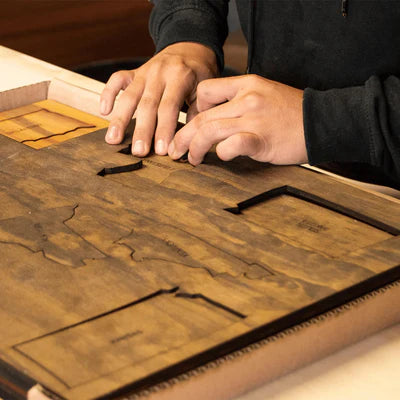


Sunflowers by Van Gogh - Premium Wooden Jigsaw Puzzle
Sunflowers by Van Gogh - Premium Wooden Jigsaw Puzzle
- Regular price
- Price: $115.00
- Regular price
- List Price: $0.00
- Sale price
- Price: $115.00
- Unit price
- per
Key Features:
Key Features:
- Premium Quality: Crafted from durable 3mm (.14in) composite wood board for lasting enjoyment.
- Vibrant Imagery: High-resolution UV printing directly on the wood—no paper laminate—for stunning detail and vibrant colors.
- Eco-Conscious: Made with environmentally friendly materials.
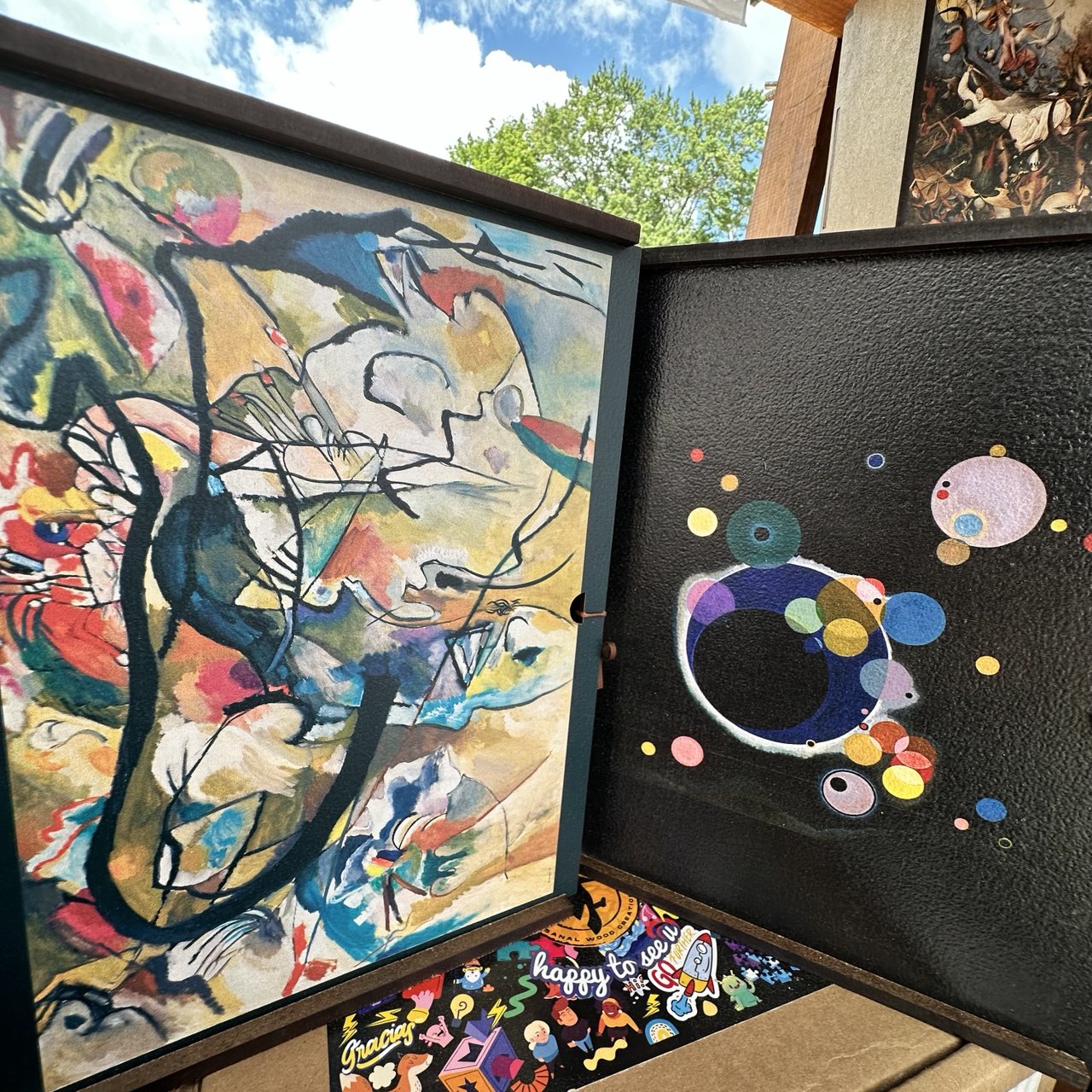
- Heirloom Keepsake: Your puzzle arrives beautifully packaged in a handcrafted wooden box, perfect for gifting or storing your masterpiece.
Craftsmanship and Care:
Craftsmanship and Care:
Experience the satisfying click of perfectly interlocking pieces. Our state-of-the-art laser cutting ensures precise fit and a smooth, seamless puzzle-solving experience. The perfect upgrade from cardboard without breaking the bank.
- Natural Laser Residue: A small amount of harmless black residue from the laser cutting process may be present. Simply wipe it away with a damp cloth.
- Hand-Finished Details: Each puzzle board, each wooden box are all carefully hand-stained, painted, and glued.
Satisfaction Guaranteed:
Satisfaction Guaranteed:
We are confident in the quality of our puzzles. If you are not completely satisfied, we offer a full refund or exchange.
PLEASE NOTE:
Each puzzle is crafted to make the most of your chosen size. Artwork may be subtly adjusted to meet our material and production standards while honoring the original work. Planning to frame yours? Email info@whatawoodwork.com for final measurements.
Couldn't load pickup availability
In stock
 PRODUCT DESCRIPTION
Sunflowers — Vincent van Gogh — Wooden Jigsaw Puzzle
Van Gogh painted Sunflowers to decorate a guest room. Not for a gallery, not for posterity. Paul Gauguin was coming to stay at the Yellow House in Arles in 1888, and Van Gogh wanted the walls to say something before either of them spoke. Gauguin liked the paintings enough to ask for copies. Van Gogh made them. The original went to London.
📖 The Story Behind This Piece
Van Gogh finished the London Sunflowers in August 1888, weeks before Gauguin arrived. The goal was hospitality expressed through paint — fifteen sunflowers in a simple vase, set against a yellow background so saturated it nearly dissolves the boundary between subject and space. Chrome yellow was newly available at the time, and Van Gogh used three distinct shades of it, stacking thick impasto strokes that gave the petals physical weight. The National Gallery has held the painting since 1924. Up close, the paint surface reads almost like relief sculpture.
Van Gogh made over 2,000 works in roughly a decade of serious painting. The Arles period, 1888 to 1889, was the most concentrated burst of that output. He believed color could carry emotional information directly, without the mediation of subject matter. Sunflowers was partly a test of that belief — could yellow, applied in enough variation and density, hold a room? Gauguin thought it could. He called this the best of the series.
The chrome yellows in Sunflowers range from pale lemon at the edges of certain petals to deep ochre at the flower centers, and those transitions are where the puzzle gets genuinely difficult. UV printing on wood renders that mid-range yellow without the slight wash that paper laminate introduces. When you're sorting pieces and holding two nearly identical yellows to the light, the difference is visible. The impasto ridges Van Gogh built up over weeks exist in the painting itself; here they exist as tonal variation, and the eye learns to read them the same way.
🎁 Who Gets One of These
A few types of people buy this one, and they tend to be specific about why.
✔️ The Post-Impressionist collector who owns at least one Van Gogh print — You know the difference between the London Sunflowers and the Munich version. A puzzle built from the National Gallery original is the right one.
✔️ The art history professor or serious student — Chrome yellow darkens over time; the 1888 pigment has already shifted slightly from what Van Gogh mixed. Spending an afternoon with this image is a different kind of looking than a lecture slide allows.
✔️ The person who has been to the National Gallery and stood in front of room 43 — You remember the scale. Rebuilding it piece by piece from a 23"x31" print brings back a version of that attention.
✔️ The gift-giver who wants something that references a real conversation — Someone who collects floral art, or who has mentioned Van Gogh by name, will know immediately that you paid attention.
✔️ The parent or grandparent who did cardboard puzzles for years — Ready for something that doesn't warp in humidity, doesn't shed paper dust, and doesn't go in a closet when it's done.
🧩 Puzzle Specifications
✔️ Precision laser-cut wooden pieces
✔️ 3mm MDF core — rigid, warp-resistant, built to last
✔️ UV printing directly on wood — no paper laminate, no peeling
✔️ Traditional grid-cut design
✔️ Handcrafted wooden keepsake box included
✔️ Made to order — ships in 3–4 weeks
💎 Why This Puzzle Lasts
Most wooden puzzle makers charge $300 to $500. The craft justifies it. WAWW gets to $115–$170 through direct manufacturing and no wholesale chain. Nothing is sitting in a warehouse. Every puzzle is made after you order it. Same materials, no markup.
The 3mm MDF core is what separates a wooden puzzle from a cardboard one in practical terms. Cardboard absorbs humidity and warps; MDF doesn't. Pieces cut from it click together with a firmness that stays consistent years later, not just on the first solve. UV printing bonds ink directly to the wood surface rather than applying a paper layer on top. With Sunflowers specifically, that matters: no laminate means no micro-bubbling, no eventual corner peel, and no color shift from adhesive yellowing beneath those chrome yellows over time.
The traditional grid cut produces clean, satisfying piece connections without novelty shapes interrupting your focus. Once the puzzle is complete, it goes into a handcrafted wooden box that functions as permanent storage, not as something you recycle. The box is part of the object. Made-to-order production means yours is cut after you purchase; the three-to-four week wait is the lead time for something made specifically for you, not a shipping delay on warehouse stock.