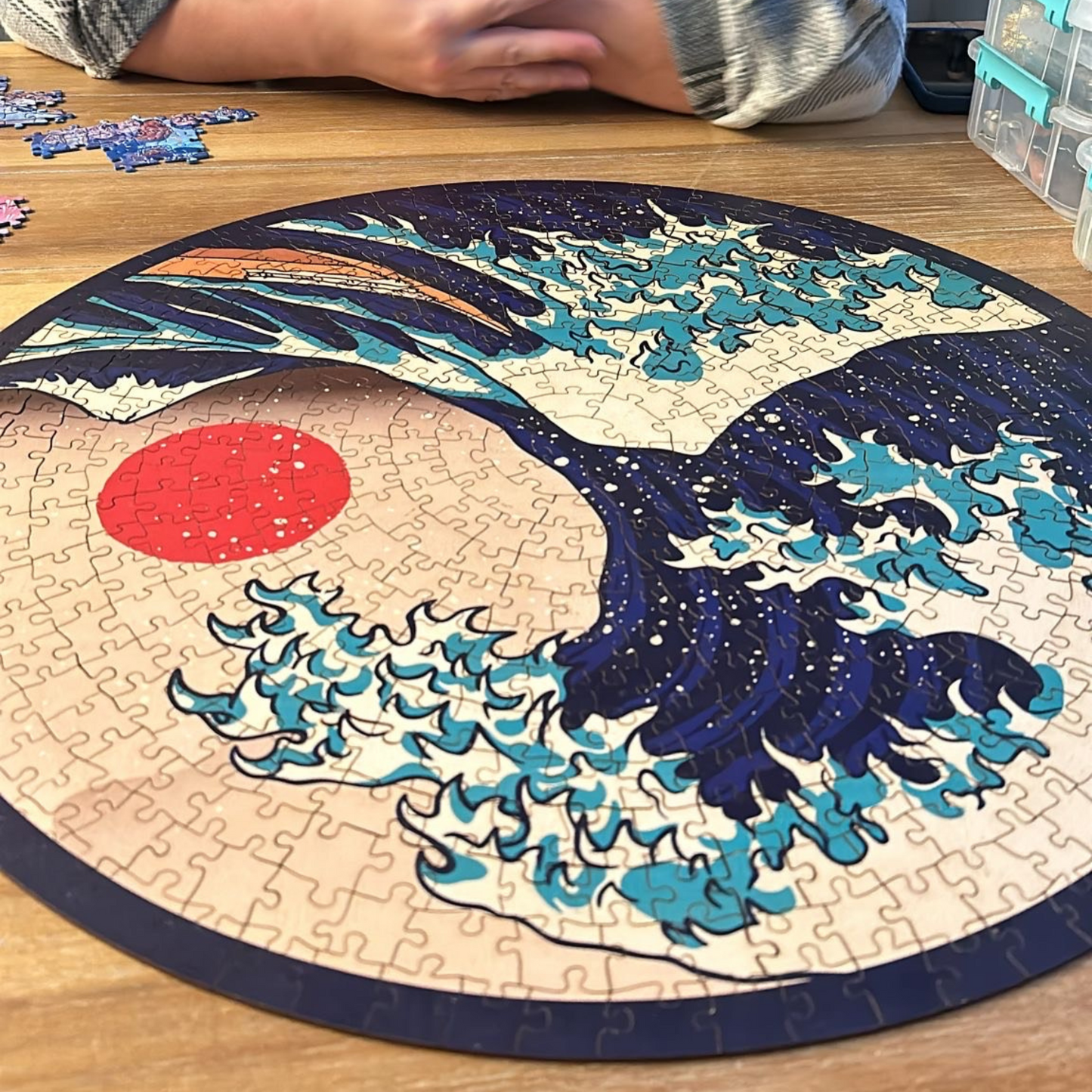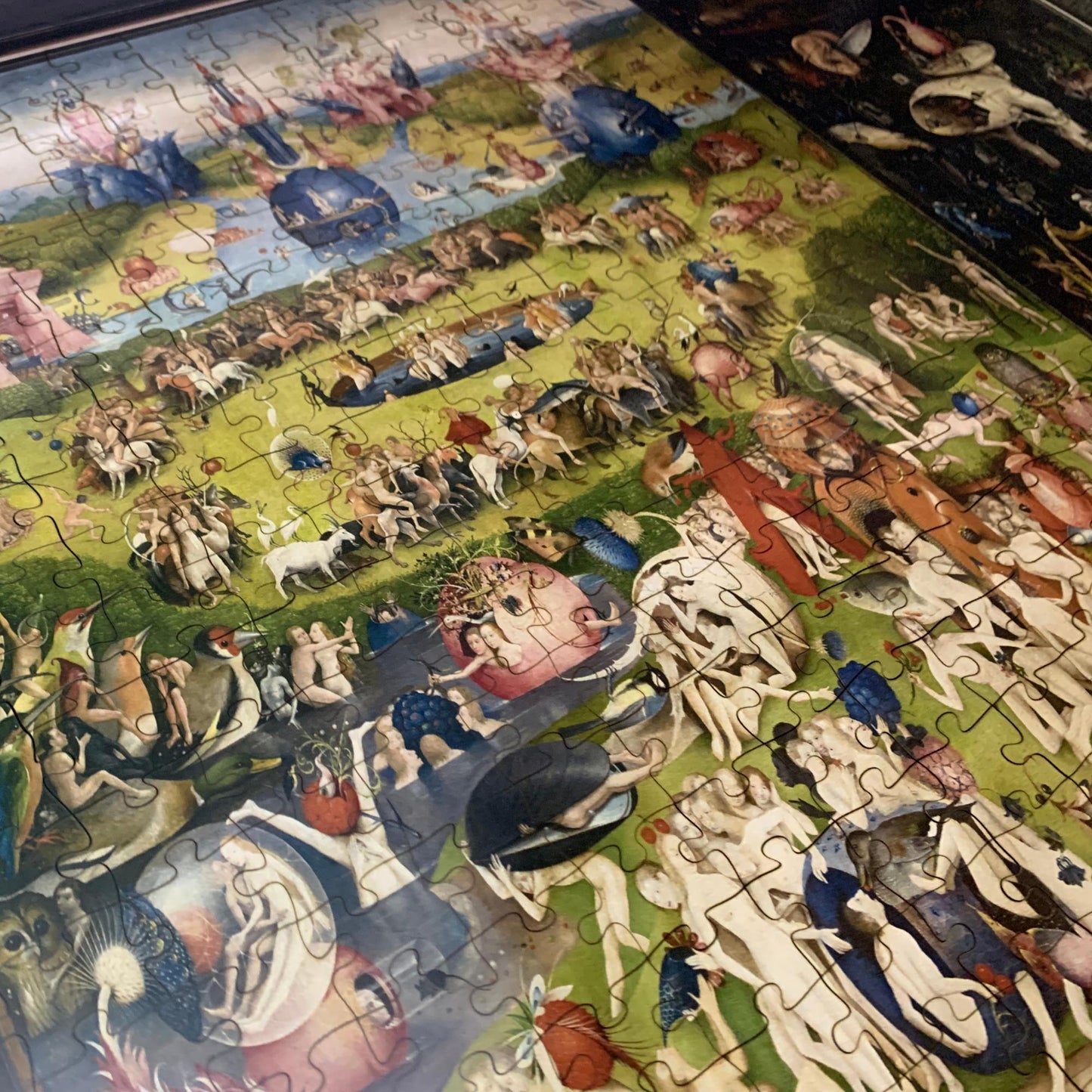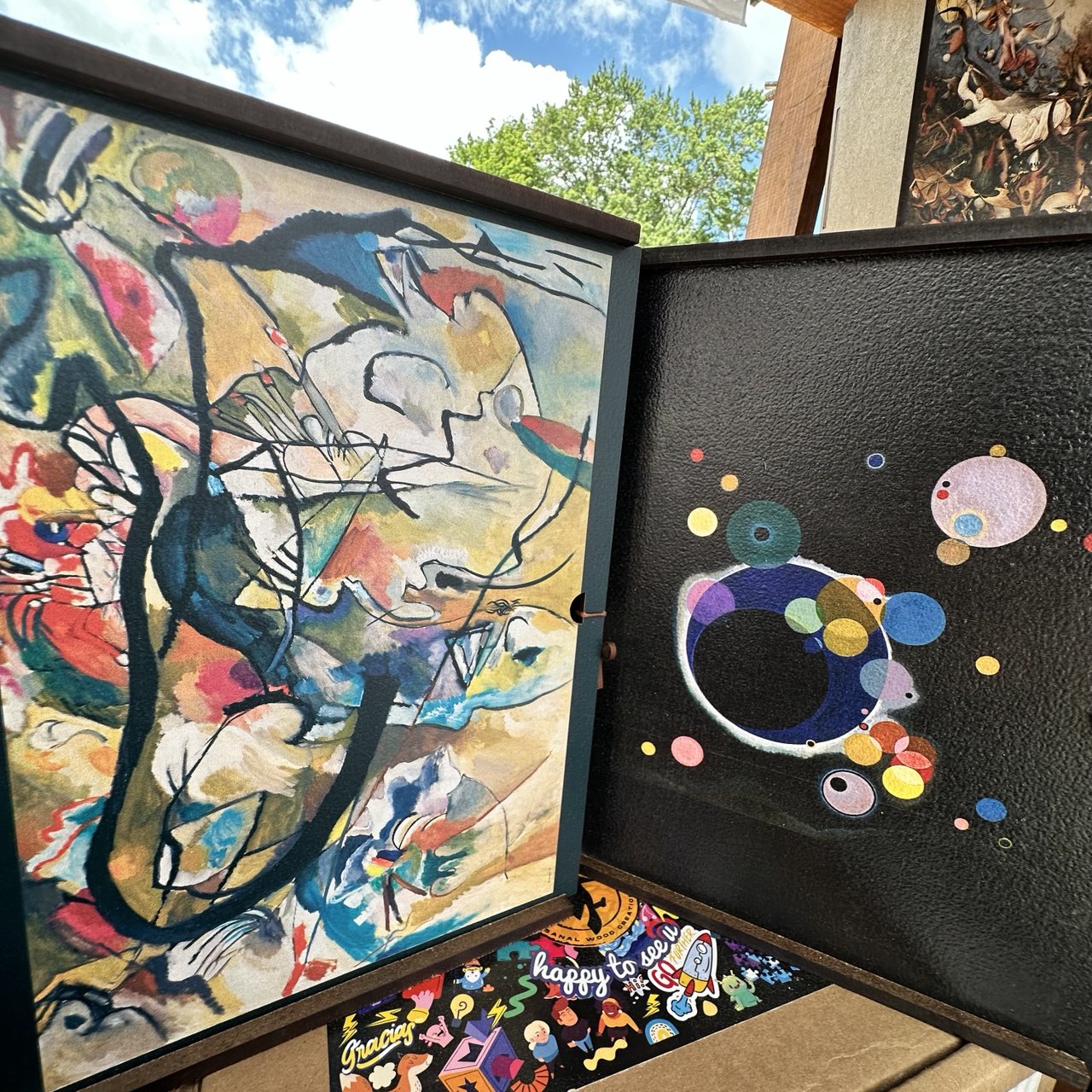



Descent into the Maelström | Harry Clarke Wooden Puzzle — Edgar Allan Poe 1923
Descent into the Maelström | Harry Clarke Wooden Puzzle — Edgar Allan Poe 1923
- Regular price
- Price: $115.00
- Regular price
- List Price: $0.00
- Sale price
- Price: $115.00
- Unit price
- per
Key Features:
Key Features:
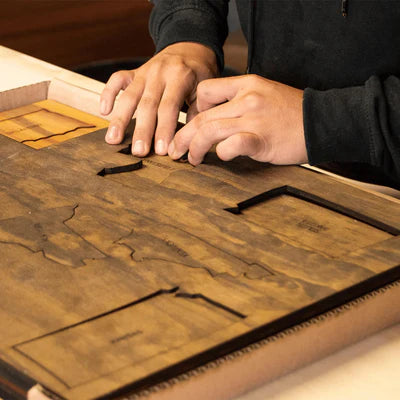
- Premium Quality: Crafted from durable 3mm (.14in) composite wood board for lasting enjoyment.
- Vibrant Imagery: High-resolution UV printing directly on the wood—no paper laminate—for stunning detail and vibrant colors.
- Eco-Conscious: Made with environmentally friendly materials.
- Heirloom Keepsake: Your puzzle arrives beautifully packaged in a handcrafted wooden box, perfect for gifting or storing your masterpiece.
Craftsmanship and Care:
Craftsmanship and Care:
Experience the satisfying click of perfectly interlocking pieces. Our state-of-the-art laser cutting ensures precise fit and a smooth, seamless puzzle-solving experience. The perfect upgrade from cardboard without breaking the bank.
- Natural Laser Residue: A small amount of harmless black residue from the laser cutting process may be present. Simply wipe it away with a damp cloth.
- Hand-Finished Details: Each puzzle board, each wooden box are all carefully hand-stained, painted, and glued.
Satisfaction Guaranteed:
Satisfaction Guaranteed:
We are confident in the quality of our puzzles. If you are not completely satisfied, we offer a full refund or exchange.
PLEASE NOTE:
Each puzzle is crafted to make the most of your chosen size. Artwork may be subtly adjusted to meet our material and production standards while honoring the original work. Planning to frame yours? Email info@whatawoodwork.com for final measurements.
Couldn't load pickup availability
In stock
 PRODUCT DESCRIPTION
Illustration for Edgar Allan Poe's Tales of Mystery and Imagination: Harry Clarke drew his figures with hidden details. He wasn't being obscure. He was testing whether you were paying attention.
When the original pen-and-ink plates were published in 1919, readers reported finding figures hidden inside figures — faces in shadow, hands in fabric, shapes that only resolve when you stop looking for them.
📖 The Story Behind This Piece
Clarke completed the first set of 24 black-and-white plates for Poe's collected tales in 1919, then returned four years later to add eight color plates. He wasn't revising. He was deepening. The Crawford Art Gallery in Cork holds a significant portion of the originals, including the plates for "The Pit and the Pendulum" and "The Fall of the House of Usher." The gallery acquired the color plate "The Colloquy of Monos and Una" as recently as 2023, which says something about how seriously these works are still being collected, a century after they were made.
Clarke came to Poe from a background in stained glass, which explains the line work. He was trained to design images that had to read from a distance and hold up to light shining directly through them. When he applied that discipline to illustration, the results were dense in a way most book illustrators never achieved. The figures in his Poe plates have weight. The shadows have geometry. Nothing is vague because vagueness was something he had no use for.
Clarke's linework is where this puzzle gets interesting in the hand. The black-and-white regions of the image produce high tonal contrast across adjacent pieces, which sounds like an advantage until you reach the mid-tones — the areas where his crosshatching creates texture without committing to either dark or light. Assembled on wood, with UV printing that sits directly in the grain rather than floating on a laminate layer, those zones have a depth that doesn't read on screen. You find details during assembly that simply weren't visible in the product photo.
🎁 Who Gets One of These
A few types of people reliably end up with this one.
✔️ The Poe reader who owns a good annotated edition — You know which tale each plate belongs to. Assembling Clarke's version of Usher is a different kind of re-reading.
✔️ The Art Nouveau collector who tracks what's in museum holdings — Clarke sits alongside Beardsley and Mucha in serious collections. The Crawford's 2023 acquisition is the kind of thing you already know about.
✔️ The person who bought a cardboard puzzle during lockdown and hasn't touched one since — The pieces felt cheap. The image faded where the laminate lifted. A wooden puzzle with UV-printed ink on MDF is a different category of object entirely.
✔️ The gift-giver shopping for someone with a Poe tattoo or a shelf of gothic fiction — Specific enough to land, substantial enough to keep. Not a bookmark.
✔️ The illustrator or graphic designer who works in dense linework professionally — Clarke solved compositional problems at a scale most illustrators never attempt. Rebuilding his plates piece by piece is a slow education.
October is the obvious occasion, and it's not wrong. Also worth considering: birthdays for anyone with a literary bent, and Father's Day for the dad whose shelves lean toward Poe, Lovecraft, or anything with a dark spine.
🧩 Puzzle Specifications
✔️ Precision laser-cut wooden pieces
✔️ 3mm MDF core — rigid, warp-resistant, built to last
✔️ UV printing directly on wood — no paper laminate, no peeling
✔️ Traditional grid-cut design
✔️ Sizes: 15"x23", 18"x24", 23"x31"
✔️ Piece counts: 300–1000
✔️ Handcrafted wooden keepsake box included
✔️ Made to order — ships in 3–4 weeks
💎 Why This Puzzle Lasts
Most wooden puzzle makers charge $300–$500. The craft justifies it. WAWW gets to the same place differently: direct manufacturing, no wholesale chain, made to order with no warehouse inventory absorbing cost. Same materials. No markup passed along.
The core is 3mm MDF, which is rigid in a way cardboard never achieves and never becomes. Cardboard puzzles warp with humidity, and the pieces stop clicking cleanly after a few assemblies. The MDF holds its shape and holds its fit. Pieces laid down in 2025 will click the same way in 2045. UV printing goes directly onto the wood surface, with no paper laminate between the ink and the material. Laminates peel. They lift at edges. UV ink bonded to wood doesn't lift because there's nothing to separate.
The laser cut follows a traditional grid pattern with no novelty shapes. Each piece sits flush, locks positively, and releases cleanly when you need to move a section. No piece wobbles in place because the tolerances are cut, not torn. The storage box is solid wood, handcrafted, and sized to the puzzle. After assembly, the box doesn't go in the recycling — it holds the puzzle, sits on a shelf, and becomes part of the object. Made to order means your puzzle doesn't exist until you order it. The 3–4 week production window is production time, not shipping delay. Nothing sits in a warehouse degrading.