
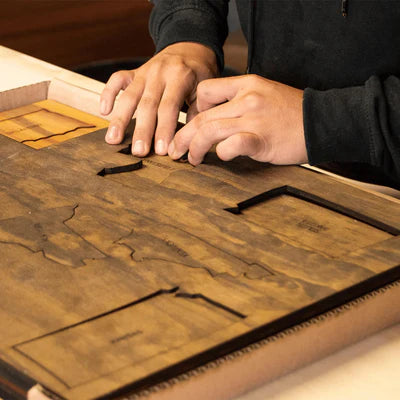


The Fairies' Favourite by Fitzgerald - Premium Wooden Jigsaw
The Fairies' Favourite by Fitzgerald - Premium Wooden Jigsaw
- Regular price
- Price: $115.00
- Regular price
- List Price: $0.00
- Sale price
- Price: $115.00
- Unit price
- per
Key Features:
Key Features:
- Premium Quality: Crafted from durable 3mm (.14in) composite wood board for lasting enjoyment.
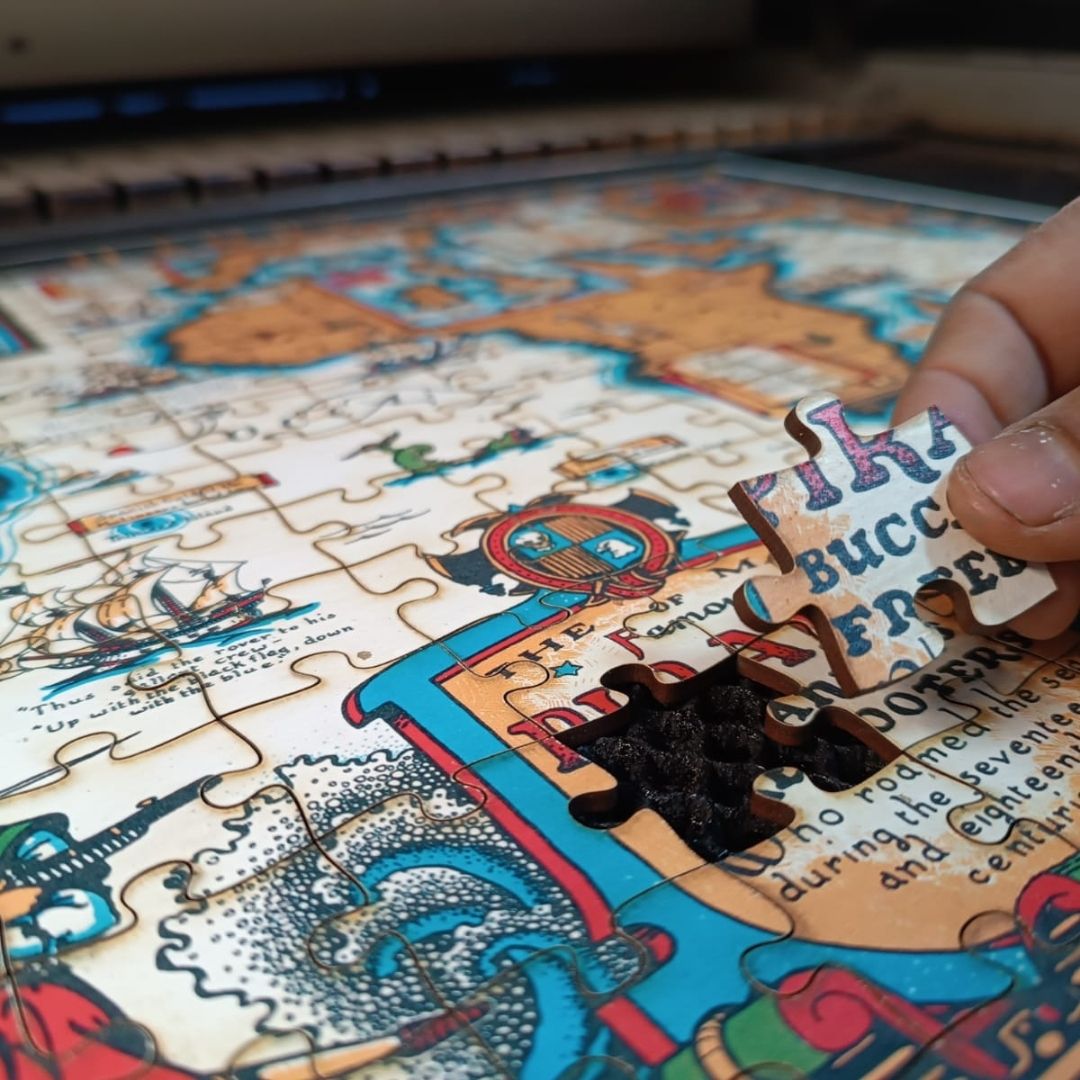
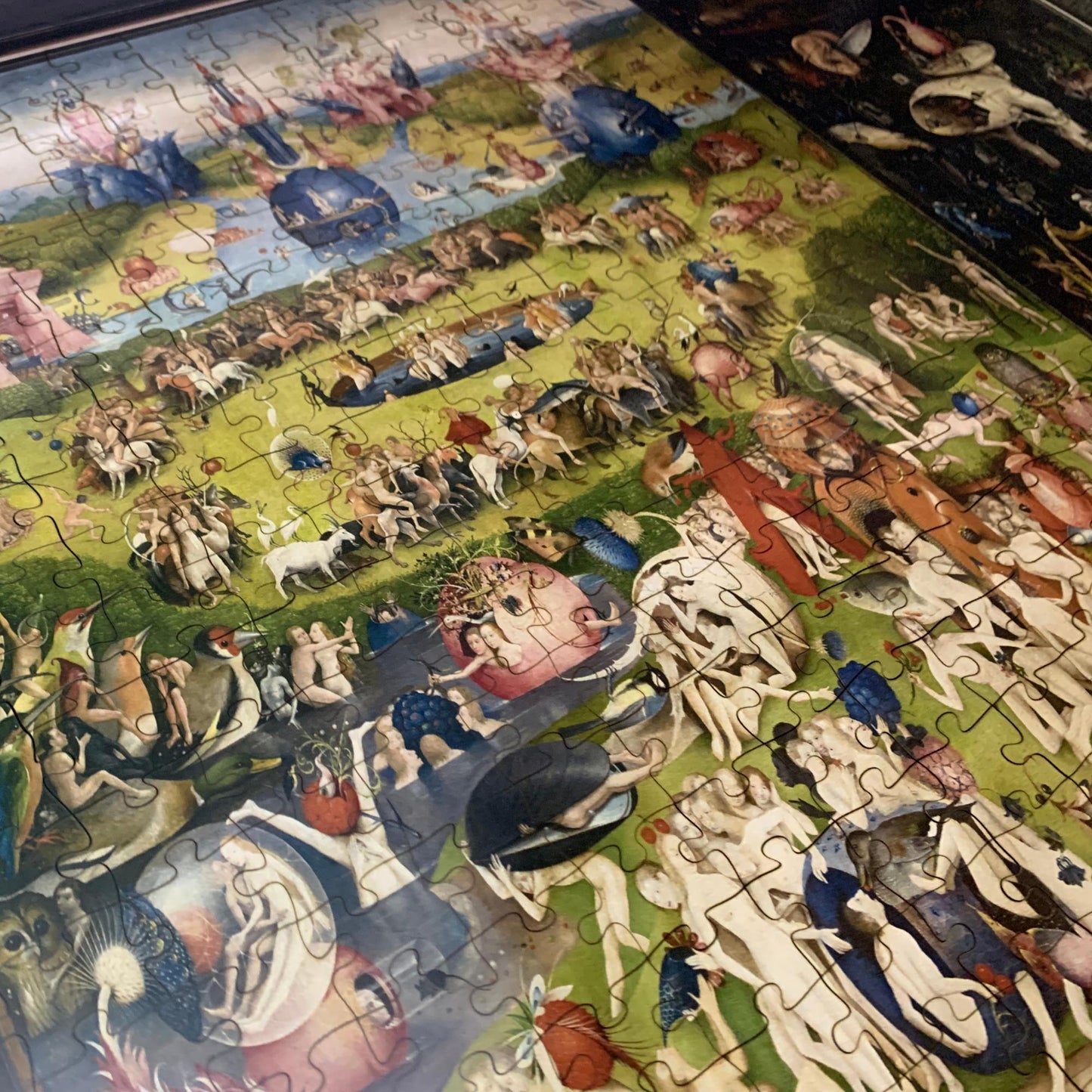
- Vibrant Imagery: High-resolution UV printing directly on the wood—no paper laminate—for stunning detail and vibrant colors.
- Eco-Conscious: Made with environmentally friendly materials.
- Heirloom Keepsake: Your puzzle arrives beautifully packaged in a handcrafted wooden box, perfect for gifting or storing your masterpiece.
Craftsmanship and Care:
Craftsmanship and Care:
Experience the satisfying click of perfectly interlocking pieces. Our state-of-the-art laser cutting ensures precise fit and a smooth, seamless puzzle-solving experience. The perfect upgrade from cardboard without breaking the bank.
- Natural Laser Residue: A small amount of harmless black residue from the laser cutting process may be present. Simply wipe it away with a damp cloth.
- Hand-Finished Details: Each puzzle board, each wooden box are all carefully hand-stained, painted, and glued.
Satisfaction Guaranteed:
Satisfaction Guaranteed:
We are confident in the quality of our puzzles. If you are not completely satisfied, we offer a full refund or exchange.
PLEASE NOTE:
Each puzzle is crafted to make the most of your chosen size. Artwork may be subtly adjusted to meet our material and production standards while honoring the original work. Planning to frame yours? Email info@whatawoodwork.com for final measurements.
Couldn't load pickup availability
In stock
 PRODUCT DESCRIPTION
The Fairies' Favourite — Wooden Jigsaw Puzzle
Art historians have long speculated that John Anster Fitzgerald painted his fairy scenes under the influence of opium. Look at the work long enough and you start to understand why. The creatures crowding around that captive bird are not cute. They are not decorative. Fitzgerald called himself "Fairy Fitzgerald" and meant it as a serious artistic identity, not a charming nickname. The Toledo Museum of Art keeps this one in its permanent collection.
📖 The Story Behind This Piece
Fitzgerald completed The Fairies' Favourite sometime between 1860 and 1865, working in watercolor and body color heightened with white on paper. The scene pulls from the English nursery rhyme "Who Killed Cock Robin?" — a poem that reads as innocent until you sit with it, at which point it reads as a small trial conducted by birds over a body. In Fitzgerald's version, a captive bird sits at the center of a dense, vegetal mass of fairies and grotesque creatures. The white heightening catches them mid-swarm. The bird is alive. That is the unsettling part.
Fitzgerald earned his nickname because fairy painting was essentially his entire output for decades. Victorian England had a genuine appetite for the supernatural — fairies appeared in Shakespeare revivals, in Spiritualist séances, in the illustrated press. Fitzgerald fed that appetite and then exceeded it. His compositions are crowded past the point of comfort. Whether opium was involved or not, the results look like something the rational mind wouldn't produce on its own. That instability is the point.
The puzzle begins in the dark edges. Fitzgerald's vegetal background is painted deep greens and near-blacks, and UV printing directly onto the wood grain keeps those shadows from flattening into a uniform murk — you can see texture variation within the darkness that a paper laminate would swallow entirely. Work inward toward the creature cluster and the white-heightened wings start to emerge as distinct shapes. Some fairies are delicate. Some are not. That distinction only becomes clear at close range, which is exactly where assembly puts you.
🎁 Who Gets One of These
A handful of specific people will want to own this. Here is who they are.
✔️ The Victorian art collector who already owns prints — You know the Pre-Raphaelites, you've looked at Fuseli, and Fitzgerald keeps coming up in the same breath. Now something in your home holds the original for a few weeks while you put it together.
✔️ The person who grew up reading fairy tales that were actually scary — Not Disney. Grimm. Fitzgerald's fairies have teeth and intentions, and the nursery rhyme reference running through this painting is not subtle once you know to look for it.
✔️ The museum member who wants the collection at home — The Toledo Museum of Art keeps the original. A wooden puzzle with UV-printed color accuracy gets you closer to the real object than a poster does.
✔️ The puzzler who has moved past cardboard and needs a reason to go slowly — Fitzgerald packed this canvas. The creature count rewards close attention at every stage of assembly, and no two sections sort the same way.
✔️ The gift-giver who has a friend deep into Victorian history or folklore — "Who Killed Cock Robin?" is a specific reference. Someone who knows it will stop when they see the bird at the center of that swarm.
Strong gift occasions: birthdays for anyone who collects historical art or Victorian curiosities, Halloween (the sinister undertone earns it), and winter holidays when long indoor evenings make something this detailed feel like the right object to open.
🧩 Puzzle Specifications
✔️ Precision laser-cut wooden pieces
✔️ 3mm MDF core — rigid, warp-resistant, built to last
✔️ UV printing directly on wood — no paper laminate, no peeling
✔️ Traditional grid-cut design
✔️ Handcrafted wooden keepsake box included
✔️ Made to order — ships in 3–4 weeks
💎 Why This Puzzle Lasts
Most wooden puzzle makers charge $300–$500. The craft justifies that price. WAWW gets to $115–$170 through direct manufacturing and no wholesale chain. Every puzzle is made to order, so there is no warehouse inventory padding the cost. Same materials. No markup.
The 3mm MDF core is what keeps pieces clicking cleanly years from now. Cardboard compresses, warps with humidity, and starts shedding at the cut edges. MDF does none of that. Each piece feels solid in your hand, and the fit stays precise whether you assemble once or ten times. UV printing goes directly onto the wood surface, so there is no paper layer to bubble, peel, or yellow. Fitzgerald's whites stay white. His darks stay sharp.
The traditional grid cut means pieces connect with a satisfying snap rather than the loose, ambiguous fit of novelty-shaped cuts. When a section locks together, you know it. The wooden keepsake box arrives as part of the object, not as packaging — it is the kind of box that stays on a shelf after the puzzle is done. Every puzzle is made after you order it. The three-to-four-week production window exists because nothing sits in a warehouse waiting. Your puzzle is made once, for you.
🖼️ After You Finish It
Most people frame it. The wooden box ends up nearby — on a shelf, on a windowsill, somewhere it keeps getting picked up. Visitors ask about the image first. Then someone recognizes the bird surrounded by that crowd of creatures and asks what nursery rhyme it references. The Fairies' Favourite has been sitting in the Toledo Museum of Art for over a century. Assembling it yourself is a different kind of looking.