


The Fantail by Schachtzabel - Premium Wooden Jigsaw Puzzle
The Fantail by Schachtzabel - Premium Wooden Jigsaw Puzzle
- Regular price
- Price: $115.00
- Regular price
- List Price: $0.00
- Sale price
- Price: $115.00
- Unit price
- per
Key Features:
Key Features:
- Premium Quality: Crafted from durable 3mm (.14in) composite wood board for lasting enjoyment.
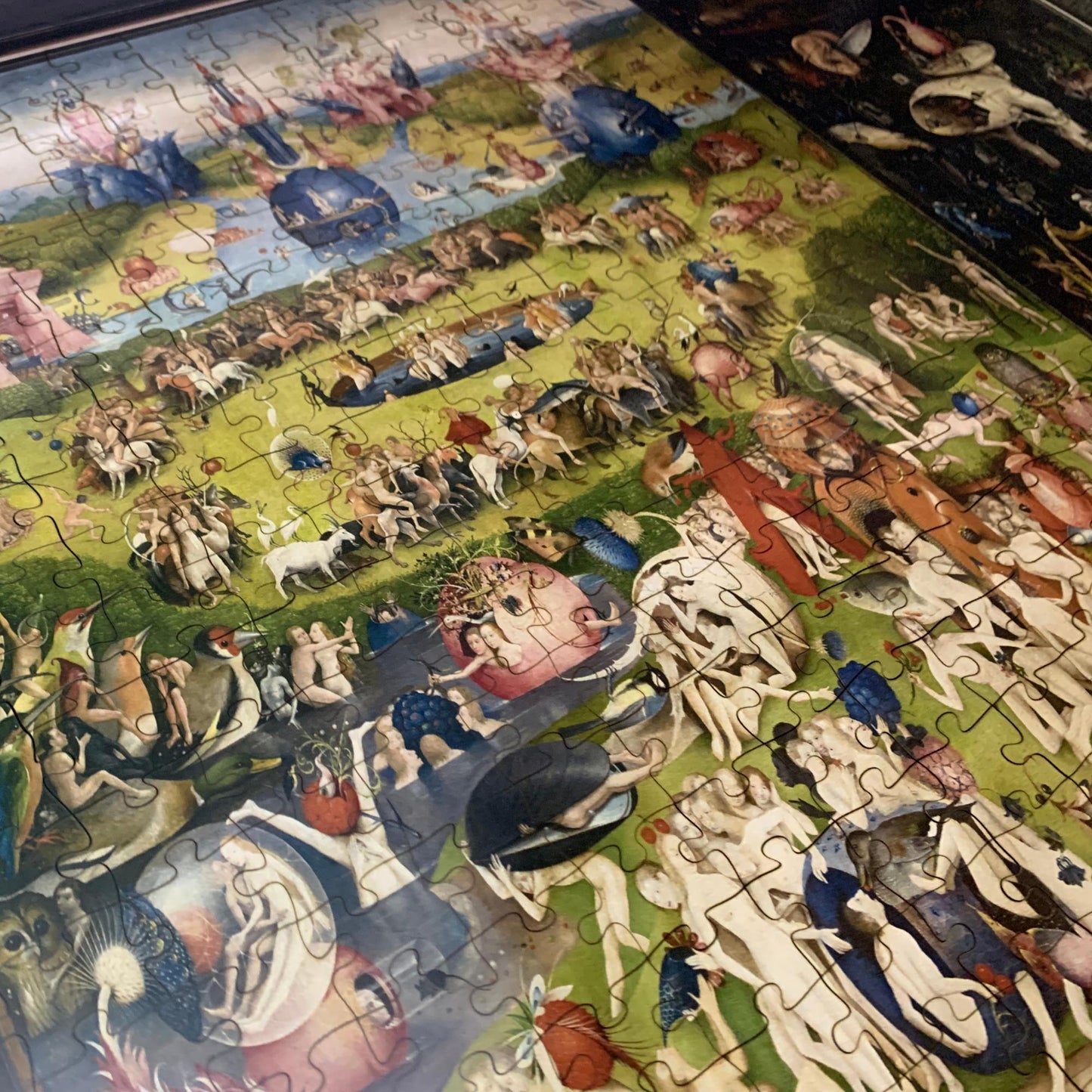
- Vibrant Imagery: High-resolution UV printing directly on the wood—no paper laminate—for stunning detail and vibrant colors.
- Eco-Conscious: Made with environmentally friendly materials.
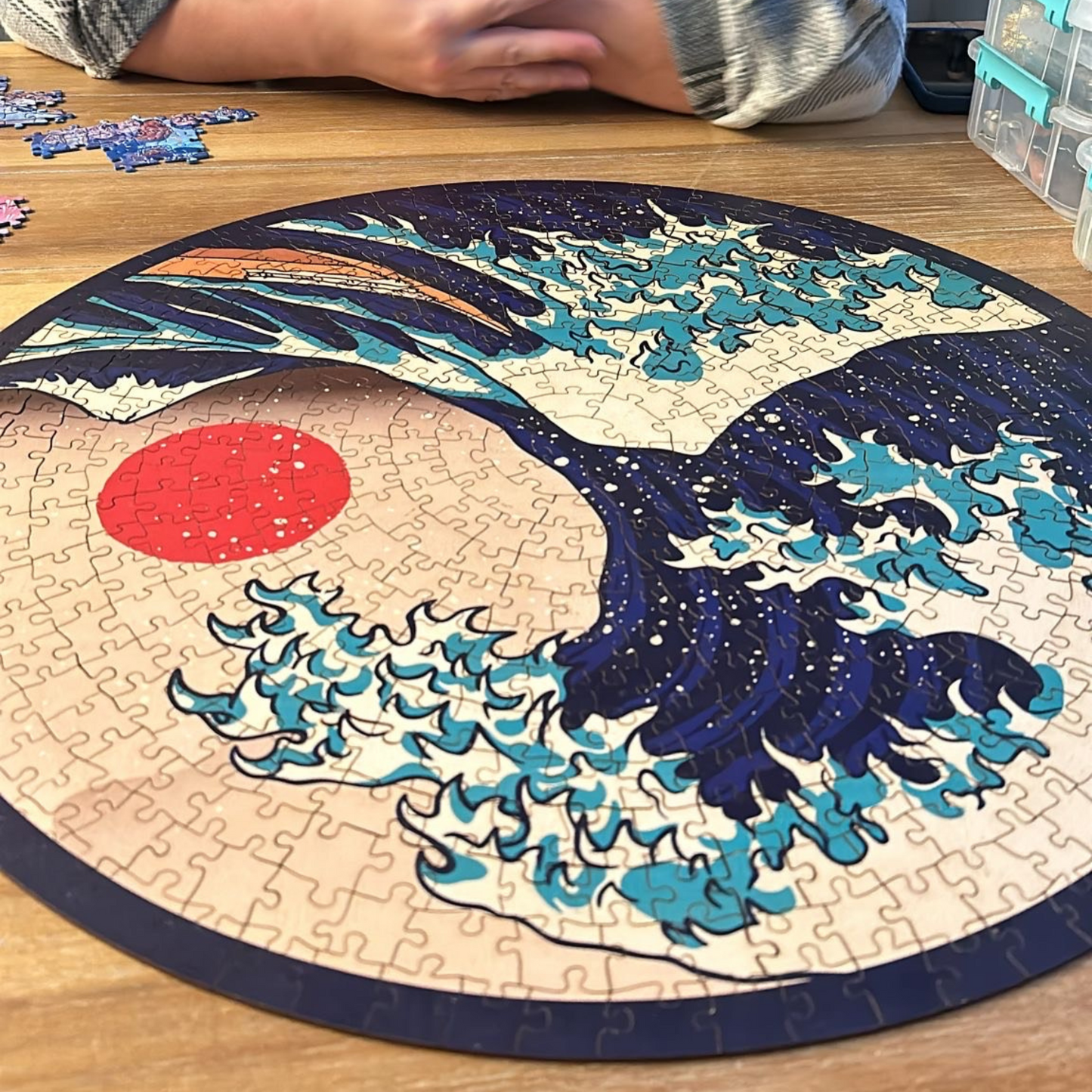
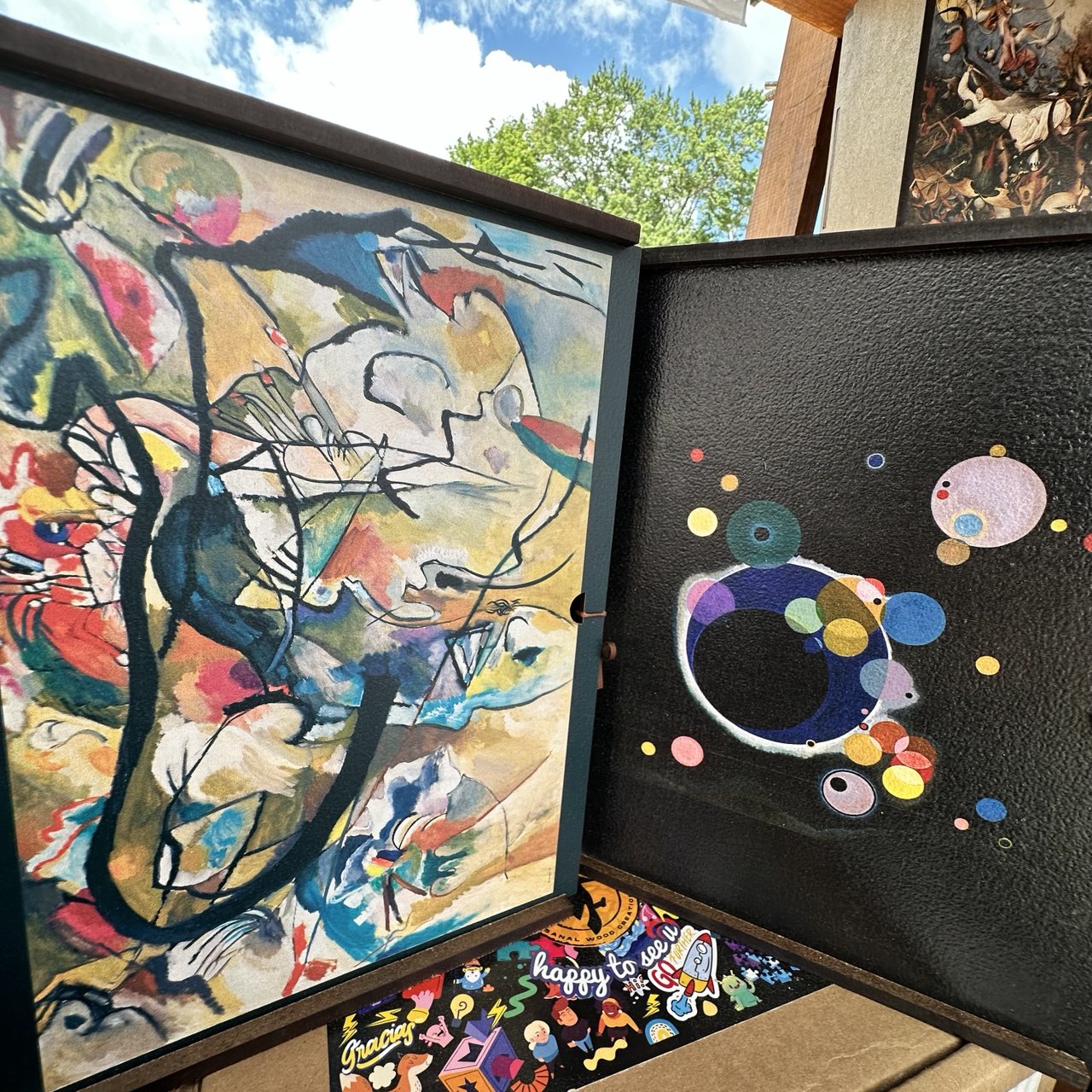
- Heirloom Keepsake: Your puzzle arrives beautifully packaged in a handcrafted wooden box, perfect for gifting or storing your masterpiece.
Craftsmanship and Care:
Craftsmanship and Care:
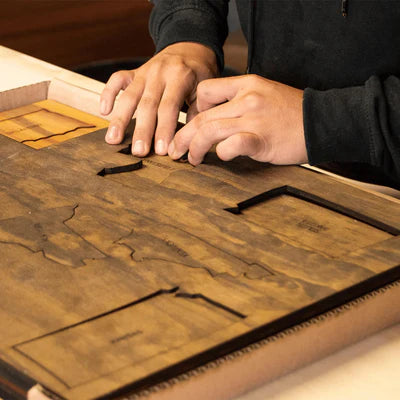
Experience the satisfying click of perfectly interlocking pieces. Our state-of-the-art laser cutting ensures precise fit and a smooth, seamless puzzle-solving experience. The perfect upgrade from cardboard without breaking the bank.
- Natural Laser Residue: A small amount of harmless black residue from the laser cutting process may be present. Simply wipe it away with a damp cloth.
- Hand-Finished Details: Each puzzle board, each wooden box are all carefully hand-stained, painted, and glued.
Satisfaction Guaranteed:
Satisfaction Guaranteed:
We are confident in the quality of our puzzles. If you are not completely satisfied, we offer a full refund or exchange.
PLEASE NOTE:
Each puzzle is crafted to make the most of your chosen size. Artwork may be subtly adjusted to meet our material and production standards while honoring the original work. Planning to frame yours? Email info@whatawoodwork.com for final measurements.
Couldn't load pickup availability
In stock
 PRODUCT DESCRIPTION
The Fantail: Vintage 1906 scientific literature that looked like fine art, because two Germans refused to treat those as separate things.
Plate 52 in Schachtzabel's 1906 survey of pigeon breeds is a white fantail standing at full display. The artist who painted it, Anton Schöner, was a watercolorist working from living birds. The chromolithographers who reproduced it for Universitätsdruckerei H. Stürtz in Würzburg matched his work layer by layer. The result was scientific literature that looked like fine art, because both men refused to treat those as separate things.
📖 The Story Behind This Piece
Around 1906, Emil Schachtzabel published what remains one of the foundational texts of columbiculture: "Illustriertes Prachtwerk sämtlicher Taubenrassen," a systematic survey of known pigeon breeds produced in Würzburg. Plate 52 covers the Fantail, a breed Schachtzabel traced to the East Indies, known for its arched neck, trembling posture, and the broad spread of tail feathers that gives the bird its name. The illustration isn't decorative. It was made to function as reference, which is why every feather grouping is precise and every shadow earns its place.
Schachtzabel was a German poultry administrator and breeder before he was a publisher, and that background shaped every decision in the book. He wasn't interested in romanticizing the birds. He wanted to document them accurately enough that a breeder in Leipzig could identify a Fantail from a woodcut. Hiring Anton Schöner, a watercolorist with the technical instincts of a naturalist, was how he got both things at once: accuracy and beauty, neither compromising the other.
The Fantail's tail feathers read, on screen, as a soft white mass. In the puzzle, they separate. The laser cut runs through that region in tight horizontal increments, and as pieces come together, the gradations between cool white, warm ivory, and pale gray become visible in a way the digital file doesn't prepare you for. UV printing directly onto the wood surface keeps those tonal shifts intact without the color shift that paper laminate introduces. What Schöner painted in the 1900s is what you're holding.
🎁 Who Gets One of These
A few specific people come to mind for this one.
✔️ The ornithology reader who has a shelf of field guides — Schachtzabel's work belongs on that shelf. The Fantail plate is Plate 52 of a serious reference series, not decorative bird art, and that difference matters to you.
✔️ The chromolithography collector who tracks 19th- and early 20th-century print techniques — Schöner's watercolors were reproduced layer by layer at H. Stürtz's press in Würzburg. You already know how much craft that required.
✔️ The person who keeps fancy pigeons — Fantails are still bred to the same standard Schachtzabel documented in 1906. Seeing the breed rendered with this level of care is a different experience when you've raised one.
✔️ The vintage natural history print buyer who is running out of wall space — A puzzle version of a print you'd otherwise frame offers the same image in a format that earns its storage box and doesn't require a frame shop.
✔️ The puzzle buyer who has finished too many cardboard puzzles and wants to stop doing that — Wooden pieces, a board that holds its shape, a box worth keeping. A logical next step.
Works well as a gift for retirement (something to do well, slowly, with a good image), for a birthday tied to a bird or natural history interest, or for any occasion where you want to give something with a real object behind it rather than a gift card.
🧩 Puzzle Specifications
✔️ Precision laser-cut wooden pieces
✔️ 3mm MDF core — rigid, warp-resistant, built to last
✔️ UV printing directly on wood — no paper laminate, no peeling
✔️ Traditional grid-cut design
✔️ Handcrafted wooden keepsake box included
✔️ Made to order — ships in 3–4 weeks
💎 Why This Puzzle Lasts
Most wooden puzzle makers charge $300–$500. The craft justifies it. WAWW gets to the same place differently: direct manufacturing, no wholesale markup, made to order with no warehouse inventory carrying costs passed along. Same materials. Honest price.
The 3mm MDF core is the reason a finished puzzle still clicks cleanly a decade from now. Cardboard compresses and warps; MDF holds its shape under humidity and use. UV printing goes directly onto the wood surface rather than onto a paper laminate bonded on top. No laminate means no peeling at the edges, no color shift from adhesive yellowing, no loss of the tonal precision Schöner put into those tail feathers in the first place.
The traditional grid cut produces pieces with consistent, satisfying fit. No novelty shapes competing with the image. When a piece clicks, it stays. The keepsake box ships as part of the object, not as packaging, and it functions as storage that's worth keeping on a shelf after assembly. Every puzzle is made to order, which means no pre-built inventory sitting in a warehouse, and no puzzle built before yours is ordered. The three-to-four week production window is the cost of that. It's a reasonable trade.
The fantail breed has been documented, refined, and bred to this same standard for over a century. Plate 52 is still one of the clearest records of what that looks like.