


The Five Phases of the Bat by Yoshitoshi - Wooden Jigsaw Puzzle
The Five Phases of the Bat by Yoshitoshi - Wooden Jigsaw Puzzle
- Regular price
- Price: $115.00
- Regular price
- List Price: $0.00
- Sale price
- Price: $115.00
- Unit price
- per
Key Features:
Key Features:
- Premium Quality: Crafted from durable 3mm (.14in) composite wood board for lasting enjoyment.
- Vibrant Imagery: High-resolution UV printing directly on the wood—no paper laminate—for stunning detail and vibrant colors.
- Eco-Conscious: Made with environmentally friendly materials.
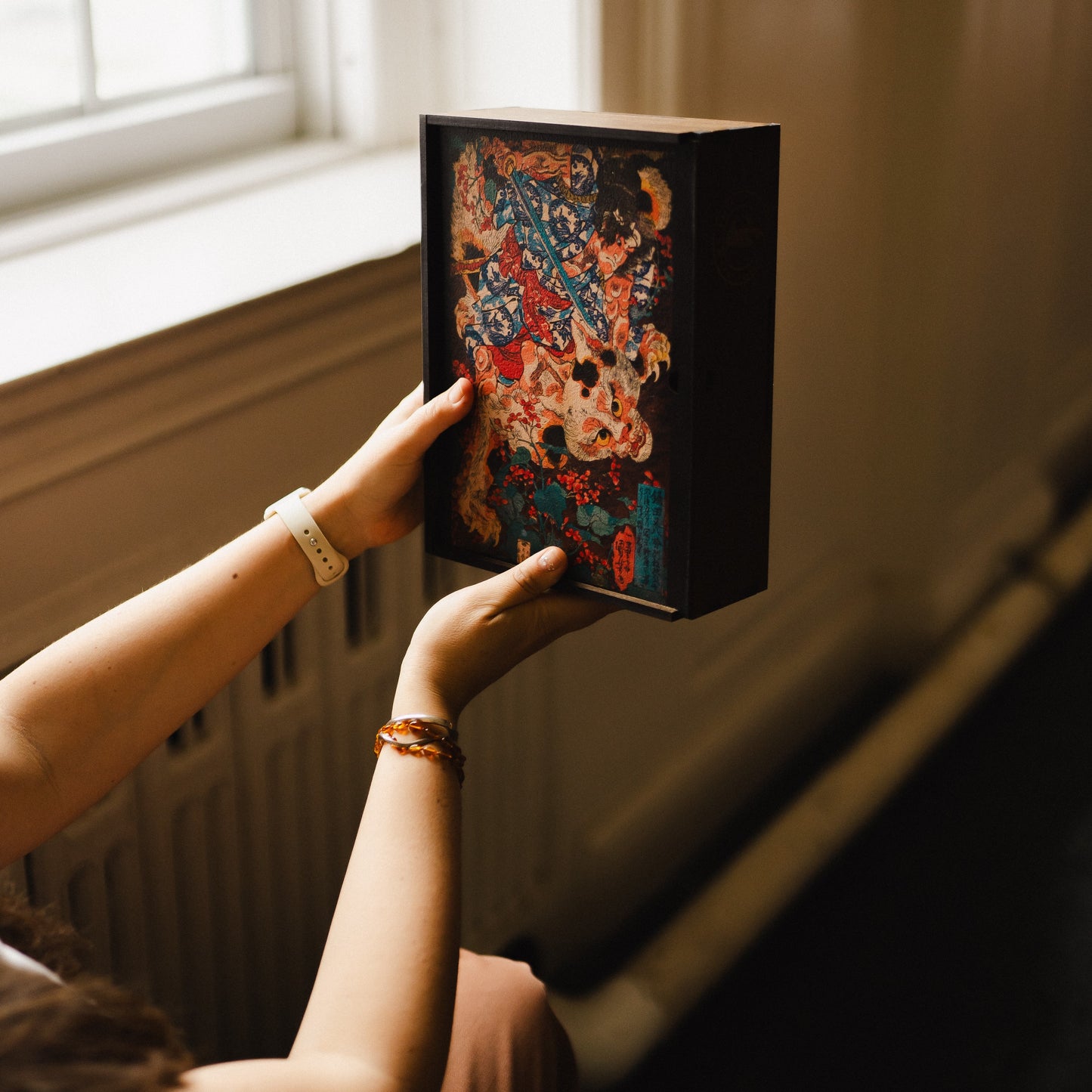
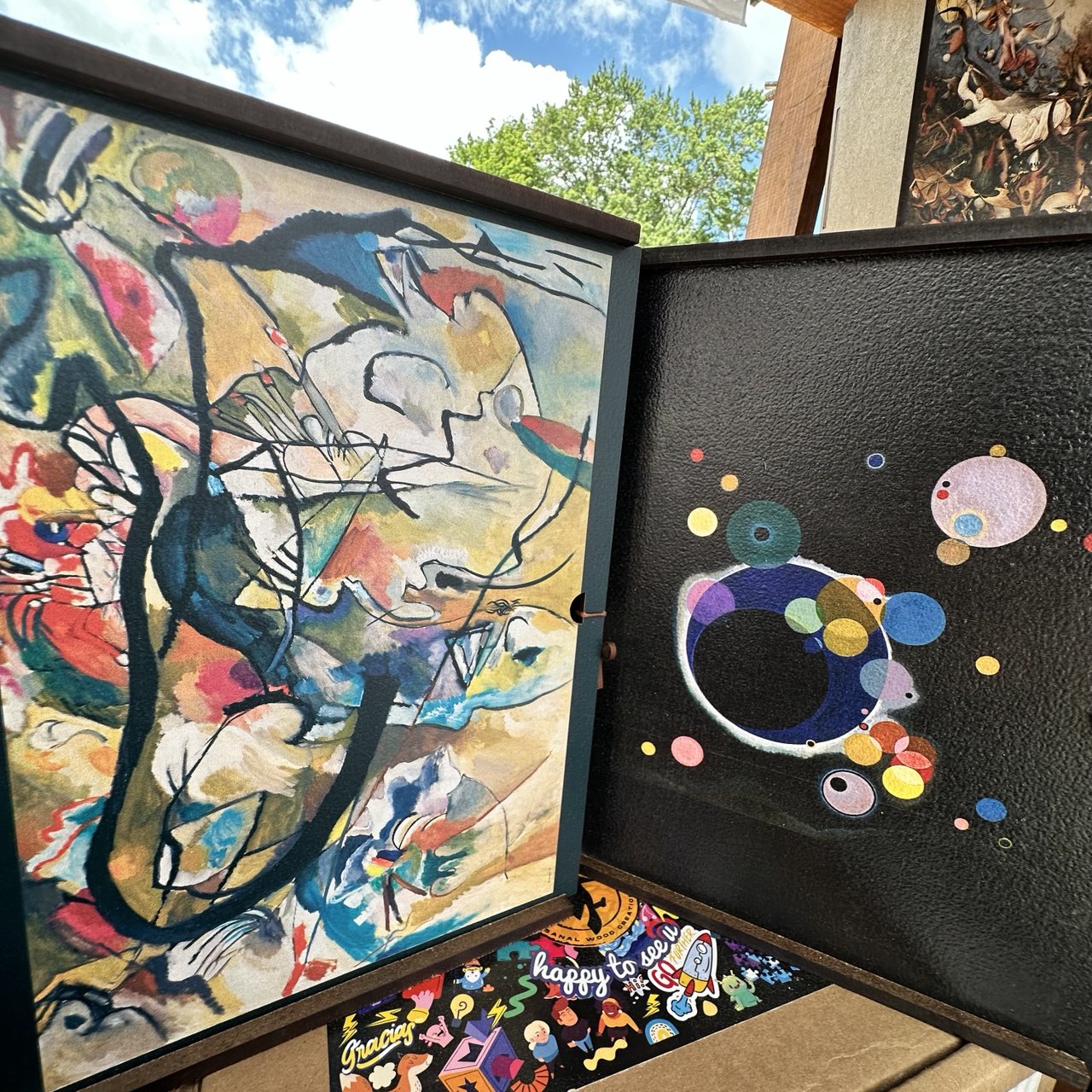
- Heirloom Keepsake: Your puzzle arrives beautifully packaged in a handcrafted wooden box, perfect for gifting or storing your masterpiece.
Craftsmanship and Care:
Craftsmanship and Care:
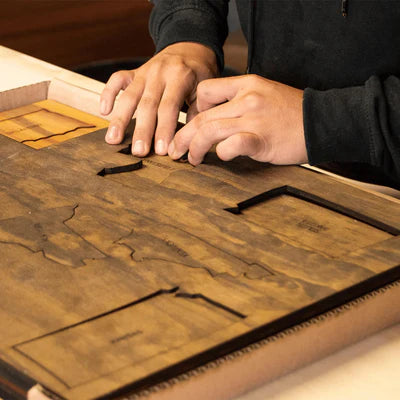
Experience the satisfying click of perfectly interlocking pieces. Our state-of-the-art laser cutting ensures precise fit and a smooth, seamless puzzle-solving experience. The perfect upgrade from cardboard without breaking the bank.
- Natural Laser Residue: A small amount of harmless black residue from the laser cutting process may be present. Simply wipe it away with a damp cloth.
- Hand-Finished Details: Each puzzle board, each wooden box are all carefully hand-stained, painted, and glued.
Satisfaction Guaranteed:
Satisfaction Guaranteed:
We are confident in the quality of our puzzles. If you are not completely satisfied, we offer a full refund or exchange.
PLEASE NOTE:
Each puzzle is crafted to make the most of your chosen size. Artwork may be subtly adjusted to meet our material and production standards while honoring the original work. Planning to frame yours? Email info@whatawoodwork.com for final measurements.
Couldn't load pickup availability
In stock
 PRODUCT DESCRIPTION
The Five Phases of the Bat — Wooden Jigsaw Puzzle
Yoshitoshi titled it "Kōmori no godanme" — Bats in the Fifth Act. Somewhere along the way, English translators turned that into "The Five Phases of the Bat," which sounds much more mysterious and tells you nothing about what's actually happening. What's happening: two bats are performing a murder scene from Japan's most famous samurai revenge play. One holds an umbrella. One holds two swords. Yoshitoshi thought that was funny. He was right.
📖 The Story Behind This Piece
In 1882, Yoshitoshi published a series of small comic prints called "Yoshitoshi ryakuga" — Sketches by Yoshitoshi. The series used mitate, a Japanese tradition of parody in which famous scenes get restaged with absurd substitutions. Here, the subject is Act V of Chūshingura, one of the most performed Kabuki plays in Japanese history. In the original, a down-and-out samurai named Sadakuro murders a merchant during a thunderstorm. Yoshitoshi replaces both men with bats. The umbrella is still there. The swords are still there. The thunderstorm is implied. The tragedy is now a comedy, and the comedy still lands 140 years later.
By 1882, Yoshitoshi was working at the edge of a dying tradition. Meiji-era Japan was importing photography and Western printing techniques, and the woodblock print market had collapsed. Most of his contemporaries had retired or retrained. Yoshitoshi kept going, in part by doing what his predecessors couldn't quite pull off: making ukiyo-e funny. The mitate format gave him permission to be irreverent, and he used it without apology. The bat print is a small work, not a grand statement. That's what makes it interesting.
UV printing on wood does something unexpected to this image. The black ink in Yoshitoshi's original line work sits differently than it would on paper or a screen. When you're building toward the bats themselves, you'll spend real time in the middle-dark zones where the bat wings meet the background shadow — both are close in value, and the laser cut gives you no mercy. The piece edges are your best guide. The umbrella, when it finally clicks in, reads almost like a joke punchline delivered late.
🎁 Who Gets One of These
A few specific people come to mind, none of them especially easy to shop for.
✔️ The ukiyo-e collector who owns prints but no Yoshitoshi — You know the tradition. You've probably never seen mitate done with bats performing Kabuki murder. Now you can own it in a format that doesn't require archival framing conditions.
✔️ The Kabuki enthusiast who knows Chūshingura cold — You'll catch the joke immediately. Sadakuro with a sword and an umbrella, restaged as a bat. Yoshitoshi knew exactly who he was talking to in 1882.
✔️ The person who reads art history the way other people read novels — Meiji-era Japan is one of the most compressed cultural ruptures in modern history. Yoshitoshi was working inside it. That context makes this print worth spending time with.
✔️ The gift-buyer who needs something genuinely specific — Not a museum poster, not a print-on-demand canvas. A handcrafted wooden puzzle of a 140-year-old bat parody, in a keepsake box. There is no version of that gift that gets forgotten.
✔️ The puzzle person who has finished every nature scene they own — Yoshitoshi's line work and close tonal values make the bat sections legitimately difficult in the way that a new kind of problem is difficult.
Works well as a birthday gift for anyone with a serious interest in Japanese art or Kabuki theater, and as a retirement gift for someone who finally has time to sit with something demanding.
🧩 Puzzle Specifications
✔️ Precision laser-cut wooden pieces
✔️ 3mm MDF core — rigid, warp-resistant, built to last
✔️ UV printing directly on wood — no paper laminate, no peeling
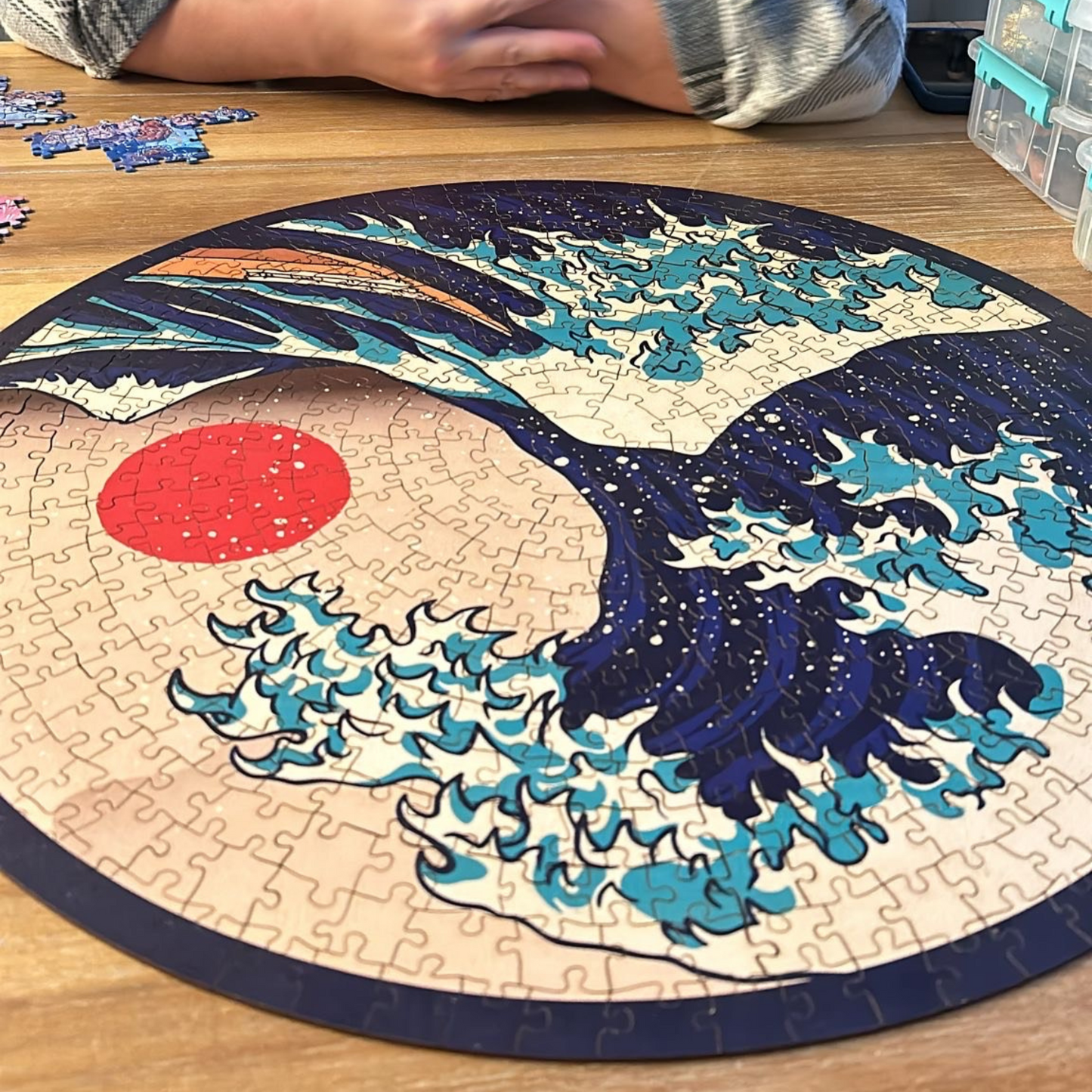
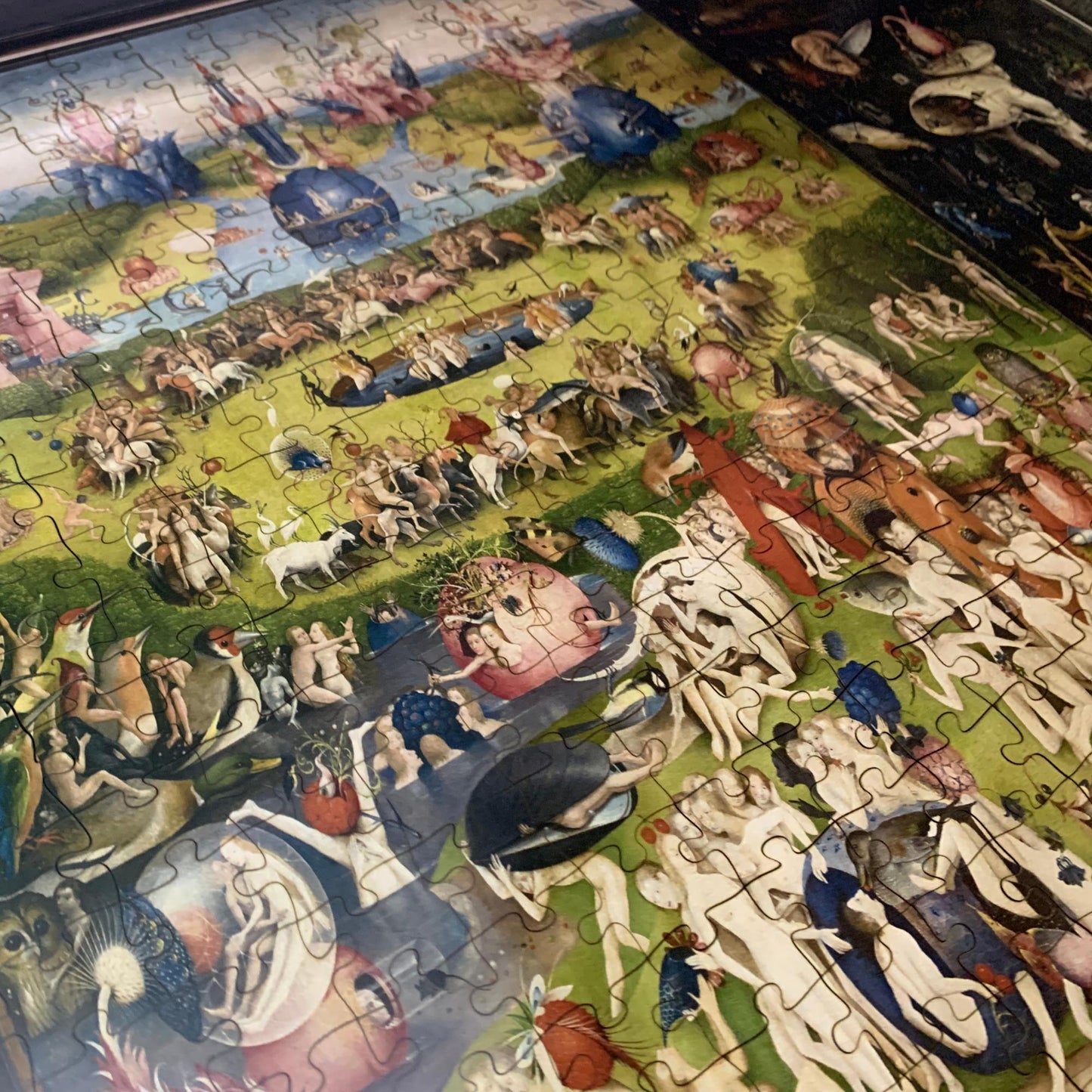
✔️ Traditional grid-cut design
✔️ Sizes: 15"x23", 18"x24", 23"x31"
✔️ Piece counts: 300–1000
✔️ Handcrafted wooden keepsake box included
✔️ Made to order — ships in 3–4 weeks
💎 Why This Puzzle Lasts
Comparable wooden puzzles from other makers run $300–$500. The craft justifies that price. WAWW gets to $115–$170 through direct manufacturing and no wholesale chain — not by cutting corners on materials. Same 3mm MDF core. Same UV printing. No warehouse inventory, no retail margin.
The 3mm MDF core is what separates wooden puzzles from cardboard ones over time. Cardboard warps, softens at the edges, and loses its click. MDF holds its shape for decades, so the pieces still seat cleanly whether you solve it once or return to it years later. UV printing bonds the ink directly to the wood surface, with no paper laminate in between. No laminate means no peeling at the corners, and no fading from light exposure — Yoshitoshi's blacks and ink-wash grays read the same on the wood as they do in the original print.
The traditional grid cut means pieces connect the way puzzle pieces are supposed to connect — with a click you can feel, not just see. No novelty shapes, no arbitrary die cuts. When you're done, the wooden keepsake box is worth keeping. Most people store the completed puzzle there, or display the box on its own. Every puzzle at WAWW is made to order after you place it. The 3–4 week production window exists because nothing sits in a warehouse waiting. Your puzzle gets made when you order it.
The 300-piece, 15"x23" starts at $115. The 1000-piece, 23"x31" runs $170.
🖼️ After You Finish It
Most people frame it. The wooden box ends up on a shelf nearby, and it's usually the box that starts the conversation — then the image, then the explanation of what's actually happening in it. Two bats. A murder scene from a 250-year-old samurai play. One of them has an umbrella. Yoshitoshi made it in 1882 as a joke, and the joke still works.
⚠️ Important Notes
Puzzles may have light laser residue on the surface — a damp cloth handles it. There's a natural wood scent when the box first opens; it fades within a few days. Made-to-order production means your puzzle ships in 3–4 weeks. If anything arrives damaged, we replace or refund. No questions.