


The Ghost Behind the Net — Hokusai's Masterpiece Wooden Puzzle
The Ghost Behind the Net — Hokusai's Masterpiece Wooden Puzzle
- Regular price
- Price: $115.00
- Regular price
- List Price: $0.00
- Sale price
- Price: $115.00
- Unit price
- per
Key Features:
Key Features:
- Premium Quality: Crafted from durable 3mm (.14in) composite wood board for lasting enjoyment.
- Vibrant Imagery: High-resolution UV printing directly on the wood—no paper laminate—for stunning detail and vibrant colors.
- Eco-Conscious: Made with environmentally friendly materials.
- Heirloom Keepsake: Your puzzle arrives beautifully packaged in a handcrafted wooden box, perfect for gifting or storing your masterpiece.
Craftsmanship and Care:
Craftsmanship and Care:
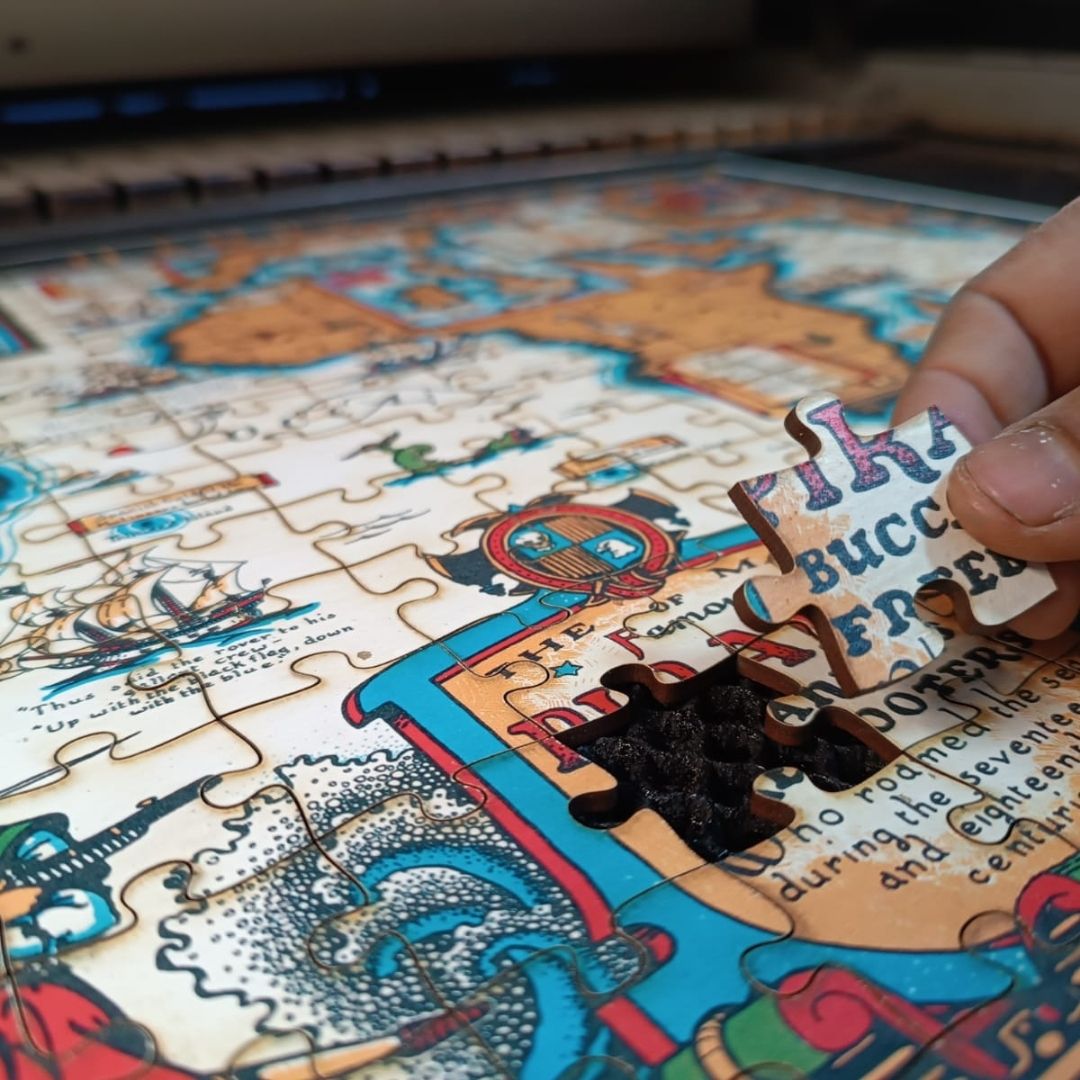
Experience the satisfying click of perfectly interlocking pieces. Our state-of-the-art laser cutting ensures precise fit and a smooth, seamless puzzle-solving experience. The perfect upgrade from cardboard without breaking the bank.
- Natural Laser Residue: A small amount of harmless black residue from the laser cutting process may be present. Simply wipe it away with a damp cloth.
- Hand-Finished Details: Each puzzle board, each wooden box are all carefully hand-stained, painted, and glued.
Satisfaction Guaranteed:
Satisfaction Guaranteed:
We are confident in the quality of our puzzles. If you are not completely satisfied, we offer a full refund or exchange.
PLEASE NOTE:
Each puzzle is crafted to make the most of your chosen size. Artwork may be subtly adjusted to meet our material and production standards while honoring the original work. Planning to frame yours? Email info@whatawoodwork.com for final measurements.
Couldn't load pickup availability
In stock
 PRODUCT DESCRIPTION
The Ghost of Kohada Koheiji — Wooden Jigsaw Puzzle
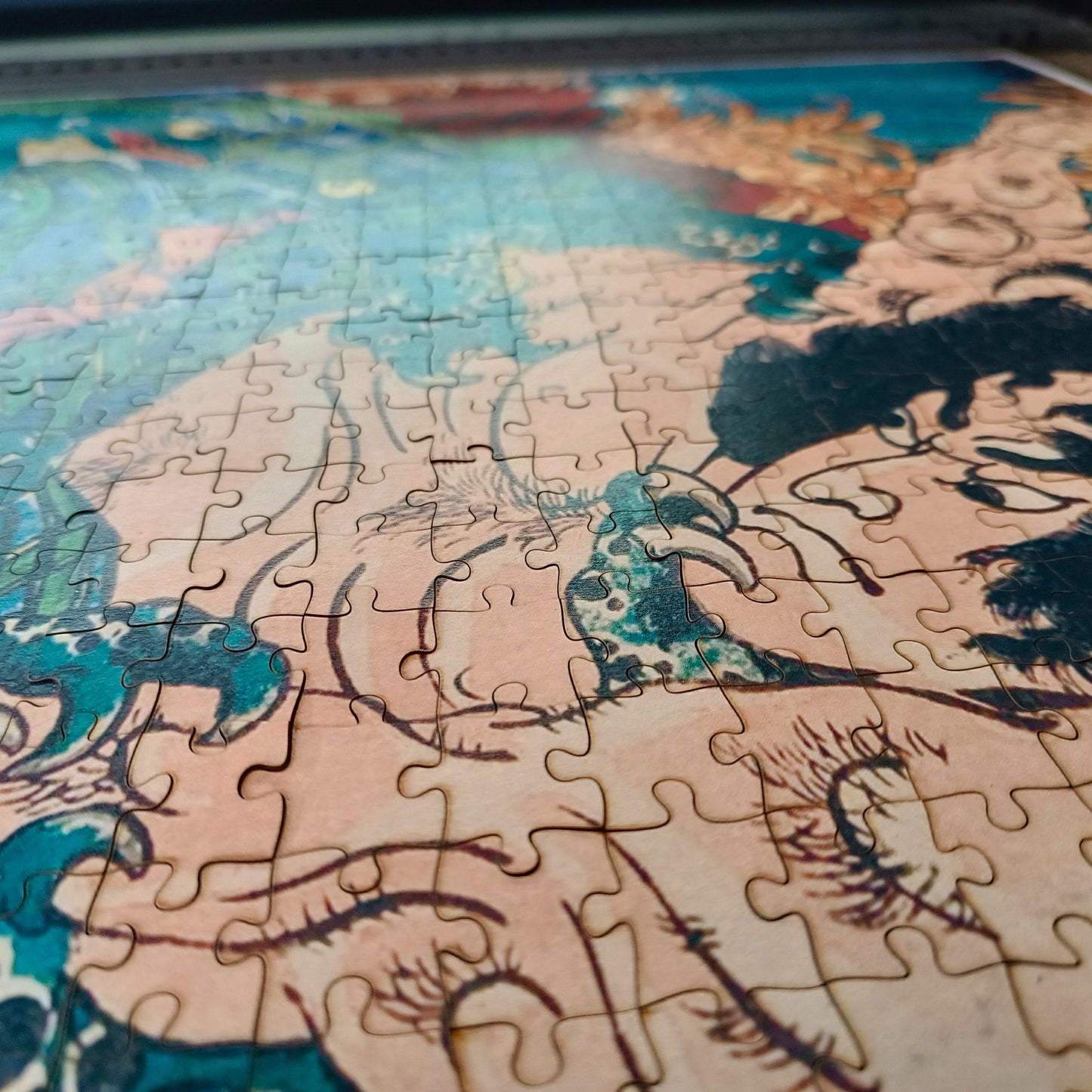
Hokusai started "One Hundred Ghost Stories" around 1831 and stopped after five prints. Nobody knows why. The series was abandoned, incomplete, and the five that exist became some of the most studied images in Edo-period art. Koheiji is one of them: a murdered Kabuki actor grinning over a mosquito net, rendered in Prussian blue so deep it reads almost black until the light shifts.
📖 The Story Behind This Piece
Hokusai made this print around 1831, during a period when ghost stories weren't entertainment in the modern sense — they were public ritual. Summer ghost-tale gatherings, called kaidan-kai, involved lighting candles and extinguishing them one by one as each story finished, letting the darkness accumulate. Koheiji belonged to that tradition. He was a fictional Kabuki actor, murdered in the Asaka Swamp by his wife and her lover, who returned as a skeletal spirit to haunt them into madness. Hokusai doesn't illustrate the murder. He shows the aftermath: the ghost, already grinning, already won.
By 1831, Hokusai was in his seventies and had already produced "The Great Wave." He kept working anyway, kept experimenting. "One Hundred Ghost Stories" shows him doing something unusual for ukiyo-e: using Prussian blue, a relatively new pigment in Japan at the time, as a primary atmospheric tool rather than an accent. The blue in Koheiji isn't decorative. It's the whole mood. He understood what the pigment could do to darkness and built the composition around that understanding.
During assembly, the mosquito net is where most people slow down. The gauze folds are rendered in fine parallel lines against that Prussian blue ground, and on a screen they look almost identical. On wood, UV printing preserves the tonal separation between the net's shadow folds and the background in a way that paper laminate flattens out. You'll find yourself sorting by values you didn't notice in the preview image, picking up pieces and realizing the gray you thought was one shade is actually three.
🎁 Who Gets One of These
A few types of people buy this one specifically.
✔️ The Japanese woodblock print collector — You know the difference between ukiyo-e and shin-hanga and you've explained it more than once. The Ghost series is Hokusai doing something he almost never did, and you'll want it on the wall.
✔️ The Kabuki or Edo-period history reader — You've gone deep enough into the period to know what a kaidan-kai was. The Koheiji legend shows up across Edo drama and literature, and this is Hokusai's version of it.
✔️ The serious puzzle person who's done the cardboard route — You've finished enough 1000-piece puzzles that the material matters now. Wood pieces click differently, stack differently, and the finished surface reads differently under light.
✔️ The art historian or museum member who gives good gifts — One of only five prints from an unfinished series by one of the most studied artists in Japanese history. That's a gift with a story attached that doesn't require explanation.
✔️ The supernatural-themed art buyer — Not horror in the commercial sense. Hokusai's Koheiji is genuinely unsettling in the way serious folklore is: earned, specific, rooted in a place and a grief.
🧩 Puzzle Specifications
✔️ Precision laser-cut wooden pieces
✔️ 3mm MDF core — rigid, warp-resistant, built to last
✔️ UV printing directly on wood — no paper laminate, no peeling
✔️ Traditional grid-cut design
✔️ Piece counts: 300–1000
✔️ Handcrafted wooden keepsake box included
✔️ Made to order — ships in 3–4 weeks
💎 Why This Puzzle Lasts
Most wooden puzzle makers charge $300–$500. The craft justifies it. WAWW gets to the same place differently: direct manufacturing, no wholesale chain, made to order only. Same materials, no markup. The savings pass through.
The 3mm MDF core is what keeps pieces clicking cleanly years from now. Cardboard compresses and warps; MDF holds its shape under handling, under humidity, under storage. Each piece fits the same on the hundredth assembly as it did on the first. UV printing goes directly onto that wood surface, so there's no paper laminate to bubble, peel, or fade at the edges. The Prussian blue in Koheiji is a pigment that's sensitive to light degradation in original prints — here it stays fixed, printed into the surface itself.
The traditional grid cut means pieces interlock with a satisfying resistance that novelty-shape cuts often lose. No gimmicks in the geometry. The wooden keepsake box is built to stay — not packaging to discard, but the object the puzzle lives in. People put them on shelves. Some use them to store other things. The box has weight to it. Made to order means nothing sits in a warehouse waiting to warp; your puzzle is cut after you place the order, which is why the wait is three to four weeks and why it arrives the way it should.