


The Hall of Stars by Karl Thiele - Wooden Jigsaw Puzzle
The Hall of Stars by Karl Thiele - Wooden Jigsaw Puzzle
- Regular price
- Price: $115.00
- Regular price
- List Price: $0.00
- Sale price
- Price: $115.00
- Unit price
- per
Key Features:
Key Features:
- Premium Quality: Crafted from durable 3mm (.14in) composite wood board for lasting enjoyment.
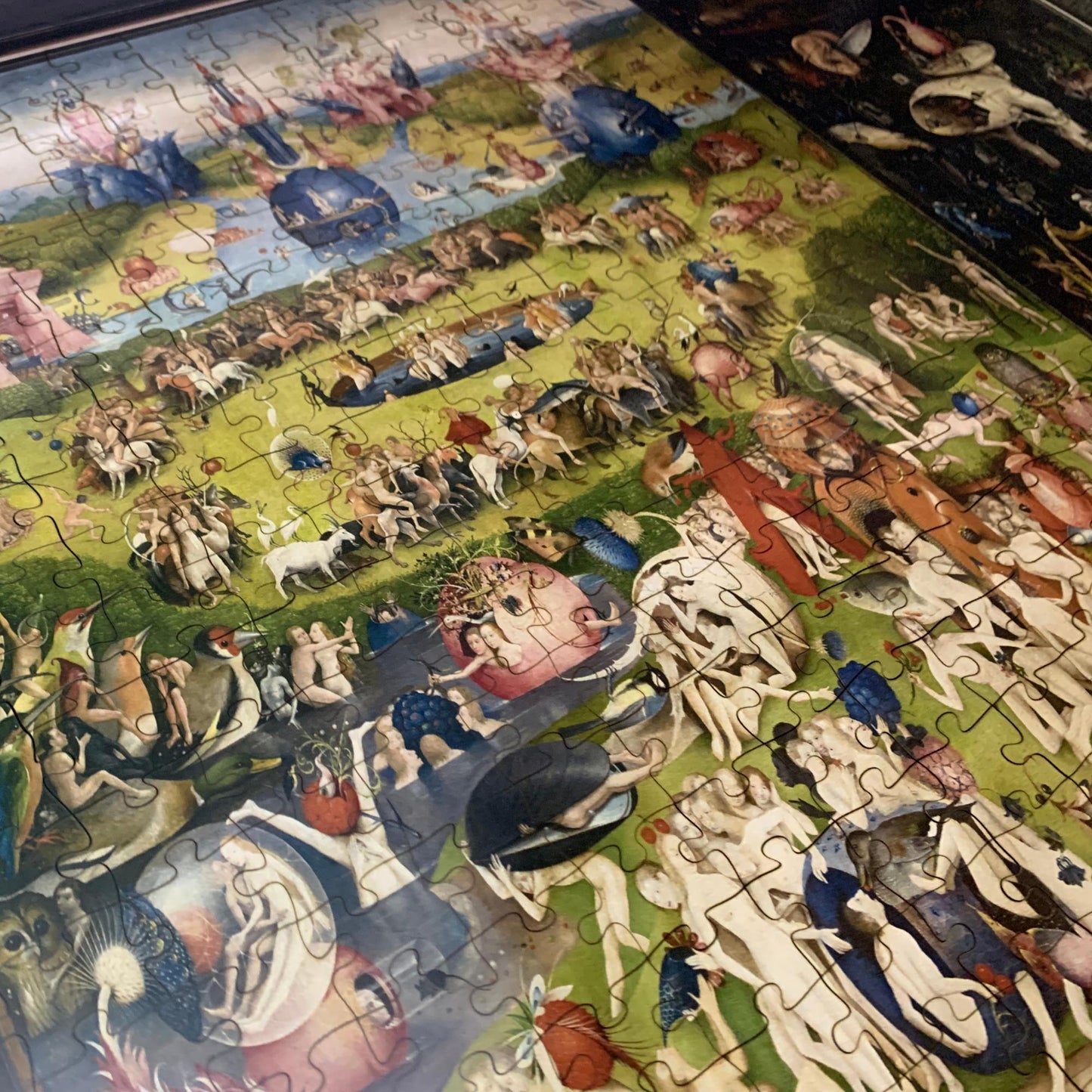
- Vibrant Imagery: High-resolution UV printing directly on the wood—no paper laminate—for stunning detail and vibrant colors.
- Eco-Conscious: Made with environmentally friendly materials.
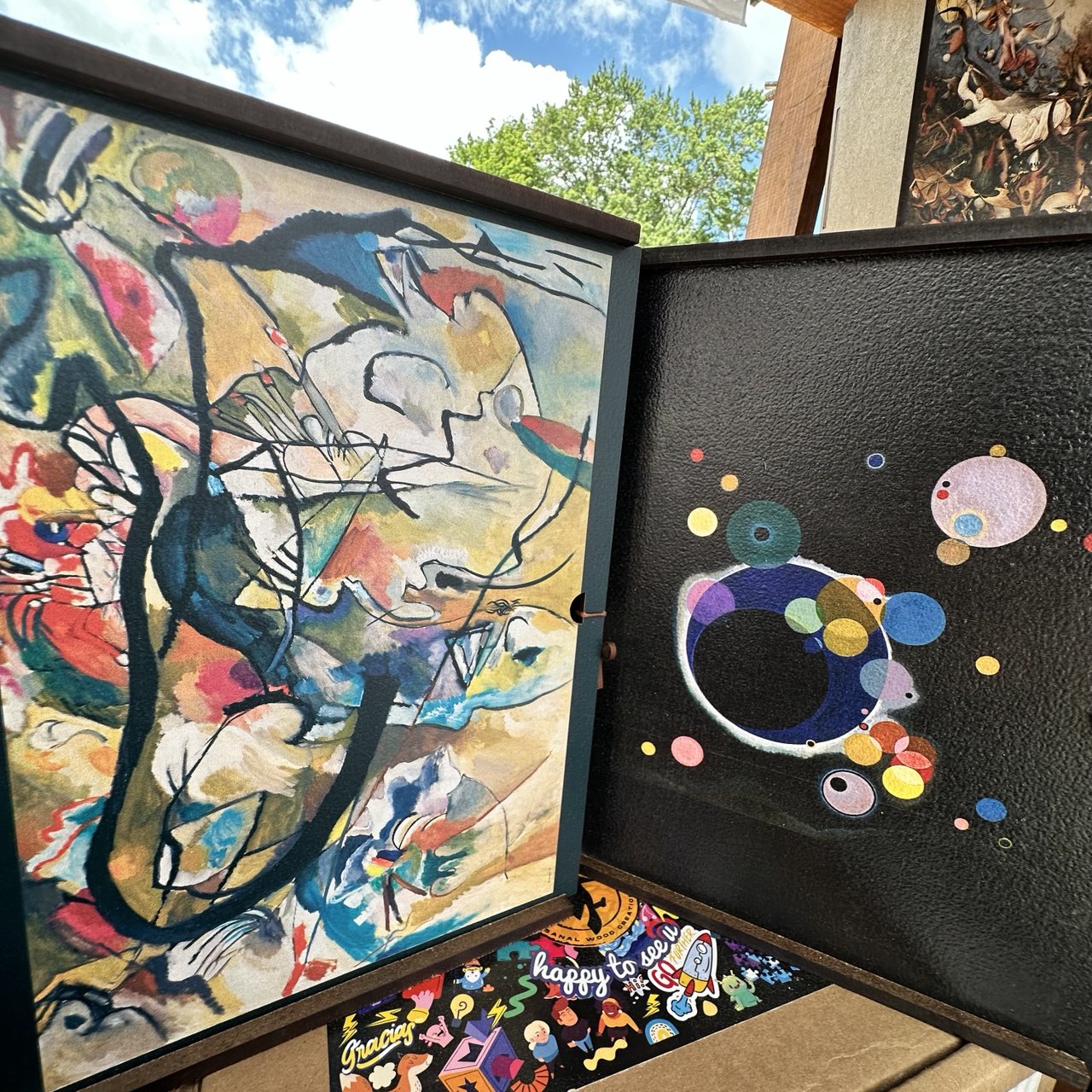
- Heirloom Keepsake: Your puzzle arrives beautifully packaged in a handcrafted wooden box, perfect for gifting or storing your masterpiece.
Craftsmanship and Care:
Craftsmanship and Care:
Experience the satisfying click of perfectly interlocking pieces. Our state-of-the-art laser cutting ensures precise fit and a smooth, seamless puzzle-solving experience. The perfect upgrade from cardboard without breaking the bank.
- Natural Laser Residue: A small amount of harmless black residue from the laser cutting process may be present. Simply wipe it away with a damp cloth.
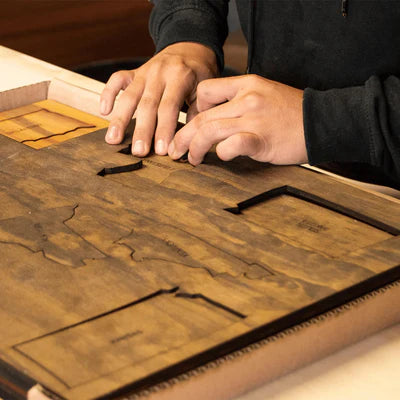
- Hand-Finished Details: Each puzzle board, each wooden box are all carefully hand-stained, painted, and glued.
Satisfaction Guaranteed:
Satisfaction Guaranteed:
We are confident in the quality of our puzzles. If you are not completely satisfied, we offer a full refund or exchange.
PLEASE NOTE:
Each puzzle is crafted to make the most of your chosen size. Artwork may be subtly adjusted to meet our material and production standards while honoring the original work. Planning to frame yours? Email info@whatawoodwork.com for final measurements.
Couldn't load pickup availability
In stock
 PRODUCT DESCRIPTION
The Hall of Stars (Sternenhalle): Schinkel designed this set in 1815 for a Berlin opera house. He was an architect, not a theatrical painter, and it shows.
The deep blue dome he conceived for the Queen of the Night's palace wasn't decorative — it was structural thinking applied to illusion. When the curtain rose on that 1816 production, the audience wasn't looking at painted scenery. They were looking at a building that could never be built, drawn by someone who knew exactly how to build one.
📖 The Story Behind This Piece
In 1815, Karl Friedrich Schinkel sat down to design the sets for a new Berlin Royal Opera production of Mozart's The Magic Flute. The scene he's remembered for is Act 1, Scene 6: the Hall of Stars, the throne room of the Queen of the Night. Schinkel filled the dome with actual constellations, rendered with the precision of an astronomical chart. He layered in Egyptian Revival columns and Neoclassical symmetry, both visual languages tied to the opera's Masonic symbolism. The result looked less like a stage and more like a cosmological argument.
Karl Friedrich Thiele engraved the design as part of a published portfolio of Schinkel's theatrical work, released between 1819 and 1849. Thiele's contribution is easy to underestimate. Stage designs disappear when the production closes. Thiele's decision to document Schinkel's work in aquatint is the reason this image exists at all. Without the engraving, the Hall of Stars would be a footnote in opera history rather than one of the most reproduced stage designs ever made.
The dominant visual challenge in this puzzle is the blue dome. It reads as near-solid in a digital thumbnail, but up close the constellations distribute across it in clusters of pale line-work that vary in density from sector to sector. UV printing on wood preserves the tonal gradation that paper laminate compresses into flat zones. You'll notice the difference most when sorting the dome's upper quadrant — pieces that look identical on a screen resolve into distinct values once they're in your hands under direct light.
🎁 Who Gets One of These
A few specific people keep buying this one.
✔️ The opera subscriber who has seen The Magic Flute at least twice — You know the Act 1 staging. Seeing Schinkel's original conception, the one that set the visual template for every production since 1816, is a different experience than watching it from the house.
✔️ The architectural history reader — Schinkel is the architect behind some of Berlin's most important Neoclassical buildings. The Hall of Stars is what his spatial thinking looked like when the brief was pure imagination and no budget.
✔️ The amateur astronomer with art on the walls — The constellations in this dome are placed correctly. Schinkel knew his star charts. Assembling the dome means learning which constellation lives where.
✔️ The art history professor or serious museum-goer — Egyptian Revival iconography, Masonic symbolism, Neoclassical proportion — all of it legible in a single image. It's a good room to spend time in.
✔️ The gift-giver who wants to stop giving forgettable things — A 200-year-old stage design for the world's most performed opera, on wood, in a handcrafted box. That's a specific gift.
Strong occasions: birthdays for anyone with a serious interest in classical music or art history; anniversaries for couples who share a connection to opera; Christmas for the person in your life who already owns everything and notices when something is genuinely considered.
🧩 Puzzle Specifications
✔️ Precision laser-cut wooden pieces
✔️ 3mm MDF core — rigid, warp-resistant, built to last
✔️ UV printing directly on wood — no paper laminate, no peeling
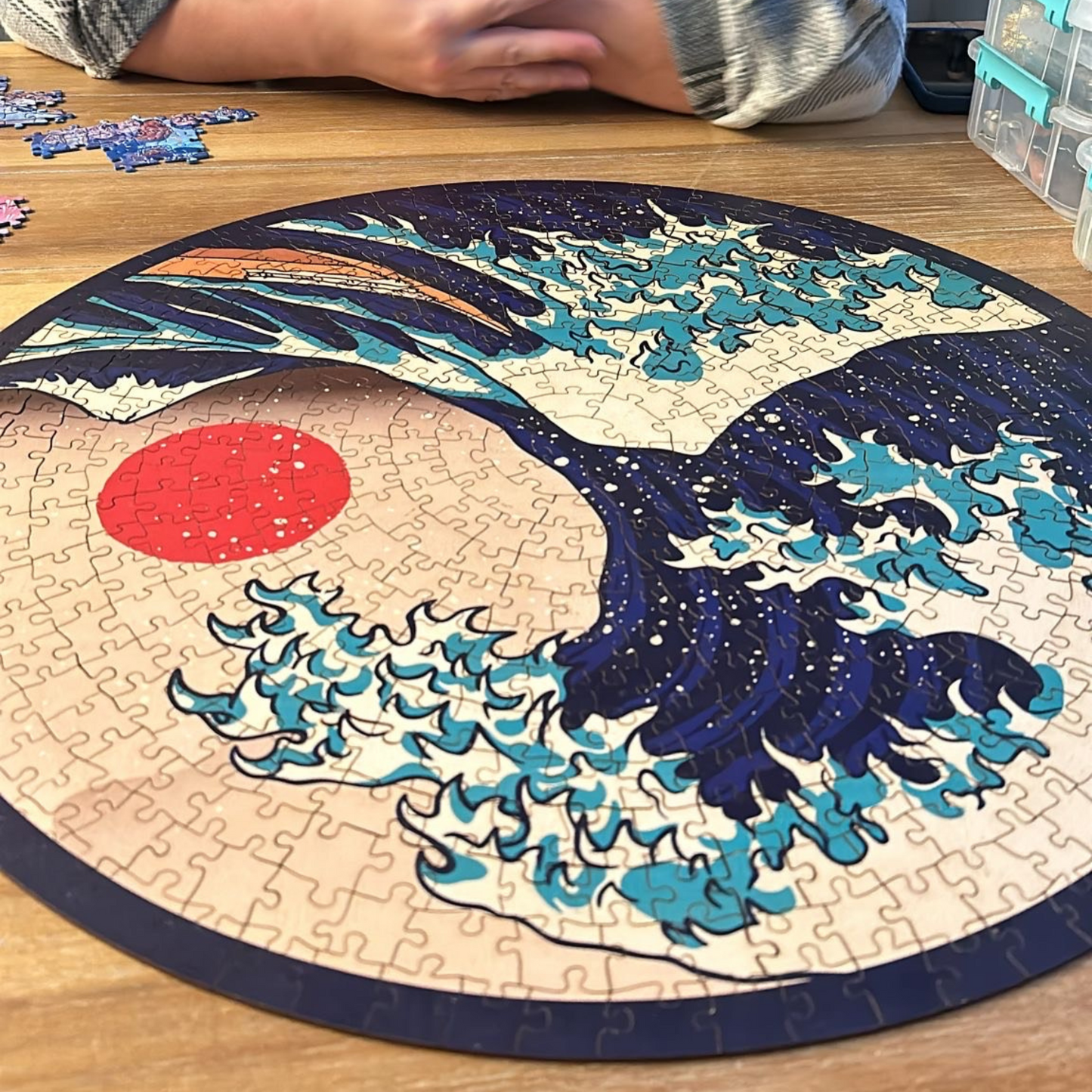
✔️ Traditional grid-cut design
✔️ Sizes: 15"x23", 18"x24", 23"x31"
✔️ Piece counts: 300–1000
✔️ Handcrafted wooden keepsake box included
✔️ Made to order — ships in 3–4 weeks
💎 Why This Puzzle Lasts
Most wooden puzzle makers charge $300 to $500. The craft justifies it. We get to the same place differently: direct manufacturing, no wholesale chain, made to order. Same materials. No markup passed on to you.
The 3mm MDF core is what keeps pieces clicking cleanly years from now. Cardboard expands and contracts with humidity. MDF doesn't. The pieces you separate on the first solve seat exactly the same way on the tenth. UV printing bonds pigment directly to that wood surface rather than pressing it onto a paper layer glued on top. No laminate means no peeling at the edges, no color shift at the seams, and no loss of the fine line-work in Thiele's engraving.
The traditional grid cut means pieces interlock with a clean, definite snap — the feedback that tells you a piece is right before you look up to confirm. Once the puzzle is finished, it doesn't stay a puzzle. The handcrafted wooden box holds the completed image when disassembled and stays out on a shelf because it looks like it belongs there. Every puzzle is made after you order. Nothing sits in a warehouse. The 3 to 4 week production window is the reason the quality is consistent.
The 300-piece, 15"x23" starts at $115. The 1000-piece, 23"x31" runs $170.
🖼️ After You Finish It
Most people frame it. The wooden box goes on a shelf nearby and holds its own as an object. When someone asks about the image — and they will, because a deep blue constellation dome is not a common thing to have on a wall — the answer requires explaining Schinkel, Mozart, Freemasonry, and a Berlin opera house in 1816. The Hall of Stars has been one of opera's defining visual documents for over two centuries. Having assembled it yourself is a particular kind of familiarity with it.
⚠️ Important Notes
Puzzles may have light laser residue on the surface — a damp cloth handles it. There's a natural wood scent when the box first opens; it fades within a few days. Made-to-order production means your puzzle ships in 3–4 weeks. If anything arrives damaged, we replace or refund. No questions.