


The Last Judgment by Pieter Huys at Walters - Wooden Jigsaw Puzzle
The Last Judgment by Pieter Huys at Walters - Wooden Jigsaw Puzzle
- Regular price
- Price: $115.00
- Regular price
- List Price: $0.00
- Sale price
- Price: $115.00
- Unit price
- per
Key Features:
Key Features:
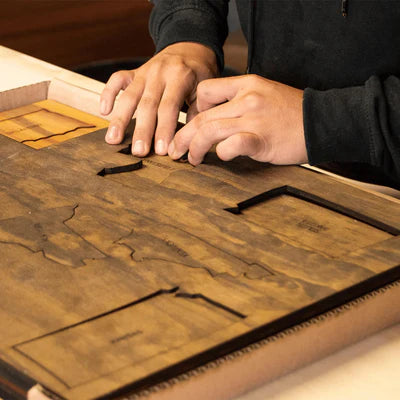
- Premium Quality: Crafted from durable 3mm (.14in) composite wood board for lasting enjoyment.
- Vibrant Imagery: High-resolution UV printing directly on the wood—no paper laminate—for stunning detail and vibrant colors.
- Eco-Conscious: Made with environmentally friendly materials.
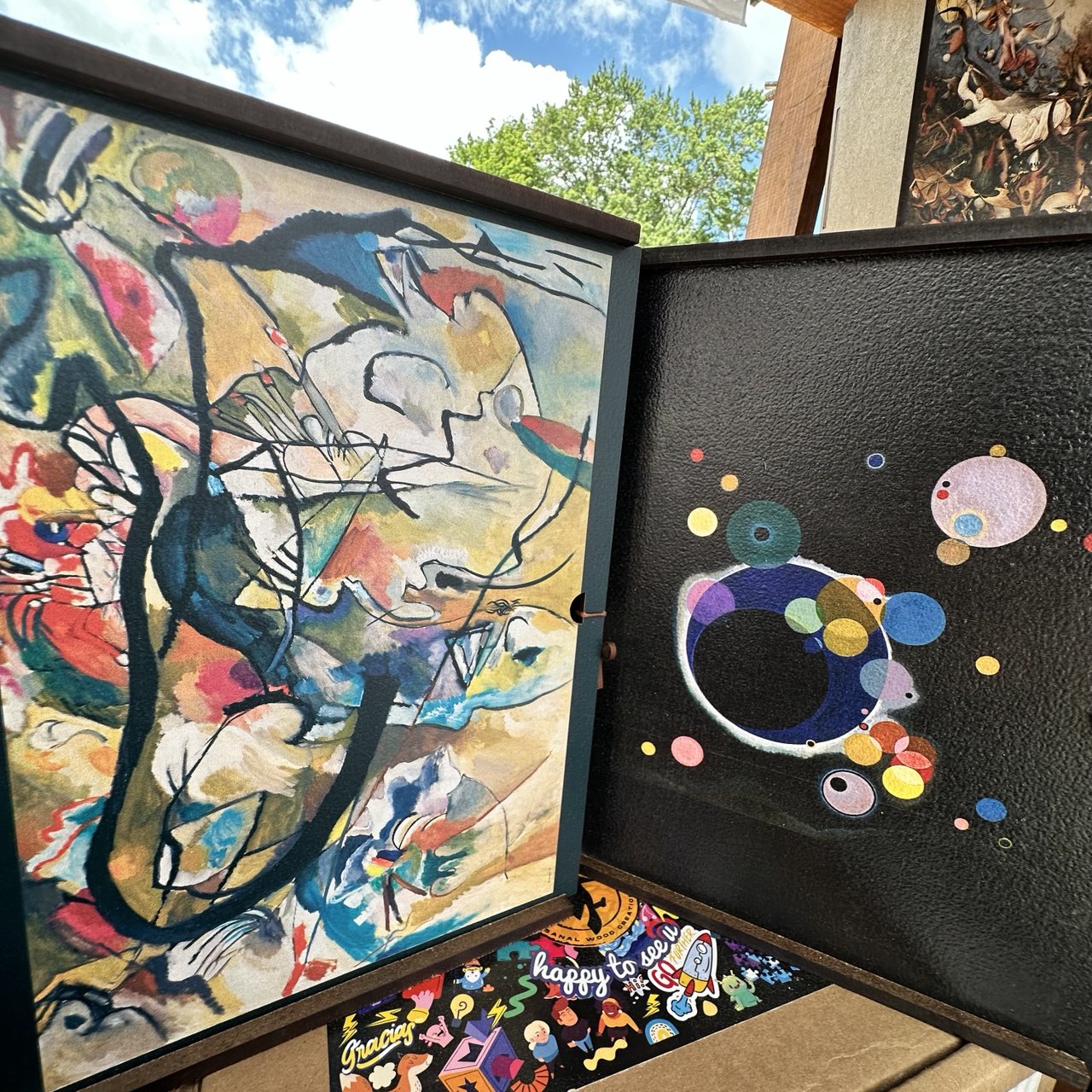
- Heirloom Keepsake: Your puzzle arrives beautifully packaged in a handcrafted wooden box, perfect for gifting or storing your masterpiece.
Craftsmanship and Care:
Craftsmanship and Care:
Experience the satisfying click of perfectly interlocking pieces. Our state-of-the-art laser cutting ensures precise fit and a smooth, seamless puzzle-solving experience. The perfect upgrade from cardboard without breaking the bank.
- Natural Laser Residue: A small amount of harmless black residue from the laser cutting process may be present. Simply wipe it away with a damp cloth.
- Hand-Finished Details: Each puzzle board, each wooden box are all carefully hand-stained, painted, and glued.
Satisfaction Guaranteed:
Satisfaction Guaranteed:
We are confident in the quality of our puzzles. If you are not completely satisfied, we offer a full refund or exchange.
PLEASE NOTE:
Each puzzle is crafted to make the most of your chosen size. Artwork may be subtly adjusted to meet our material and production standards while honoring the original work. Planning to frame yours? Email info@whatawoodwork.com for final measurements.
Couldn't load pickup availability
In stock
 PRODUCT DESCRIPTION
Pieter Huys knew his viewers. He painted their fears back at them
— Welcome to the 'The Last Judgment' Wooden Jigsaw Puzzle version.
The glutton being force-fed until he bursts. That detail is in there, painted by Pieter Huys in 1553, and it's easy to miss at first. The punishments in this painting aren't generic hellfire — each one fits the sin exactly, spelled out in Flemish Renaissance terms, for an audience that would have recognized every one of them.
📖 The Story Behind This Piece
Painted between 1553 and 1554, during a period when apocalyptic imagery had moved from church walls into private collections, The Last Judgment lays out a cosmos under pressure. Christ holds the center in the upper register, composed and still. Below, the landscape fractures into violence: angels and demons wrestling over souls, hybrid creatures that follow no natural taxonomy, the damned sorted and punished by the logic of their own sins. The version held by The Walters Art Museum in Baltimore — acquired by Henry Walters in 1902 as part of the Massarenti Collection — includes that celestial vision of Christ. The Prado's version does not.
Pieter Huys was working in the long shadow of Hieronymus Bosch, who had died about forty years before Huys painted this. What Huys understood about Bosch wasn't the monsters specifically — it was the system. Bosch built hell as a place with rules, its own terrible logic. Huys inherited that framework and pressed it further into the moral vocabulary of mid-16th-century Flanders, where the Reformation had made questions of salvation newly urgent and newly contested.
Assembly starts straightforwardly with Christ and the upper register — the composition is anchored and the colors hold. Then the descent begins. The hellscape below fractures into dozens of micro-scenes, each with its own color logic, and the pieces that looked sorted suddenly don't behave. UV printing directly onto the MDF pulls the ochres and shadow-blues out of the wood grain itself, so the texture you see in the original panel surface reads through in ways a paper laminate would flatten completely. You'll stop at some point, holding a piece, studying what exactly is happening in the bottom left corner. Something is eating something. It takes a moment to work out which is which.
🎁 Who Gets One of These
A few kinds of people buy this one, and they tend to have very specific reasons.
✔️ The Northern Renaissance collector who's read their Erwin Panofsky — You know what iconological analysis actually means, and you've spent real time thinking about how Flemish painters encoded moral argument in visual form. Huys gives you a lot to work through.
✔️ The museum member who noticed the Walters version on a visit to Baltimore — The Massarenti Collection acquisition is a story in itself. Owning a puzzle made from that specific work carries a different weight than a reproduction print.
✔️ The art historian who teaches Bosch and wants to show students a lesser-known inheritor — Huys is understudied relative to his influence. Having the painting on a table, assembled piece by piece, is a different kind of looking than a slide.
✔️ The person who finds Gothic and surrealist imagery genuinely beautiful, not just disturbing — Not everyone does. The people who do will recognize this immediately.
✔️ The gift-giver who needs something for someone who owns too many books and not enough objects — A keepsake wooden box containing a Flemish apocalypse is, at minimum, a conversation.
Works well as a birthday gift for the Renaissance art enthusiast who has the monographs but not the object. Also a serious choice for the holidays, for someone you want to give something that takes real time with.
🧩 Puzzle Specifications
✔️ Precision laser-cut wooden pieces
✔️ 3mm MDF core — rigid, warp-resistant, built to last
✔️ UV printing directly on wood — no paper laminate, no peeling
✔️ Traditional grid-cut design
✔️ Handcrafted wooden keepsake box included
✔️ Made to order — ships in 3–4 weeks
💎 Why This Puzzle Lasts
Most wooden puzzle makers charge $300–$500. The craft justifies it. WAWW gets to the same place differently: direct manufacturing, no wholesale chain, made to order with no warehouse inventory absorbing cost. Same materials. The price difference goes to the buyer, not the margin.
The 3mm MDF core is what keeps pieces clicking cleanly years from now. Cardboard compresses, absorbs humidity, warps at the edges. MDF doesn't. Pieces cut from it hold their tolerance, which means the satisfying click of a correct fit stays satisfying the twentieth time you pick this up. UV printing goes directly onto the wood surface — no paper laminate bonded on top, which means no peeling at the corners and no fading from light exposure. The colors in Huys' hellscape, those cold blues and sulfurous yellows, stay exactly where he left them.
The traditional grid cut means solving by shape works the way it should. No arbitrary piece forms creating false confidence — a fit is a fit, and you know it. When the puzzle is finished, it goes back into a handcrafted wooden box that isn't packaging. People keep it. It ends up on bookshelves, on coffee tables, offered to guests who want to try. Every puzzle is made after you order it. The three-to-four week wait is the production timeline for a single object, built for one buyer. Nothing sits in a warehouse waiting to be whatever it becomes.
🖼️ After You Finish It
Most people frame it. The painting itself has been in The Walters Art Museum since 1902. Huys finished it around 1554. Four and a half centuries of people looking at the same scene — Christ in the upper register, the damned sorted below — and still not entirely sure what's happening in the bottom left corner.