


The Masque of the Red Death by Demuth - Premium Wooden Puzzle
The Masque of the Red Death by Demuth - Premium Wooden Puzzle
- Regular price
- Price: $115.00
- Regular price
- List Price: $0.00
- Sale price
- Price: $115.00
- Unit price
- per
Key Features:
Key Features:
- Premium Quality: Crafted from durable 3mm (.14in) composite wood board for lasting enjoyment.
- Vibrant Imagery: High-resolution UV printing directly on the wood—no paper laminate—for stunning detail and vibrant colors.
- Eco-Conscious: Made with environmentally friendly materials.
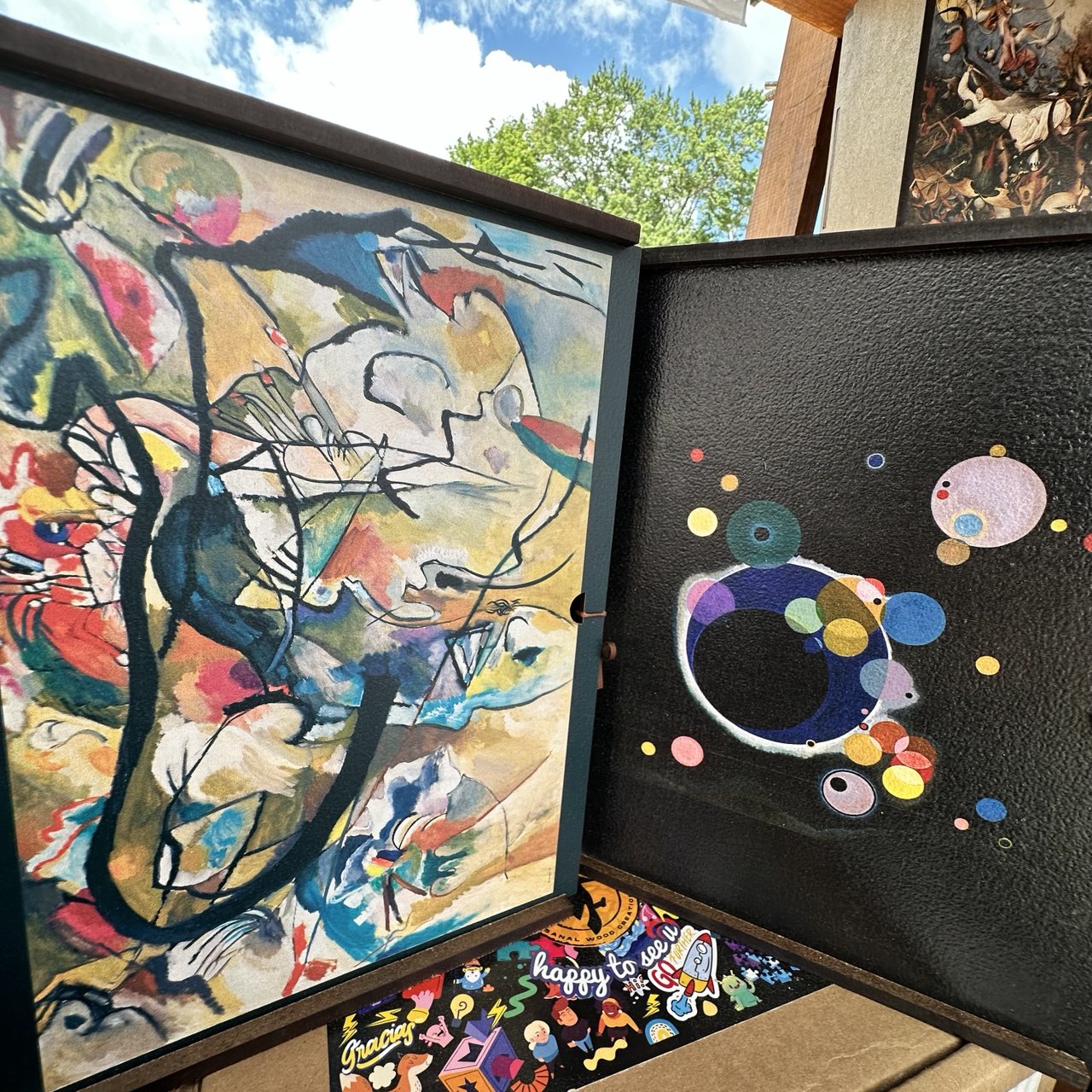
- Heirloom Keepsake: Your puzzle arrives beautifully packaged in a handcrafted wooden box, perfect for gifting or storing your masterpiece.
Craftsmanship and Care:
Craftsmanship and Care:
Experience the satisfying click of perfectly interlocking pieces. Our state-of-the-art laser cutting ensures precise fit and a smooth, seamless puzzle-solving experience. The perfect upgrade from cardboard without breaking the bank.
- Natural Laser Residue: A small amount of harmless black residue from the laser cutting process may be present. Simply wipe it away with a damp cloth.
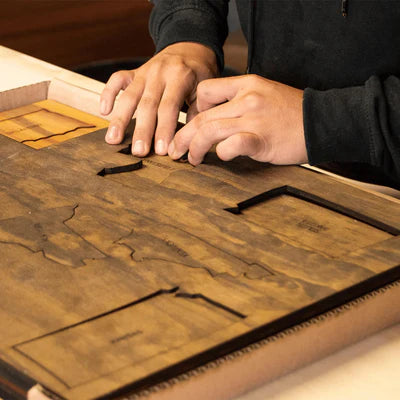
- Hand-Finished Details: Each puzzle board, each wooden box are all carefully hand-stained, painted, and glued.
Satisfaction Guaranteed:
Satisfaction Guaranteed:
We are confident in the quality of our puzzles. If you are not completely satisfied, we offer a full refund or exchange.
PLEASE NOTE:
Each puzzle is crafted to make the most of your chosen size. Artwork may be subtly adjusted to meet our material and production standards while honoring the original work. Planning to frame yours? Email info@whatawoodwork.com for final measurements.
Couldn't load pickup availability
In stock
 PRODUCT DESCRIPTION
The Masque of the Red Death: Most people who see it don't know the year it was made. Once you do, you can't unknow it
He chose Poe's story about a prince who locks himself inside a castle to escape a plague, throws a party, and dies anyway. The painting has lived at the Barnes Foundation in Philadelphia ever since. Demuth painted this in 1918, while the Spanish Influenza was killing fifty million people worldwide.
📖 The Story Behind This Piece
Demuth finished this watercolor and graphite work around 1918, the same year pandemic death tolls were being printed in newspapers with blank spaces where the numbers should have gone — censored to protect wartime morale. The painting shows the climax of Poe's story: the moment Prince Prospero's masked guests realize the figure moving through the seven colored rooms is not a costume. The ebony clock stands in the background. The stained glass glows. Nobody in the room is going to make it out.
Demuth worked almost exclusively in watercolor, a medium that punishes hesitation. His Precisionist instincts kept the geometry hard while the washes stayed fluid, a combination that gives the scene its specific wrongness: everything too controlled for what's happening in it. He was living with illness himself — diagnosed with diabetes years before insulin was available — which may explain why Poe's story felt less like allegory and more like observation.
Assembly starts simply enough in the corners, where Demuth's architectural lines hold clean and the grid clicks together fast. Then you hit the figures at the center: layered transparent washes, bodies dissolving into each other, shapes that don't resolve until the surrounding pieces lock in and force the image to declare itself. UV printing on wood makes those translucent watercolor passages visible in a way digital screens flatten out — the depth in the stained glass reads differently when it's sitting on a wood grain instead of glowing from behind a pixel.
🎁 Who Gets One of These
A few types of buyers come back to this one specifically.
✔️ The Poe reader who has the annotated Library of America edition on their shelf — You know the seven rooms, their colors, the order of the clock's chimes. Seeing Demuth's interpretation piece by piece is its own kind of close reading.
✔️ The modernist art collector who follows the Barnes Foundation — Philadelphia's most distinctive collection, and this is one of its quietly devastating pieces. Owning a version of it in wood and UV ink makes sense if the Barnes already means something to you.
✔️ The person who buys thoughtfully around Halloween and hates the obvious options — Gothic themes without kitsch. Poe without the raven. A work of actual art history that happens to be seasonally appropriate.
✔️ The gift-giver who knows someone currently working through a Precisionism phase — Charles Sheeler gets most of the attention. Demuth's literary work is the less charted territory, and that's worth something to the right collector.
✔️ The reader-artist hybrid, the person who owns both art books and annotated fiction — Demuth worked at the exact seam between those two worlds. So does this puzzle.
🧩 Puzzle Specifications
✔️ Precision laser-cut wooden pieces
✔️ 3mm MDF core — rigid, warp-resistant, built to last
✔️ UV printing directly on wood — no paper laminate, no peeling
✔️ Traditional grid-cut design
✔️ Handcrafted wooden keepsake box included
✔️ Made to order — ships in 3–4 weeks
💎 Why This Puzzle Lasts
Most wooden puzzle makers charge $300–$500. The craft justifies it. We arrive at the same place differently: direct manufacturing, no wholesale chain, made to order only. Same materials. No markup passed on to you.
The 3mm MDF core doesn't flex. Cardboard warps after a few years in storage; this doesn't. Pieces cut from it fit with a clean snap on assembly one, and they'll fit the same way twenty years from now when someone finds the box on a shelf. UV printing goes directly onto the wood surface, no paper layer between the ink and the substrate. Paper laminates peel. Paper laminates fade. Neither of those things happens here.
The traditional grid cut means pieces interlock firmly and release cleanly — no guessing whether a piece fits or just appears to. When you finish, the wooden keepsake box takes over as the object. It's solid enough that people keep it on a shelf long after the puzzle has been framed or disassembled. Every puzzle is made to order, which means no inventory sitting in a warehouse degrading. Yours is cut and printed after you order it, which is why production takes 3–4 weeks.