


Vase of Flowers by De Heem - Premium Wooden Jigsaw Puzzle
Vase of Flowers by De Heem - Premium Wooden Jigsaw Puzzle
- Regular price
- Price: $115.00
- Regular price
- List Price: $0.00
- Sale price
- Price: $115.00
- Unit price
- per
Key Features:
Key Features:
- Premium Quality: Crafted from durable 3mm (.14in) composite wood board for lasting enjoyment.
- Vibrant Imagery: High-resolution UV printing directly on the wood—no paper laminate—for stunning detail and vibrant colors.
- Eco-Conscious: Made with environmentally friendly materials.
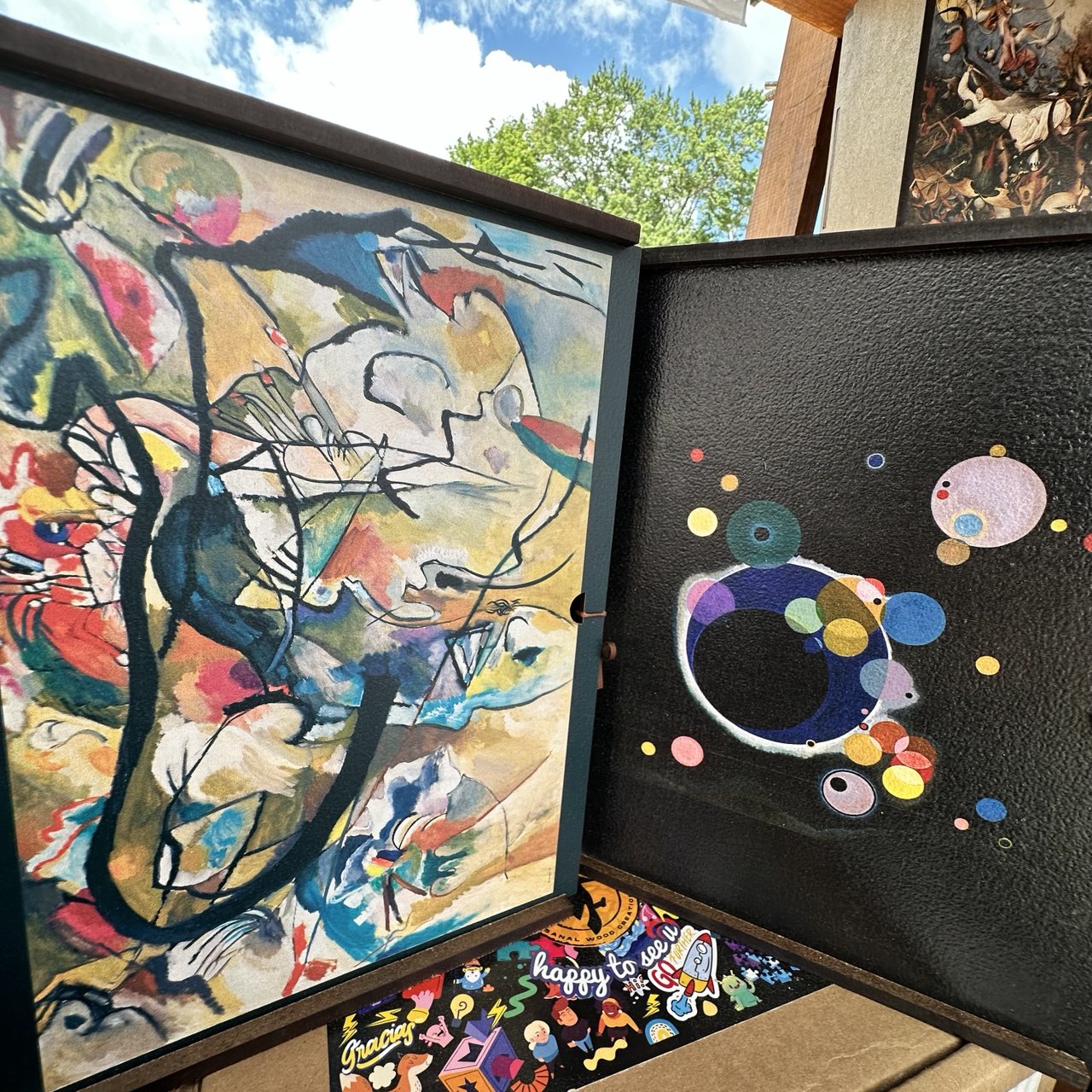
- Heirloom Keepsake: Your puzzle arrives beautifully packaged in a handcrafted wooden box, perfect for gifting or storing your masterpiece.
Craftsmanship and Care:
Craftsmanship and Care:
Experience the satisfying click of perfectly interlocking pieces. Our state-of-the-art laser cutting ensures precise fit and a smooth, seamless puzzle-solving experience. The perfect upgrade from cardboard without breaking the bank.
- Natural Laser Residue: A small amount of harmless black residue from the laser cutting process may be present. Simply wipe it away with a damp cloth.
- Hand-Finished Details: Each puzzle board, each wooden box are all carefully hand-stained, painted, and glued.
Satisfaction Guaranteed:
Satisfaction Guaranteed:
We are confident in the quality of our puzzles. If you are not completely satisfied, we offer a full refund or exchange.
PLEASE NOTE:
Each puzzle is crafted to make the most of your chosen size. Artwork may be subtly adjusted to meet our material and production standards while honoring the original work. Planning to frame yours? Email info@whatawoodwork.com for final measurements.
Couldn't load pickup availability
In stock
 PRODUCT DESCRIPTION
Vase of Flowers by Jan Davidsz de Heem — Wooden Jigsaw Puzzle
Look closely at the glass vase in de Heem's painting and you'll see a studio window reflected in it, complete with cloudy sky. He painted that reflection around 1670, on a canvas already crowded with tulips, poppies, a spider, and a butterfly. Most people who've seen this painting in the Mauritshuis in The Hague walk past it without noticing.
📖 The Story Behind This Piece
Painted around 1670 and held permanently at the Mauritshuis in The Hague, this is de Heem at full force. The composition bulges outward — exotic blooms stacked against each other, fruit tucked at the base, a spider working its web in the lower corner, a butterfly resting near the rim. Where earlier Dutch still life painters arranged flowers in careful, legible order, de Heem let things overflow. The vase itself is glass, and in its curved surface, a studio window with a cloudy sky bends into view.
Jan Davidsz de Heem spent decades making still life paintings that were really arguments about abundance. The exotic flowers he painted — tulips from the Ottoman Empire, flowers that couldn't bloom in the same season — weren't arrangements anyone could have gathered. They were assembled from studies made across months and years. The spider and butterfly weren't decorative. They were reminders that the whole gorgeous thing was already decaying.
The dark background is where UV printing on wood earns its keep here. In a digital reproduction, those shadows read as flat black. On the wood surface, they hold texture — the grain of the MDF pushing through just slightly, giving depth that paper laminate would smother. During assembly, the lower third of the puzzle is the real test: dark greens bleeding into near-black, with the stem clusters and shadows cut into pieces that look nearly identical until the fit tells you otherwise.
🎁 Who Gets One of These
A few types of people buy this one in particular.
✔️ The still life collector who's spent real time in Dutch Golden Age rooms — You've stood in front of de Heem's work in person and noticed things the wall labels didn't mention. Rebuilding it piece by piece is a different kind of looking.
✔️ The museum member who gifts thoughtfully — Someone on your list volunteers at a natural history or fine art museum, knows the difference between Haarlem and Utrecht school, and would recognize de Heem's name immediately.
✔️ The botanical illustrator or trained horticulturist — De Heem's flowers are botanically specific. The tulip varieties, the poppy species — getting those right across a 1000-piece puzzle is its own quiet project.
✔️ The person who has finished cardboard puzzles and stopped — Not because they lost interest in puzzles, but because what you do with a cardboard puzzle when it's done was never a good answer.
✔️ The art history graduate or university professor — Someone who teaches or studied 17th-century Northern European painting and would put this on a shelf in their office without irony.
Works well as a birthday gift for fine art lovers, a holiday gift for anyone who subscribes to a museum, or an anniversary gift for two people who have been to the Netherlands together. Skip it as a casual occasion gift — this one lands best when the recipient knows de Heem or will look him up the moment they read the box.
🧩 Puzzle Specifications
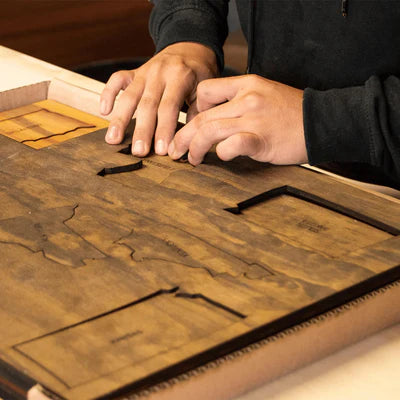
✔️ Precision laser-cut wooden pieces
✔️ 3mm MDF core — rigid, warp-resistant, built to last
✔️ UV printing directly on wood — no paper laminate, no peeling
✔️ Traditional grid-cut design
✔️ Handcrafted wooden keepsake box included
✔️ Made to order — ships in 3–4 weeks
💎 Why This Puzzle Lasts
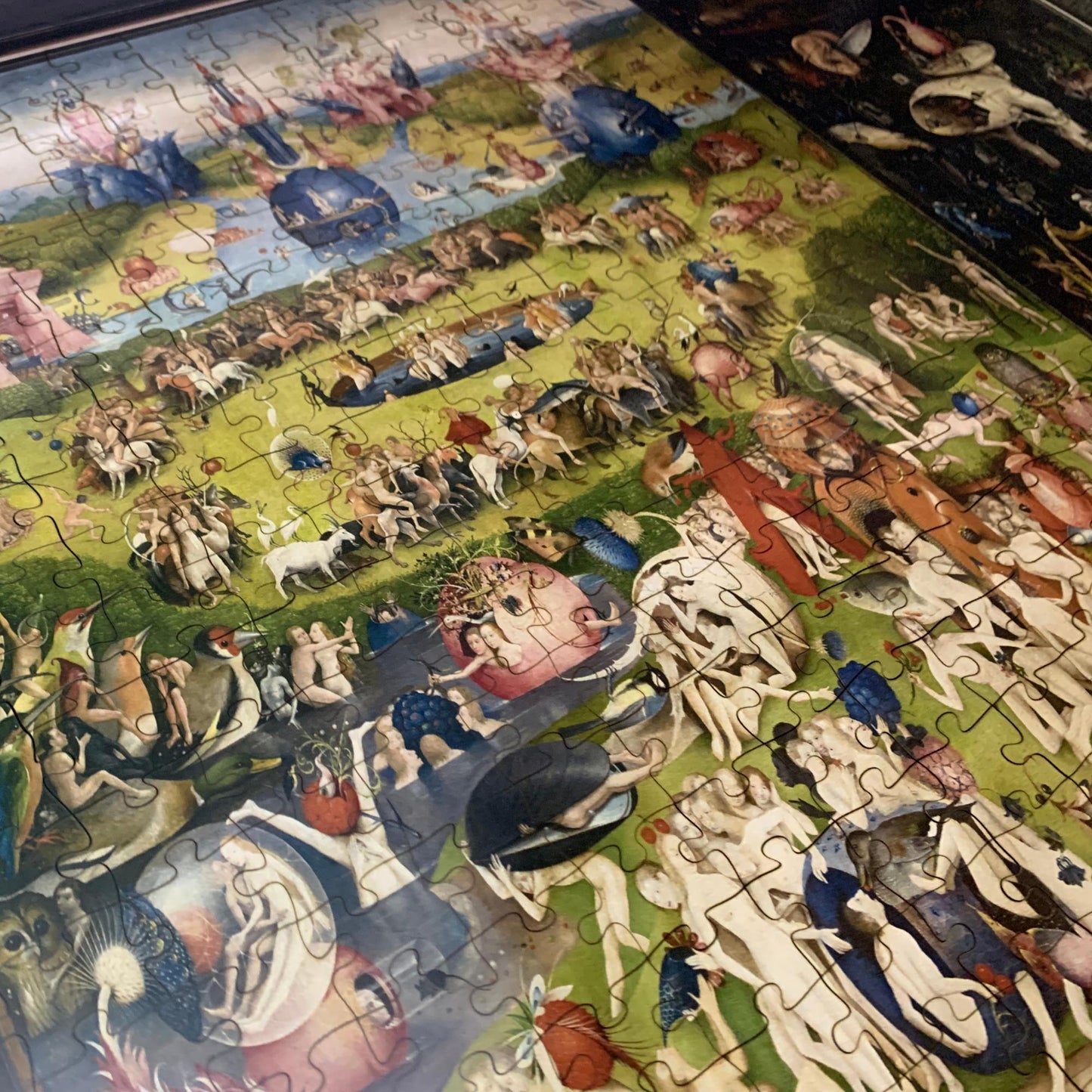
Most wooden puzzle makers charge $300–$500. The craft justifies it. We get there differently: direct manufacturing, no wholesale chain, made to order. Same materials. No markup. The price difference stays in your pocket.
The 3mm MDF core is what lets the pieces click cleanly and stay clicked. Cardboard compresses over time — the fit loosens, the surface dents, and a finished puzzle left on a table for a week starts to feel provisional. The MDF doesn't move. A piece that fits today fits the same way twenty years from now. UV printing bonds the image directly to the wood surface, skipping the paper laminate layer that peels, yellows, and dulls. De Heem's shadows — and there are a lot of them — stay dark and distinct rather than fading toward gray.
The traditional grid cut means every piece has a clear mechanical purpose. No novelty shapes, no gimmick cuts — just the satisfying resistance of a well-made fit. When you finish, the handcrafted wooden storage box isn't an afterthought. It's sized for the puzzle, finished properly, and built to be kept. Most people store the completed puzzle in it flat, or frame the puzzle and keep the box on the same shelf. Made to order means no warehouse, no sitting inventory, no puzzle printed six months ago. Yours is made when you order it.
🖼️ After You Finish It
Most people frame it. The wooden box ends up nearby — on a bookshelf, on a side table — because it's too well-made to put in a closet. Visitors ask about the image before they ask about anything else: what it is, where the original lives, why there's a spider in a flower painting from 1670. De Heem put that spider there to answer a question he knew people would ask. The answer hasn't changed in 350 years.