




Flowers and Birds by Kyosai - Premium Japanese Wooden Jigsaw Puzzle
Flowers and Birds by Kyosai - Premium Japanese Wooden Jigsaw Puzzle
- Regular price
- Price: $115.00
- Regular price
- List Price: $0.00
- Sale price
- Price: $115.00
- Unit price
- per
Key Features:
Key Features:
- Premium Quality: Crafted from durable 3mm (.14in) composite wood board for lasting enjoyment.
- Vibrant Imagery: High-resolution UV printing directly on the wood—no paper laminate—for stunning detail and vibrant colors.
- Eco-Conscious: Made with environmentally friendly materials.
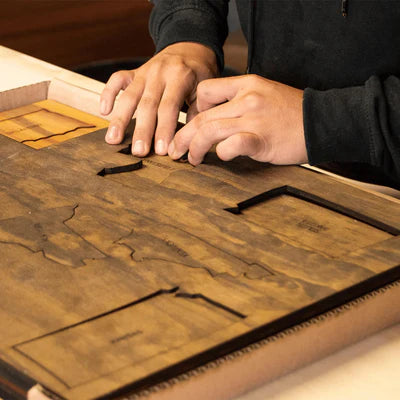
- Heirloom Keepsake: Your puzzle arrives beautifully packaged in a handcrafted wooden box, perfect for gifting or storing your masterpiece.
Craftsmanship and Care:
Craftsmanship and Care:
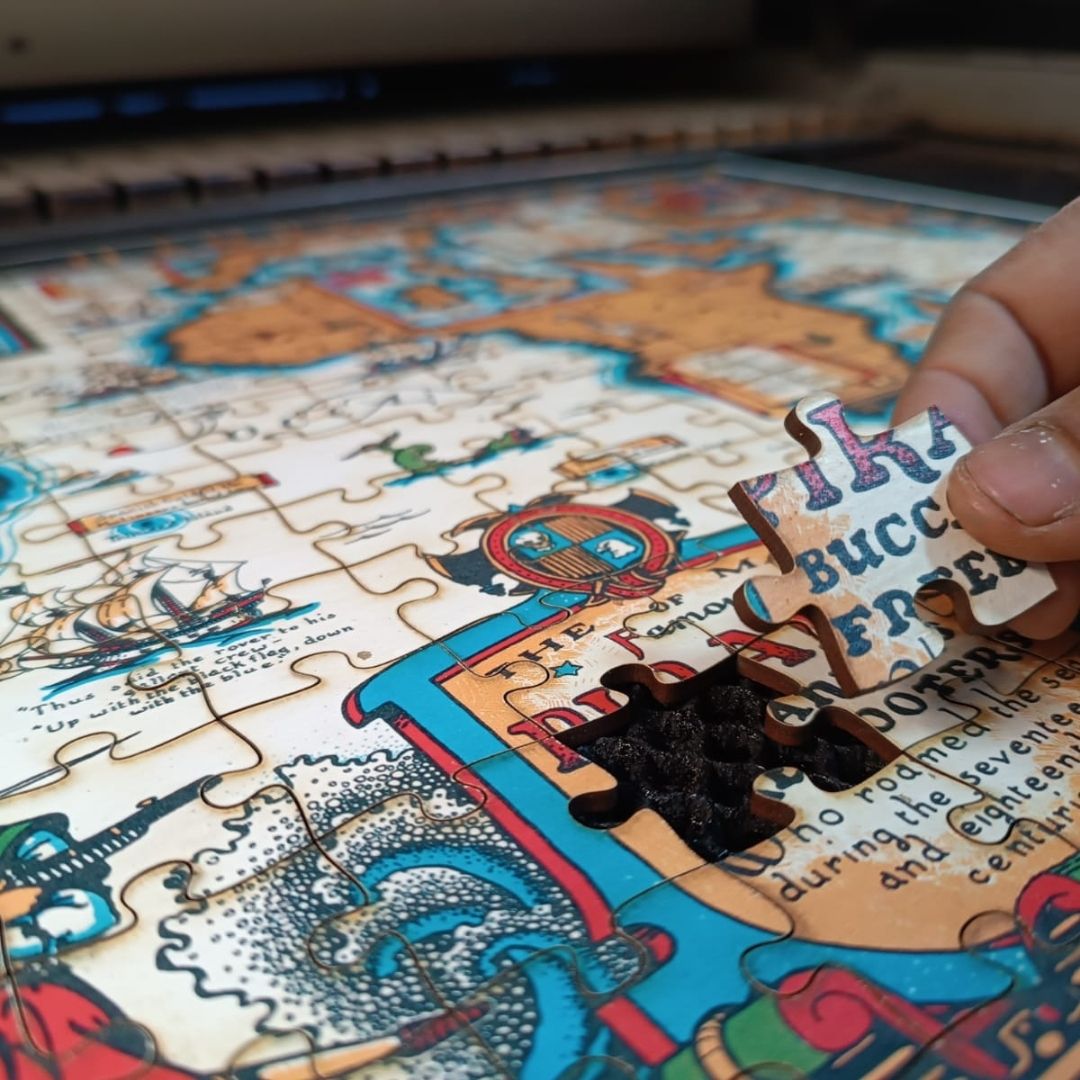
Experience the satisfying click of perfectly interlocking pieces. Our state-of-the-art laser cutting ensures precise fit and a smooth, seamless puzzle-solving experience. The perfect upgrade from cardboard without breaking the bank.
- Natural Laser Residue: A small amount of harmless black residue from the laser cutting process may be present. Simply wipe it away with a damp cloth.
- Hand-Finished Details: Each puzzle board, each wooden box are all carefully hand-stained, painted, and glued.
Satisfaction Guaranteed:
Satisfaction Guaranteed:
We are confident in the quality of our puzzles. If you are not completely satisfied, we offer a full refund or exchange.
PLEASE NOTE:
Each puzzle is crafted to make the most of your chosen size. Artwork may be subtly adjusted to meet our material and production standards while honoring the original work. Planning to frame yours? Email info@whatawoodwork.com for final measurements.
Couldn't load pickup availability
In stock
 PRODUCT DESCRIPTION
Flowers and Birds — Kawanabe Kyōsai — Wooden Jigsaw Puzzle
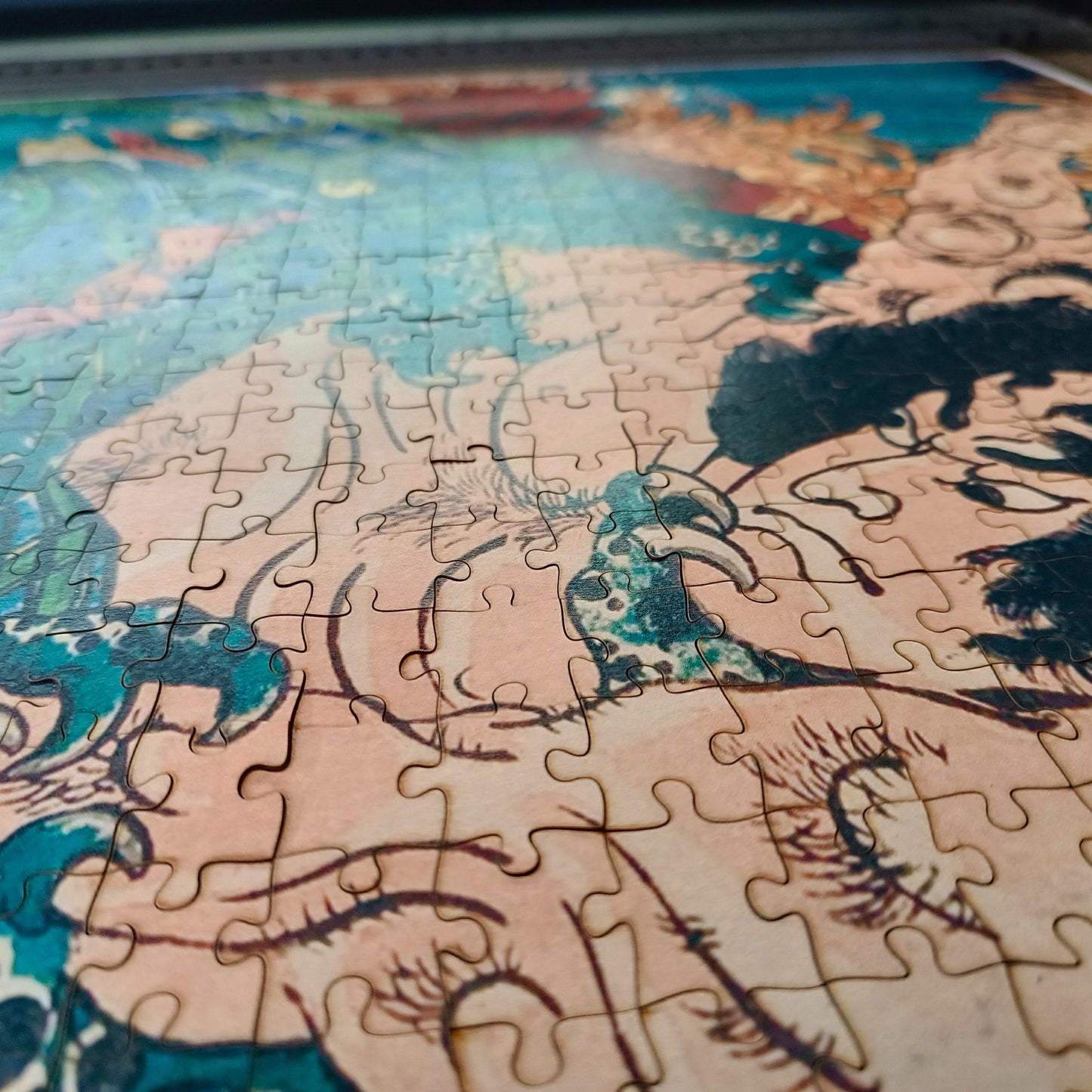
In 1881, Kyōsai submitted two paintings to the Second National Industrial Exhibition. One was a monochrome crow on a withered branch. The other was this — silk, color, birds alive in flowering branches. He showed both in the same room, on purpose, to prove he could do either. The Tokyo National Museum still has the polychrome one. You're looking at it.
📖 The Story Behind This Piece
Kyōsai painted Flowers and Birds on silk in 1881, at a moment when Japan was deliberately opening itself to Western influence while its artists quietly argued about what was worth keeping. The kachō-ga tradition, birds and flora rendered with meticulous ink and color, was centuries old by then. Kyōsai didn't treat it like a museum piece. The birds in this scroll carry actual weight. The branches bend. The composition breathes without going slack.
Kyōsai trained under the rigid Kano school from age seven, then spent the rest of his career breaking its rules in ways his teachers would have recognized as technically correct. He knew exactly what he was departing from, which is different from simply being untrained. The decision to submit a lush polychrome kachō-ga alongside a spare monochrome crow at the same exhibition wasn't hedging. It was a statement about range as its own form of mastery.
Silk holds color differently than paper, and the UV print on MDF recovers something of that depth — colors that sit in the surface rather than floating on top of it. During assembly, the area around the flowering branches is where most people slow down. The blooms are close in value to the birds' plumage in several places, and the laser cut doesn't cheat with outline-following shapes. You sort by texture and color shift rather than silhouette, which is closer to how Kyōsai actually built the composition.
Kawanabe Kyosai, active in the 19th century, was a virtuoso Japanese painter celebrated for his ability to bridge traditional and contemporary styles. His work spans the transition from Edo to Meiji periods, showcasing mastery across diverse techniques. Kyosai is widely recognized for his versatility, evident in his seamless blend of Kano school precision with the popular Ukiyo-e style. His legacy is marked by an ability to animate traditional subjects with innovation and vibrancy, influencing subsequent generations of artists. Kyosai remains a revered figure in Japanese art, celebrated for enriching the cultural tapestry with dynamic and compelling imagery.
🎁 Who Gets One of These
A few specific people reliably end up here.
✔️ The collector who already owns Japanese woodblock prints — Kyōsai sat at the intersection of Kano formalism and Ukiyo-e populism; this piece is a different conversation than Hiroshige, and it fits that wall accordingly.
✔️ The museum member who visits the Asian art wing with intent — You know the kachō-ga genre, you've seen hanging scrolls in person, and rebuilding one at 23"x31" is a different kind of looking.
✔️ The gift-giver who needs something that holds up to an art historian — A work painted for a national exhibition in 1881, now in the Tokyo National Museum, clears the bar without explanation.
✔️ The person who has outgrown cardboard and wants something worth keeping — The wooden box and the rigid MDF pieces mean this stays in the house after it's finished, not in a landfill.
✔️ The Japanophile who has visited the Tokyo National Museum — You may have walked past this scroll. Now you can take it apart and put it back together at your own pace.
🧩 Puzzle Specifications
✔️ Precision laser-cut wooden pieces
✔️ 3mm MDF core — rigid, warp-resistant, built to last
✔️ UV printing directly on wood — no paper laminate, no peeling
✔️ Traditional grid-cut design
✔️ Handcrafted wooden keepsake box included
✔️ Made to order — ships in 3–4 weeks
💎 Why This Puzzle Lasts
Most wooden puzzle makers charge $300–$500. The craft justifies it. WAWW gets there differently: direct manufacturing, no wholesale chain, made to order with zero warehouse inventory. Same materials. Substantially lower price.
The 3mm MDF core is what cardboard physically cannot do. It doesn't warp from humidity, the pieces click with the same resistance in year one as year twenty, and the whole assembled image lies flat without weighting the edges. UV printing bonds color directly to the wood surface rather than laminating paper on top, so there's no layer to bubble, peel, or yellow. With a painting as color-dependent as this one, that matters.
The traditional grid cut means the solve is honest: no shortcut gimmick shapes, just the image doing the work. When you finish, the pieces come apart cleanly and go back into the handcrafted wooden box. The box is made to the same standard as the puzzle — it's the object that stays on a shelf, not the cardboard sleeve you throw away. And because every puzzle is made to order, there's no inventory sitting in a warehouse getting handled. Yours is made when you order it. The 3–4 week lead time is the reason the quality holds.