


The Last Judgment by Pieter Huys - Wooden Jigsaw Puzzle
The Last Judgment by Pieter Huys - Wooden Jigsaw Puzzle
- Regular price
- Price: $115.00
- Regular price
- List Price: $0.00
- Sale price
- Price: $115.00
- Unit price
- per
Key Features:
Key Features:
- Premium Quality: Crafted from durable 3mm (.14in) composite wood board for lasting enjoyment.
- Vibrant Imagery: High-resolution UV printing directly on the wood—no paper laminate—for stunning detail and vibrant colors.
- Eco-Conscious: Made with environmentally friendly materials.
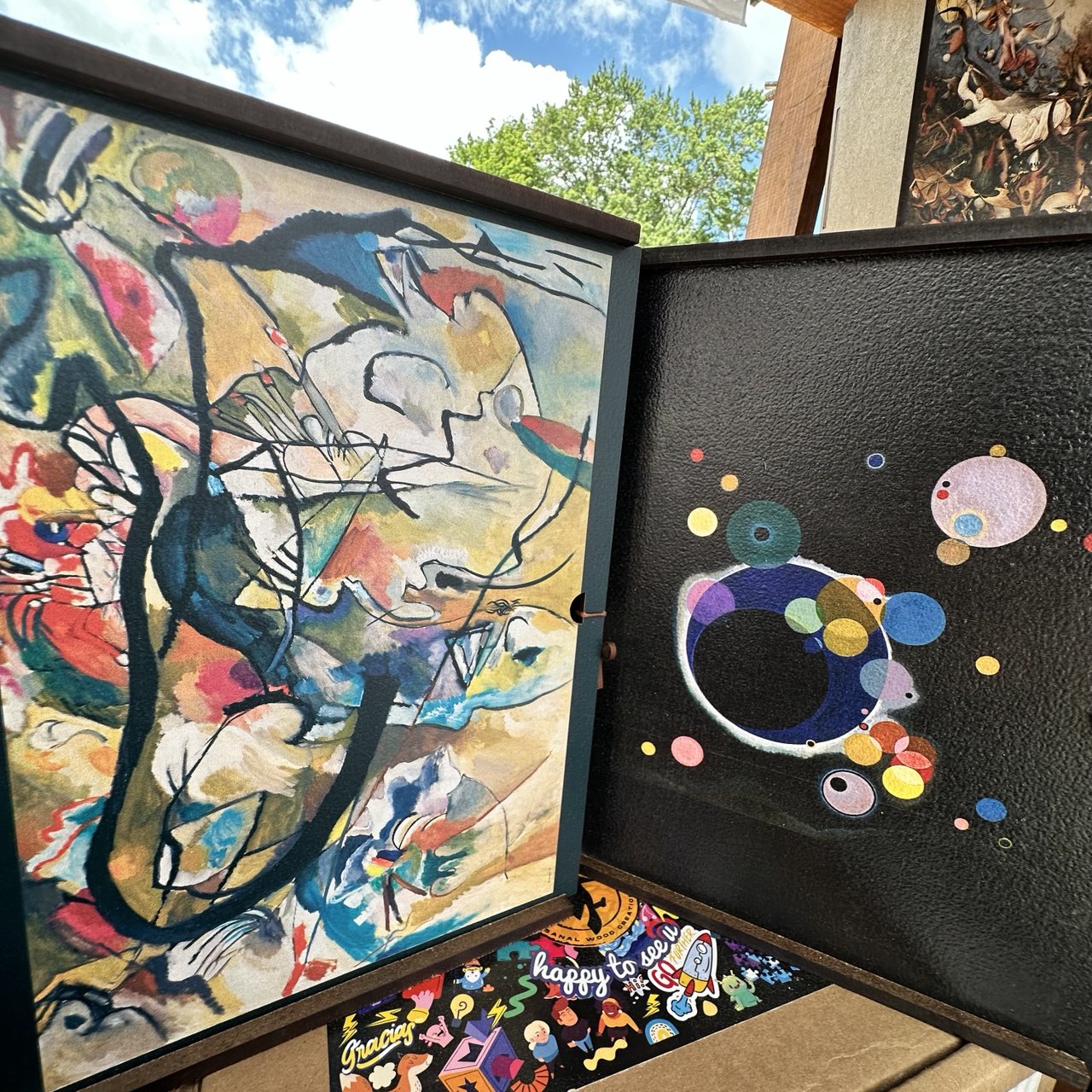
- Heirloom Keepsake: Your puzzle arrives beautifully packaged in a handcrafted wooden box, perfect for gifting or storing your masterpiece.
Craftsmanship and Care:
Craftsmanship and Care:
Experience the satisfying click of perfectly interlocking pieces. Our state-of-the-art laser cutting ensures precise fit and a smooth, seamless puzzle-solving experience. The perfect upgrade from cardboard without breaking the bank.
- Natural Laser Residue: A small amount of harmless black residue from the laser cutting process may be present. Simply wipe it away with a damp cloth.
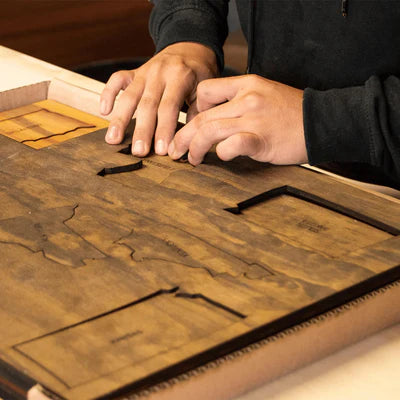
- Hand-Finished Details: Each puzzle board, each wooden box are all carefully hand-stained, painted, and glued.
Satisfaction Guaranteed:
Satisfaction Guaranteed:
We are confident in the quality of our puzzles. If you are not completely satisfied, we offer a full refund or exchange.
PLEASE NOTE:
Each puzzle is crafted to make the most of your chosen size. Artwork may be subtly adjusted to meet our material and production standards while honoring the original work. Planning to frame yours? Email info@whatawoodwork.com for final measurements.
Couldn't load pickup availability
In stock
 PRODUCT DESCRIPTION
Pieter Huys knew his viewers. He painted their fears back at them
— Welcome to the 'The Last Judgment' Wooden Jigsaw Puzzle version.
The Last Judgment — Pieter Huys, 1554
Look closely at the lower half of this painting.
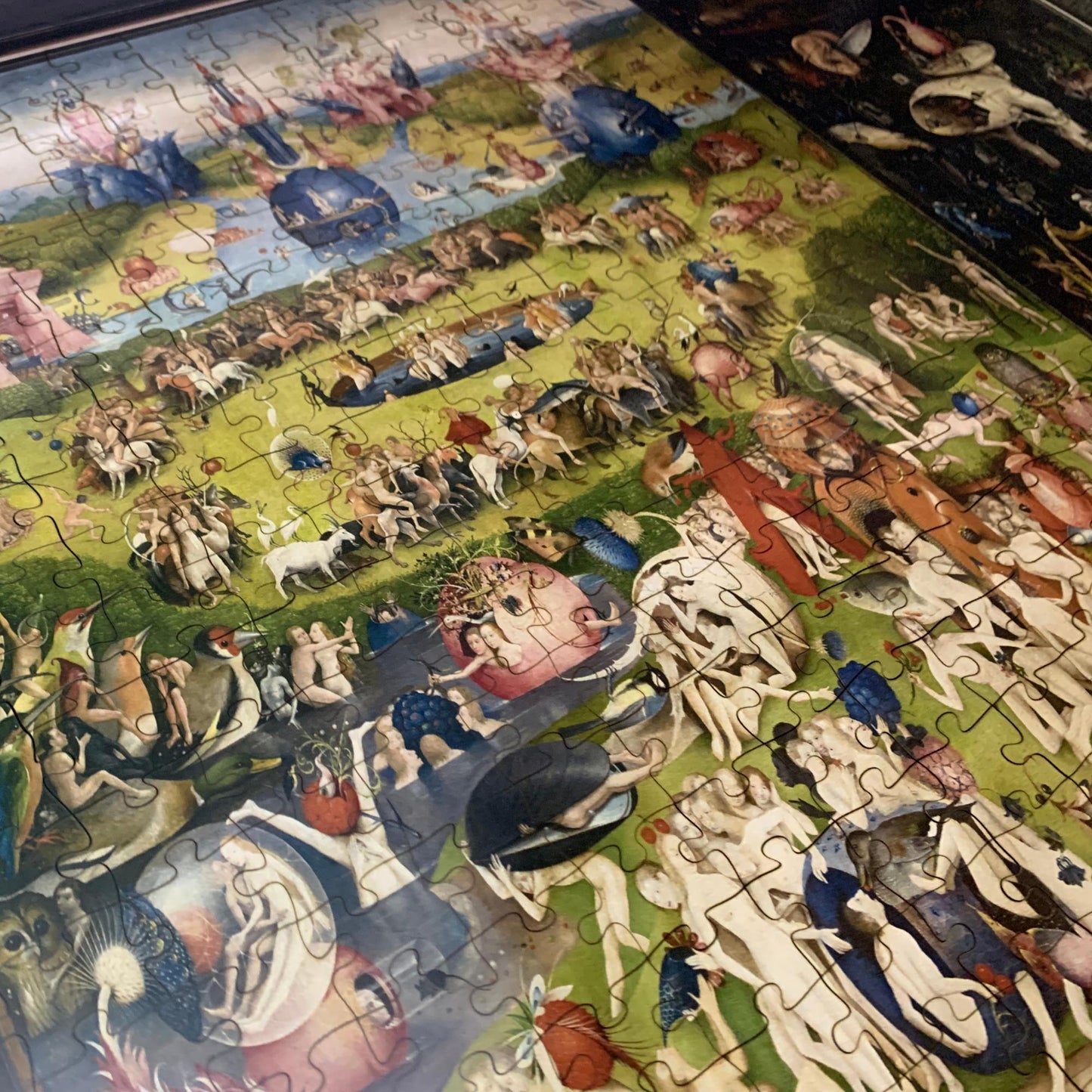
A monstrous head swallows the damned. Hybrid creatures crawl through the landscape. Bodies tumble, demons torment, fires burn, and strange machines seem designed for purposes you'd rather not discover. And every time you think you've understood what Pieter Huys painted, another tiny scene appears.
That is exactly what makes The Last Judgment such an extraordinary puzzle.
📖 The Story Behind This Piece
Painted in 1554, Pieter Huys' The Last Judgment belongs to the fantastical tradition made famous by Hieronymus Bosch a generation earlier.
Christ presides above the scene while, below, order collapses spectacularly.
The landscape becomes a teeming world of demons, hybrid beasts, tortured figures, fire, bizarre architecture and miniature narratives of punishment. Heaven may occupy the top of the painting, but Hell is where Huys lets his imagination loose.
Huys wasn't simply copying Bosch's monsters. He understood what made Bosch's worlds so compelling: they operate according to their own strange logic. Sin has consequences. Punishment becomes spectacle. Familiar objects become threatening, animals become something else entirely, and the closer you look, the stranger the painting gets.
The original is painted in oil on oak and dated 1554 on its frame. Today it belongs to the Royal Museums of Fine Arts of Belgium in Brussels, where it is recorded as inventory no. 3900.
🧩 A Puzzle Made for Discovery
This is where Huys becomes especially interesting.
At first, you assemble the broad composition: the blues and clouds of the celestial realm, the landscape, the darker infernal regions below.
Then the puzzle changes.
Individual pieces begin revealing tiny faces, claws, flames, wings, bodies, strange vessels and creatures that don't seem to belong to any recognizable species.
You stop trying simply to finish the puzzle and start investigating it.
What exactly am I looking at?
That's the pleasure of this image. With Huys, completing the puzzle isn't the only reward. Looking is part of the puzzle.
🎁 Who Gets One of These
✔️ The Bosch obsessive — They've already spent hours inside The Garden of Earthly Delights and want another Northern Renaissance world to explore.
✔️ The art-history lover — Especially someone fascinated by Bosch, Bruegel, Flemish painting, medieval imagery or the Northern Renaissance.
✔️ The person who loves beautiful things that are slightly strange — Gothic, surreal, macabre and fantastical without feeling like contemporary fantasy art.
✔️ The serious puzzler — Someone who wants an image with genuine complexity rather than another landscape with a lot of identical sky.
✔️ The impossible-to-shop-for intellectual — They already own the books. Give them an entire 16th-century apocalypse in a wooden box.
It makes an exceptional birthday, holiday or collector's gift for someone who likes their art with a little darkness — and a lot to discover.
🧩 Puzzle Specifications
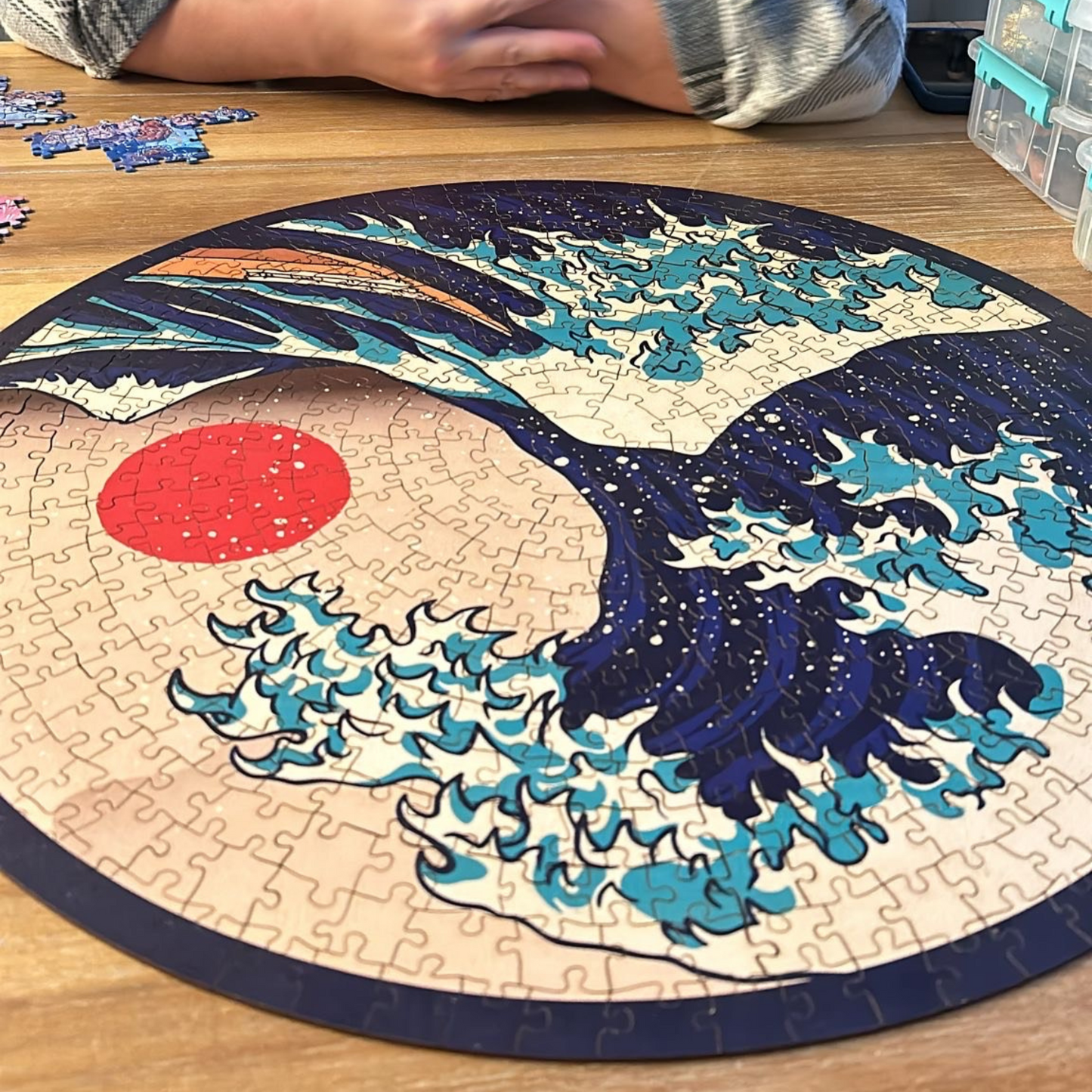
✔️ Precision laser-cut wooden pieces
✔️ 3mm MDF core — rigid, stable and made for repeated assembly
✔️ UV printing directly onto the surface
✔️ No paper laminate to peel or bubble
✔️ Traditional grid-cut design
✔️ Handcrafted wooden keepsake box included
✔️ Made to order — ships in approximately 3–4 weeks
💎 Why This Puzzle Lasts
Most premium wooden puzzles cost considerably more because they pass through distributors, wholesalers and retail markups.
We manufacture directly and make each puzzle to order.
The 3mm MDF core gives every piece rigidity and a clean, consistent fit. Unlike cardboard, it doesn't soften at the edges after repeated assembly.
The artwork is UV printed directly onto the surface, rather than printed on paper and laminated to the board. That means there is no paper layer to lift or peel at the corners.
And Huys is particularly rewarding in this format.
The deep earth tones, cold blues, flashes of red and strange miniature details remain visible piece by piece. What appears from across the room to be a Renaissance religious painting becomes something completely different when you're holding a tiny section of it in your hand.
🖼️ After You Finish It
Step away from the table and it becomes a 16th-century painting again.
Come closer and Hell starts revealing itself.
Pieter Huys painted this extraordinary world in 1554. Nearly five centuries later, we're still finding things in it.
That's exactly why we turned it into a puzzle.