
In the dim glow of flickering lanterns, a grotesque figure arches its back, mouth stretched to impossible proportions — a demon caught in a moment of eerie laughter. Around it, whispers of black ink bleed into white, the chaos beautifully tamed by the hand of {ARTIST}, Kawanabe Kyosai. This is not merely a woodblock print but a portal into a time when Japan found itself at the crossroads of tradition and transformation.
The Meiji Era heralded a seismic shift in Japanese society, challenging artists from Kyoto to Edo to reshape their own creative narratives. This period was not merely a transition from isolation to global integration but an era of sweeping re-imaginations. Artists like Kyosai and Utagawa Kuniyoshi wielded their tools with unyielding spirit, bridging the intricate tradition of ukiyo-e with emerging influences. Binding their origins in musha-e (warrior prints) and yokai-ga (ghost prints), they folded stories and mythologies that have retained allure over seas and across centuries. Each print, a perfect impression marked by a publisher’s seal, reveals layered pigments which whisper their visual lineage.
There is a reason these pieces endure, far beyond their lush aesthetic and tension-filled narratives. They echo the timeless dance of honor and supernatural curiosity, mortality, and the poignant beauty of the ephemeral — what the Japanese have long cherished as mono no aware. For the collector, the appeal is irreducible; the pigment layers speak of lost worlds, yet they challenge us to see the unseeable within our era’s turbulence.
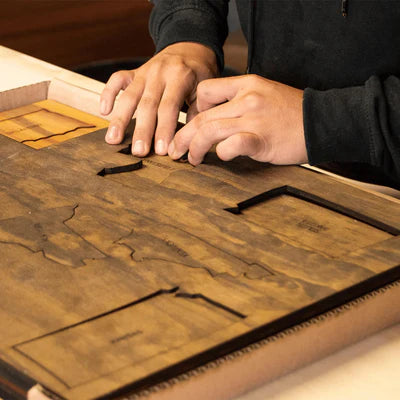
This artistry leaps elegantly into our jigsaw puzzles, such as The Laughing Demon by Hokusai Wooden Jigsaw Puzzle and the spirited Demon Stomach Debate by Kawanabe Kyosai Wooden Puzzle. The intricate linework and bold contrasts translate seamlessly into wood, where the natural grain adds an unexpected depth. Each puzzle piece invites tactile scholarship — a meditation far removed from the busy rush of pastime. This slow journey through wood clusters is both an homage and a quest. Reconstructing a yokai face, piece by piece, or tracing Hokusai's turbulent wave from its calm to inevitable chaos becomes an introspective ritual.
For those who treasure a profound connection with Japanese art, gifting these puzzles transcends the usual bounds of entertainment. They are perfect heirloom candidates for Japanophiles and mythology enthusiasts, steeped in the cultural depth that evokes admiration and reverence. As shown in the Japanese Art Collection, these pieces hold a mirror to the past while we assemble them, forging unity between eras and hands.
Stillness envelops the room as the last piece slips into place — an elegant completion, imbued with history and innovation. Visit What a Wood Work to engage with this unique amalgamation of art and tactile wonder. In piecing together these puzzles, we honor the enduring spirit of the Meiji era's artistry and its bold, lasting mark on our imaginations.