


Demon Stomach Debate — Kawanabe Kyosai Wooden Puzzle
Demon Stomach Debate — Kawanabe Kyosai Wooden Puzzle
- Regular price
- Price: $115.00
- Regular price
- List Price: $0.00
- Sale price
- Price: $115.00
- Unit price
- per
Key Features:
Key Features:
- Premium Quality: Crafted from durable 3mm (.14in) composite wood board for lasting enjoyment.
- Vibrant Imagery: High-resolution UV printing directly on the wood—no paper laminate—for stunning detail and vibrant colors.
- Eco-Conscious: Made with environmentally friendly materials.
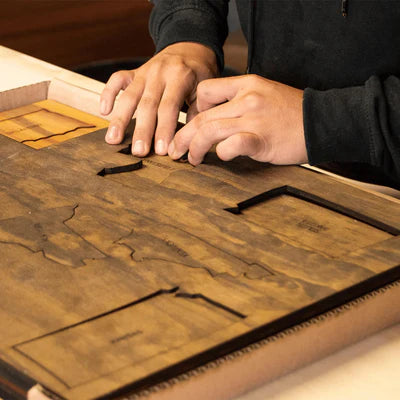
- Heirloom Keepsake: Your puzzle arrives beautifully packaged in a handcrafted wooden box, perfect for gifting or storing your masterpiece.
Craftsmanship and Care:
Craftsmanship and Care:
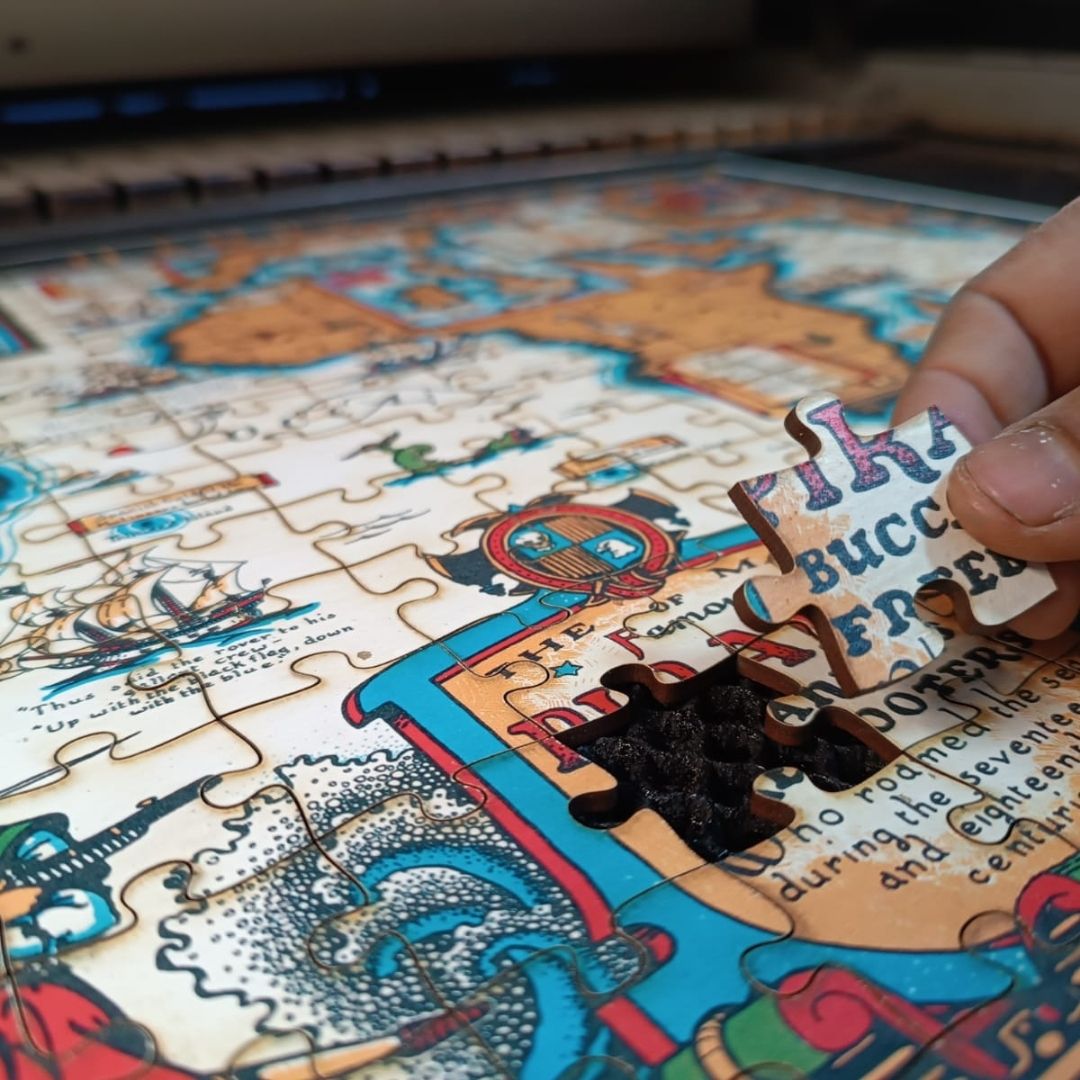
Experience the satisfying click of perfectly interlocking pieces. Our state-of-the-art laser cutting ensures precise fit and a smooth, seamless puzzle-solving experience. The perfect upgrade from cardboard without breaking the bank.
- Natural Laser Residue: A small amount of harmless black residue from the laser cutting process may be present. Simply wipe it away with a damp cloth.
- Hand-Finished Details: Each puzzle board, each wooden box are all carefully hand-stained, painted, and glued.
Satisfaction Guaranteed:
Satisfaction Guaranteed:
We are confident in the quality of our puzzles. If you are not completely satisfied, we offer a full refund or exchange.
PLEASE NOTE:
Each puzzle is crafted to make the most of your chosen size. Artwork may be subtly adjusted to meet our material and production standards while honoring the original work. Planning to frame yours? Email info@whatawoodwork.com for final measurements.
Couldn't load pickup availability
In stock
 PRODUCT DESCRIPTION
The Lazy One in the Middle — Wooden Jigsaw Puzzle
In 1875, Kawanabe Kyosai drew a fat stomach wearing a Western necktie with the word "Financier" written on it. The stomach is smoking a pipe. Around it, the arms and legs are starving. Kyosai was supposed to be illustrating Aesop. He was also getting something off his chest about Meiji-era Japan. A copy of the book this came from is in the British Museum.
📖 The Story Behind This Piece
Published in 1875 as part of Tsuzoku Isoppu Monogatari, a six-volume Japanese retelling of Aesop's Fables, "The Lazy One in the Middle" adapts the ancient fable of the Belly and the Members for a country mid-transformation. Kyosai places a rotund stomach at the center of the frame, reclining and smoking, its Western tie labeled "Financier" in plain text. The limbs around it are skeletal, straining. The political target is precise. The fable is just cover.
Kyosai spent much of his career working in a tradition his contemporaries were abandoning. While Japan was racing toward Western modernization, he kept working in ukiyo-e, not out of nostalgia but because he understood what the form could carry. Satire in a woodblock print lands differently than satire in a pamphlet. The brushwork softens it just enough to survive. Kyosai was arrested once for seditious content and kept working.
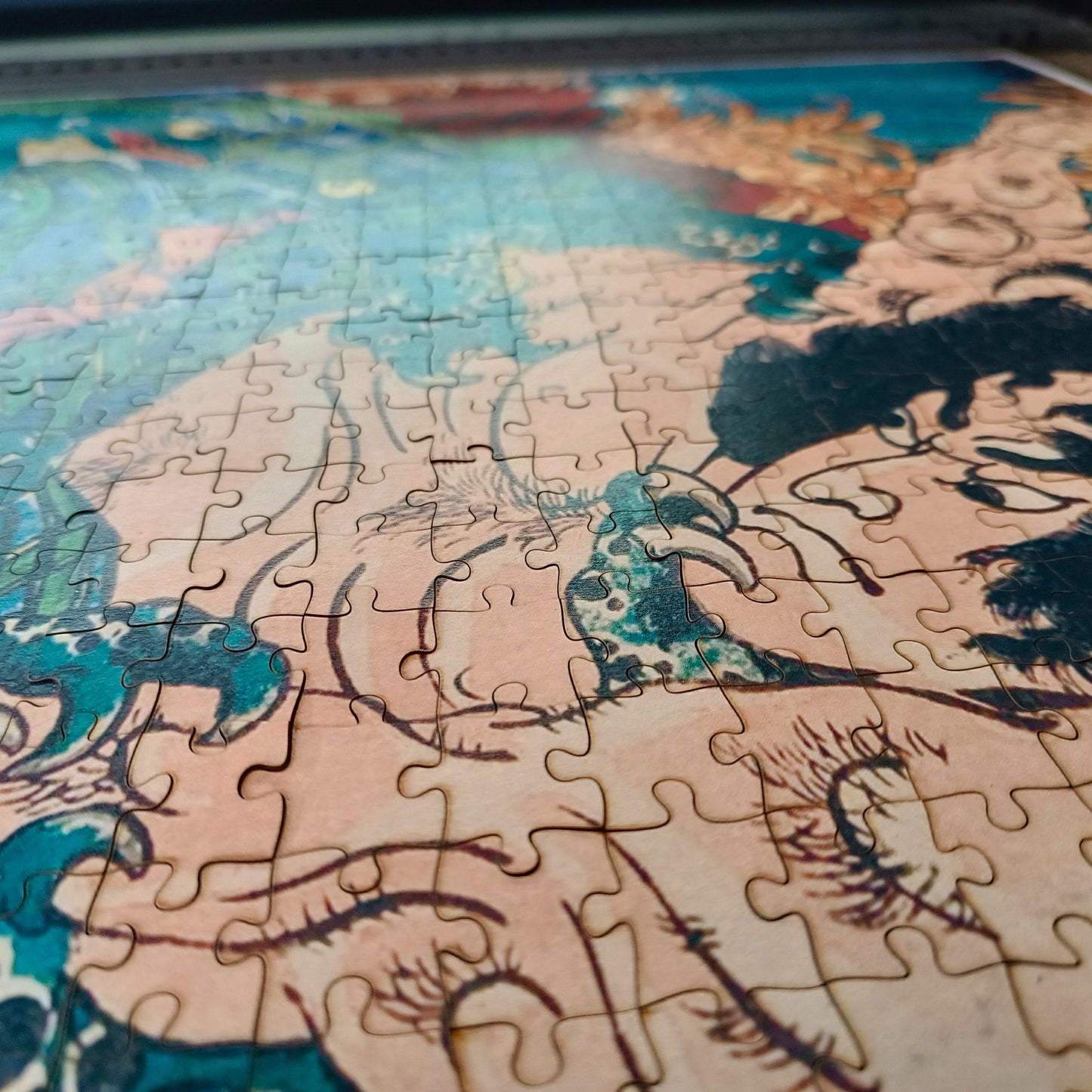
The woodblock line work in this print is where the puzzle gets interesting. Kyosai's ink lines are not uniform — they vary in weight, and that variation is what gives the figures volume. During assembly, the sections around the stomach's robe are all similar ink-on-pale-ground, and the only guide is the subtle shift in line weight from fold to fold. On screen the image looks clear. In pieces, you realize how much information lives in a single brushstroke. UV printing directly onto the MDF wood surface preserves those ink-weight gradations without the color drift that paper laminate introduces over time.
🎁 Who Gets One of These
A few kinds of people tend to find their way to this one specifically.
✔️ The Japanese woodblock print collector — You already own a Hiroshige. You know the difference between ukiyo-e and shin-hanga. Kyosai's political work doesn't always make it into the survey courses, and that's part of the appeal.
✔️ The Meiji history reader — You've been through the Westernization debates, the Fukuzawa essays, maybe Seidensticker. You'll recognize exactly who Kyosai was drawing that tie on, and why it still reads.
✔️ The political cartoon enthusiast who goes back further than Daumier — Kyosai was doing this in 1875 with a woodblock and a fable and a single word on a necktie. The economy of the critique is worth sitting with.
✔️ The gift-giver who is tired of giving coffee table books — A book about Kyosai sits on a shelf. A puzzle of a Kyosai gets built, framed, and explained to every person who comes over afterward.
✔️ The museum gift shop regular who wants the thing the gift shop doesn't carry — The British Museum holds a copy of the book this print came from. They don't sell this puzzle. We do.
Works well as a gift for art-focused birthdays, Japanese cultural events, or year-end gifts for the person who reads more history than anyone else in the room.
Need translation?
This is Kyosai's "Discussion of the Stomach and Intestines" — a comic allegory where the body's internal organs have come to life as quarrelsome characters, hurling insults and blaming each other for poor digestion. The stomach sits lazily in the middle while the intestines rage around it, each organ personified as a bickering townsperson with its own grievances.
The humor is biting: when the central organ refuses to do its job, the whole body descends into disorder. Kyosai was satirizing gluttony, laziness, and bureaucratic inefficiency — wrapping sharp social criticism in grotesque comedy that feels surprisingly modern.
The handwritten text flowing across the top panel is written in playful Edo-style prose, with speech-like inscriptions near each figure representing the organs' complaints and exaggerated anatomical arguments. The red panel on the right carries Kyosai's artist signature and publisher information, typical of Meiji-era print conventions.
Kawanabe Kyosai (1831–1889) was one of Japan's last great woodblock masters — celebrated for using dark humor and the grotesque to hold a mirror up to human weakness.