


A Eunuch's Dream by Nouÿ - Premium Wooden Puzzle
A Eunuch's Dream by Nouÿ - Premium Wooden Puzzle
- Regular price
- Price: $115.00
- Regular price
- List Price: $0.00
- Sale price
- Price: $115.00
- Unit price
- per
Key Features:
Key Features:
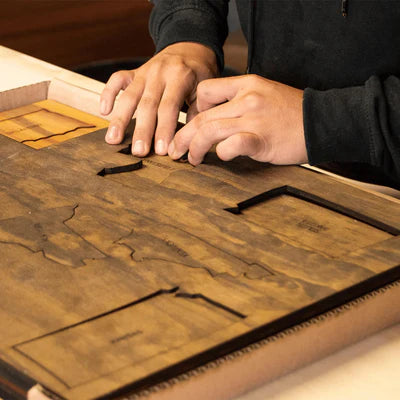
- Premium Quality: Crafted from durable 3mm (.14in) composite wood board for lasting enjoyment.
- Vibrant Imagery: High-resolution UV printing directly on the wood—no paper laminate—for stunning detail and vibrant colors.
- Eco-Conscious: Made with environmentally friendly materials.
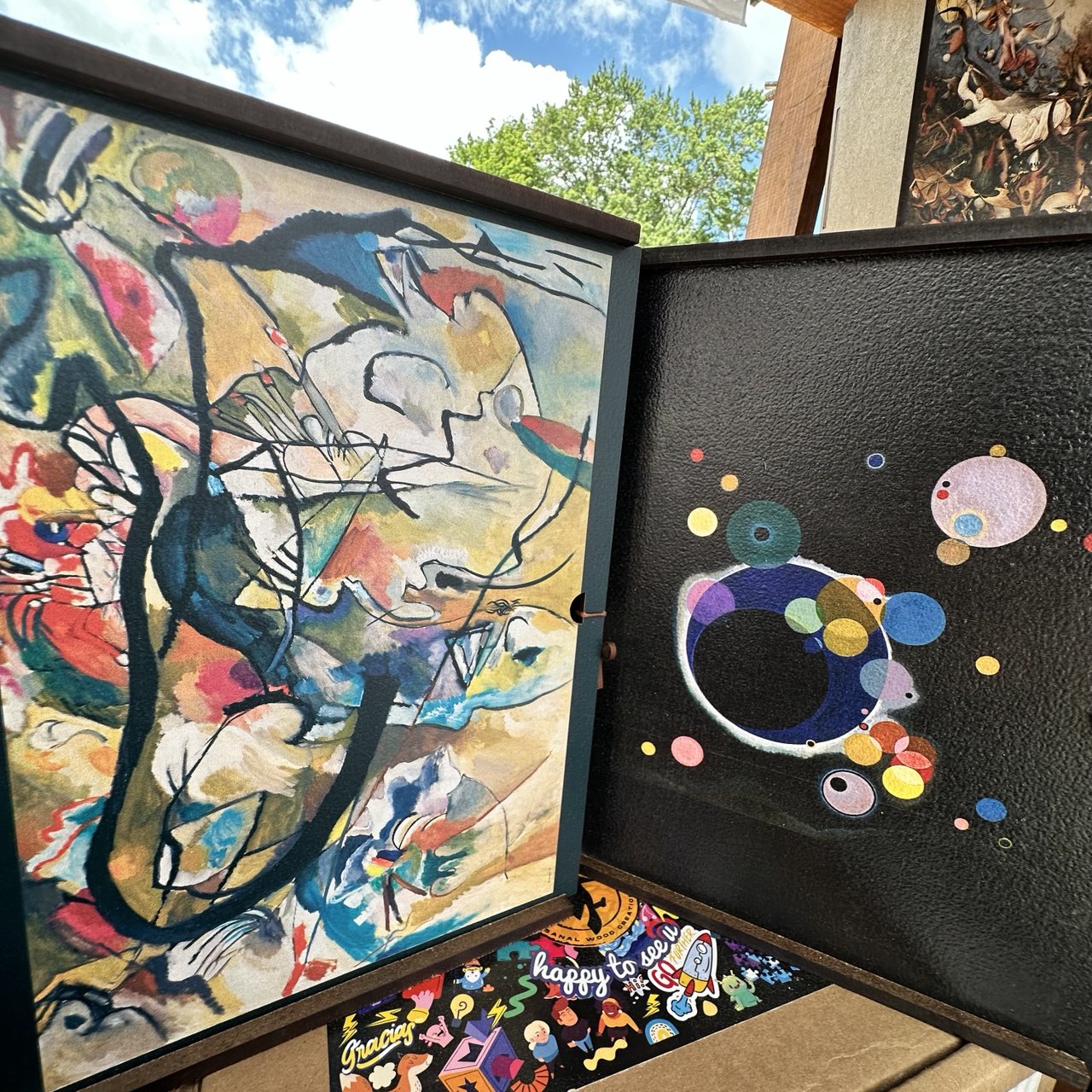
- Heirloom Keepsake: Your puzzle arrives beautifully packaged in a handcrafted wooden box, perfect for gifting or storing your masterpiece.
Craftsmanship and Care:
Craftsmanship and Care:
Experience the satisfying click of perfectly interlocking pieces. Our state-of-the-art laser cutting ensures precise fit and a smooth, seamless puzzle-solving experience. The perfect upgrade from cardboard without breaking the bank.
- Natural Laser Residue: A small amount of harmless black residue from the laser cutting process may be present. Simply wipe it away with a damp cloth.
- Hand-Finished Details: Each puzzle board, each wooden box are all carefully hand-stained, painted, and glued.
Satisfaction Guaranteed:
Satisfaction Guaranteed:
We are confident in the quality of our puzzles. If you are not completely satisfied, we offer a full refund or exchange.
PLEASE NOTE:
Each puzzle is crafted to make the most of your chosen size. Artwork may be subtly adjusted to meet our material and production standards while honoring the original work. Planning to frame yours? Email info@whatawoodwork.com for final measurements.
Couldn't load pickup availability
In stock
 PRODUCT DESCRIPTION
A Eunuch's Dream: Du Nouÿ painted a khamsa next to his signature. The hand symbol was meant to ward off evil — tucked into the corner of a painting already full of it.
The dream has turned nightmarish by then. The haze, the longing, the child. The khamsa doesn't protect anyone in this painting. It just watches.
📖 The Story Behind This Piece
Jean Lecomte du Nouÿ finished this oil on wood panel in 1874, working from a 153-year-old source: Montesquieu's Persian Letters, the epistolary novel that made French readers feel sophisticated about imagining other people's suffering. The eunuch in the painting has smoked opium and drifted into a vision of the harem slave he cannot marry. The idyll breaks fast. A small figure — child or putto — steps into the frame holding a knife already bloodied. The khamsa beside the signature is the painting's one gesture toward mercy. The Cleveland Museum of Art has held this work ever since.
Du Nouÿ trained in the rigorous French academic tradition under Gleyre and then Gérôme, which meant he could render silk, skin, and shadow with unsettling precision before he ever touched an Orientalist subject. That technical mastery is what separates this painting from decorative fantasy. He wasn't approximating the East — he was building a specific psychological trap and furnishing it carefully, down to the hand symbol in the corner that he knew Western audiences would have to look up.
The dark passages in this painting are where the puzzle gets interesting. Du Nouÿ layered deep shadow against skin and textile in ways that read as tonal chaos in a digital thumbnail. When you're working with the physical pieces, those shadow zones resolve slowly, piece by piece — you start to see the architectural logic underneath. UV printing directly onto wood deepens the contrast rather than flattening it. The dark areas hold their density in a way paper laminate can't sustain.
🎁 Who Gets One of These
A few specific people come to mind.
✔️ The Orientalism scholar who teaches 19th-century French painting — You've assigned Montesquieu and explained the epistolary form. Now the Gérôme-trained hand that illustrated the anxiety underneath it is on your desk in pieces.
✔️ The Cleveland Museum member who walked past this without stopping — Most people do. The khamsa next to the signature is easy to miss at distance. At puzzle scale, you won't miss it again.
✔️ The collector who owns Orientalist prints but nothing this psychologically specific — Decorative Eastern imagery is everywhere right now. A painting about the limits of fantasy, made in 1874, sits differently on a shelf.
✔️ The academic gift recipient who is impossible to buy for — Art historians who study this period recognize du Nouÿ immediately. That recognition matters; it signals the giver did real research.
✔️ The reader who spent time with Persian Letters in college and never shook it — Montesquieu's epistolary structure made moral critique feel like gossip. Du Nouÿ turned one letter into a painting. The knife in the dream is the punchline to both.
Works as a birthday or anniversary gift for someone who reads seriously. A strong choice for a graduate finishing a dissertation on 19th-century European painting or colonial-era visual culture. Less suited to purely decorative purposes — the image is not restful.
🧩 Puzzle Specifications
✔️ Precision laser-cut wooden pieces
✔️ 3mm MDF core — rigid, warp-resistant, built to last
✔️ UV printing directly on wood — no paper laminate, no peeling
✔️ Traditional grid-cut design
✔️ Handcrafted wooden keepsake box included
✔️ Made to order — ships in 3–4 weeks
💎 Why This Puzzle Lasts
Most wooden puzzle makers charge $300–$500. The craft justifies the price. WAWW gets there through direct manufacturing, no wholesale chain, and made-to-order production. Same materials, no middleman markup. The $115–$170 range reflects the actual cost of making something well.
The 3mm MDF core doesn't flex. Cardboard warps with humidity, and once it does, pieces stop clicking cleanly. MDF holds its shape for decades, which means the puzzle you assemble now fits the same way if you take it apart and start over in fifteen years. The UV printing bonds directly to the wood surface instead of sitting on top of a paper layer. No laminate means no peeling at the edges, and no fading when the puzzle lives near a window.
The traditional grid cut keeps the solving experience clean. Every piece has a defined place and a physical click when it finds it — no ambiguity, no pieces that almost fit. When you're done, the wooden keepsake box isn't afterthought packaging. It's a proper storage object with weight and a lid that closes flush. People keep them. Every puzzle is made to order after you place it, which is why the wait is three to four weeks. Nothing sits in a warehouse. Nothing gets built until yours does.