


A Map of North Carolina by Mabel Pugh - Wooden Jigsaw Puzzle
A Map of North Carolina by Mabel Pugh - Wooden Jigsaw Puzzle
- Regular price
- Price: $115.00
- Regular price
- List Price: $0.00
- Sale price
- Price: $115.00
- Unit price
- per
Key Features:
Key Features:
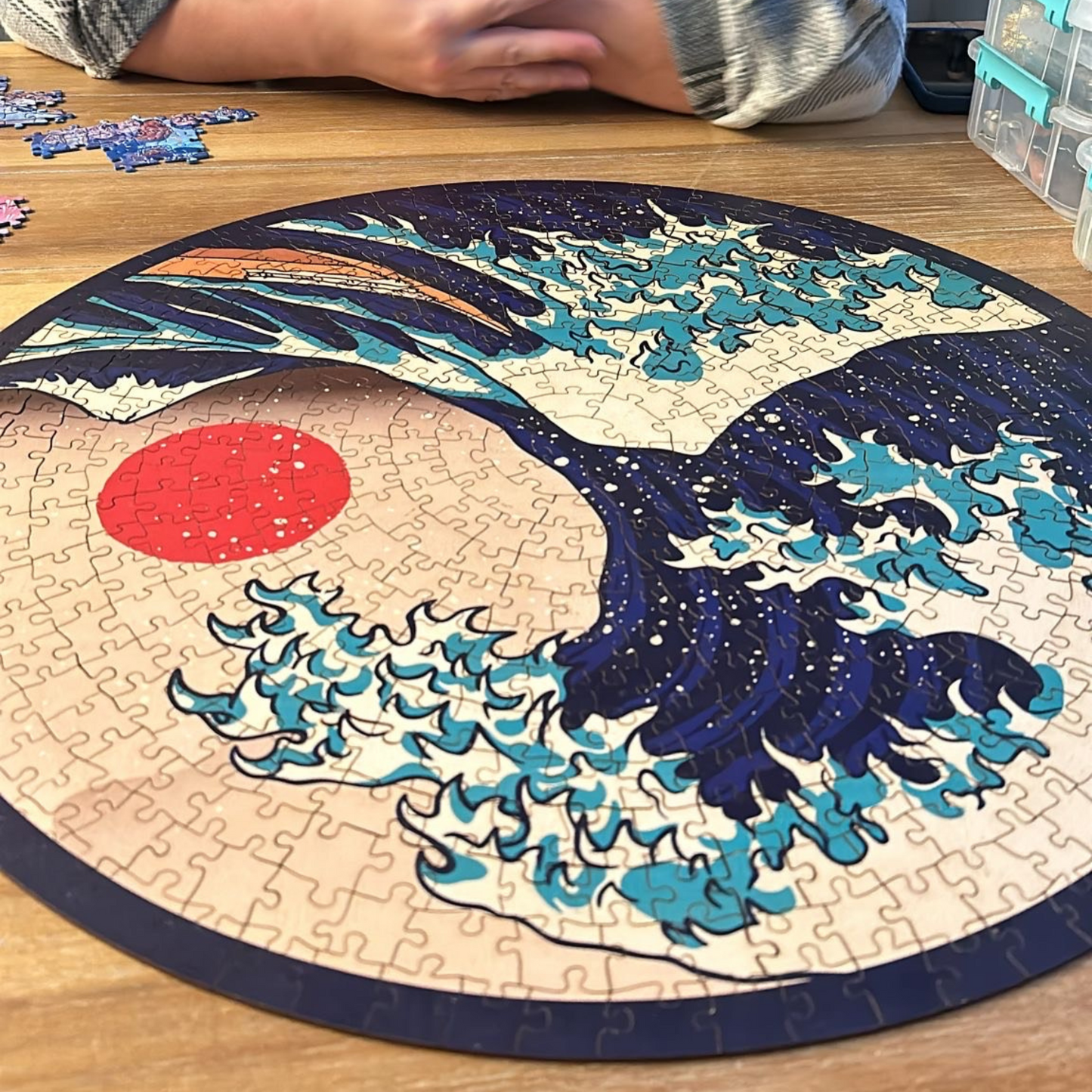
- Premium Quality: Crafted from durable 3mm (.14in) composite wood board for lasting enjoyment.
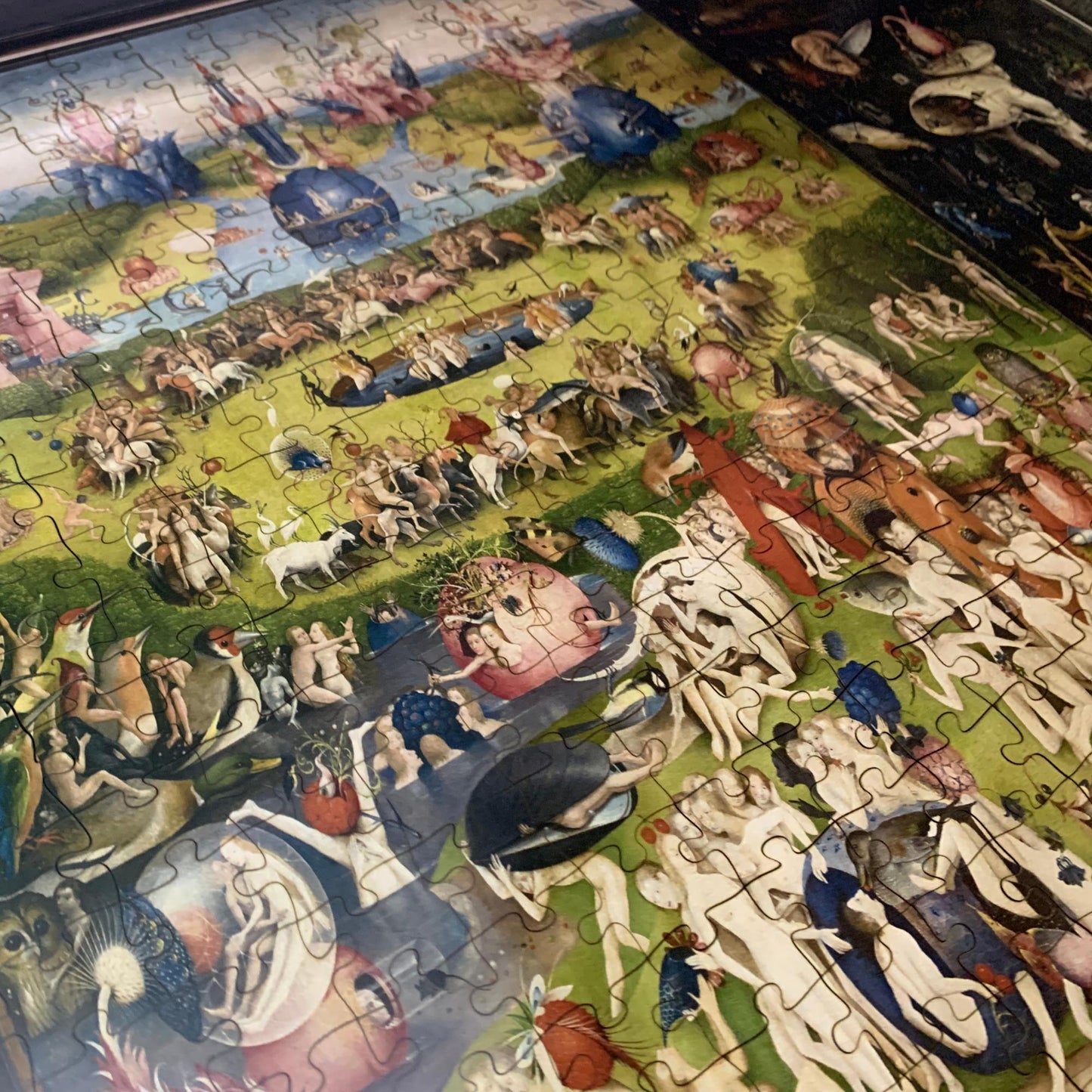
- Vibrant Imagery: High-resolution UV printing directly on the wood—no paper laminate—for stunning detail and vibrant colors.
- Eco-Conscious: Made with environmentally friendly materials.
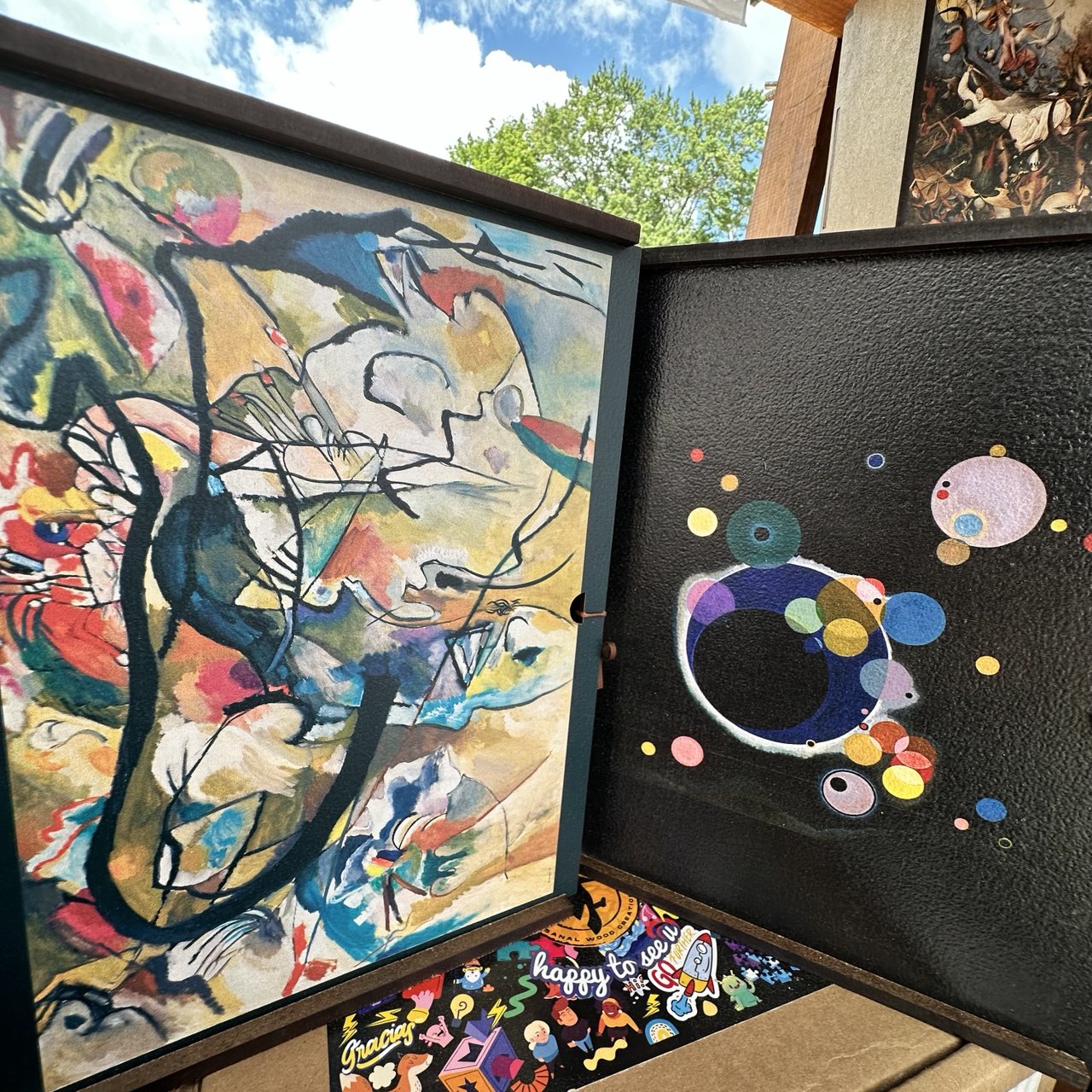
- Heirloom Keepsake: Your puzzle arrives beautifully packaged in a handcrafted wooden box, perfect for gifting or storing your masterpiece.
Craftsmanship and Care:
Craftsmanship and Care:
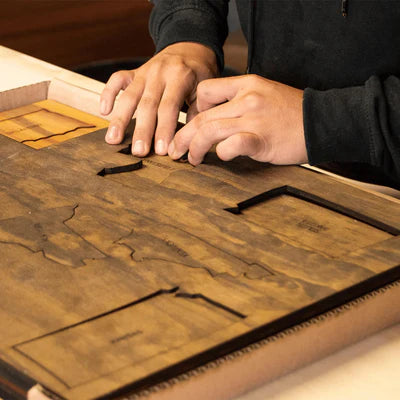
Experience the satisfying click of perfectly interlocking pieces. Our state-of-the-art laser cutting ensures precise fit and a smooth, seamless puzzle-solving experience. The perfect upgrade from cardboard without breaking the bank.
- Natural Laser Residue: A small amount of harmless black residue from the laser cutting process may be present. Simply wipe it away with a damp cloth.
- Hand-Finished Details: Each puzzle board, each wooden box are all carefully hand-stained, painted, and glued.
Satisfaction Guaranteed:
Satisfaction Guaranteed:
We are confident in the quality of our puzzles. If you are not completely satisfied, we offer a full refund or exchange.
PLEASE NOTE:
Each puzzle is crafted to make the most of your chosen size. Artwork may be subtly adjusted to meet our material and production standards while honoring the original work. Planning to frame yours? Email info@whatawoodwork.com for final measurements.
Couldn't load pickup availability
In stock
 PRODUCT DESCRIPTION
A Map of North Carolina for Nature Lovers — Wooden Jigsaw Puzzle
In 1937, Mabel Pugh was running the Art Department at Peace College in Raleigh when the Garden Club of North Carolina hired her to draw the state. Not chart it. Draw it — freehand, with native birds perched on county lines and wildflowers blooming in the margins. The result was a work of phytogeography that most botanists would have drawn as a table. Pugh drew it as something you'd want to live with.
📖 The Story Behind This Piece
Commissioned in 1937 by Mrs. R.L. McMillan, chairman of the Map Committee and First Vice President of the Garden Club of North Carolina, this pictorial map was meant to make people care about the state's natural landscape before "environmental awareness" was a phrase anyone used. Pugh filled it with freehand illustrations of native birds, regional flora, and landmarks across all 100 counties. The Garden Club has authorized reprints over the decades specifically to fund horticultural projects, including the Martha Franck Fragrance Garden. The map now lives in the David Rumsey Historical Map Collection.
Pugh was the head of an art department, not a cartographer, and that distinction matters here. A cartographer would have prioritized accuracy at the expense of ornament. Pugh understood that people protect what they love, and that love requires beauty first. She gave the Garden Club a map that worked as decoration as much as documentation — one that would hang on a wall and do its conservation work quietly, for decades.
Assembling the 1000-piece version, you'll hit a section somewhere along the coastal plain where a painted bird overlaps a county boundary, its wing feathers rendered in three or four close colors that look nearly identical on a screen. On the wooden surface, with UV ink sitting directly in the grain, the tonal variation between those feathers separates in a way a paper print flattens out. You notice Pugh was not approximating. She knew exactly which bird she was drawing.
🎁 Who Gets One of These
A few specific people come to mind when we look at this one.
✔️ The North Carolinian who left and kept something from home — You know the counties. You've driven through the Piedmont and walked the Outer Banks. Pugh drew your state the year your grandparents were young.
✔️ The map collector who cares about provenance — Archived in the David Rumsey Historical Map Collection, licensed through the North Carolina Art Archives. The paperwork on this one is clean.
✔️ The garden club member or horticultural enthusiast — The Garden Club of North Carolina commissioned this map and has used reprints to fund public gardens for over 80 years. The lineage is real.
✔️ The natural history buff with a shelf of field guides — Pugh drew the native species with enough specificity that you can identify them. Eastern bluebird, Carolina wren, longleaf pine. Not decorative approximations.
✔️ The art educator looking for something to teach with — A 1937 pictorial map that functions simultaneously as Art Deco illustration, regional botany, and conservation argument makes for a denser lesson than most.
Works as a gift for North Carolina homecomings, garden club milestones, natural history birthdays, and retirement from any career spent in the state. Spring is the obvious season, but the fall color in the western mountain sections makes October feel right too.
🧩 Puzzle Specifications
✔️ Precision laser-cut wooden pieces
✔️ 3mm MDF core — rigid, warp-resistant, built to last
✔️ UV printing directly on wood — no paper laminate, no peeling
✔️ Traditional grid-cut design
✔️ Sizes: 15"x23", 18"x24", 23"x31"
✔️ Piece counts: 300–1000
✔️ Handcrafted wooden keepsake box included
✔️ Made to order — ships in 3–4 weeks
💎 Why This Puzzle Lasts
Most wooden puzzle makers charge $300–$500. The craft justifies it. We get there differently: direct manufacturing, no wholesale chain, made to order. Same materials, no markup. The price reflects what it actually costs to make, not what the market will bear.
The 3mm MDF core is why pieces still fit cleanly years from now. Cardboard compresses, warps with humidity, and loses its edge. MDF holds its shape. Every piece clicks the same way on the hundredth assembly as it did on the first. UV ink goes directly onto the wood surface with no paper laminate between them, which means no peeling at the edges and no fading from light exposure. Pugh's hand-mixed colors stay the colors she chose.
The traditional grid cut means pieces have real tactile resistance — you know when something fits and you know when it doesn't. No guessing, no forcing. The handcrafted wooden keepsake box is sized for the puzzle itself, not for generic storage. After assembly, the box earns a shelf. Made to order means your puzzle doesn't exist until you buy it. No warehouse sitting under fluorescent lights. Production takes 3–4 weeks, and the result ships ready to last.
The 300-piece, 15"x23" starts at $115. The 1000-piece, 23"x31" runs $170.
🖼️ After You Finish It
Most people frame it. A 1937 pictorial map of North Carolina, UV-printed on wood, looks different on a wall than a reproduction poster — the surface reads as an object, not a print. The wooden box tends to stay nearby, usually on a shelf or desk. Pugh's map has been reprinted by the Garden Club for over 80 years to fund the gardens it helped people care about. Knowing that changes how long you spend looking at it once it's up.
⚠️ Important Notes
Puzzles may have light laser residue on the surface — a damp cloth handles it. There's a natural wood scent when the box first opens; it fades within a few days. Made-to-order production means your puzzle ships in 3–4 weeks. If anything arrives damaged, we replace or refund. No questions.