
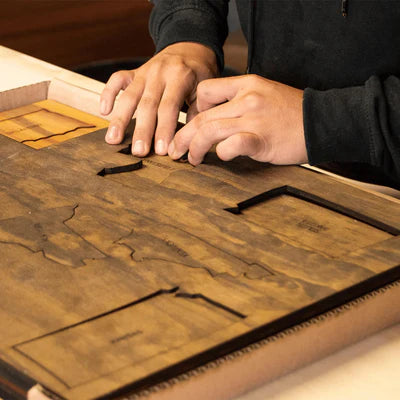


A Sunday Afternoon by Seurat - Premium Wooden Jigsaw Puzzle
A Sunday Afternoon by Seurat - Premium Wooden Jigsaw Puzzle
- Regular price
- Price: $115.00
- Regular price
- List Price: $0.00
- Sale price
- Price: $115.00
- Unit price
- per
Key Features:
Key Features:
- Premium Quality: Crafted from durable 3mm (.14in) composite wood board for lasting enjoyment.
- Vibrant Imagery: High-resolution UV printing directly on the wood—no paper laminate—for stunning detail and vibrant colors.
- Eco-Conscious: Made with environmentally friendly materials.
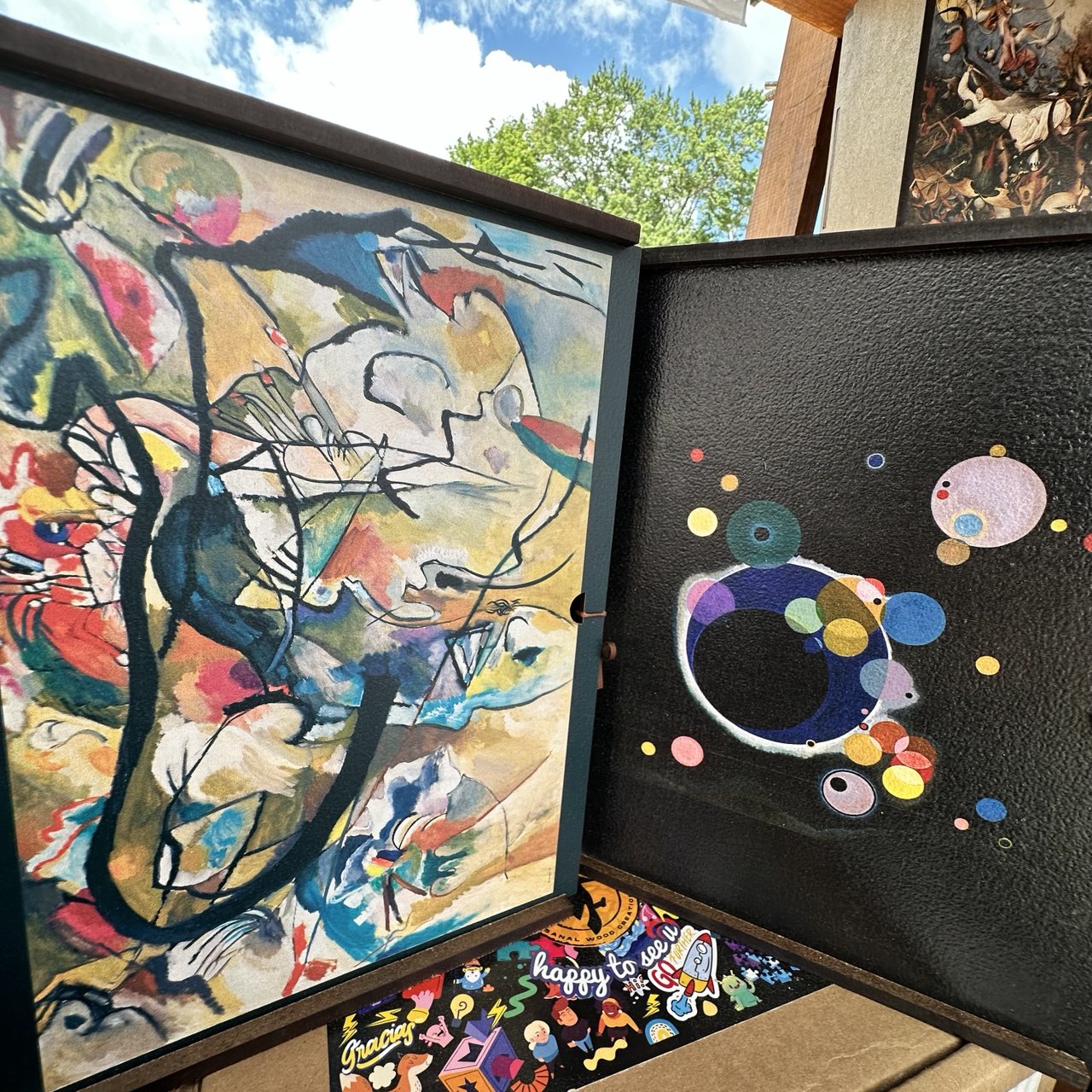
- Heirloom Keepsake: Your puzzle arrives beautifully packaged in a handcrafted wooden box, perfect for gifting or storing your masterpiece.
Craftsmanship and Care:
Craftsmanship and Care:
Experience the satisfying click of perfectly interlocking pieces. Our state-of-the-art laser cutting ensures precise fit and a smooth, seamless puzzle-solving experience. The perfect upgrade from cardboard without breaking the bank.
- Natural Laser Residue: A small amount of harmless black residue from the laser cutting process may be present. Simply wipe it away with a damp cloth.
- Hand-Finished Details: Each puzzle board, each wooden box are all carefully hand-stained, painted, and glued.
Satisfaction Guaranteed:
Satisfaction Guaranteed:
We are confident in the quality of our puzzles. If you are not completely satisfied, we offer a full refund or exchange.
PLEASE NOTE:
Each puzzle is crafted to make the most of your chosen size. Artwork may be subtly adjusted to meet our material and production standards while honoring the original work. Planning to frame yours? Email info@whatawoodwork.com for final measurements.
Couldn't load pickup availability
In stock
 PRODUCT DESCRIPTION
A Sunday Afternoon on the Island of La Grande Jatte: Seurat spent two years making dots.
Not sketching, not painting in any conventional sense — placing individual points of pure color, side by side, trusting that the eye would do the blending. The finished canvas is roughly 2 by 3 meters. He was 26 when it debuted. The technique had no name yet. He called it divisionism.
📖 The Story Behind This Piece
Between 1884 and 1886, Seurat built this painting the way a scientist runs an experiment. The island of La Grande Jatte sits in the Seine just northwest of Paris, a Sunday retreat for Parisians of every class. Rather than paint what he saw with loose, impressionistic urgency, Seurat brought color theory into the studio. Each dot of pigment was chosen for how it would interact optically with the dot beside it. The result is a painting that looks different from ten feet than from two, and different again in reproduction than in person.
Seurat had read Eugène Chevreul and Ogden Rood on color perception. He wasn't decorating — he was testing a hypothesis about how the human eye processes light. That belief, that painting could be grounded in optics rather than intuition, is what separates La Grande Jatte from everything that came before it. The eighth Impressionist exhibition in 1886 had his answer. Neo-Impressionism became a movement that afternoon. Seurat died five years later at 31.
Assembling the pointillist sections of this puzzle reveals something no digital reproduction can. Seurat's color field, when laser-cut into wooden pieces, becomes a sorting problem unlike any other. The sky at the upper left reads as a single pale blue from across a room, but in your hands it breaks into pieces that are lavender, yellow-white, and green-grey — because that's what Seurat actually put there. UV printing onto the wood surface holds those subtle tonal distinctions without the color shift that paper laminate introduces. The dots don't merge until you step back. While you're working, you're inside the technique.
🎁 Who Gets One of These
A few types of people tend to end up with one of these. They're not hard to spot.
Strong occasions: milestone birthdays for anyone with an art background, anniversary gifts for couples who share a museum habit, holiday gifts for the person who genuinely has everything. The connection to the Art Institute of Chicago makes it a natural choice for anyone based in or attached to the city.
🧩 Puzzle Specifications
✔️ Precision laser-cut wooden pieces
✔️ 3mm MDF core — rigid, warp-resistant, built to last
✔️ UV printing directly on wood — no paper laminate, no peeling
✔️ Traditional grid-cut design
✔️ Handcrafted wooden keepsake box included
✔️ Made to order — ships in 3–4 weeks
💎 Why This Puzzle Lasts
Most wooden puzzle makers charge $300–$500. The craft justifies it. WAWW gets to the same place differently: direct manufacturing, no wholesale chain, made to order with no warehouse inventory sitting between you and the factory. Same materials. The savings come from the structure, not the product.
The 3mm MDF core feels solid the moment you pick up a piece. Cardboard warps with humidity and loses its click within a season. MDF doesn't. Pieces made from it fit the same way in year one as year twenty, which matters if the puzzle is going to live on a shelf between uses rather than get thrown away. UV printing goes directly onto the wood surface, not onto a paper layer bonded to it. Paper laminates yellow, bubble, and peel. Without one, the color you see when you open the box is the color you see a decade later.
The traditional grid cut means every piece has a distinct orientation and a clean fit. No irregular shapes competing with the image for attention — the solving experience is about the painting, not the cut pattern. When the last piece goes in, the wooden keepsake box becomes the thing the puzzle lives in. It's built to the same standard as the puzzle: it's not packaging. Several buyers keep the box on a bookshelf and use it as a display object independent of the puzzle. Made to order means your puzzle doesn't exist until you order it. Production takes 3–4 weeks. Nothing sits in a warehouse. Nothing gets made until there's a reason to make it.
La Grande Jatte has been in the Art Institute of Chicago for nearly a century. Most people know it from a textbook. Fewer have spent real time with the surface of it.