



American White Pelican by Audubon - Premium Wooden Puzzle
American White Pelican by Audubon - Premium Wooden Puzzle
- Regular price
- Price: $115.00
- Regular price
- List Price: $0.00
- Sale price
- Price: $115.00
- Unit price
- per
Key Features:
Key Features:
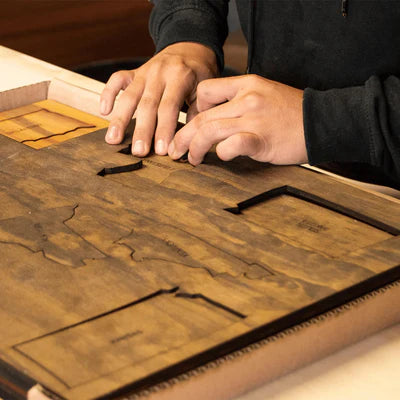
- Premium Quality: Crafted from durable 3mm (.14in) composite wood board for lasting enjoyment.
- Vibrant Imagery: High-resolution UV printing directly on the wood—no paper laminate—for stunning detail and vibrant colors.
- Eco-Conscious: Made with environmentally friendly materials.
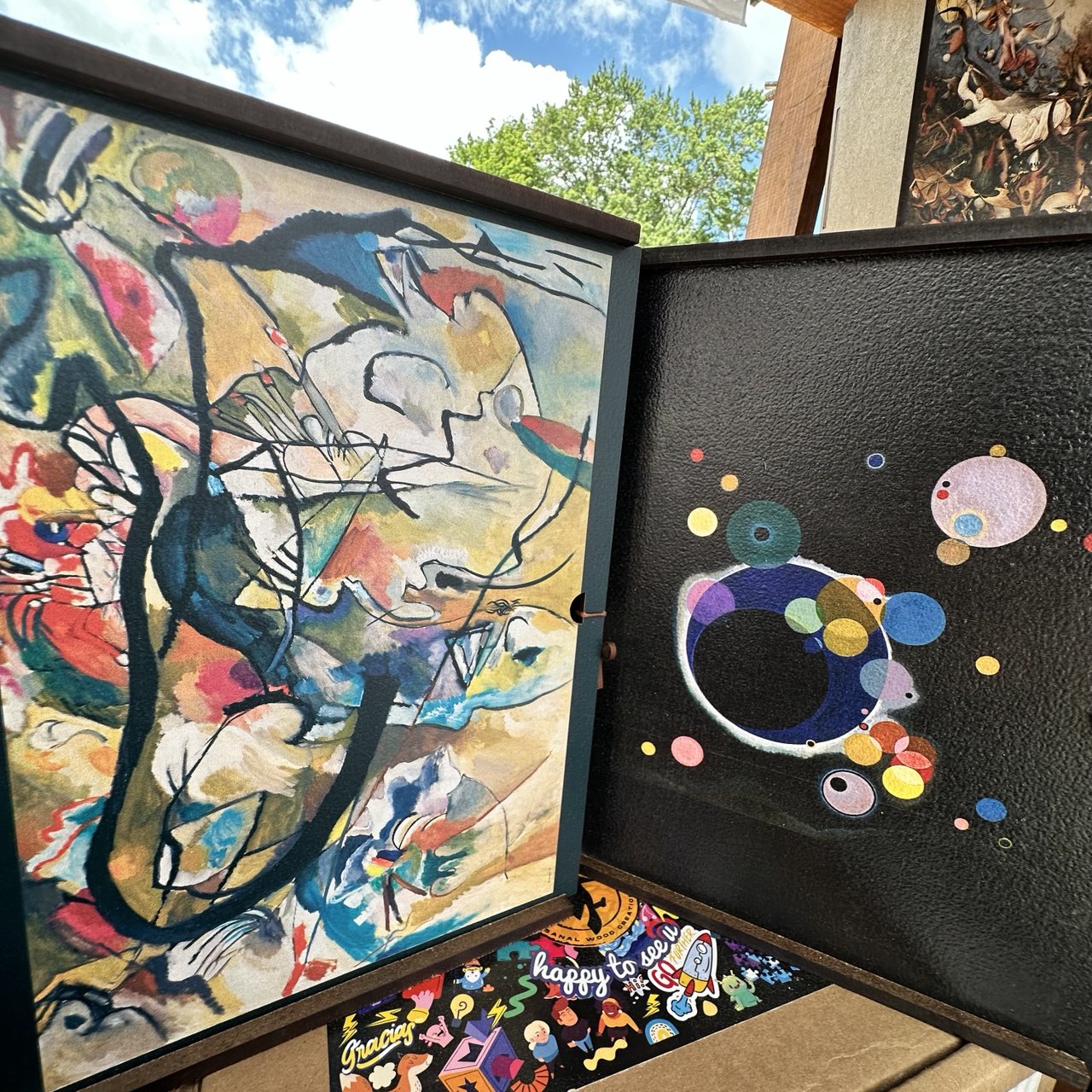
- Heirloom Keepsake: Your puzzle arrives beautifully packaged in a handcrafted wooden box, perfect for gifting or storing your masterpiece.
Craftsmanship and Care:
Craftsmanship and Care:
Experience the satisfying click of perfectly interlocking pieces. Our state-of-the-art laser cutting ensures precise fit and a smooth, seamless puzzle-solving experience. The perfect upgrade from cardboard without breaking the bank.
- Natural Laser Residue: A small amount of harmless black residue from the laser cutting process may be present. Simply wipe it away with a damp cloth.
- Hand-Finished Details: Each puzzle board, each wooden box are all carefully hand-stained, painted, and glued.
Satisfaction Guaranteed:
Satisfaction Guaranteed:
We are confident in the quality of our puzzles. If you are not completely satisfied, we offer a full refund or exchange.
PLEASE NOTE:
Each puzzle is crafted to make the most of your chosen size. Artwork may be subtly adjusted to meet our material and production standards while honoring the original work. Planning to frame yours? Email info@whatawoodwork.com for final measurements.
Couldn't load pickup availability
In stock
 PRODUCT DESCRIPTION
American White Pelican by John James Audubon — Wooden Jigsaw Puzzle
Audubon drew this pelican at life size. The original plate measured 39 by 26 inches — large enough that the bird's bill alone spans nearly a foot of paper. That scale was the whole argument. To show a species properly, you had to show it as it actually was, not reduced to fit a page.
📖 The Story Behind This Piece
Plate 311 of The Birds of America was printed in 1836 by engraver Robert Havell Jr. using hand-colored aquatint on what Audubon called "Double Elephant" folio paper — one of the largest printing formats available at the time. The pelican stands in profile, bill forward, the small vertical horn on its upper mandible visible only during breeding season and gone within weeks of laying. Most people who see pelicans never see the horn. Audubon did, and made sure you'd see it too. The high-resolution source for this puzzle comes from the pristine copy held by the National Gallery of Art in Washington, D.C.
Audubon's foundational decision was to refuse reduction. Every other ornithological illustrator of his era worked at book scale. Audubon believed that shrinking a bird distorted it, that proportion was part of the truth. So he worked at life size, found a paper format large enough to hold it, and spent years finding subscribers willing to pay for volumes too large to shelve conventionally. The science and the stubbornness were inseparable.
Assembly starts, for most people, with the bill. It's an unusual puzzle problem: a large yellow form with very little internal variation, set against the pale body of the bird. The UV printing on wood pulls out the subtle warmth in Havell's original hand-coloring — the faint ochre gradations in the bill that read as flat yellow on a screen. Once the bill is seated, the feather work in the wing and breast becomes its own challenge, each quill edge laser-cut to sit cleanly against the next piece.
🎁 Who Gets One of These
A few specific people come to mind for this one.
✔️ The birder who has spent time at Pelican Island or along the Gulf Coast flyway — You've watched these birds fish cooperatively in formation. Audubon described exactly that behavior in his Ornithological Biography. The plate is the image; the biography is the field notes.
✔️ The natural history museum member who buys from the gift shop deliberately — Not tchotchkes. Objects that hold up. Audubon's work has been in museum collections for nearly 200 years and still looks like it was made last week.
✔️ The art history reader who knows the difference between Audubon and a generic vintage print — Plate 311 has a specific provenance: the NGA copy, Havell's engraving, 1836. That's not decoration; that's a document.
✔️ The person furnishing a study or library with things that have context — Framed, the completed puzzle reads as serious ornithological art. Anyone who notices it will ask about it.
✔️ The gift-giver who is tired of giving things that get forgotten by February — A handcrafted wooden box holding a 435-piece Audubon plate is not a forgettable gift. It's the kind of thing people mention when they describe their apartment.
Birthdays for birders and naturalists. Retirement gifts for scientists or conservationists. A considered holiday gift for the person who owns their things deliberately and doesn't need another bottle of wine.
💎 Why This Puzzle Lasts
Most wooden puzzle makers charge $300 to $500. The craft justifies it. WAWW gets to the same place differently: direct manufacturing, no wholesale chain, made to order with zero warehouse inventory. The materials are the same. The markup is gone.
The core is 3mm MDF — dense, rigid, and dimensionally stable in a way cardboard simply cannot hold over time. A cardboard puzzle warps. Pieces loosen. After a few years, the fit degrades. The MDF core keeps its shape and its snap through decades of use, which matters if you plan to assemble this more than once or pass it along.
Printing goes directly onto the wood surface using UV-cured ink, with no paper laminate in between. No laminate means no peeling at corners, no bubbling from humidity, no color shift as the adhesive ages. The image you're assembling in twenty years is the same image you opened today.
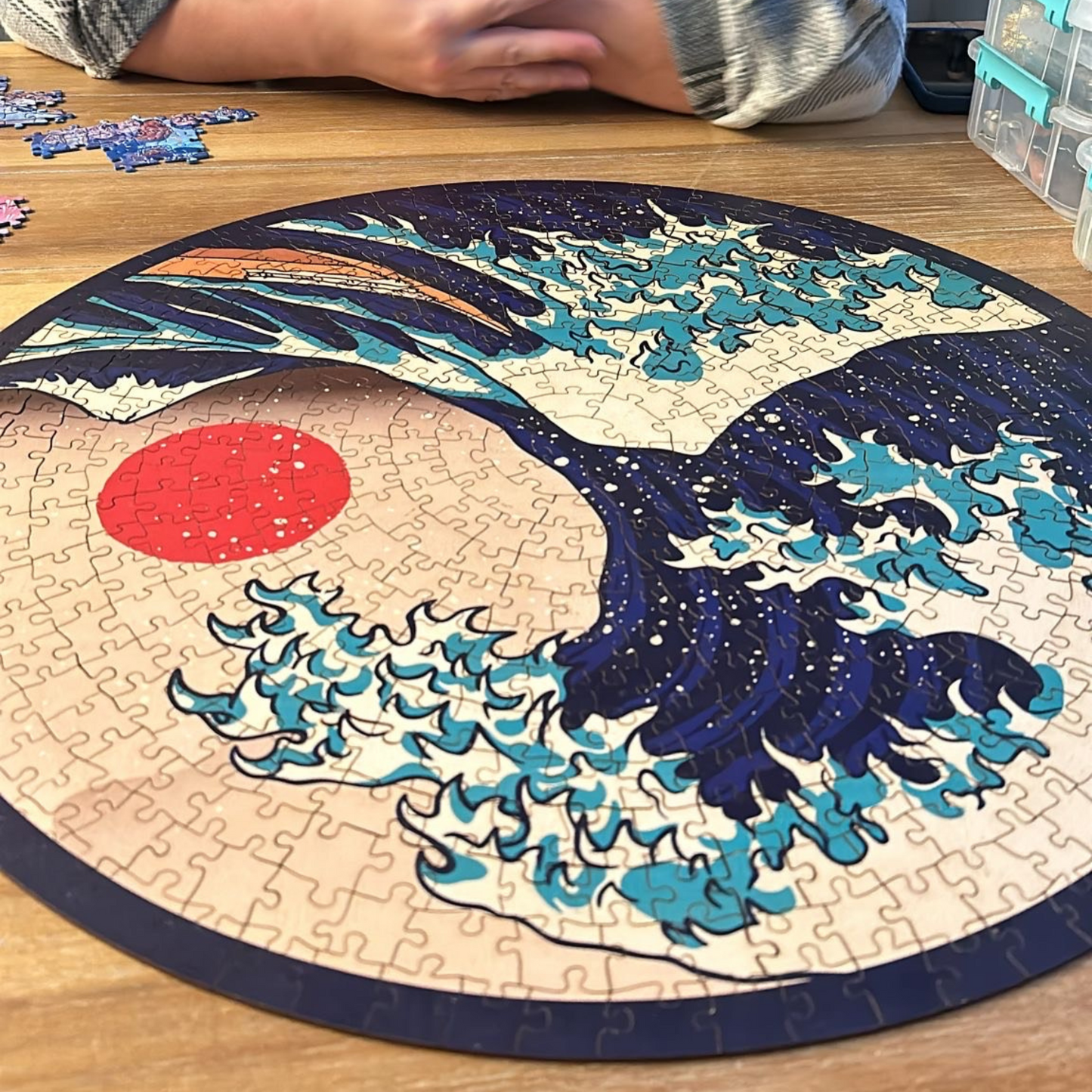
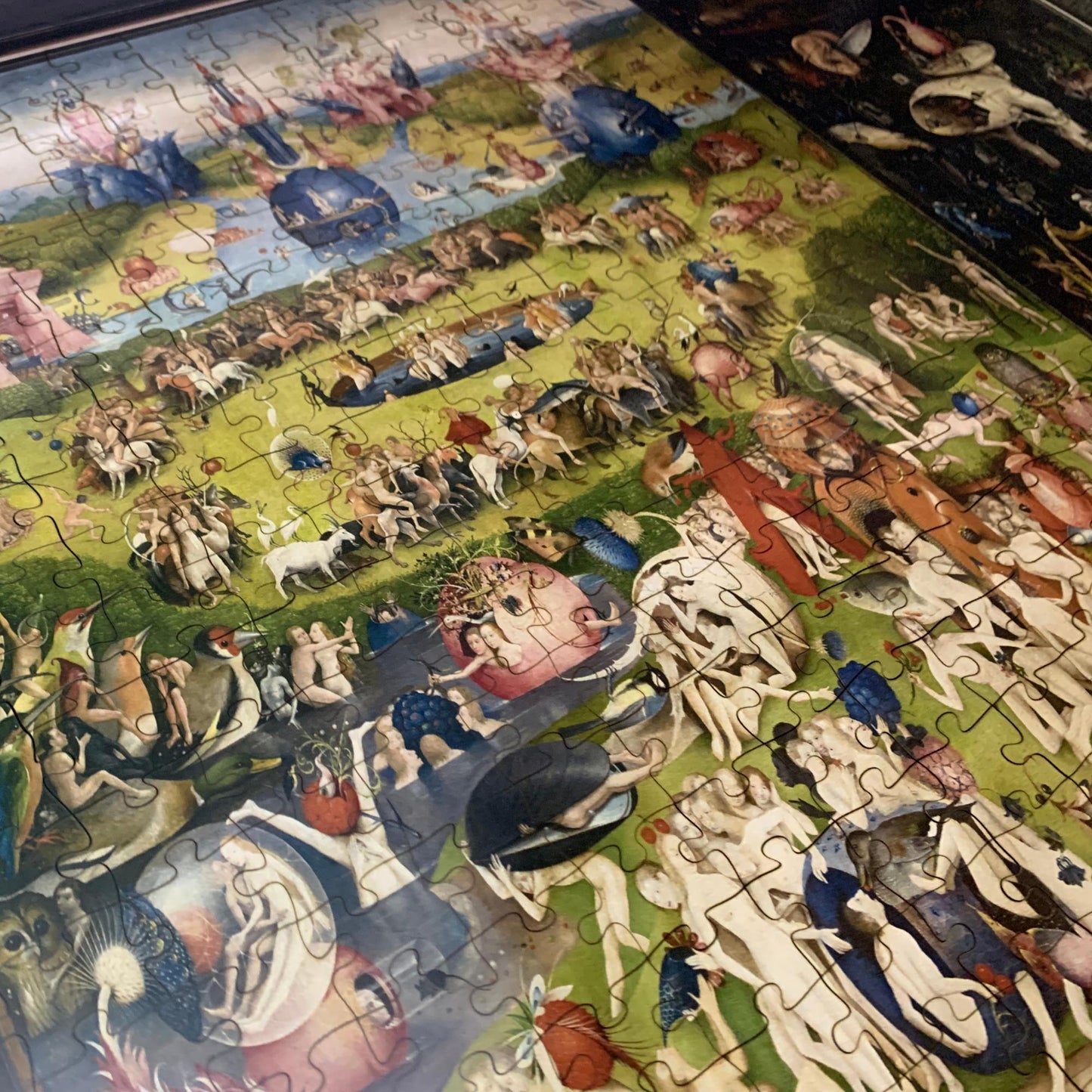
The cut is a traditional grid pattern — no novelty shapes, no trick pieces. Solving feels clean and deliberate. Each piece has a defined place and locks there. The wooden keepsake box is not a shipping container; it's built to the same standard as the puzzle, and most people keep it out after the puzzle is framed or stored.
Every puzzle is made to order. Production starts when you buy. Nothing sits in a warehouse going stale. The 3–4 week lead time is the cost of that, and it's worth it.