


Aurora Borealis by Church - Premium Wooden Jigsaw Puzzle
Aurora Borealis by Church - Premium Wooden Jigsaw Puzzle
- Regular price
- Price: $115.00
- Regular price
- List Price: $0.00
- Sale price
- Price: $115.00
- Unit price
- per
Key Features:
Key Features:
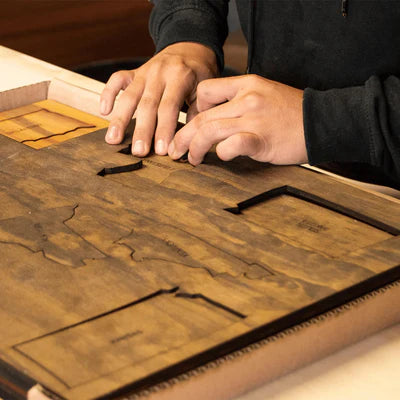
- Premium Quality: Crafted from durable 3mm (.14in) composite wood board for lasting enjoyment.
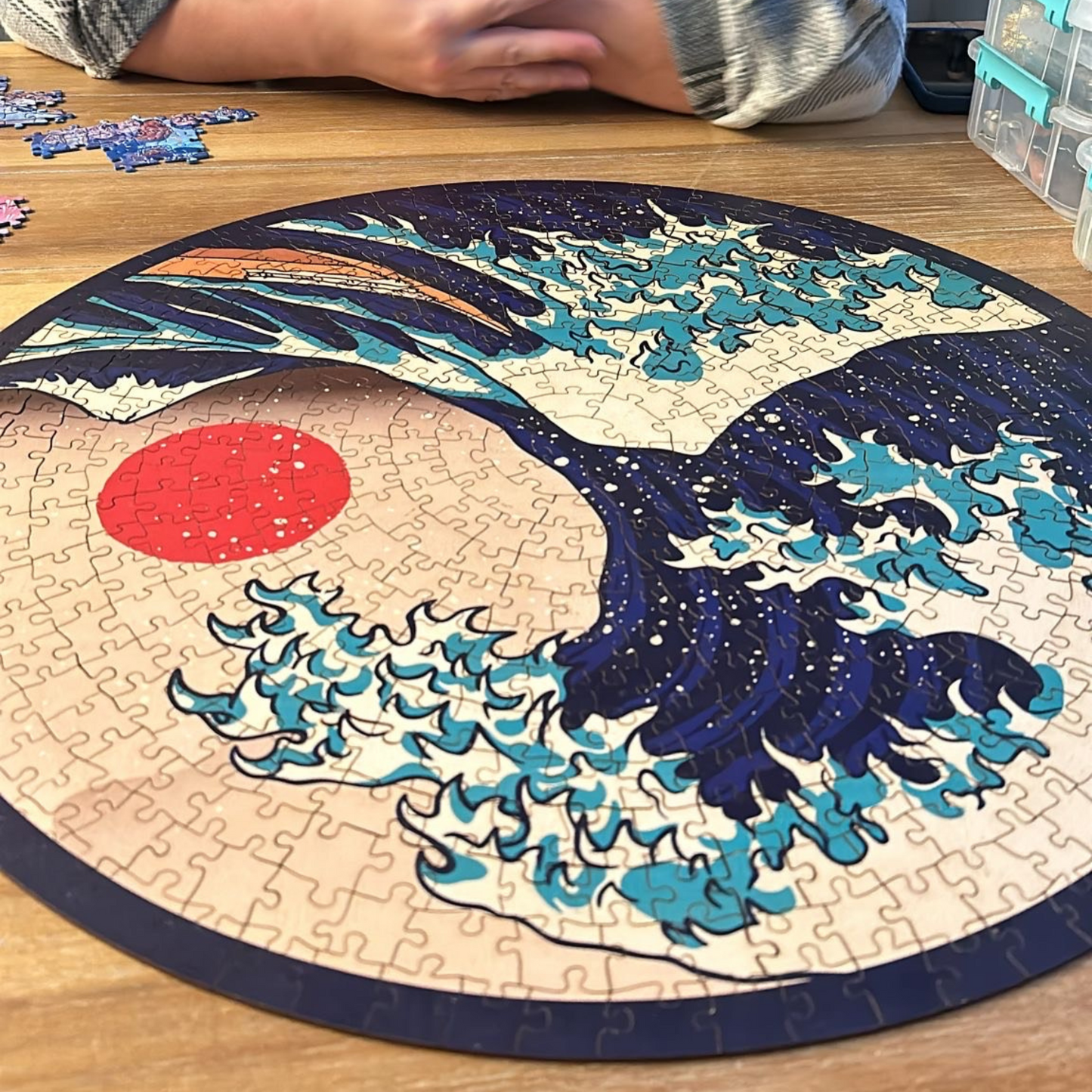
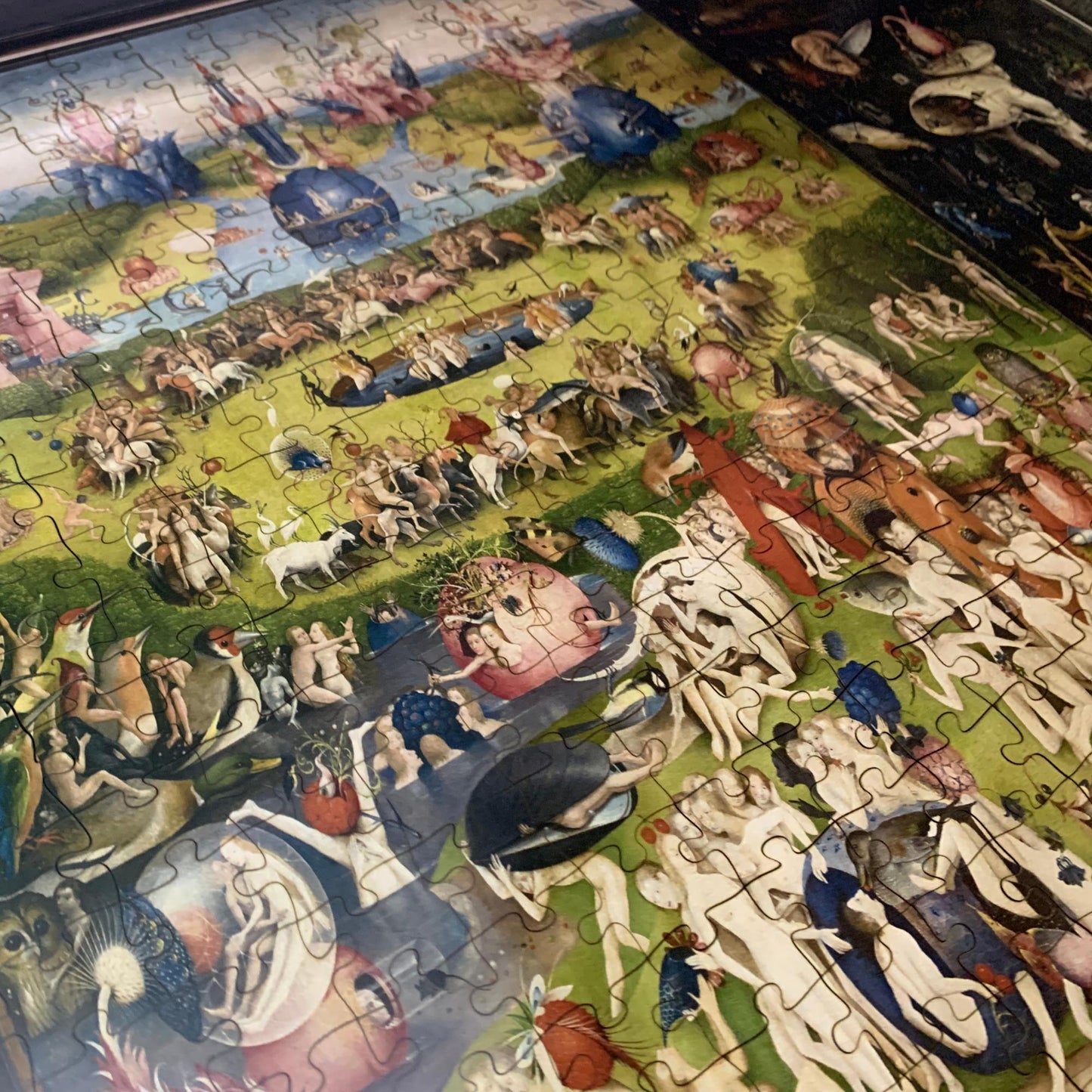
- Vibrant Imagery: High-resolution UV printing directly on the wood—no paper laminate—for stunning detail and vibrant colors.
- Eco-Conscious: Made with environmentally friendly materials.
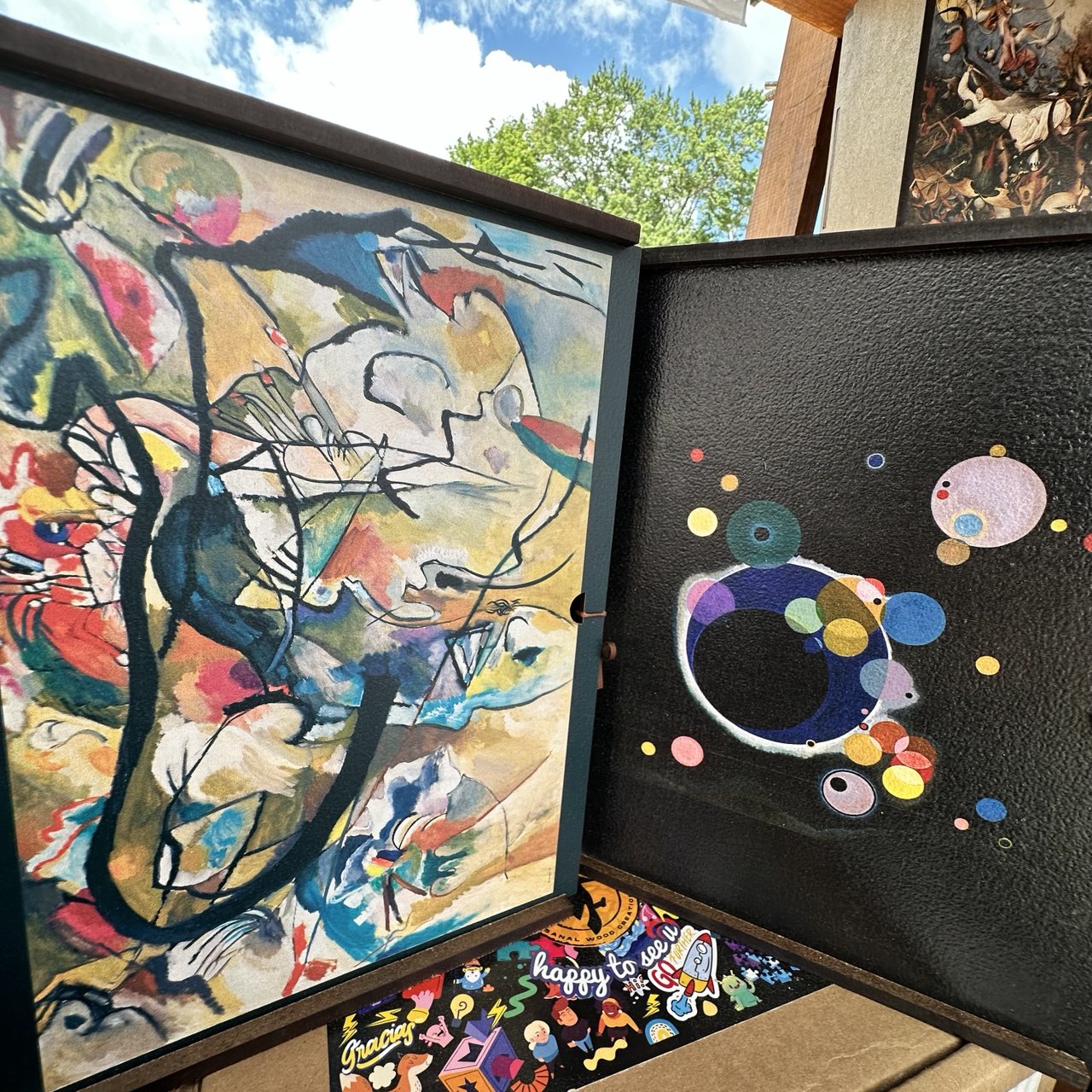
- Heirloom Keepsake: Your puzzle arrives beautifully packaged in a handcrafted wooden box, perfect for gifting or storing your masterpiece.
Craftsmanship and Care:
Craftsmanship and Care:
Experience the satisfying click of perfectly interlocking pieces. Our state-of-the-art laser cutting ensures precise fit and a smooth, seamless puzzle-solving experience. The perfect upgrade from cardboard without breaking the bank.
- Natural Laser Residue: A small amount of harmless black residue from the laser cutting process may be present. Simply wipe it away with a damp cloth.
- Hand-Finished Details: Each puzzle board, each wooden box are all carefully hand-stained, painted, and glued.
Satisfaction Guaranteed:
Satisfaction Guaranteed:
We are confident in the quality of our puzzles. If you are not completely satisfied, we offer a full refund or exchange.
PLEASE NOTE:
Each puzzle is crafted to make the most of your chosen size. Artwork may be subtly adjusted to meet our material and production standards while honoring the original work. Planning to frame yours? Email info@whatawoodwork.com for final measurements.
Couldn't load pickup availability
In stock
 PRODUCT DESCRIPTION
Aurora Borealis a Frederic Edwin Church artwork made into a Wooden Jigsaw Puzzle.
In 1865, a Union soldier saw the northern lights tear across the sky and wept. He wasn't alone. The aurora had appeared over the eastern seaboard multiple times during the Civil War, and most Americans read it as a sign — specifically a northern sign, a divine endorsement of the Union cause. Church knew this when he painted it. The SS United States, locked in Arctic ice, flying its flag with every star still in place. Hayes had promised to carry that flag north without losing a single one.
📖 The Story Behind This Piece
Church finished this painting in 1865, the same year the war ended. The scene is the Arctic, but the subject is America. Dr. Isaac Israel Hayes had returned from his polar expedition and handed Church a set of field sketches. Church worked from those sketches to build the image: the ship caught in ice, the sky erupting in green and white above it, the light playing both scientific phenomenon and political prophecy. At the time, audiences didn't need the symbolism explained. They already knew what the northern lights meant.
Church had trained under Thomas Cole and fallen in with Alexander von Humboldt's idea that great landscape painting was also a kind of natural science — that the goal was total atmospheric accuracy, not mood. Hayes was a friend, not just a source. When Church painted the aurora, he was working from someone else's memory of standing under it at the top of the world. That gap between firsthand experience and secondhand rendering is exactly what gives the painting its particular charge.
During assembly, the sky is where the real work happens. The aurora moves through four or five distinct color registers — deep green, pale yellow, near-white, the cold blue of the ice below — and the laser cut follows the grid precisely enough that the tonal shifts land on piece edges rather than disappearing into them. UV printing directly onto the wood pulls out the luminosity in the upper third of the image in a way flat paper reproduction flattens completely. You'll sort those upper-sky pieces twice before you're confident about where they go.
🎁 Who Gets One of These
A few specific kinds of people tend to end up with this one.
✔️ The American history reader who owns at least one Civil War title — You already know about the aurora sightings of 1861 and 1863. Now you have the painting that turned them into art, at a size worth framing.
✔️ The Hudson River School follower who has visited Olana — Church's house on the Hudson is still there. So is his eye for scale. The 23"x31" size does what a phone screen never could.
✔️ The geoscience or astronomy enthusiast who has seen the aurora in person — Church got the light physics right. The banding, the directionality, the cold color temperature. Puzzling through that accuracy is its own kind of pleasure.
✔️ The gift-giver who needs something for the person who reads serious nonfiction — Someone working through Arctic exploration history or 19th-century American painting will have context for every piece of this image.
✔️ The collector who already has the Smithsonian American Art Museum's print on a wall somewhere — The original hangs there. A wooden puzzle built from the same source image is a different kind of object entirely.
Works well as a retirement gift for someone leaving a long career in history, science, or public service. Fits the winter holiday season naturally given the Arctic subject matter. Substantial enough for a significant birthday.
🧩 Puzzle Specifications
✔️ Precision laser-cut wooden pieces
✔️ 3mm MDF core — rigid, warp-resistant, built to last
✔️ UV printing directly on wood — no paper laminate, no peeling
✔️ Traditional grid-cut design
✔️ Handcrafted wooden keepsake box included
✔️ Made to order — ships in 3–4 weeks
💎 Why This Puzzle Lasts
Most wooden puzzle makers charge $300–$500. The craft justifies it. WAWW gets to $115–$170 through direct manufacturing, no wholesale chain, and a made-to-order model that eliminates warehouse costs entirely. Same materials. No markup absorbed by a middleman.
The 3mm MDF core is what separates this from cardboard puzzles you've owned before. Pick up a finished piece and it doesn't flex. Set the completed puzzle on a table and it lies flat — no warping, no bowing at the edges. In twenty years the pieces will still click together the same way. UV printing bonds directly to the wood surface, so there's no paper layer to bubble, peel, or yellow. The aurora's upper greens and the ice-field whites stay exactly as printed.
The traditional grid cut means the pieces connect with a satisfying, unambiguous snap. No arbitrary shapes designed to add novelty — just clean geometry that makes the solving feel precise. When the puzzle is finished, the handcrafted wooden storage box becomes a permanent part of the object. People keep them on shelves. They hold the disassembled puzzle for years. Every WAWW puzzle is made after you order it, which means a 3–4 week ship window. Nothing sits in a warehouse. Nothing is made on speculation.
🖼️ After You Finish It
Most people frame it. The wooden box moves to a shelf nearby, usually next to books. Someone visiting will ask about the image first — the aurora, the ship, the ice — and then ask about the box, and at some point you'll mention Hayes's flag and the Civil War and a conversation you didn't plan for takes over the room. Church painted Aurora Borealis in 1865. It's been asking that kind of question ever since.