


Ivan Bilibin Wooden Puzzle — Prince Gvidon's Flight | Tale of Tsar Saltan 1904
Ivan Bilibin Wooden Puzzle — Prince Gvidon's Flight | Tale of Tsar Saltan 1904
- Regular price
- Price: $115.00
- Regular price
- List Price: $0.00
- Sale price
- Price: $115.00
- Unit price
- per
Key Features:
Key Features:
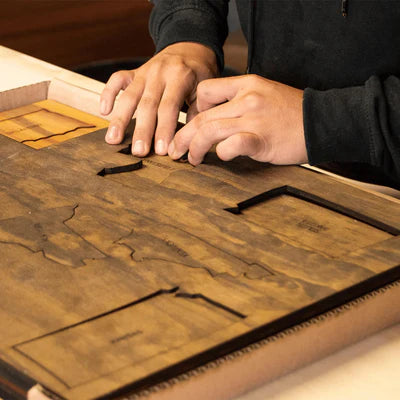
- Premium Quality: Crafted from durable 3mm (.14in) composite wood board for lasting enjoyment.
- Vibrant Imagery: High-resolution UV printing directly on the wood—no paper laminate—for stunning detail and vibrant colors.
- Eco-Conscious: Made with environmentally friendly materials.
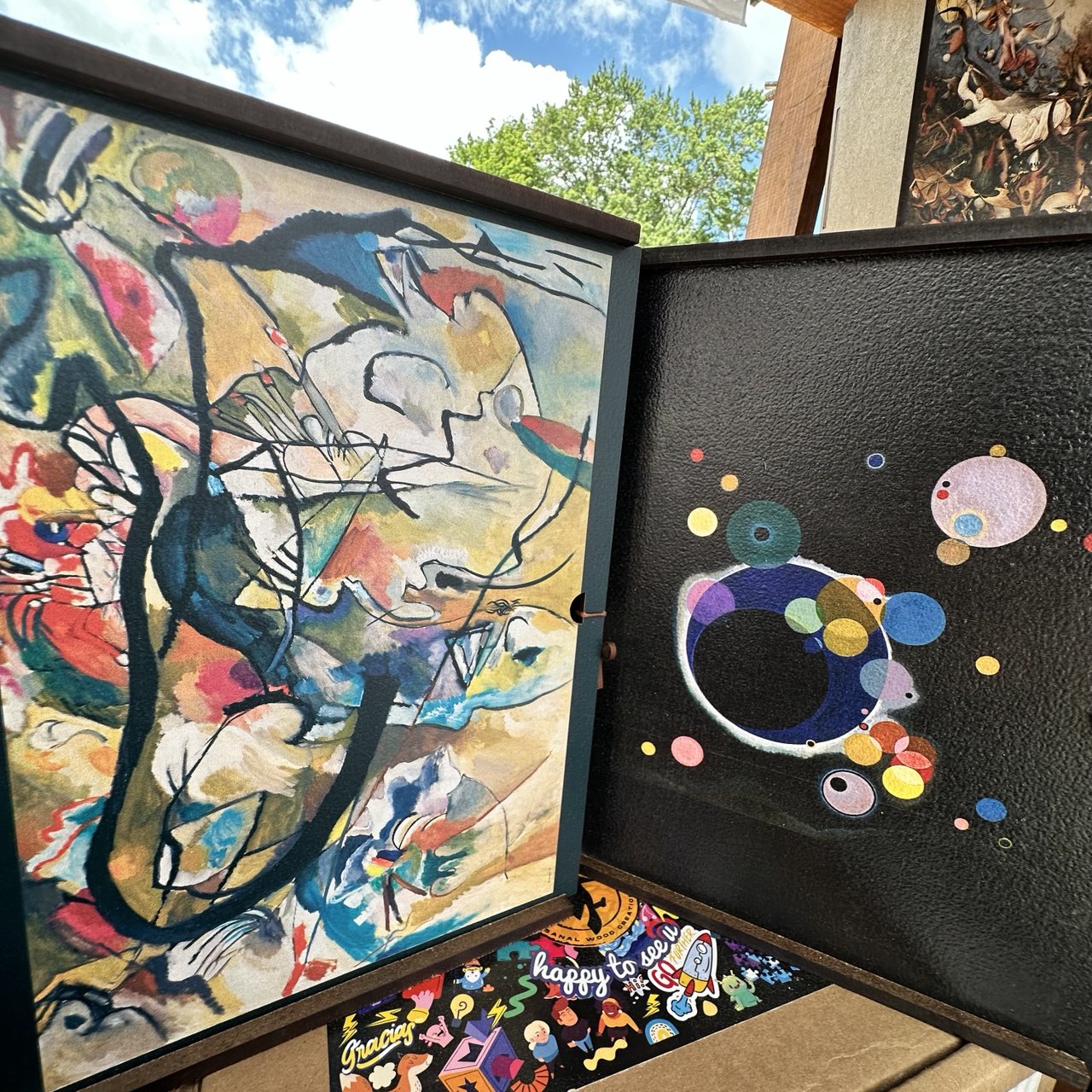
- Heirloom Keepsake: Your puzzle arrives beautifully packaged in a handcrafted wooden box, perfect for gifting or storing your masterpiece.
Craftsmanship and Care:
Craftsmanship and Care:
Experience the satisfying click of perfectly interlocking pieces. Our state-of-the-art laser cutting ensures precise fit and a smooth, seamless puzzle-solving experience. The perfect upgrade from cardboard without breaking the bank.
- Natural Laser Residue: A small amount of harmless black residue from the laser cutting process may be present. Simply wipe it away with a damp cloth.
- Hand-Finished Details: Each puzzle board, each wooden box are all carefully hand-stained, painted, and glued.
Satisfaction Guaranteed:
Satisfaction Guaranteed:
We are confident in the quality of our puzzles. If you are not completely satisfied, we offer a full refund or exchange.
PLEASE NOTE:
Each puzzle is crafted to make the most of your chosen size. Artwork may be subtly adjusted to meet our material and production standards while honoring the original work. Planning to frame yours? Email info@whatawoodwork.com for final measurements.
Couldn't load pickup availability
In stock
 PRODUCT DESCRIPTION
Bilibin drew Baba Yaga's mortar and pestle not as a fairy tale prop but as a working machine. In Russian folk tradition, the mortar grinds the boundary between the living world and the dead one.
He knew that. Every line in that forest knows that too.
📖 The Story Behind These Pieces
Ivan Bilibin made both of these illustrations within four years of each other. They are opposites — and that's the point.
In 1900 he drew Baba Yaga tearing through a birch forest in her mortar and pestle. In 1904 he drew a prince who had transformed himself into a mosquito, racing across open ocean toward his father's kingdom. One image closes. One opens. One is dread moving through darkness. One is flight moving toward light. Together they contain the full emotional range of Russian folklore — everything that lives in those stories between the forest and the sea.
Bilibin wasn't illustrating folklore the way illustrators illustrated folklore. He was building a visual language for it. Working from lubok — the Russian popular print tradition — and layering in Art Nouveau structure and the flat contained linework of Japanese woodblock prints, he arrived at something that looked ancient and modern at once. His ink outlines are so precise they read as architecture. The watercolor fills them the way stained glass fills lead. Each tree in that birch forest is a deliberate shape. Each wave in that ocean is a decision.
He knew what Baba Yaga's mortar meant. In Russian folk tradition, the mortar grinds the boundary between the living world and the dead one. The broom trailing behind her sweeps away her tracks as she moves. The forest closes after her. And then four years later, the same hand that drew that closing forest drew an ocean that opens all the way to the horizon — a walled city floating impossibly on an island, a prince transformed, a ship to catch.
Bilibin was 24 years old when he drew Baba Yaga. He died in Leningrad in 1942, during the German siege, with projects unfinished on his desk. Between those two dates he built a visual system so precise and so distinctly Russian that it became the defining image of an entire folklore tradition. These two illustrations are four years and a world apart. On the same wall, they complete each other.
🎁 Who Gets One of These
A few types of people tend to find this one and not let go of it.
✔️ The Slavic mythology reader — You've been through Afanasyev's collected folk tales, you have opinions about how Baba Yaga is usually depicted, and Bilibin's version is the one that gets it right.
✔️ The Art Nouveau collector — You own Mucha prints and Klimt books, and Bilibin belongs in that conversation. Not many people in the US know his name yet. That's part of the appeal.
✔️ The folklore and fantasy reader who also assembles puzzles — You've read Angela Carter and Catherynne Valente and you want something on the table that holds the same kind of weight.
✔️ The parent or grandparent who grew up with Eastern European folk stories — Baba Yaga was a real figure in the house, not a curiosity. Giving this is a different kind of recognition.
✔️ The museum shop buyer who wants something the museum shop doesn't carry — Russian Art Nouveau at this scale and quality, at a price that doesn't require a board discussion.
Works well as a holiday gift for anyone with a serious interest in folklore, illustration history, or Eastern European art. Also a considered birthday gift for the person in your life who has outgrown what you can find at the bookstore.
🧩 Puzzle Specifications
✔️ Precision laser-cut wooden pieces
✔️ 3mm MDF core — rigid, warp-resistant, built to last
✔️ UV printing directly on wood — no paper laminate, no peeling
✔️ Traditional grid-cut design
✔️ Sizes: 15"x23", 18"x24", 23"x31"
✔️ Piece counts: 300–1000
✔️ Handcrafted wooden keepsake box included
✔️ Made to order — ships in 3–4 weeks
💎 Why This Puzzle Lasts
Most wooden puzzle makers charge $300–$500. The craft justifies it. We get there differently: direct manufacturing, no wholesale chain, made to order. Same materials. The price difference is structural, not a sign of a corner cut.
The 3mm MDF core is what keeps pieces clicking cleanly years from now. Cardboard compresses and warps; MDF holds its shape under humidity and handling. UV printing goes directly onto the wood surface, which means no paper laminate sitting between you and the image. Nothing to peel. Nothing to fade. Bilibin's watercolor layers stay readable at the scale they were drawn.
The traditional grid cut gives each piece a clean, satisfying click — no gimmick shapes competing with the image for attention. When the puzzle is done, the handcrafted wooden box becomes where it lives. People keep it on a shelf. The box outlasts the occasion. Every puzzle is made to order, which means it goes into production when you buy it. The three-to-four week wait is the reason there's no warehouse of degraded inventory sitting somewhere — yours is made for you.