
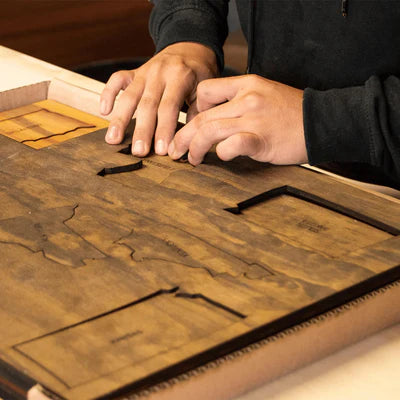


Basket of Fruit by Caravaggio - Premium Wooden Puzzle
Basket of Fruit by Caravaggio - Premium Wooden Puzzle
- Regular price
- Price: $115.00
- Regular price
- List Price: $0.00
- Sale price
- Price: $115.00
- Unit price
- per
Key Features:
Key Features:
- Premium Quality: Crafted from durable 3mm (.14in) composite wood board for lasting enjoyment.
- Vibrant Imagery: High-resolution UV printing directly on the wood—no paper laminate—for stunning detail and vibrant colors.
- Eco-Conscious: Made with environmentally friendly materials.
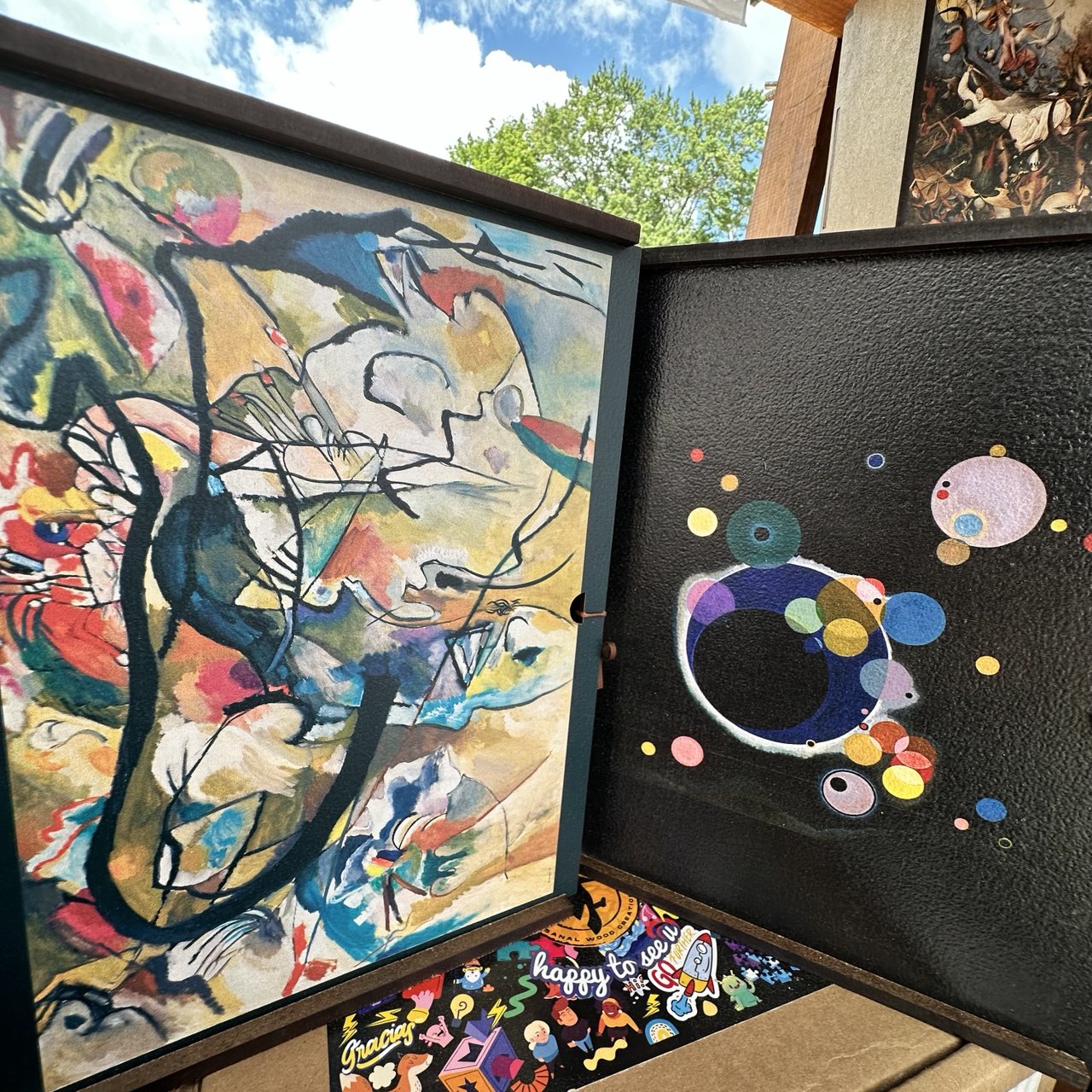
- Heirloom Keepsake: Your puzzle arrives beautifully packaged in a handcrafted wooden box, perfect for gifting or storing your masterpiece.
Craftsmanship and Care:
Craftsmanship and Care:
Experience the satisfying click of perfectly interlocking pieces. Our state-of-the-art laser cutting ensures precise fit and a smooth, seamless puzzle-solving experience. The perfect upgrade from cardboard without breaking the bank.
- Natural Laser Residue: A small amount of harmless black residue from the laser cutting process may be present. Simply wipe it away with a damp cloth.
- Hand-Finished Details: Each puzzle board, each wooden box are all carefully hand-stained, painted, and glued.
Satisfaction Guaranteed:
Satisfaction Guaranteed:
We are confident in the quality of our puzzles. If you are not completely satisfied, we offer a full refund or exchange.
PLEASE NOTE:
Each puzzle is crafted to make the most of your chosen size. Artwork may be subtly adjusted to meet our material and production standards while honoring the original work. Planning to frame yours? Email info@whatawoodwork.com for final measurements.
Couldn't load pickup availability
In stock
 PRODUCT DESCRIPTION
Basket of Fruit — Caravaggio — Wooden Jigsaw Puzzle
The apple has a worm hole in it. Caravaggio put it there on purpose, around 1597, at a moment when Italian painters didn't paint still lifes at all — the genre wasn't considered serious enough. He painted one anyway, with rotting fruit, and it ended up in a cardinal's private collection. Cardinal Federico Borromeo kept it for the rest of his life.
📖 The Story Behind This Piece
Painted between 1597 and 1600, Basket of Fruit sits in the Pinacoteca Ambrosiana in Milan and holds a specific distinction: art historians consider it one of the earliest examples of pure still life in Italian art. Caravaggio positioned the wicker basket so it juts slightly over the edge of the ledge toward the viewer — a trompe-l'œil trick that makes the fruit feel close enough to touch. The pale, nearly featureless background strips away any narrative distraction. What's left is a bruised apple, spotted pears, a withered fig leaf, and the implication that all of it will be gone soon.
Caravaggio made a deliberate choice that set him apart from virtually every Italian painter working at the time: he refused to idealize what he saw. The imperfections in this basket — the worm damage, the browning leaves — weren't careless. They were the point. For Caravaggio, realism without decay was a kind of dishonesty. The fruit in this painting is beautiful precisely because it's already going.
Assembly surfaces the detail that reproduction flattens. The wicker weave of the basket becomes its own puzzle within the puzzle — dozens of near-identical interlocking strands where color differences are measured in single tones. UV printing directly onto wood gives the dark background a depth that a paper-laminate print can't hold; the pale ochre of the ledge reads differently against wood grain than against glossy paper. Somewhere in the middle of building this, the worm-eaten apple becomes the piece you're looking for.
🎁 Who Gets One of These
A few kinds of people order this one specifically.
✔️ The Baroque art collector — You've stood in front of Caravaggio's work in Rome or Milan and noticed how different the originals look from any reproduction. The wicker, the bruised fruit, the impossible shadow. Now you can spend real time rebuilding it piece by piece.
✔️ The art historian or serious student — Someone who can explain why a still life with rotting fruit was a provocation in 1597, and who wants an object on their shelf that reflects that knowledge.
✔️ The museum member who has stopped buying decorative prints — You've outgrown posters. The wooden keepsake box alone signals that something more considered is happening here.
✔️ The gift-giver who once gave the wrong thing — You know this person's taste well enough to know that Caravaggio is right and Monet is wrong for them. That precision deserves a gift that matches it.
✔️ The philosophy reader who keeps Ecclesiastes on their desk — Vanitas imagery isn't decorative for you. A puzzle built around memento mori is a different kind of afternoon.
Works well as a birthday gift for an art lover with specific taste, a retirement gift for someone leaving a museum career, or an anniversary gift for the couple that spent a trip in Milan. Skip it as a general holiday gift unless you know the person well enough to spell Caravaggio correctly.
🧩 Puzzle Specifications
✔️ Precision laser-cut wooden pieces
✔️ 3mm MDF core — rigid, warp-resistant, built to last
✔️ UV printing directly on wood — no paper laminate, no peeling
✔️ Traditional grid-cut design
✔️ Sizes: 15"x23", 18"x24", 23"x31"
✔️ Piece counts: 300–1000
✔️ Handcrafted wooden keepsake box included
✔️ Made to order — ships in 3–4 weeks
💎 Why This Puzzle Lasts
Most wooden puzzle makers charge $300–$500. The craft justifies it. WAWW gets there differently: direct manufacturing, no wholesale chain, made to order. Same materials. No markup passed through to you.
The 3mm MDF core is why the pieces still click cleanly years from now. Cardboard compresses and warps with humidity; MDF doesn't. You'll feel the difference the first time you seat a piece — it lands with a solidity that cardboard can't replicate. UV printing goes directly onto the wood surface with no paper layer between the ink and the board. Paper laminates peel at the edges and fade toward the center; neither happens here because there's no laminate to fail.
The traditional grid cut means pieces connect without ambiguity. No irregular shapes engineered to trick you — just a clean, satisfying solve where each connection is confirmed by feel. After assembly, the handcrafted wooden keepsake box becomes where the puzzle lives. People keep it. It looks like something. Made-to-order means no warehouse inventory, no sitting on a shelf for months before shipping — your puzzle is cut and printed after you buy it, which is why the wait is three to four weeks and why it arrives in the condition it should.