


Great Heron by Audubon - Blue Crane Premium Wooden Jigsaw Puzzle
Great Heron by Audubon - Blue Crane Premium Wooden Jigsaw Puzzle
- Regular price
- Price: $115.00
- Regular price
- List Price: $0.00
- Sale price
- Price: $115.00
- Unit price
- per
Key Features:
Key Features:
- Premium Quality: Crafted from durable 3mm (.14in) composite wood board for lasting enjoyment.
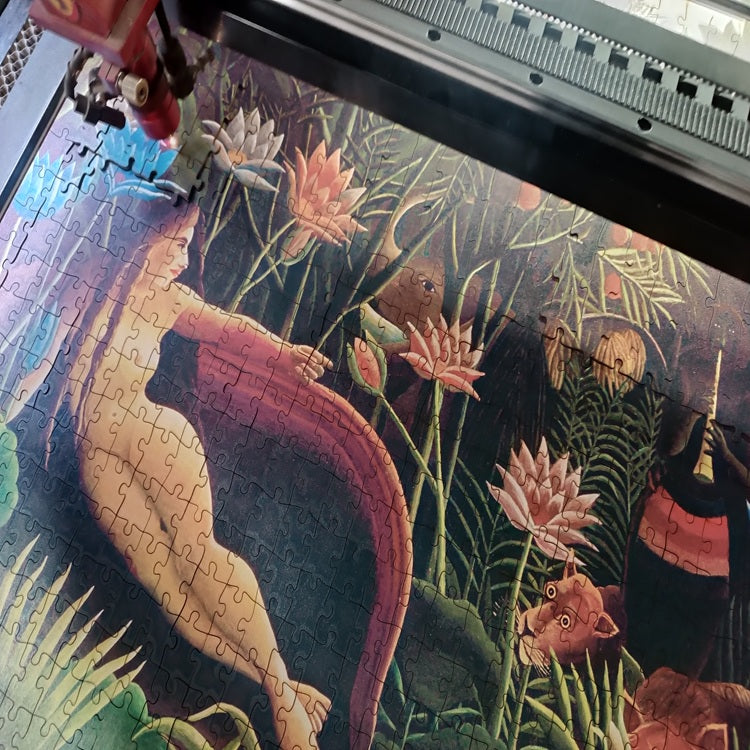
- Vibrant Imagery: High-resolution UV printing directly on the wood—no paper laminate—for stunning detail and vibrant colors.
- Eco-Conscious: Made with environmentally friendly materials.
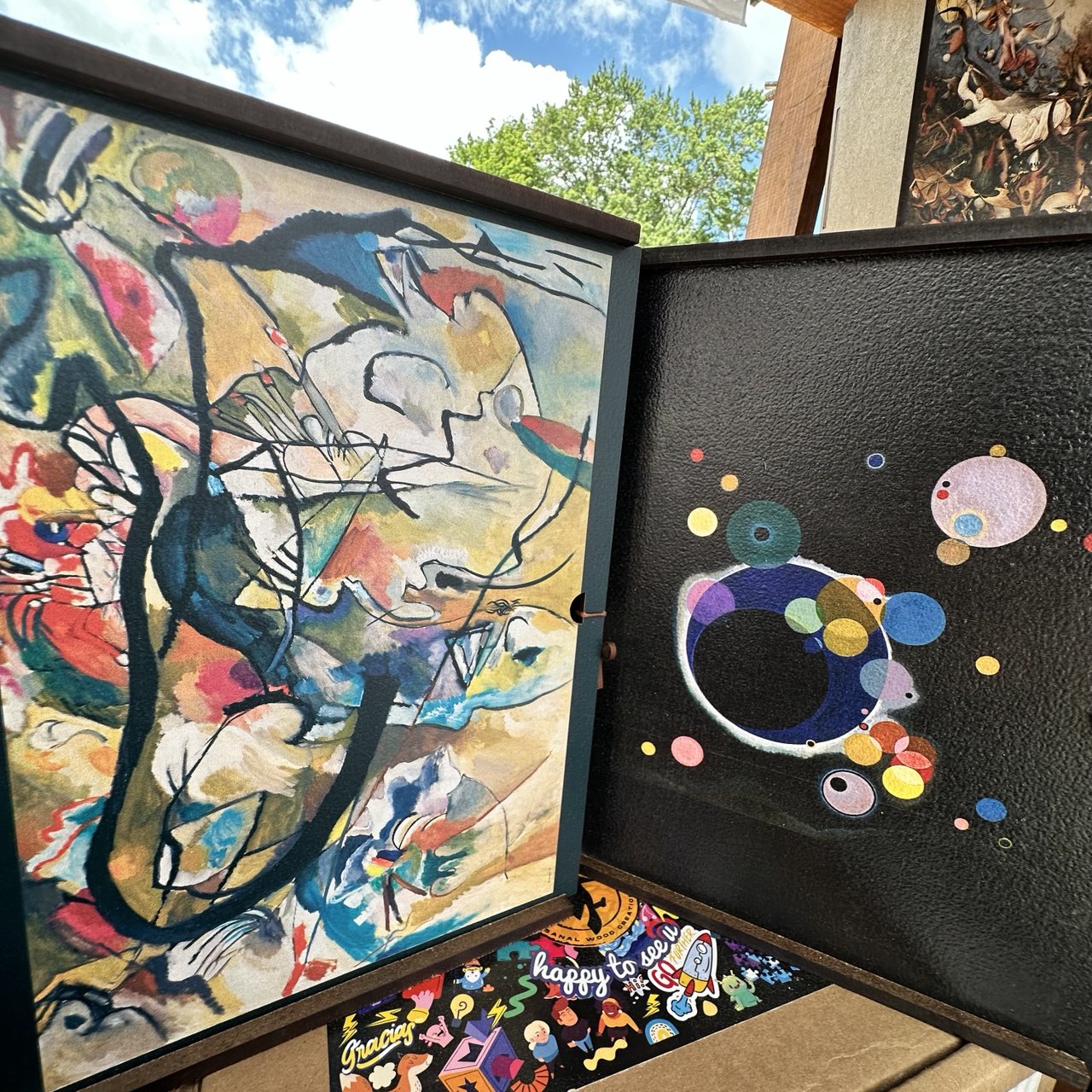
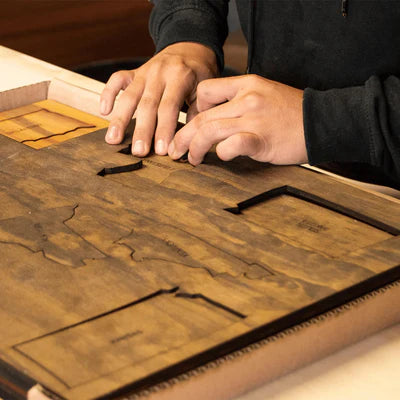
- Heirloom Keepsake: Your puzzle arrives beautifully packaged in a handcrafted wooden box, perfect for gifting or storing your masterpiece.
Craftsmanship and Care:
Craftsmanship and Care:
Experience the satisfying click of perfectly interlocking pieces. Our state-of-the-art laser cutting ensures precise fit and a smooth, seamless puzzle-solving experience. The perfect upgrade from cardboard without breaking the bank.
- Natural Laser Residue: A small amount of harmless black residue from the laser cutting process may be present. Simply wipe it away with a damp cloth.
- Hand-Finished Details: Each puzzle board, each wooden box are all carefully hand-stained, painted, and glued.
Satisfaction Guaranteed:
Satisfaction Guaranteed:
We are confident in the quality of our puzzles. If you are not completely satisfied, we offer a full refund or exchange.
PLEASE NOTE:
Each puzzle is crafted to make the most of your chosen size. Artwork may be subtly adjusted to meet our material and production standards while honoring the original work. Planning to frame yours? Email info@whatawoodwork.com for final measurements.
Couldn't load pickup availability
In stock
 PRODUCT DESCRIPTION
Blue Crane or Great Blue Heron — An Audubon Wooden Jigsaw Puzzle
The adult and the juvenile look like two different species. That's not artistic license — Little Blue Herons actually do this. The adult is slate-blue. The juvenile is white. For years, early naturalists counted them separately, as unrelated birds. Audubon put both in the same frame, in 1836, and quietly settled the argument.
📖 The Story Behind This Piece
This plate of The Birds of America was engraved, printed, and hand-colored by Robert Havell in 1836, set against a landscape near Charleston, South Carolina. Audubon places the slate-blue adult in the foreground,
Audubon spent years moving through the American South, shooting specimens and sketching in the field, then rebuilding the poses from wire-mounted birds to get the posture exactly right. He wasn't illustrating birds so much as constructing an argument that American wildlife deserved the same treatment European naturalists had given Old World species. The Carolina setting matters here. Charleston's tidal marshes were where Audubon observed these birds directly, not from memory or second-hand accounts.
The heron's plumage is where UV printing on wood earns its place. The slate-blue of the adult sits against a pale sky that shifts almost imperceptibly toward green at the horizon — that gradient is nearly invisible on screen and fully present on the printed wood surface. During assembly, the foreground bird's neck feathers will slow you down. The detail there is dense, the tonal shifts are narrow, and the pieces cut through it without mercy. You'll find yourself studying a two-inch section of a 19th-century engraving more closely than most people ever have.
🎁 Who Gets One of These
A few specific people come to mind.
✔️ The birder with a life list in the hundreds — You've spotted Little Blue Herons in the field. You already know they're one bird, two colors. Audubon made the case in 1836 and it holds up.
✔️ The natural history museum member who actually reads the wall text — The Birds of America was printed in double elephant folio format, nearly four feet tall. Audubon's originals hang in institutions. Plate 307 belongs in your house.
✔️ The person who has framed Audubon prints before — You know the difference between a reproduction and an object. UV printing on 3mm wood makes a different kind of object than paper on a wall.
✔️ The art history buyer who focuses on American Romanticism — Audubon was working at the same moment as Thomas Cole and the Hudson River School. Plate 307 has the same compositional ambitions, applied to ornithology.
✔️ The gift-giver who needs something for someone who already owns everything — Made to order, ships in a handcrafted wooden box, sourced from a 190-year-old engraving. Hard to find anything more considered than that.
Strong gift occasions: birthdays for naturalists or art collectors, retirement gifts for biologists or conservationists, holiday gifts when you need something that won't end up in a closet. The Audubon subject carries enough cultural weight that no explanation is required when someone opens it.
💎 Why This Puzzle Lasts
Most wooden puzzle makers charge $300 to $500. The craft justifies that price. WAWW gets to $115–$170 through direct manufacturing and no wholesale chain — made to order, no warehouse, no middleman markup. Same materials. Different math.
The core is 3mm MDF, which means pieces click together cleanly and stay that way. Cardboard swells with humidity and warps over time; MDF doesn't. A puzzle you assemble today will fit the same way twenty years from now. UV printing goes directly onto the wood surface — no paper laminate means no peeling at the edges, no fading along the seams, and no loss of detail in the fine engraving lines Robert Havell cut nearly two centuries ago.
The laser cut follows a traditional grid, which sounds like a limitation but solves an actual problem: the pieces have consistent logic, so your hands learn the system and stop fighting it. You're solving the image, not the cut pattern. When the puzzle is finished, it goes into a handcrafted wooden box built for the purpose — not a cardboard sleeve to be thrown out, but something people keep on shelves. Made to order means your puzzle doesn't exist until you buy it. Production takes 3–4 weeks. Nothing sits in a warehouse waiting for a buyer; yours is made for you specifically.
This plate has been in natural history collections for nearly 190 years. Rebuilding it yourself, piece by piece, through Havell's engraved lines and Audubon's Carolina marshland, is a different kind of familiarity with it.