


Theobroma Cacao Wooden Puzzle — Berthe Hoola van Nooten | Java 1863
Theobroma Cacao Wooden Puzzle — Berthe Hoola van Nooten | Java 1863
- Regular price
- Price: $115.00
- Regular price
- List Price: $0.00
- Sale price
- Price: $115.00
- Unit price
- per
Key Features:
Key Features:
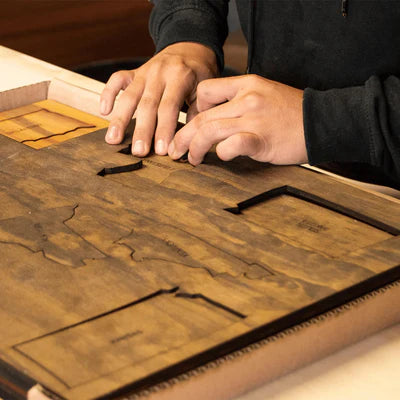
- Premium Quality: Crafted from durable 3mm (.14in) composite wood board for lasting enjoyment.
- Vibrant Imagery: High-resolution UV printing directly on the wood—no paper laminate—for stunning detail and vibrant colors.
- Eco-Conscious: Made with environmentally friendly materials.
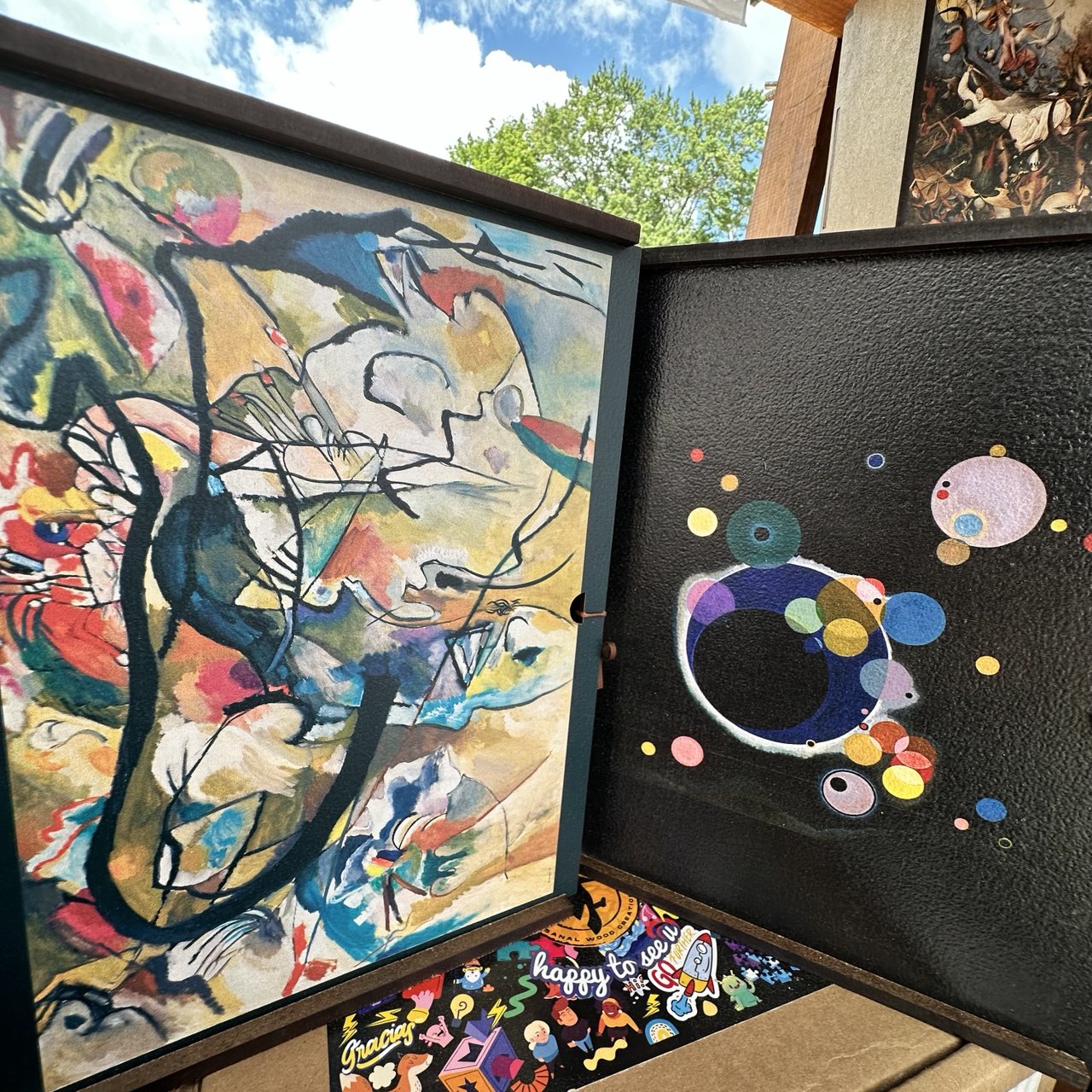
- Heirloom Keepsake: Your puzzle arrives beautifully packaged in a handcrafted wooden box, perfect for gifting or storing your masterpiece.
Craftsmanship and Care:
Craftsmanship and Care:
Experience the satisfying click of perfectly interlocking pieces. Our state-of-the-art laser cutting ensures precise fit and a smooth, seamless puzzle-solving experience. The perfect upgrade from cardboard without breaking the bank.
- Natural Laser Residue: A small amount of harmless black residue from the laser cutting process may be present. Simply wipe it away with a damp cloth.
- Hand-Finished Details: Each puzzle board, each wooden box are all carefully hand-stained, painted, and glued.
Satisfaction Guaranteed:
Satisfaction Guaranteed:
We are confident in the quality of our puzzles. If you are not completely satisfied, we offer a full refund or exchange.
PLEASE NOTE:
Each puzzle is crafted to make the most of your chosen size. Artwork may be subtly adjusted to meet our material and production standards while honoring the original work. Planning to frame yours? Email info@whatawoodwork.com for final measurements.
Couldn't load pickup availability
In stock
 PRODUCT DESCRIPTION
Theobroma cacao — food of the gods. A widowed Dutch woman painted it from life in Java, and every chocolate lover on earth owes her a moment.
A Group of Auriculas from Dr. Robert John Thornton's Temple of Flora, painted by Peter Charles Henderson and published May 1, 1803, shows four varieties of show auricula — the round-headed, eye-ringed alpine primrose that became one of the great obsessions of Regency-era English horticulture. Thornton himself wrote that being a native of the Alps, "in our picture, it is seated near a chain of tremendous mountains" — explaining the dramatic Alpine backdrop that towers behind these pot-grown flowers. By the end of the eighteenth century, something like fifty auricula shows were being held each year in Lancashire and Yorkshire alone, and during the Regency the pot-grown auricula became the pet plant of polite society. The auricula "theatre" — black velvet draped over tiered shelves, with ornate mirrors placed at the sides to reflect the flowers — was the height of aristocratic display. This plate captures that moment exactly.
Thornton ruined himself making this book. A medical doctor and heir who had no business spending what he spent, he commissioned painters, engravers, and printers for eight years straight, from 1799 to 1807, to produce 33 plates of flowers so dramatically lit and romantically staged they looked nothing like any botanical illustration anyone had seen. The project bankrupted him. The plates survived.
📖 The Story Behind This Piece
Robert John Thornton's Temple of Flora was meant as a tribute to Carl Linnaeus, the Swedish botanist who gave the plant kingdom its naming system. What Thornton actually built was something closer to theater. Each plate sets a single flower, rendered with scientific precision, against a stormy sky, a volcanic landscape, a moonlit garden. The Night-Blowing Cereus opens at midnight in front of a clock showing the hour. The Dragon Arum looms out of a murky fen like something from a fever dream. Thornton published between 1799 and 1807, while Britain was at war and the market for expensive folios was soft. He knew the timing was bad. He published anyway.
Thornton hired Philip Reinagle and Peter Henderson to paint the original compositions, then put them through aquatint, stipple, and mezzotint engraving to get the color and shadow depth he wanted. The mezzotint process alone, which builds tone by roughening a copper plate and then smoothing it back, could take weeks per image. Thornton had no formal art training. He understood exactly what he was asking for. That gap between his ambition and his expertise is probably why the plates look the way they do.
The backgrounds in these plates are built from fine tonal gradients, the kind that disappear into flat color on most screens. UV printing directly onto the wood surface holds those gradations where paper laminate would flatten them. Sorting the dark atmospheric zones behind the Dragon Arum from the lighter murk at its edges is the kind of visual problem that only becomes apparent once pieces are in hand. What reads as shadow on a monitor resolves into five or six distinct tonal shifts in wood. The flower itself comes together fast. The sky behind it is where the work is.
🎁 Who Gets One of These
A few kinds of people land on this one specifically.
✔️ The botanical print collector — You already own framed plates from the period. You know what mezzotint engraving actually is and why it matters. Rebuilding one of the most expensive flower books ever made, piece by piece, is a different relationship with the work than hanging it.
✔️ The natural history museum member — You've seen original Thornton plates behind glass and wanted more time with them. A 23"x31" wooden version gives you that, on your own table, without the rope barrier.
✔️ The gardener who also reads — Someone who knows the Night-Blowing Cereus by its Latin name, Selenicereus grandiflorus, and has an opinion about where to plant one. The drama in Thornton's staging will either delight or irritate you. Either response means you're paying attention.
✔️ The person shopping for a serious gift — You need something that clearly took thought, won't be returned, and has a story attached. Thornton's financial ruin in pursuit of this work is a story. It travels with the object.
✔️ The lapsed puzzler who outgrew cardboard — You stopped because the pieces felt cheap and the finished thing had nowhere to go. Wooden pieces and a handcrafted storage box change both of those problems.
Works well as a birthday or anniversary gift for anyone with a serious interest in botanical art, natural history, or the history of printmaking. A strong choice for Mother's Day if the person in question actually gardens or collects prints, not as a generic gesture.
📖 The Story Behind This Piece
This chromolithograph of Theobroma cacao was painted from life in Batavia — present-day Jakarta — by Madame Berthe Hoola van Nooten, and published in her landmark folio Fleurs, fruits et feuillages choisis de l'île de Java between 1863 and 1885. Van Nooten had followed her husband to Java in her early twenties. When he died and left her with debts, she turned to what she had: a painter's eye, a tropical island full of extraordinary plants, and the discipline to record them exactly. The result was one of the most botanically and visually ambitious publications of the nineteenth century, produced by a woman working largely alone in colonial Java and printed by chromolithographer P. Depannemaeker in Belgium.
The plate shows the cacao plant in full scientific detail — a deep crimson pod dominating the upper half, two leaves at full spread, a smaller immature pod, tiny blossoms on the branch, and along the bottom a dissection sequence: the flower, the seed, a cross-section of the pod interior, and a longitudinal cut revealing the arrangement of beans inside. This is the complete botanical argument in one image: what the plant looks like, how it flowers, and what it contains. The Aztec and Maya names for the tree meant "bitter water" and "food of the gods." Linnaeus, who formalized the Latin binomial Theobroma cacao, chose the latter. Van Nooten painted it as both deserved.
🎁 Who Gets One of These
✔️ The chocolate lover who reads the label — You know single-origin from bean-to-bar, you've looked up what a cacao pod actually looks like, and you have never seen it painted like this.
✔️ The botanical illustration collector — Van Nooten is consistently cited alongside Maria Sibylla Merian as one of the great women botanical artists. This is her most recognizable subject, in its most complete form.
✔️ The puzzle buyer who wants visual density — The deep crimson of the pod against the cool green of the leaves, the fine engraved detail of the dissection drawings at the bottom, the texture of every surface: this rewards a slow assembly.
✔️ The gift for the person who has everything chocolate-adjacent — They own the tasting sets, the books, the origin bars. They do not own a 19th-century chromolithograph of Theobroma cacao painted from life in Java, made into a puzzle.
Strong occasion fits: birthdays for the food-curious, chocolate enthusiasts, botanical art collectors, anyone with a serious kitchen and walls to match.
🧩 Puzzle Specifications
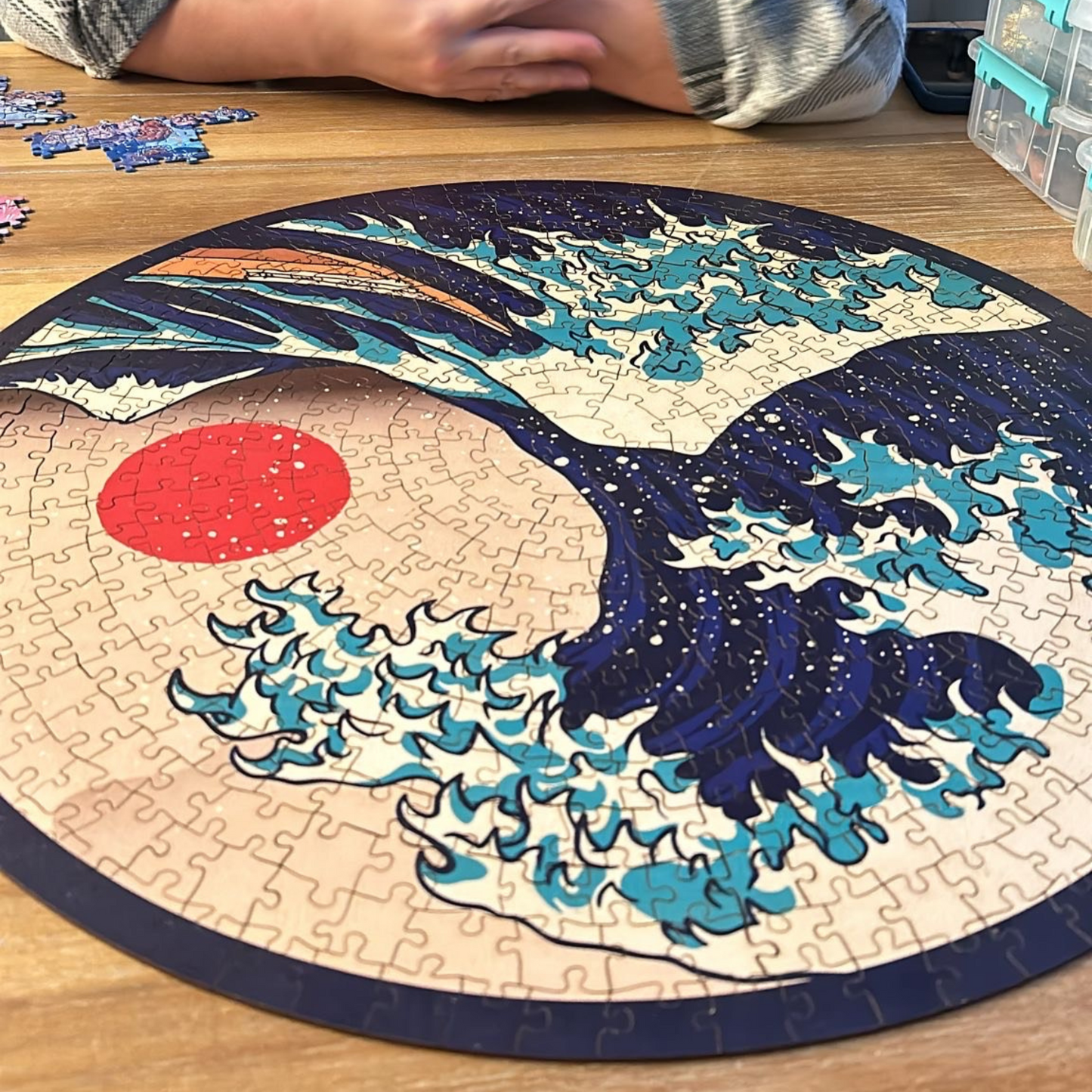
✔️ Precision laser-cut wooden pieces
✔️ 3mm MDF core — rigid, warp-resistant, built to last
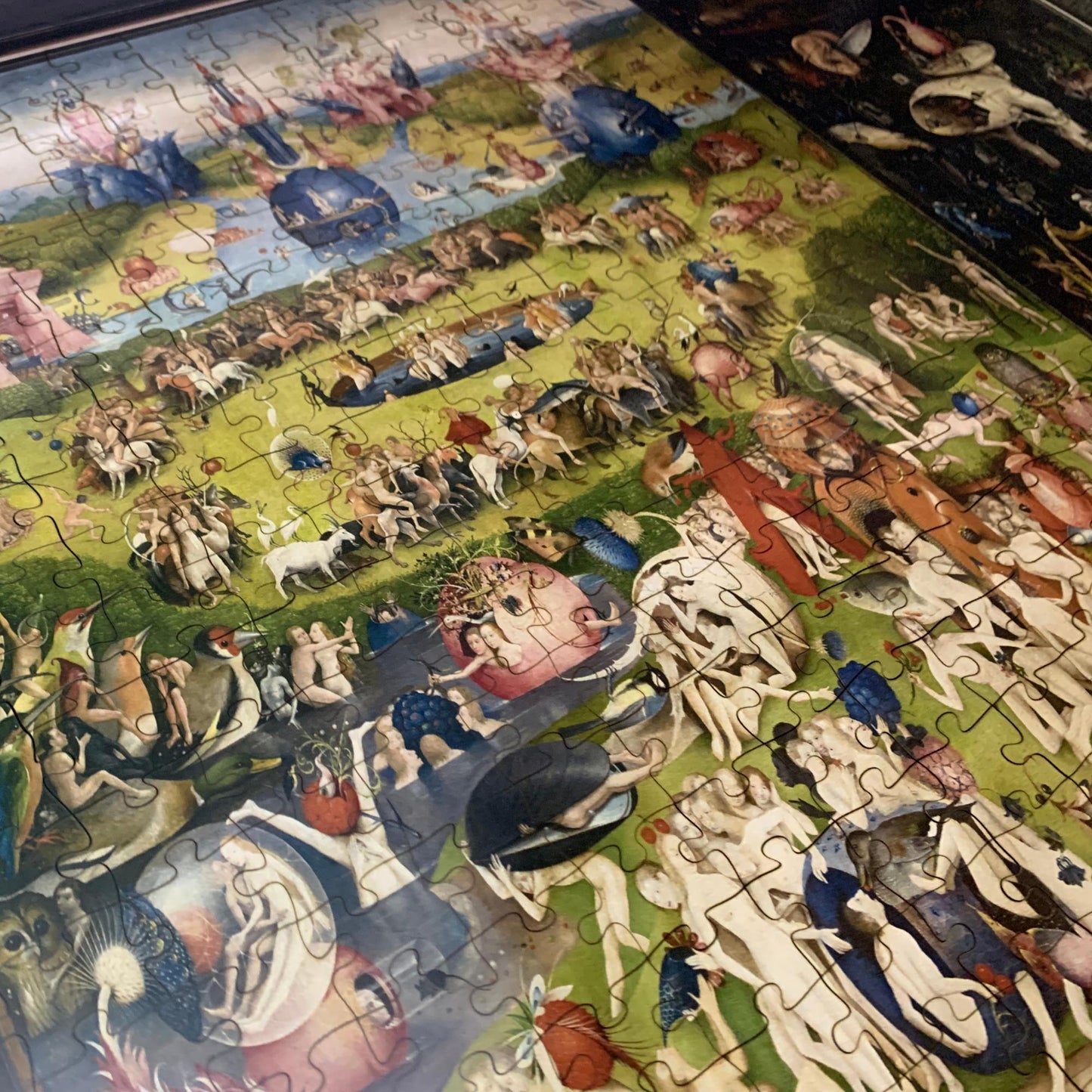
✔️ UV printing directly on wood — no paper laminate, no peeling
✔️ Traditional grid-cut design
✔️ Sizes: 15"x23", 18"x24", 23"x31"
✔️ Piece counts: 300–1000
✔️ Handcrafted wooden keepsake box included
✔️ Made to order — ships in 3–4 weeks
💎 Why This Puzzle Lasts
Most wooden puzzle makers charge $300 to $500. The craft justifies it. WAWW gets to $115–$170 through direct manufacturing, no wholesale chain, and made-to-order production. Same 3mm MDF core. Same UV printing. No warehouse margin built into the price.
The 3mm MDF core is why the pieces still click cleanly after years of handling. Cardboard compresses and warps; MDF holds its geometry. Pick up a piece and it has actual weight to it, the kind that tells you something about what went into making it. UV printing bonds color directly to the wood surface, so there's no paper layer to bubble, peel, or yellow over time. Thornton's tonal gradients in those atmospheric backgrounds, the ones that took mezzotint engravers weeks to build, stay intact.
The traditional grid cut means pieces lock with a satisfying, unambiguous click. No gimmick shapes, no pieces that almost fit. When something seats, you know it. The handcrafted wooden storage box is sized for the puzzle and built to the same standard. Most buyers keep it on a shelf after the puzzle is framed. Made to order means your puzzle doesn't exist until you buy it. Production takes 3–4 weeks. The wait is because nothing sits in a warehouse waiting to be yours.
Thornton spent eight years and his entire fortune on The Temple of Flora. That fact does something to the conversation.