
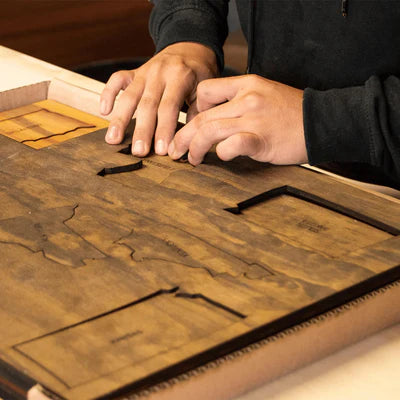


Cranes by Ogata Korin - Premium Wooden Jigsaw Puzzle
Cranes by Ogata Korin - Premium Wooden Jigsaw Puzzle
- Regular price
- Price: $115.00
- Regular price
- List Price: $0.00
- Sale price
- Price: $115.00
- Unit price
- per
Key Features:
Key Features:
- Premium Quality: Crafted from durable 3mm (.14in) composite wood board for lasting enjoyment.
- Vibrant Imagery: High-resolution UV printing directly on the wood—no paper laminate—for stunning detail and vibrant colors.
- Eco-Conscious: Made with environmentally friendly materials.
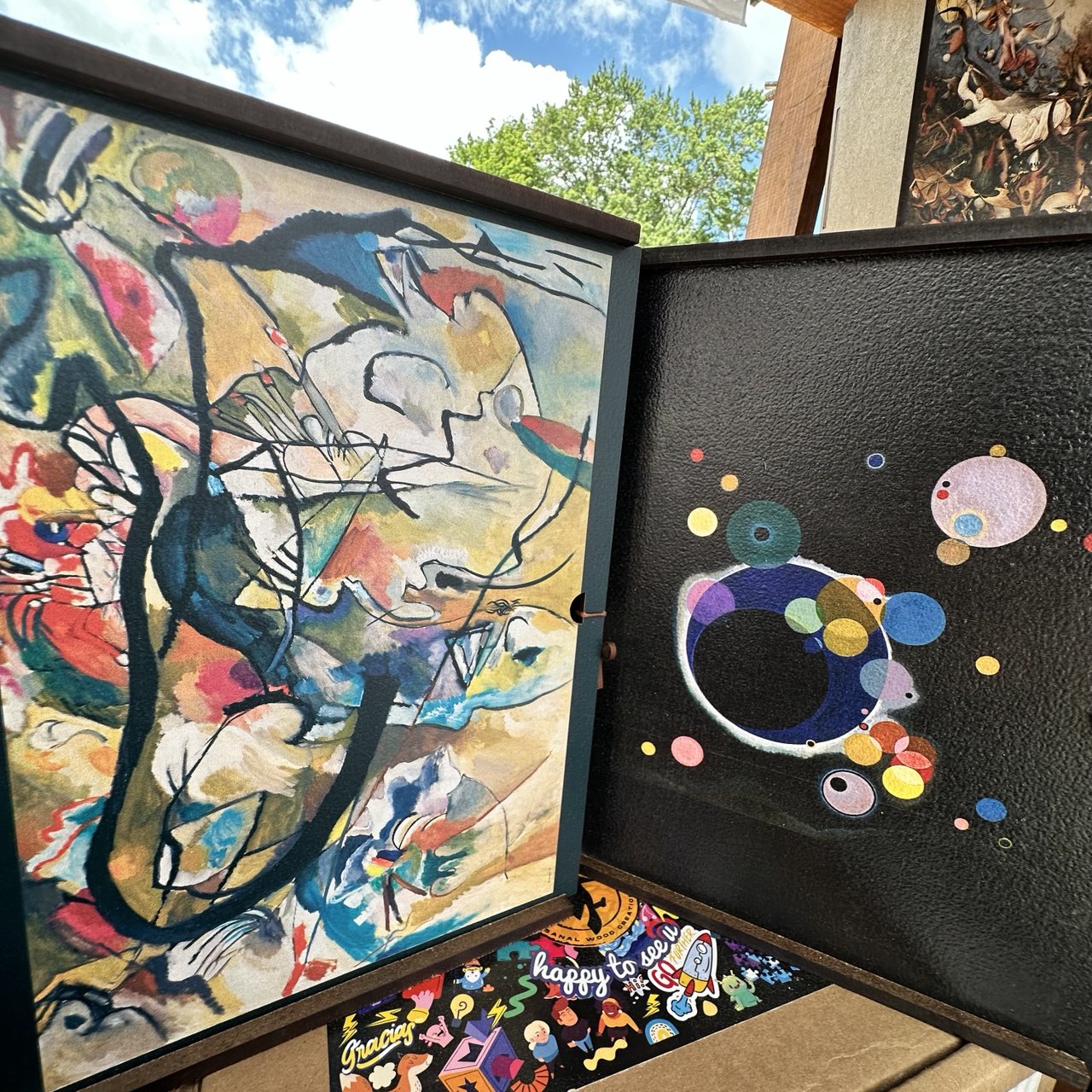
- Heirloom Keepsake: Your puzzle arrives beautifully packaged in a handcrafted wooden box, perfect for gifting or storing your masterpiece.
Craftsmanship and Care:
Craftsmanship and Care:
Experience the satisfying click of perfectly interlocking pieces. Our state-of-the-art laser cutting ensures precise fit and a smooth, seamless puzzle-solving experience. The perfect upgrade from cardboard without breaking the bank.
- Natural Laser Residue: A small amount of harmless black residue from the laser cutting process may be present. Simply wipe it away with a damp cloth.
- Hand-Finished Details: Each puzzle board, each wooden box are all carefully hand-stained, painted, and glued.
Satisfaction Guaranteed:
Satisfaction Guaranteed:
We are confident in the quality of our puzzles. If you are not completely satisfied, we offer a full refund or exchange.
PLEASE NOTE:
Each puzzle is crafted to make the most of your chosen size. Artwork may be subtly adjusted to meet our material and production standards while honoring the original work. Planning to frame yours? Email info@whatawoodwork.com for final measurements.
Couldn't load pickup availability
In stock
 PRODUCT DESCRIPTION
Cranes — Ogata Korin — Wooden Jigsaw Puzzle
Korin painted cranes that don't look like cranes. Not closely, anyway. The birds on these screens — held today at the Smithsonian's National Museum of Asian Art — are gray silhouettes, flattened into something closer to graphic notation than ornithology. He knew what cranes looked like. He chose this instead. The result has been studied for three centuries and still doesn't fully explain itself.
📖 The Story Behind This Piece
Korin completed these folding screens sometime in the late seventeenth or early eighteenth century, during Edo Japan's most fertile period for decorative arts. The composition is almost confrontational in its symmetry: a procession of gray cranes moves inward from both sides across an unbroken field of gold, while darkened silver and blue waves curl through the upper corners. There is no horizon. No depth cues. Just the birds, the gold, and a rhythm that reads almost like music written down.
Korin belonged to the Rinpa school, a tradition built on the conviction that beauty could live in reduction. He wasn't simplifying cranes — he was distilling them. The decision to flatten the birds into near-silhouettes while keeping the gold ground sumptuous and material-rich was deliberate provocation. Rinpa work looked effortless and cost a fortune to make. Korin understood that tension and leaned into it.
The gold background is where the puzzle reveals itself differently than any screen. UV printing on wood catches light the way paper never does — the gold reads with a warmth and slight depth that shifts as you move pieces around your table. The edge pieces along the top of the composition are the test: Korin's swirling water patterns in silver-blue are built from repeating curves that look identical until they aren't. You'll sort a section you think is finished and find one piece that belongs four inches to the left.
🎁 Who Gets One of These
A few specific people keep buying this one.
✔️ The collector who owns Japanese woodblock prints — Korin predates Hokusai by a century and operates in a completely different visual language. Placing this alongside your ukiyo-e prints starts an argument worth having.
✔️ The museum member who visited the Freer and Sackler — The Smithsonian holds the original screens. Rebuilding the composition by hand is a different relationship with a work you may have only seen behind glass.
✔️ The interior designer with a client who collects Asian art — Gold-ground compositions are notoriously difficult to frame well. A completed puzzle in this size, floating in a deep frame, solves the problem and costs a fraction of an archival print.
✔️ The art history professor or serious student of Edo period culture — Rinpa's influence on Japanese graphic design runs directly into the twentieth century. Spending time inside this specific composition makes that lineage easier to see.
✔️ The gift-giver who needs something that won't end up in a closet — Cranes carry specific meaning in Japanese culture — longevity, good fortune, grace — which makes this legible as a gift even to someone who doesn't know Korin's name yet.
Strong occasion fits: significant anniversaries (the longevity symbolism is direct, not decorative), milestone birthdays for someone who collects art or travels to Japan, and cultural celebrations where the recipient's connection to Japanese art or heritage matters to you.
🧩 Puzzle Specifications
✔️ Precision laser-cut wooden pieces
✔️ 3mm MDF core — rigid, warp-resistant, built to last
✔️ UV printing directly on wood — no paper laminate, no peeling
✔️ Traditional grid-cut design
✔️ Sizes: 15"x23", 18"x24", 23"x31"
✔️ Piece counts: 300–1000
✔️ Handcrafted wooden keepsake box included
✔️ Made to order — ships in 3–4 weeks
💎 Why This Puzzle Lasts
Comparable wooden puzzles from established makers run $300 to $500. The craft behind those prices is real. WAWW gets to the same place differently: direct manufacturing, no wholesale chain, no retail markup, made only when ordered. Same materials. Honest price.
The 3mm MDF core is what separates this from cardboard permanently, not just on the first solve. Cardboard warps, softens at the edges, and loses its click within a few years. MDF holds its shape and its fit. A piece that locks in today will lock in the same way two decades from now. UV printing goes directly onto the wood surface with no paper laminate in between, which means nothing can peel and UV-resistant inks keep the gold in this composition from shifting toward yellow over time.
The traditional grid cut means the solving experience is pure — no proprietary shapes fighting for your attention, just the image and your ability to read it. When the puzzle is finished and disassembled, the handcrafted wooden box it came in becomes where it lives. People keep these boxes. They end up on bookshelves alongside the things their owners actually care about. And because every puzzle ships made to order, nothing sits in a warehouse getting warehouse-handled. Your copy is built when you buy it.
The 300-piece, 15"x23" starts at $115. The 1000-piece, 23"x31" runs $170.
🖼️ After You Finish It
Most people frame it. A gold-ground composition reads well in a simple dark frame — the image holds the wall without competing with much. The wooden box tends to stay close, on a shelf or a side table. Korin's cranes have been on display at the Smithsonian for decades, and before that they passed through three centuries of Japanese collectors who understood what they had. Owning a version you built yourself is a reasonable way to join that line.
⚠️ Important Notes
Puzzles may have light laser residue on the surface — a damp cloth handles it. There's a natural wood scent when the box first opens; it fades within a few days. Made-to-order production means your puzzle ships in 3–4 weeks. If anything arrives damaged, we replace or refund. No questions.