


Crow and Blossom by Koson - Premium Wooden Jigsaw Puzzle
Crow and Blossom by Koson - Premium Wooden Jigsaw Puzzle
- Regular price
- Price: $115.00
- Regular price
- List Price: $0.00
- Sale price
- Price: $115.00
- Unit price
- per
Key Features:
Key Features:
- Premium Quality: Crafted from durable 3mm (.14in) composite wood board for lasting enjoyment.
- Vibrant Imagery: High-resolution UV printing directly on the wood—no paper laminate—for stunning detail and vibrant colors.
- Eco-Conscious: Made with environmentally friendly materials.
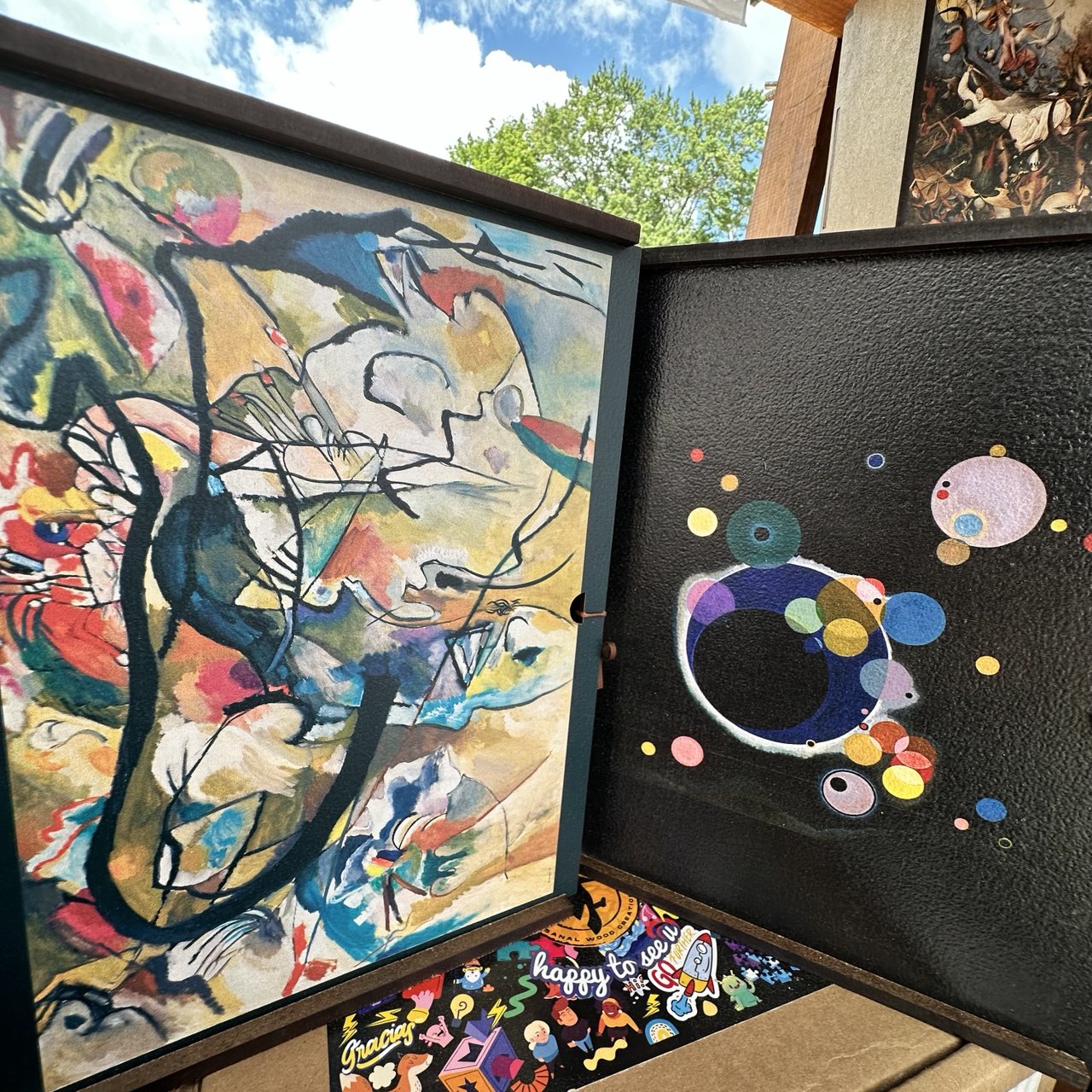
- Heirloom Keepsake: Your puzzle arrives beautifully packaged in a handcrafted wooden box, perfect for gifting or storing your masterpiece.
Craftsmanship and Care:
Craftsmanship and Care:
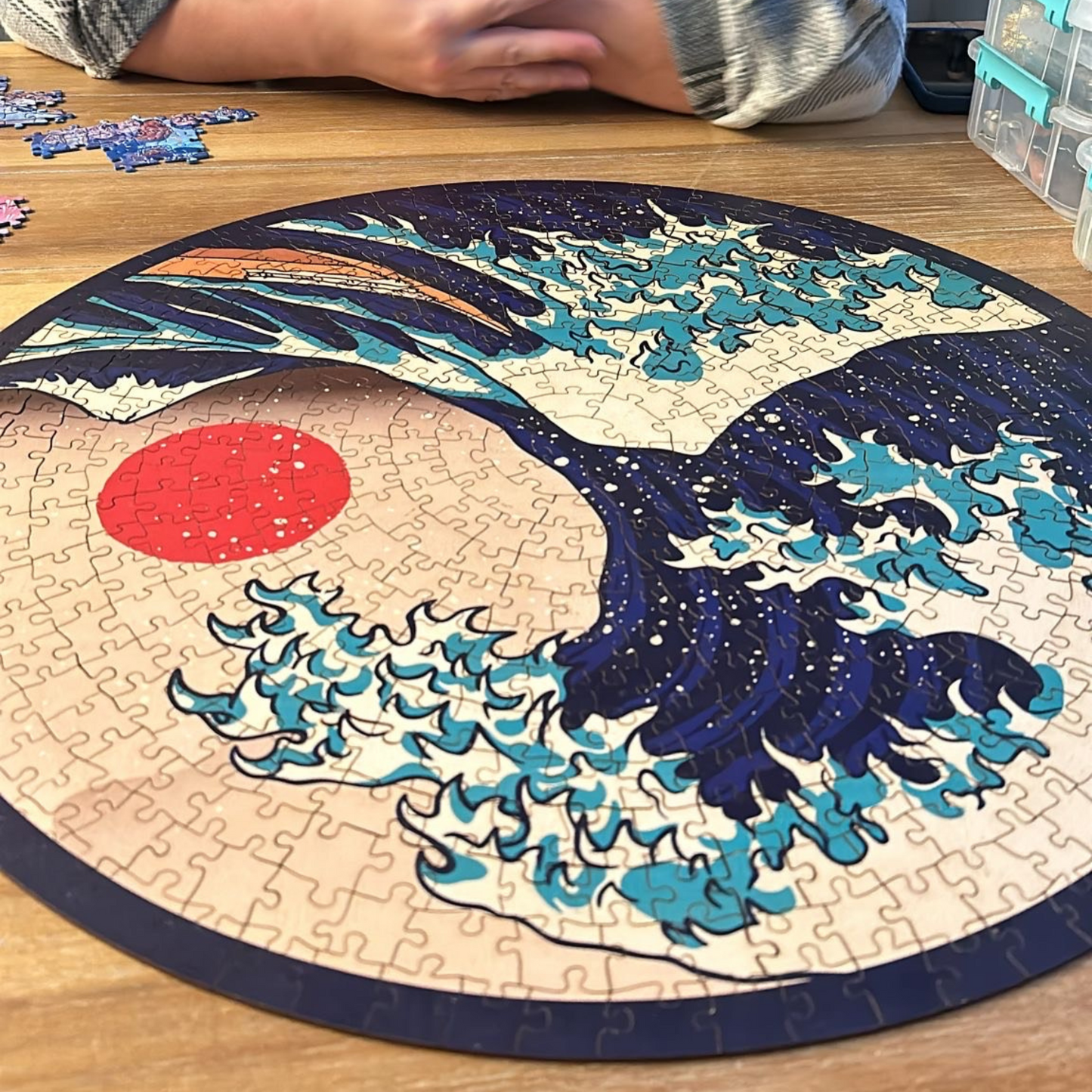
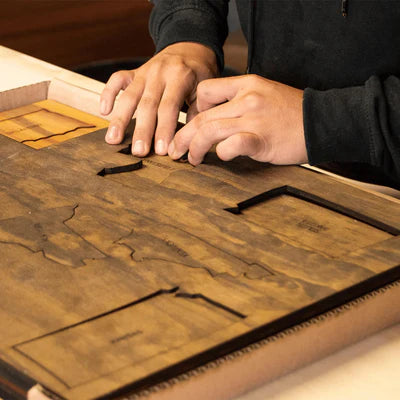
Experience the satisfying click of perfectly interlocking pieces. Our state-of-the-art laser cutting ensures precise fit and a smooth, seamless puzzle-solving experience. The perfect upgrade from cardboard without breaking the bank.
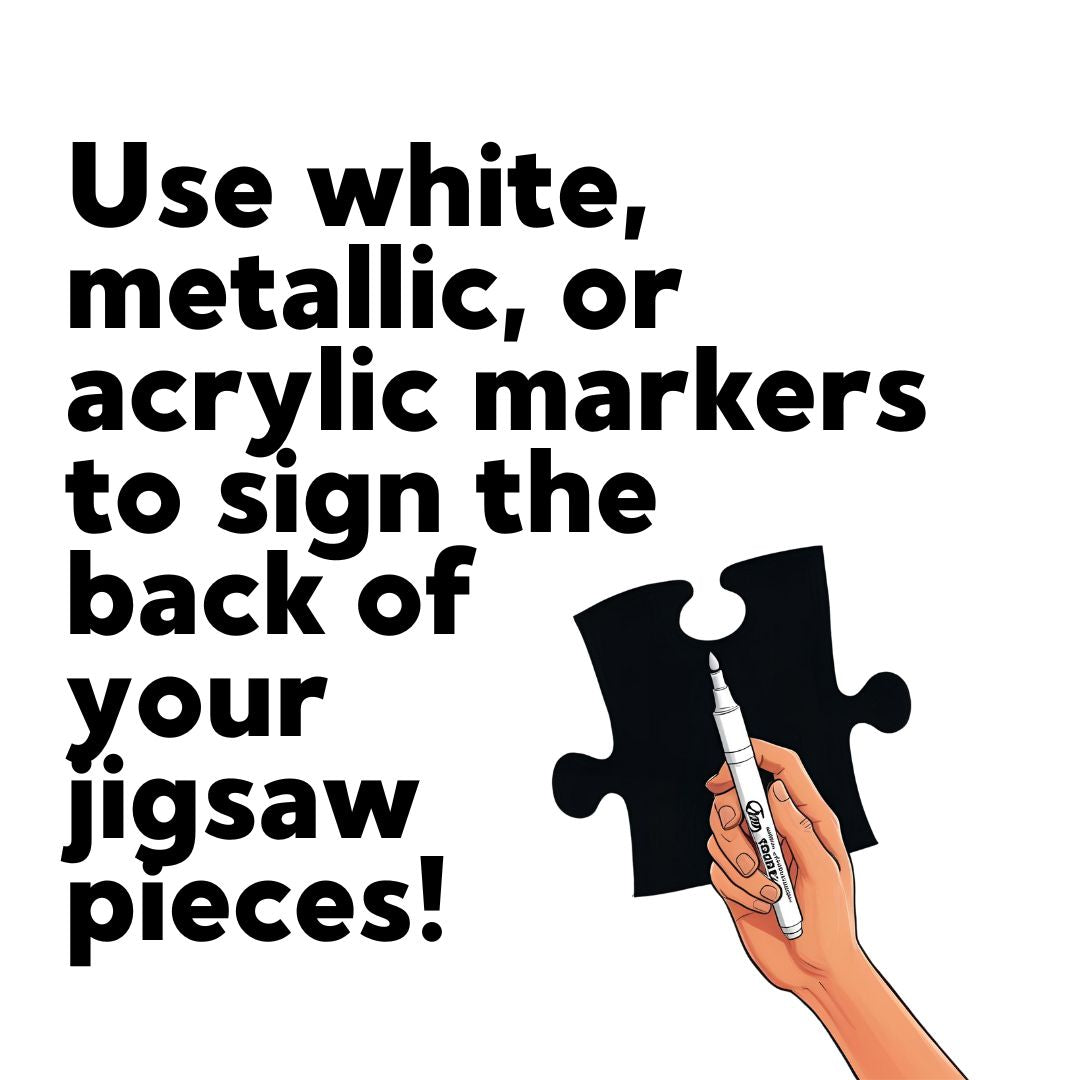
- Natural Laser Residue: A small amount of harmless black residue from the laser cutting process may be present. Simply wipe it away with a damp cloth.
- Hand-Finished Details: Each puzzle board, each wooden box are all carefully hand-stained, painted, and glued.
Satisfaction Guaranteed:
Satisfaction Guaranteed:
We are confident in the quality of our puzzles. If you are not completely satisfied, we offer a full refund or exchange.
PLEASE NOTE:
Each puzzle is crafted to make the most of your chosen size. Artwork may be subtly adjusted to meet our material and production standards while honoring the original work. Planning to frame yours? Email info@whatawoodwork.com for final measurements.
Couldn't load pickup availability
In stock
 PRODUCT DESCRIPTION
Crow and Blossom — Ohara Koson — Wooden Jigsaw Puzzle
Koson made around 500 prints over his career, and American collectors were buying them before most Japanese buyers considered them worth keeping. Ernest Fenollosa pushed that market open in the early 1900s. By the time "Crow and Blossom" was printed around 1910, Koson was working under at least two different professional names — Shōson and Hōson — partly to manage the demand. A crow on a cherry branch. Quiet subject. Considerable career behind it.
📖 The Story Behind This Piece
Around 1910, Koson placed a single crow on a branch of cherry blossoms and printed almost nothing else. No background. No horizon. Just black plumage against white petals, with the branch cutting diagonally across the frame. The shin-hanga movement he worked within was deliberately bridging Japanese woodblock tradition with Western compositional ideas — and this print shows exactly where those two things met. The restraint is Japanese. The drama of that contrast is something else entirely.
Koson's subject was always nature, but his real skill was compression. He could render individual feathers on a bird no larger than a fist, each one distinct under close inspection, without the image ever feeling labored. He worked prolifically — 500 designs across a career — but the kachō-e prints endure because of what he left out. No ornamentation, no narrative scene. Just the crow, the branch, and the decision to stop there.
The crow's body is almost entirely black, which sounds simple until you're sorting pieces by the faint variations in feather texture that UV printing on raw wood pulls out of the dark tones. On screen, those feathers read as a flat field. In the puzzle, the grain of the wood moves through the ink and differentiates them. The blossoms present a different problem: dozens of near-identical pale petals, each slightly offset, the branch weaving between them. Assembly moves between two completely different visual languages in the same frame.
🎁 Who Gets One of These
A few specific kinds of people end up with this one.
✔️ The Japanese woodblock print collector — You already own something in this tradition, possibly framed. Koson's kachō-e prints sit in major museum collections. Rebuilding one by hand is a different relationship with the same image.
✔️ The person who spent time in Kyoto in spring — Cherry blossom season is specific. So is this print. Koson wasn't painting a symbol; he was recording an encounter between a bird and a branch that lasts about two weeks a year.
✔️ The art history teacher or Asian studies librarian — Shin-hanga gets discussed; it rarely gets handled. A puzzle built from a 1910 Koson print is a tangible object from a movement that changed how East and West exchanged visual culture.
✔️ The person who assembles alone and wants something that holds up to that — The dark-to-light contrast in this image means you're never just sorting by color. The crow demands one kind of attention. The blossoms demand another.
✔️ The gift-giver who wants something that explains itself — The keepsake box sits on a shelf. Visitors ask about the image. Koson's name opens a conversation most people didn't expect to have.
Works well as a retirement gift, especially for someone with a connection to Japanese art or culture. Strong choice for a milestone birthday in the 50–70 range. Considered enough for a significant anniversary. The spring release window aligns naturally with cherry blossom season, which makes the timing meaningful rather than incidental.
🧩 Puzzle Specifications
✔️ Precision laser-cut wooden pieces
✔️ 3mm MDF core — rigid, warp-resistant, built to last
✔️ UV printing directly on wood — no paper laminate, no peeling
✔️ Traditional grid-cut design
✔️ Sizes: 15"x23", 18"x24", 23"x31"
✔️ Piece counts: 300–1000
✔️ Handcrafted wooden keepsake box included
✔️ Made to order — ships in 3–4 weeks
💎 Why This Puzzle Lasts
Most wooden puzzle makers charge $300–$500. The craft justifies it. WAWW gets to the same quality differently: direct manufacturing, no wholesale chain, made to order with zero warehouse inventory. The materials are the same. The markup isn't there.
The 3mm MDF core is what separates a puzzle you keep from one you eventually throw out. Cardboard warps, softens at the edges, and loses its fit within a few years. MDF holds its shape and its click. A piece that snaps cleanly into place on the first solve will snap the same way two decades later. UV printing goes directly onto the wood surface, so there's no paper laminate to bubble, peel, or fade under light. Koson's blacks stay black. The pale petals don't yellow.
The traditional grid cut means every piece has a defined shape you can feel — no novelty cuts, no irregular silhouettes competing with the image. Solving stays about the picture. The wooden keepsake box arrives as part of the object, not as packaging to discard; most people find a shelf for it after the puzzle is framed. Made to order means your puzzle hasn't been sitting in a warehouse. It's built when you buy it, which is why the 3–4 week wait exists.
The 300-piece, 15"x23" starts at $115. The 1000-piece, 23"x31" runs $170.
🖼️ After You Finish It
Most people frame it. The crow holds at any scale — the 23"x31" version especially, where the feather detail becomes something you notice from across the room. The wooden box ends up nearby on a shelf, usually. Visitors ask what it is. "Crow and Blossom" is a print that's been in museum collections for over a century, and most people encounter it for the first time when they see it on someone's wall.
⚠️ Important Notes
Puzzles may have light laser residue on the surface — a damp cloth handles it. There's a natural wood scent when the box first opens; it fades within a few days. Made-to-order production means your puzzle ships in 3–4 weeks. If anything arrives damaged, we replace or refund. No questions.