


Vintage Electrical Discharge Plate - Premium Wooden Jigsaw Puzzle of an Electron
Vintage Electrical Discharge Plate - Premium Wooden Jigsaw Puzzle of an Electron
- Regular price
- Price: $115.00
- Regular price
- List Price: $0.00
- Sale price
- Price: $115.00
- Unit price
- per
Key Features:
Key Features:
- Premium Quality: Crafted from durable 3mm (.14in) composite wood board for lasting enjoyment.
- Vibrant Imagery: High-resolution UV printing directly on the wood—no paper laminate—for stunning detail and vibrant colors.
- Eco-Conscious: Made with environmentally friendly materials.
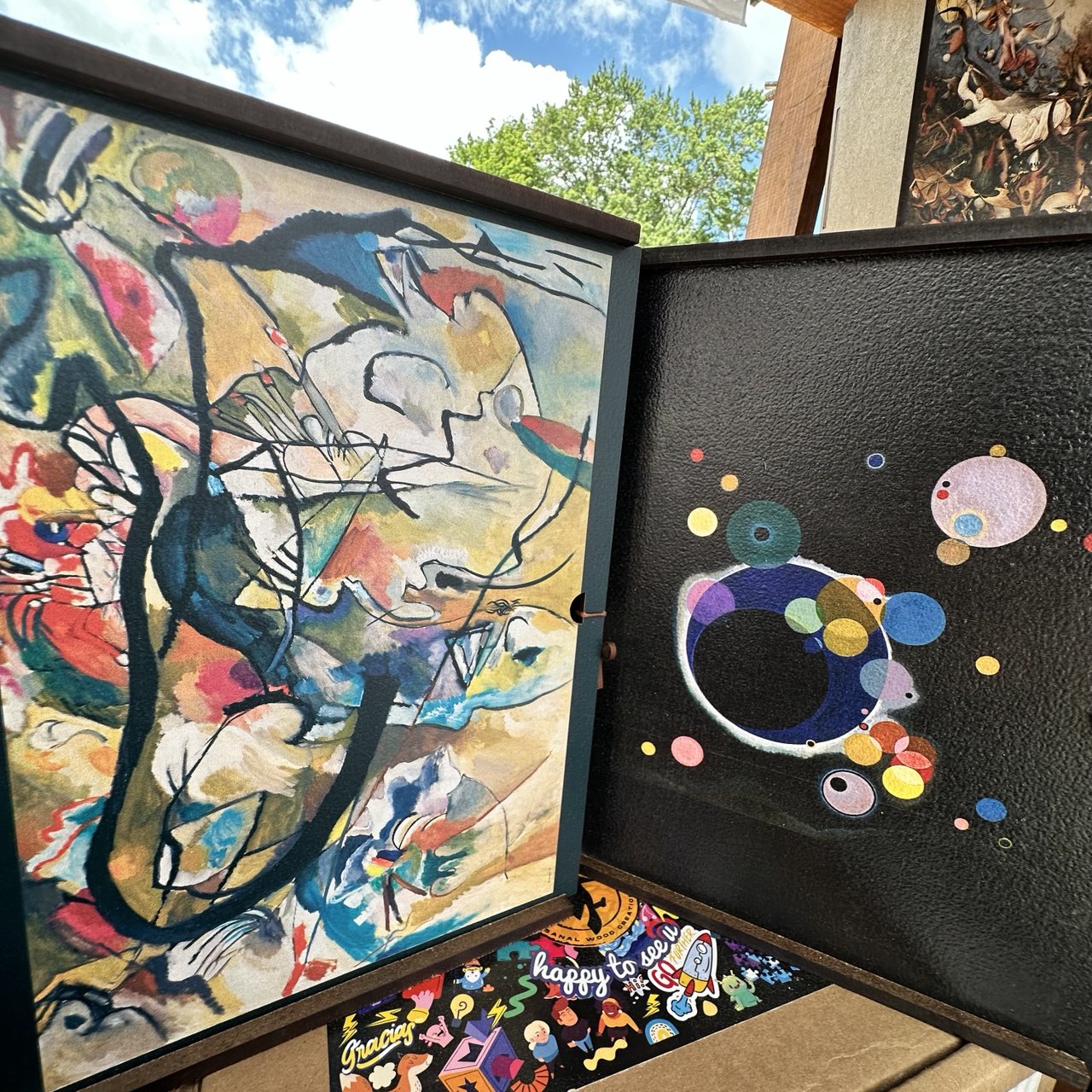
- Heirloom Keepsake: Your puzzle arrives beautifully packaged in a handcrafted wooden box, perfect for gifting or storing your masterpiece.
Craftsmanship and Care:
Craftsmanship and Care:
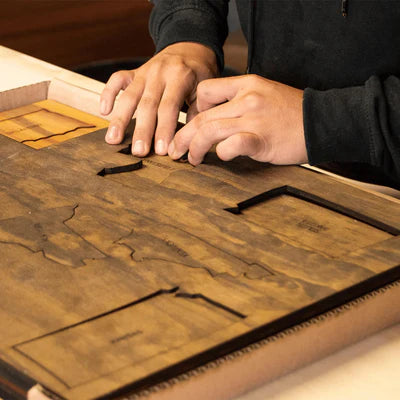
Experience the satisfying click of perfectly interlocking pieces. Our state-of-the-art laser cutting ensures precise fit and a smooth, seamless puzzle-solving experience. The perfect upgrade from cardboard without breaking the bank.
- Natural Laser Residue: A small amount of harmless black residue from the laser cutting process may be present. Simply wipe it away with a damp cloth.
- Hand-Finished Details: Each puzzle board, each wooden box are all carefully hand-stained, painted, and glued.
Satisfaction Guaranteed:
Satisfaction Guaranteed:
We are confident in the quality of our puzzles. If you are not completely satisfied, we offer a full refund or exchange.
PLEASE NOTE:
Each puzzle is crafted to make the most of your chosen size. Artwork may be subtly adjusted to meet our material and production standards while honoring the original work. Planning to frame yours? Email info@whatawoodwork.com for final measurements.
Couldn't load pickup availability
In stock
 PRODUCT DESCRIPTION
In 1906, nobody had seen an electron. They knew it existed — J.J. Thomson had proven that nine years earlier — but the thing itself was invisible.
So the illustrators at the Bibliographisches Institut in Leipzig did the next best thing: they drew what electricity looked like when it tore through a gas-filled tube. Lichtenberg figures branching like frozen lightning. Cathode ray arcs held in glass. The glow of plasma before anyone called it that.
📖 The Story Behind This Piece
The plate first appeared in Volume 5 of Meyers Großes Konversations-Lexikon in 1906, published for a German-speaking public that was collectively trying to understand what electricity actually was. The phenomena shown here — Lichtenberg figures, spark discharges, cathode ray tubes — were not yet fully explained by physics. The illustration wasn't a summary of settled knowledge. It was a field report from the edge of what was understood, rendered in chromolithograph with the precision of a scientific instrument and the color sense of someone who cared how it looked on the page.
The illustrators who made this were never named. That was standard practice at the Bibliographisches Institut — the institution signed the work, not the individuals. What they left behind is a document of a specific conviction: that a complex physical phenomenon, explained badly, is useless, and explained without visual honesty, is worse. Every branching arc in the Lichtenberg figure is accurate to the discharge pattern. The aesthetic decisions and the scientific ones were the same decisions.
During assembly, the dark ground of the plate becomes the puzzle's main challenge. Large sections of near-black — the background behind the tube diagrams — offer almost no color variation to navigate by. What pulls you through those sections is edge geometry and the faint, warm tonal shifts that UV printing on wood preserves in a way a screen simply doesn't show. You'll find yourself holding pieces up to the light to catch a gradient your monitor flattened entirely. The scientific diagrams in the upper register, by contrast, sort quickly — the tube outlines and labeled discharge arcs are high-contrast and distinct. Two completely different solving problems in the same image.
🎁 Who Gets One of These
A few specific types of people keep finding their way to this one.
✔️ The physics teacher who still has their grad school textbooks — You've explained Lichtenberg figures to a classroom. Here's the 1906 version of that explanation, laser-cut into 500 pieces.
✔️ The collector of scientific antique prints — You know what a good chromolithograph costs framed at a map and print dealer. At $115 to $170, this format is a different calculation entirely.
✔️ The person who keeps a Tesla coil on their desk and thinks that's normal — The cathode ray tube diagrams in this plate predate the television by thirty years. Worth knowing while you sort them.
✔️ The history of science reader who owns Kuhn and means it — Electrical Discharge is a document from inside a paradigm shift, made for a public that was watching electrons get discovered in real time.
✔️ The gift-giver who is tired of giving coffee table books — A book gets looked at twice. A wooden puzzle with a handcrafted box and a 1906 scientific plate gets kept.
Works well as a birthday present for anyone in physics or engineering, and a retirement gift for the scientist who has read everything and assembled nothing.
🧩 Puzzle Specifications
✔️ Precision laser-cut wooden pieces
✔️ 3mm MDF core — rigid, warp-resistant, built to last
✔️ UV printing directly on wood — no paper laminate, no peeling
✔️ Traditional grid-cut design
✔️ Sizes: 15"x23", 18"x24", 23"x31"
✔️ Piece counts: 300–1000
✔️ Handcrafted wooden keepsake box included
✔️ Made to order — ships in 3–4 weeks
💎 Why This Puzzle Lasts
Most wooden puzzle makers charge $300 to $500. The craft justifies it. WAWW gets to the same place differently: direct manufacturing, no wholesale chain, made to order with no warehouse inventory sitting between the maker and the buyer. Same materials. The price reflects the actual cost of the thing, not the cost of the distribution model around it.
The 3mm MDF core is why a puzzle piece still clicks cleanly after twenty years. Cardboard compresses with humidity, warps with temperature, and degrades at the edges after a few assemblies. MDF doesn't. The rigidity also means pieces interlock with a satisfying resistance — not tight enough to frustrate, not loose enough to slide. UV printing goes directly onto the wood surface rather than onto paper laminate bonded over it. No laminate means no peeling at the corners, no bubbling at the seams, and no fading from light exposure over time. The dark tones in the Electrical Discharge plate stay dark.
The traditional grid cut produces clean, consistent piece shapes that let you focus on the image rather than fighting irregular geometry. When you finish, the completed puzzle doesn't get rolled into a tube. The handcrafted wooden box it shipped in is built to store it — flat, protected, stackable on a shelf. Made to order means your puzzle doesn't exist until you buy it. No surplus, no warehouse, no puzzle that sat in a box for eight months before it reached you. The three-to-four week production window is the lead time on something built specifically for you.
🖼️ After You Finish It
Most people frame it. The dark ground and the branching discharge figures read well at a distance — it holds the wall the way a good scientific print holds a wall. The wooden box ends up on the shelf nearby, which is where visitors notice it second, after they've asked about the image. Electrical Discharge comes from a moment when scientists were genuinely unsure how electricity moved through matter. That uncertainty is legible in the plate, if you've spent time with it piece by piece.