


Fisk's Meandering Mississippi River Map - Premium Wooden Jigsaw Puzzle | US Army Corps of Engineers
Fisk's Meandering Mississippi River Map - Premium Wooden Jigsaw Puzzle | US Army Corps of Engineers
- Regular price
- Price: $115.00
- Regular price
- List Price:
- Sale price
- Price: $115.00
- Unit price
- per
Key Features:
Key Features:
- Premium Quality: Crafted from durable 3mm (.14in) composite wood board for lasting enjoyment.
- Vibrant Imagery: High-resolution UV printing directly on the wood—no paper laminate—for stunning detail and vibrant colors.
- Eco-Conscious: Made with environmentally friendly materials.
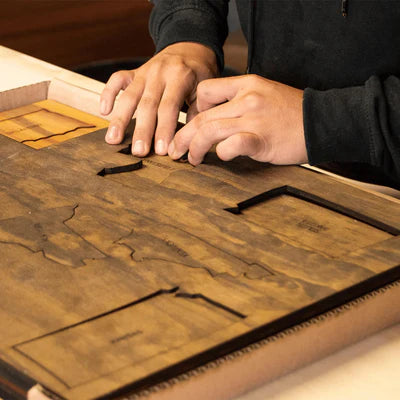
- Heirloom Keepsake: Your puzzle arrives beautifully packaged in a handcrafted wooden box, perfect for gifting or storing your masterpiece.
Craftsmanship and Care:
Craftsmanship and Care:
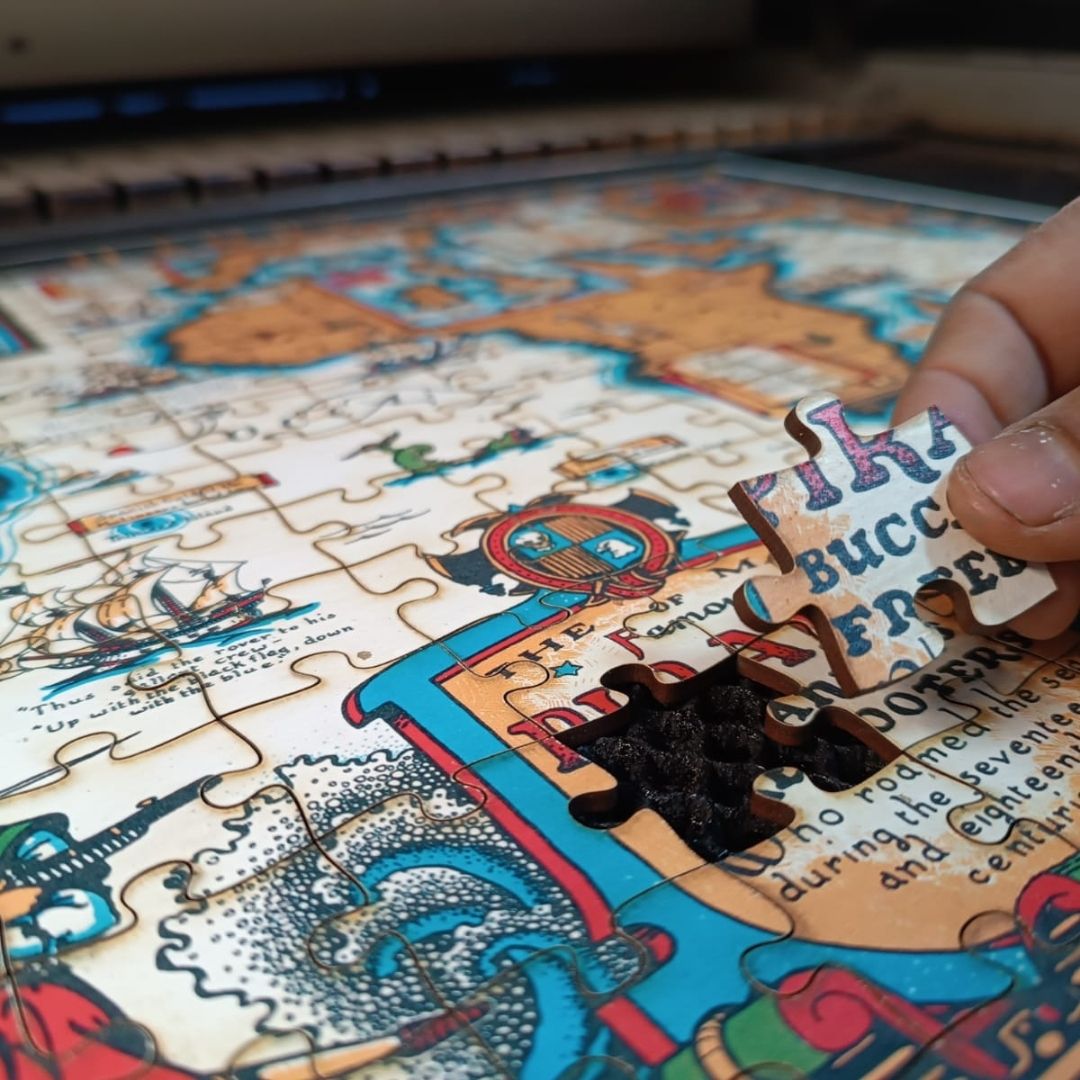
Experience the satisfying click of perfectly interlocking pieces. Our state-of-the-art laser cutting ensures precise fit and a smooth, seamless puzzle-solving experience. The perfect upgrade from cardboard without breaking the bank.
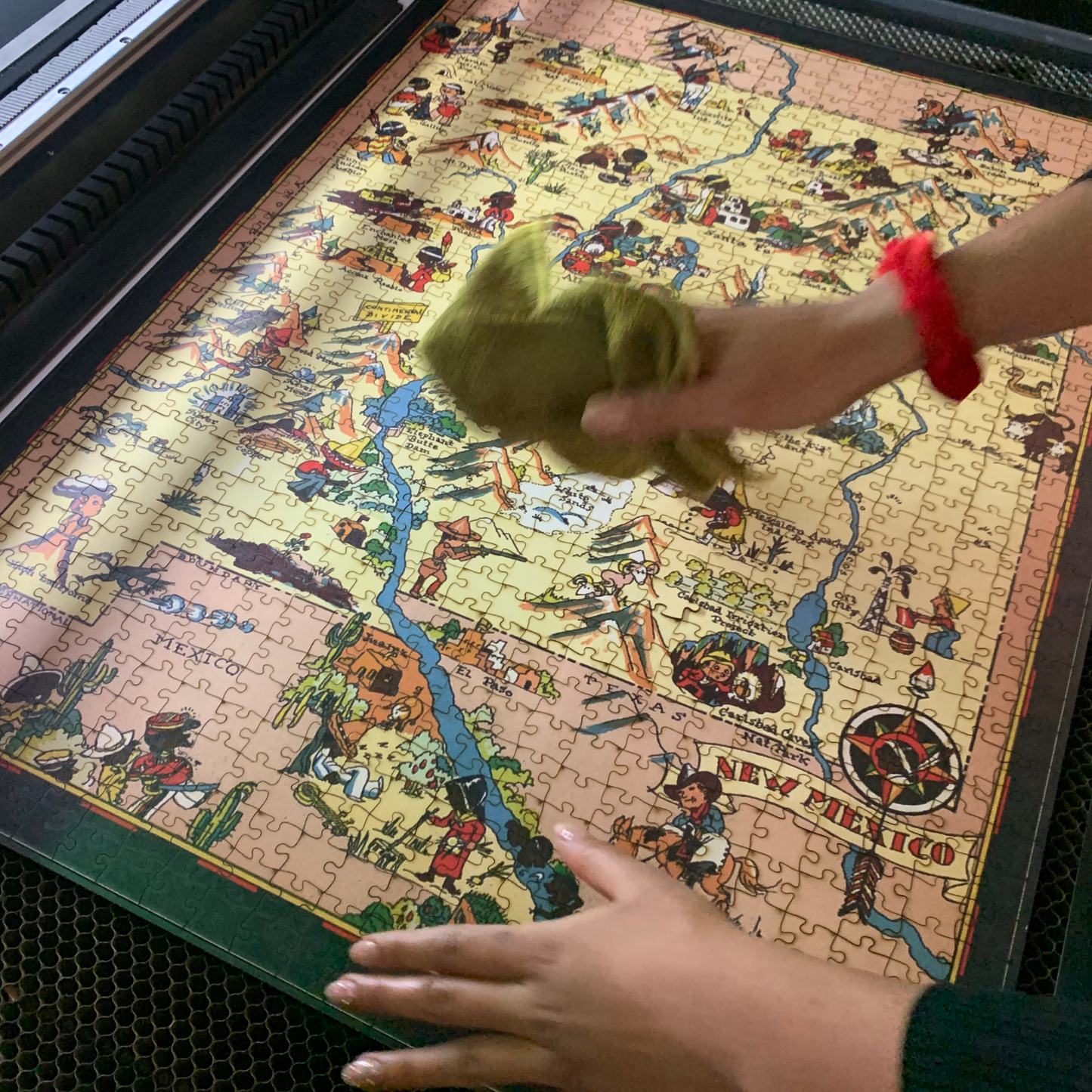
- Natural Laser Residue: A small amount of harmless black residue from the laser cutting process may be present. Simply wipe it away with a damp cloth.
- Hand-Finished Details: Each puzzle board, each wooden box are all carefully hand-stained, painted, and glued.
Satisfaction Guaranteed:
Satisfaction Guaranteed:
We are confident in the quality of our puzzles. If you are not completely satisfied, we offer a full refund or exchange.
PLEASE NOTE:
Each puzzle is crafted to make the most of your chosen size. Artwork may be subtly adjusted to meet our material and production standards while honoring the original work. Planning to frame yours? Email info@whatawoodwork.com for final measurements.
Couldn't load pickup availability
In stock
 PRODUCT DESCRIPTION
Geological Investigation of the Alluvial Valley of the Lower Mississippi River — Wooden Jigsaw Puzzle
Harold Fisk collected 16,000 soil borings along 600 miles of river and came back with something that looks more like abstract painting than science. The pale blue lines are where the Mississippi ran in 1765. Brick red is 1820. Bright green is 1880. The river never stayed still long enough to be mapped once, so Fisk mapped it dozens of times on top of itself.
📖 The Story Behind This Piece
In 1944, the US Army Corps of Engineers commissioned Fisk to figure out where the Mississippi had been. Not where it was going. Where it had been. Over three years, Fisk's team drilled thousands of borings into the floodplain soil between southern Illinois and southern Louisiana, then cross-referenced their findings against aerial photographs. What they found was that the river had coiled and recoiled across its own valley for centuries. Plate 22 of the final report contains fifteen meander maps. Each one layers the river's historical paths in overlapping color, so you're reading geological time the way you'd read a palimpsest. Sheet 6 is one of 15. If you want a specific plate please reach out via email and we will happily create a custom design for you.
🎁 Who Gets One of These
A few types of people buy this one specifically, and they tend to know exactly why.
✔️ The map collector who already owns reproductions — Fisk's Plate 2, Sheet 6 is well-known in cartography circles but rarely available in a format worth displaying. A framed print doesn't do the color layering justice the way a puzzle solved and mounted does.
✔️ The geologist or hydrologist — Someone who works with river systems and knows what 16,000 soil borings actually means as a field effort. The science is in the image, not just the legend.
✔️ The data visualization professional — Fisk did in 1944 what most design teams still haven't figured out: he made temporal data spatially readable without a single chart or graph.
✔️ The person who grew up near the Mississippi — Anyone from Memphis, Natchez, Baton Rouge, or New Orleans who has watched the river from a levee and wondered about the land on the other side.
Works well as a retirement gift for someone leaving a career in earth sciences, engineering, or federal land management. Also a strong choice for a significant birthday where the person is genuinely hard to buy for.
🧩 Puzzle Specifications
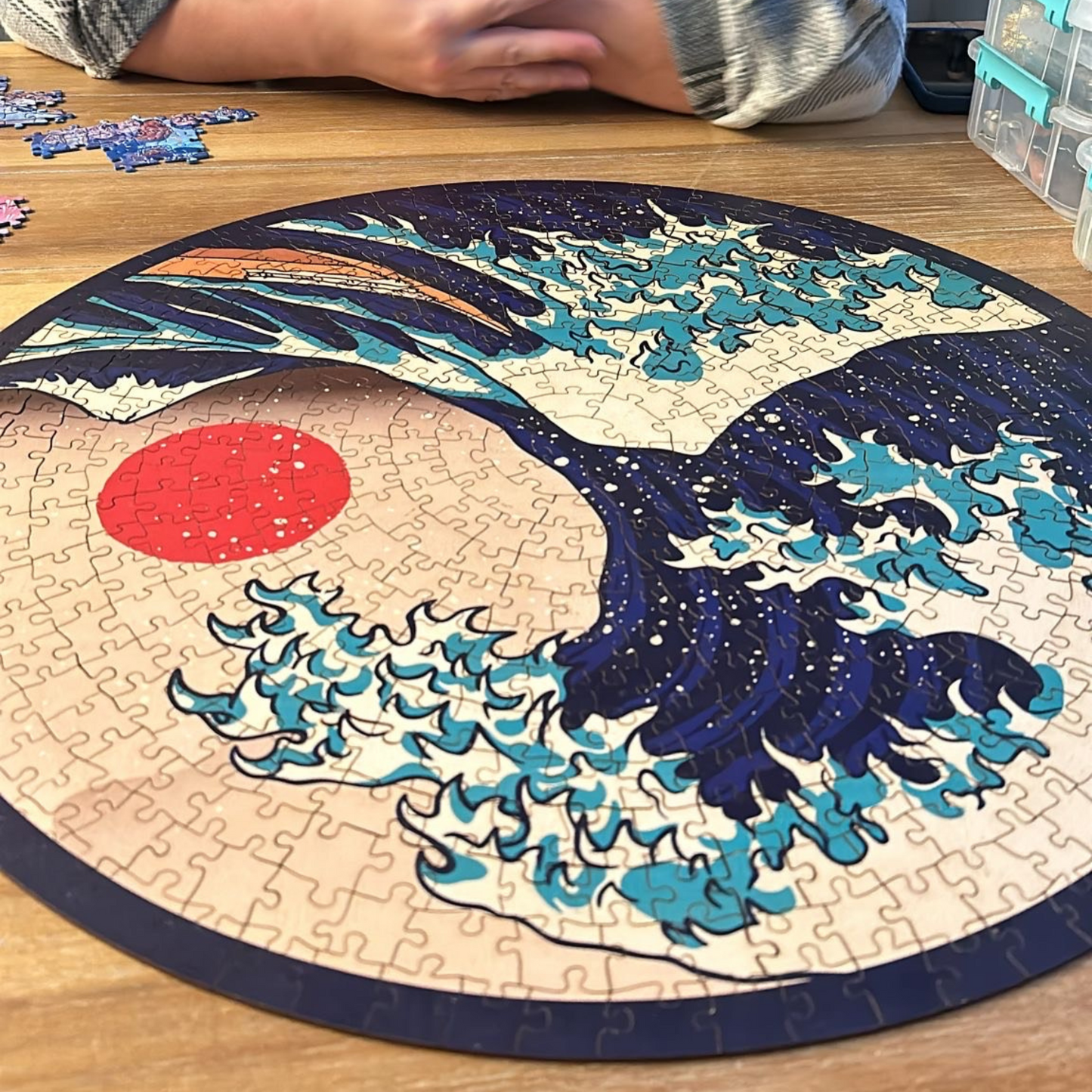
✔️ Precision laser-cut wooden pieces
✔️ 3mm MDF core — rigid, warp-resistant, built to last
✔️ UV printing directly on wood — no paper laminate, no peeling
✔️ Traditional grid-cut design
✔️ Sizes: 15"x23", 23"x31"
✔️ Piece counts: 300–1000
✔️ Handcrafted wooden keepsake box included
✔️ Made to order — ships in 3–4 weeks
💎 Why This Puzzle Lasts
The 3mm MDF core distinguishes a puzzle meant to stay at home from one kept in a closet. Unlike cardboard, which warps and softens with humidity, MDF remains stable. Its pieces click with consistent resistance, and the board stays flat in various conditions. Fisk's color gradients are so detailed that warping would ruin the image, and this rigidity is crucial for this artwork. UV printing bonds pigment directly to the wood, preventing bubbles, cracks, or yellowing. The ink remains in the wood, keeping colors distinct over time. The traditional grid cut ensures a precise fit, and the handcrafted box serves as storage, like a hardcover book. Made to order, so the puzzle only exists when purchased, with no overstock or warehouse,
The 300-piece, 15"x23" starts at $115. The 1000-piece, 23"x31" runs $170.
🖼️ After You Finish It
Most people frame it. Because UV printing on wood doesn't fade under normal light exposure, you don't need UV-protective glass to preserve the colors. Standard framing works. The image is stable. Fisk's color coding reads just as cleanly on a wall as it does on a table, and at the larger sizes, the full sweep of the Mississippi's historical paths across 600 miles of floodplain becomes something else entirely when you can step back from it.
⚠️ Important Notes
Puzzles may have light laser residue on the surface — a damp cloth handles it. There's a natural wood scent when the box first opens; it fades within a few days. Made-to-order production means your puzzle ships in 3–4 weeks. If anything arrives damaged, we replace or refund. No questions.