


Harry Clarke Wooden Puzzle — Walpurgis Night | Goethe's Faust 1925
Harry Clarke Wooden Puzzle — Walpurgis Night | Goethe's Faust 1925
- Regular price
- Price: $115.00
- Regular price
- List Price: $0.00
- Sale price
- Price: $115.00
- Unit price
- per
Key Features:
Key Features:
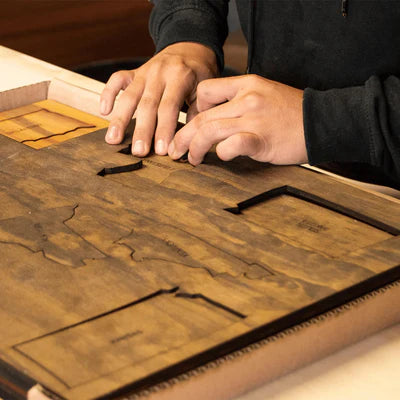
- Premium Quality: Crafted from durable 3mm (.14in) composite wood board for lasting enjoyment.
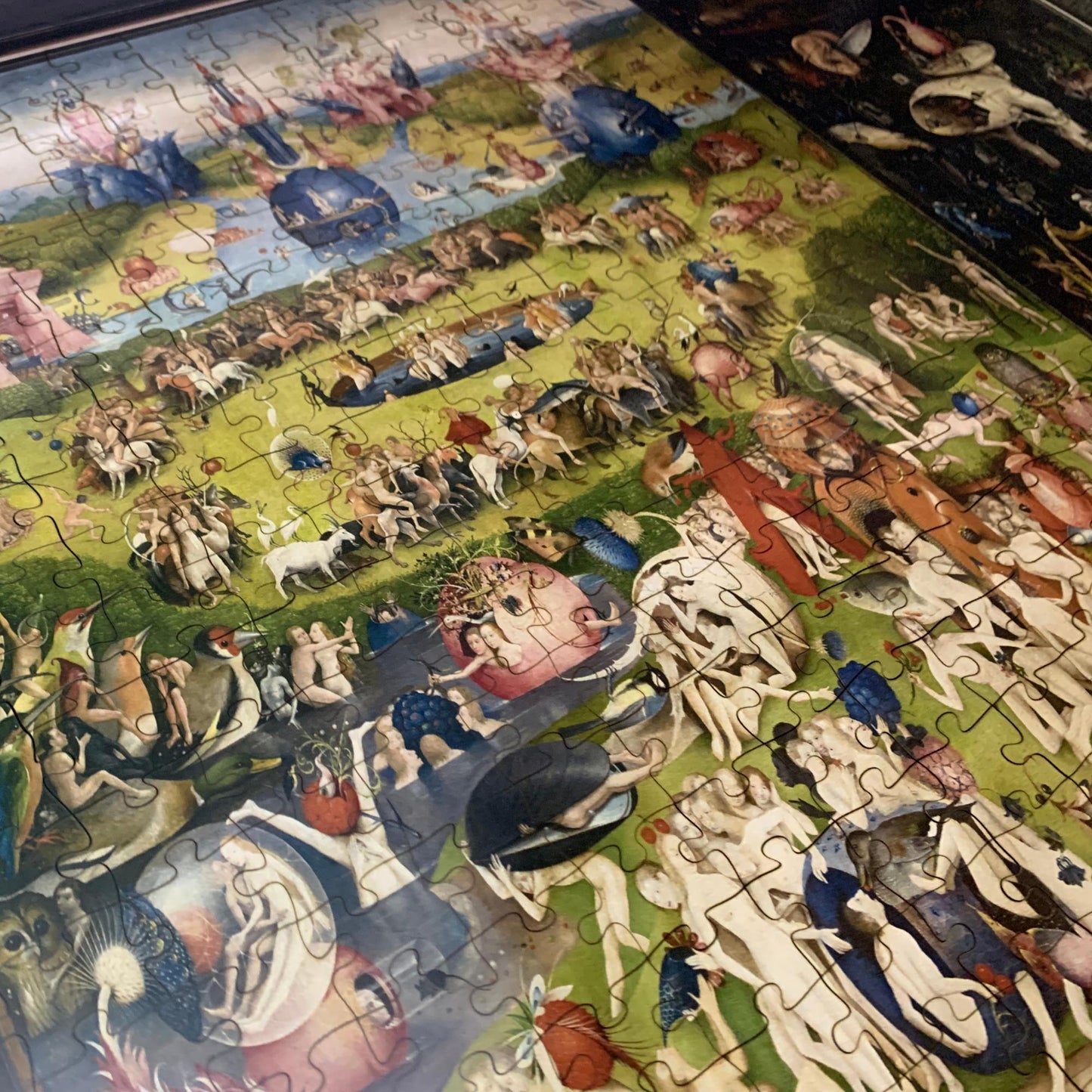
- Vibrant Imagery: High-resolution UV printing directly on the wood—no paper laminate—for stunning detail and vibrant colors.
- Eco-Conscious: Made with environmentally friendly materials.
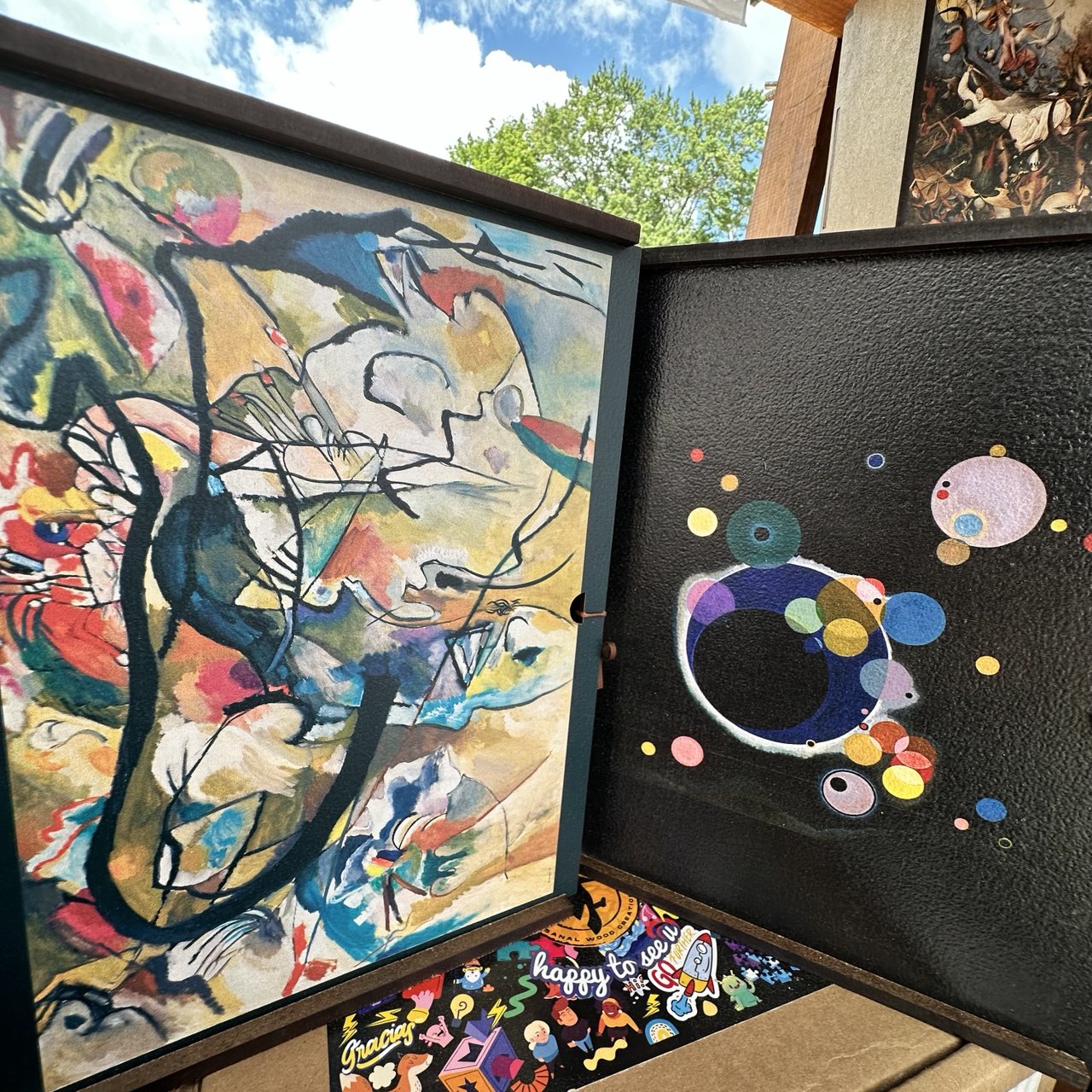
- Heirloom Keepsake: Your puzzle arrives beautifully packaged in a handcrafted wooden box, perfect for gifting or storing your masterpiece.
Craftsmanship and Care:
Craftsmanship and Care:
Experience the satisfying click of perfectly interlocking pieces. Our state-of-the-art laser cutting ensures precise fit and a smooth, seamless puzzle-solving experience. The perfect upgrade from cardboard without breaking the bank.
- Natural Laser Residue: A small amount of harmless black residue from the laser cutting process may be present. Simply wipe it away with a damp cloth.
- Hand-Finished Details: Each puzzle board, each wooden box are all carefully hand-stained, painted, and glued.
Satisfaction Guaranteed:
Satisfaction Guaranteed:
We are confident in the quality of our puzzles. If you are not completely satisfied, we offer a full refund or exchange.
PLEASE NOTE:
Each puzzle is crafted to make the most of your chosen size. Artwork may be subtly adjusted to meet our material and production standards while honoring the original work. Planning to frame yours? Email info@whatawoodwork.com for final measurements.
Couldn't load pickup availability
In stock
 PRODUCT DESCRIPTION
Clarke made this in 1925 for a limited edition of Goethe's Faust — a book already 100 years old when he illustrated it.
The scene is Walpurgis Night, the moment chaos peaks. The image sold at Sotheby's London in 2012 for £13,750. It has been in a private collection ever since. Almost nobody has seen the original in person.
📖 The Story Behind This Piece
Clarke was 32 when he completed the Faust series. The commission was for a limited edition, which meant a small, specific audience — collectors who knew the text and would notice exactly what he did with it. The Weathercock figure at the center of Walpurgis Night is not a protagonist in Goethe. Clarke pulled it forward anyway, surrounding it with swirling grotesque figures and watercolor washes so dense they read almost as stained glass. The pen and ink work underneath holds the whole thing together. On Bristol board, at 31 by 22.5 cm, the linework is barely visible without magnification.
Clarke came to illustration through stained glass, and it shows in everything he ever made. He understood how color behaves when light moves through it, not just across it. That understanding changed how he approached black ink on white board: the dark lines weren't outlines, they were lead came, holding the color in place. The Faust illustrations are the clearest argument for that reading. Without the glass training, the watercolor would drift. Instead it holds.
The dark sections of Clarke's linework — the clustered hatching, the figures compressed into the margins — are where assembly gets genuinely difficult. On screen, those areas flatten into near-black. UV printing directly onto the wood pulls out the warm undertone in the ink, and the texture of the MDF adds a faint grain that the digital file doesn't have. Puzzlers working through the lower register of the composition will find pieces that look identical until they catch the light at an angle. That's Clarke's linework doing what it was designed to do.
🎁 Who Gets One of These
A few specific people keep finding their way to this one.
✔️ The Goethe reader who has a well-annotated copy on the shelf — You know the Walpurgis Night scene. Clarke's interpretation will confirm some of what you pictured and contradict the rest of it.
✔️ The Art Nouveau collector who focuses on book illustration rather than decorative objects — Clarke sits alongside Rackham and Dulac but is harder to find in puzzle form. The 1925 Faust series is among his most complex work.
✔️ The stained glass enthusiast who understands why Clarke's ink lines behave the way they do — The construction logic running through this piece is visible once you know what to look for, and assembly makes it more visible.
✔️ The person shopping for someone who owns too much already — An object that sold at Sotheby's for £13,750 and now lives in a private collection. The puzzle version is the only accessible form of it.
✔️ The illustrator or designer who keeps a reference library of pre-digital linework — Clarke's hatching technique at this scale is worth studying up close. Puzzle assembly is close.
Strong gift occasions: Halloween, for the obvious reasons, but also Christmas for anyone who responds to dark, intricate imagery over seasonal cheer. A strong birthday gift for anyone with a Goethe or gothic literature connection.
🧩 Puzzle Specifications
✔️ Precision laser-cut wooden pieces
✔️ 3mm MDF core — rigid, warp-resistant, built to last
✔️ UV printing directly on wood — no paper laminate, no peeling
✔️ Traditional grid-cut design
✔️ Sizes: 15"x23", 18"x24", 23"x31"
✔️ Piece counts: 300–1000
✔️ Handcrafted wooden keepsake box included
✔️ Made to order — ships in 3–4 weeks
💎 Why This Puzzle Lasts
Most wooden puzzle makers charge $300–$500. The craft justifies it. WAWW gets to the same place differently: direct manufacturing, no wholesale chain, made to order in small runs. Same materials. No markup added for a retailer who never touched it.
The 3mm MDF core is what separates wooden puzzles from cardboard ones in ten years. Cardboard compresses at the joints and pieces stop fitting cleanly. MDF doesn't compress. The click you feel on the first assembly is the same click you feel on the twentieth. UV printing goes directly onto the wood surface, with no paper laminate in between. Paper laminates peel at the edges. They fade at the corners. Neither of those things can happen here because there's no laminate to separate.
The traditional grid cut keeps the solving experience honest. No novelty piece shapes competing with Clarke's linework for attention — the image stays dominant. When the puzzle is finished and comes apart, it goes into a handcrafted wooden box that's built to the same standard as the puzzle itself. Most people keep the box out. After the puzzle is framed, the box holds the documentation, or just sits on the shelf as the thing it is. Made to order means no warehouse stock, no inventory sitting under fluorescent lights for months before it reaches you. Your puzzle is cut after you order it. The 3–4 week lead time is the manufacturing time, not shipping delay.