


Kingfisher by Van Gogh - Premium Wooden Jigsaw Puzzle
Kingfisher by Van Gogh - Premium Wooden Jigsaw Puzzle
- Regular price
- Price: $115.00
- Regular price
- List Price: $0.00
- Sale price
- Price: $115.00
- Unit price
- per
Key Features:
Key Features:
- Premium Quality: Crafted from durable 3mm (.14in) composite wood board for lasting enjoyment.
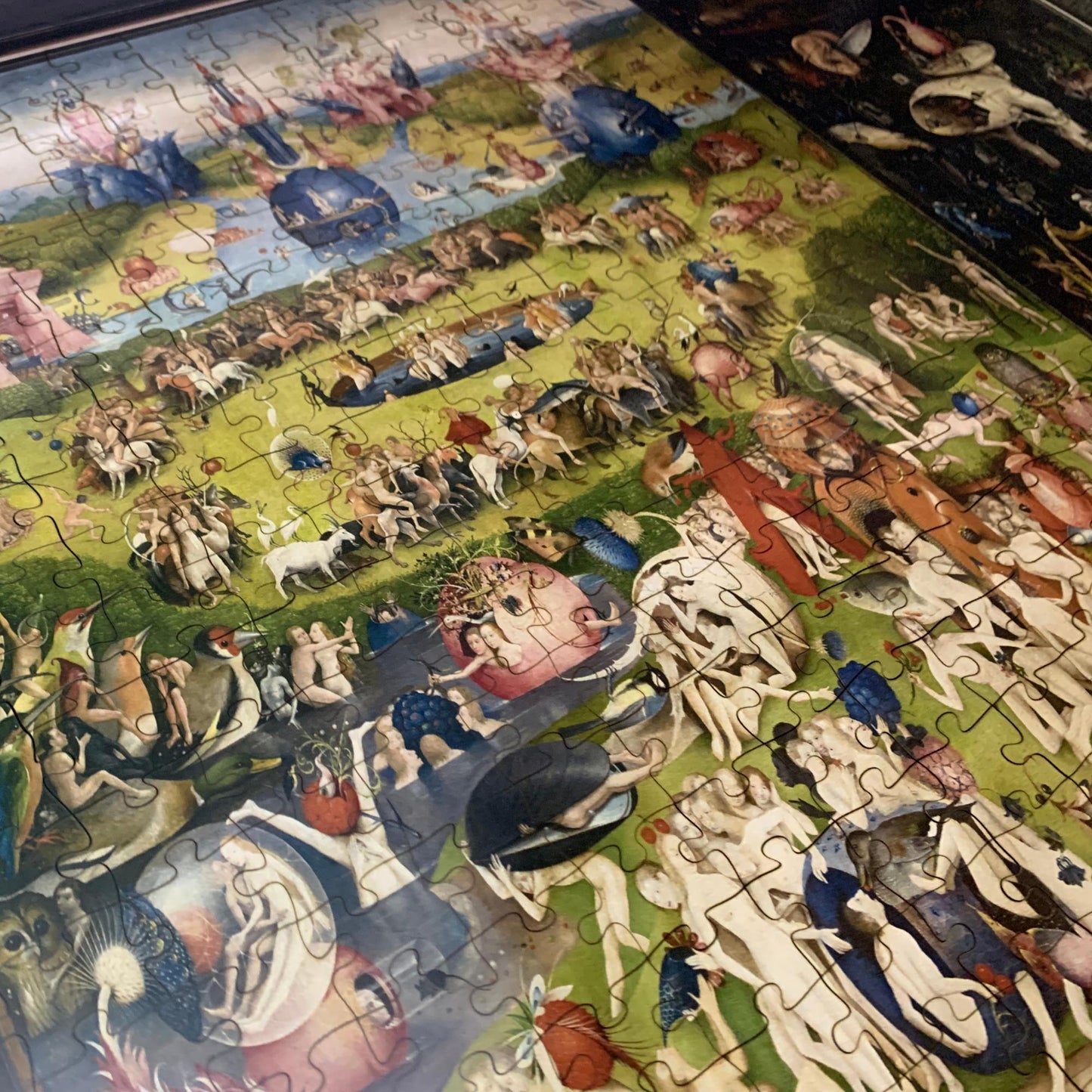
- Vibrant Imagery: High-resolution UV printing directly on the wood—no paper laminate—for stunning detail and vibrant colors.
- Eco-Conscious: Made with environmentally friendly materials.
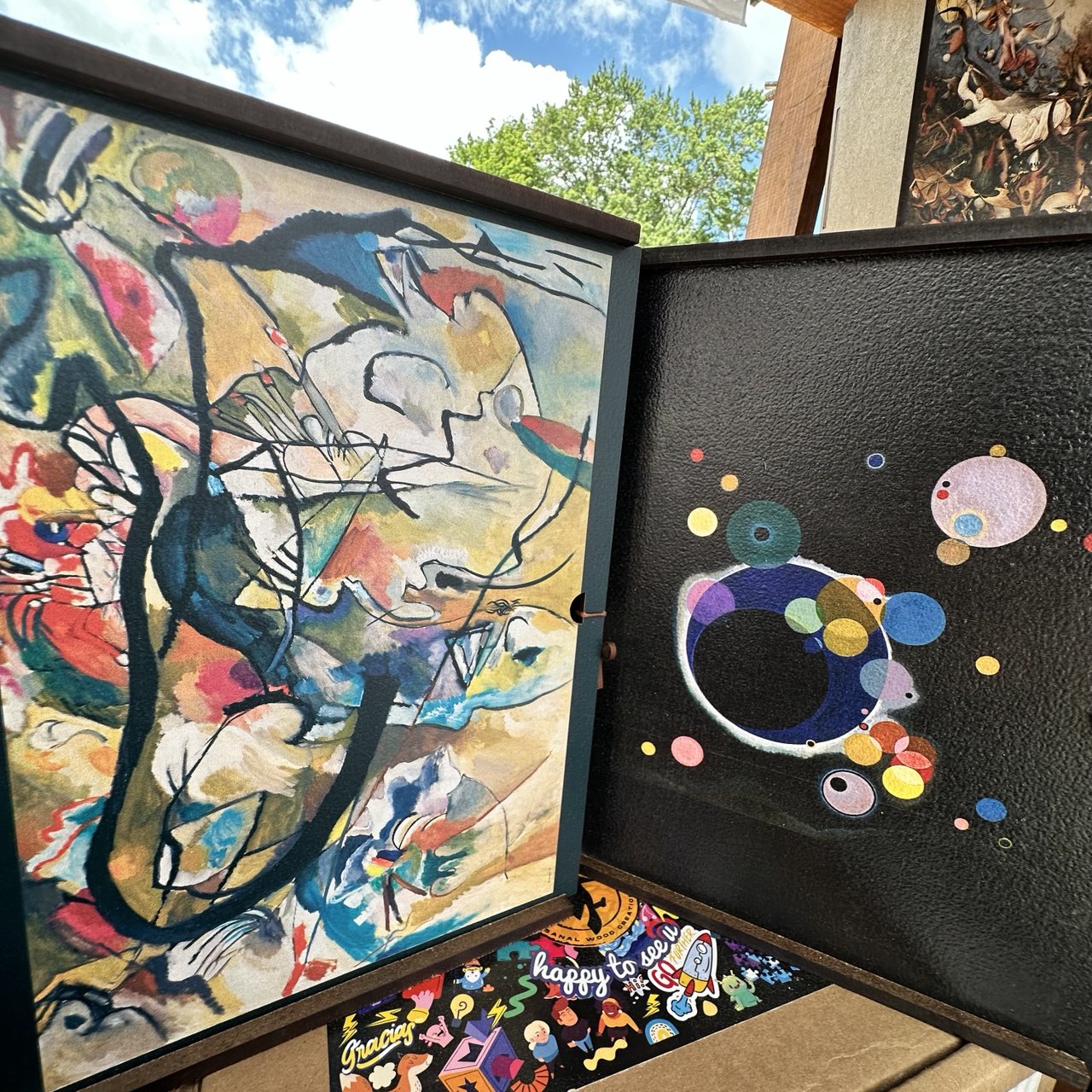
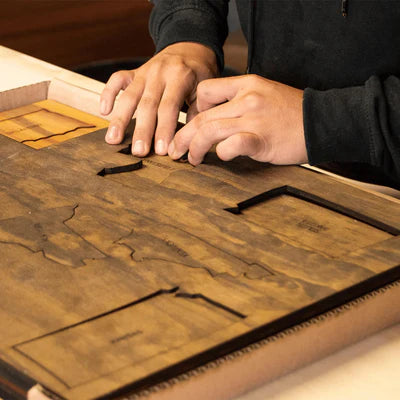
- Heirloom Keepsake: Your puzzle arrives beautifully packaged in a handcrafted wooden box, perfect for gifting or storing your masterpiece.
Craftsmanship and Care:
Craftsmanship and Care:
Experience the satisfying click of perfectly interlocking pieces. Our state-of-the-art laser cutting ensures precise fit and a smooth, seamless puzzle-solving experience. The perfect upgrade from cardboard without breaking the bank.
- Natural Laser Residue: A small amount of harmless black residue from the laser cutting process may be present. Simply wipe it away with a damp cloth.
- Hand-Finished Details: Each puzzle board, each wooden box are all carefully hand-stained, painted, and glued.
Satisfaction Guaranteed:
Satisfaction Guaranteed:
We are confident in the quality of our puzzles. If you are not completely satisfied, we offer a full refund or exchange.
PLEASE NOTE:
Each puzzle is crafted to make the most of your chosen size. Artwork may be subtly adjusted to meet our material and production standards while honoring the original work. Planning to frame yours? Email info@whatawoodwork.com for final measurements.
Couldn't load pickup availability
In stock
 PRODUCT DESCRIPTION
Kingfisher by the Waterside, 1887 — Wooden Jigsaw Puzzle
The bird in this painting never existed. Van Gogh worked from a taxidermied kingfisher he kept in his Paris studio, and the model had no feet. So he invented them, carefully painting toes curled around a reed the bird never touched. He also lengthened the tail to balance the raised beak. The kingfisher looks alive because Van Gogh decided it should.
📖 The Story Behind This Piece
Van Gogh painted this in Paris during the summer of 1887, one year into a stay that was rewriting everything he thought he knew about color. The city was full of Impressionists, and Japanese woodblock prints were circulating through the studios. He was absorbing all of it fast. The kingfisher, small and precise, sits on a reed above water rendered in loose, restless strokes. The bird is still. Everything around it is moving. That contrast is not accidental. The painting now lives in the Van Gogh Museum in Amsterdam, inventory ID s0100V1962.
Van Gogh reached painting late, at 27, after failing at art dealing, teaching, and ministry. When he arrived in Paris in 1886, his palette was still dark and northern. Within two years, contact with Impressionist color theory and Hiroshige's flat, saturated compositions had pulled his work into an entirely different register. The kingfisher, painted from a dead bird with invented anatomy, is one of the quieter proofs of that change.
The section that slows most assemblers down is the water. Van Gogh applied the blues and greens in short diagonal strokes that read as unified from a distance but fragment completely up close. On a UV-printed wooden piece, those brushstrokes print without the paper haze you get from laminate reproduction, so the texture differences between the tight reed and the broken water surface stay visually distinct at piece scale. Sorting that middle section by stroke direction before color turns out to be more useful than sorting by color alone.
💎 Why This Puzzle Lasts
Most wooden puzzle makers charge $300 to $500. The craft justifies it. WAWW gets to $115–$170 through direct manufacturing and no wholesale chain. Made to order, so there's no warehouse inventory absorbing overhead. Same materials. No markup passed down from a distributor.
The 3mm MDF core is rigid enough that pieces still click cleanly years from now. Cardboard warps with humidity and loses its tolerance. MDF doesn't. You'll feel the difference in the fit the first time you press two pieces together. UV printing goes directly onto the wood surface, no paper laminate between the image and the substrate. Nothing to peel, nothing to yellow. The blues in the water stay blue.
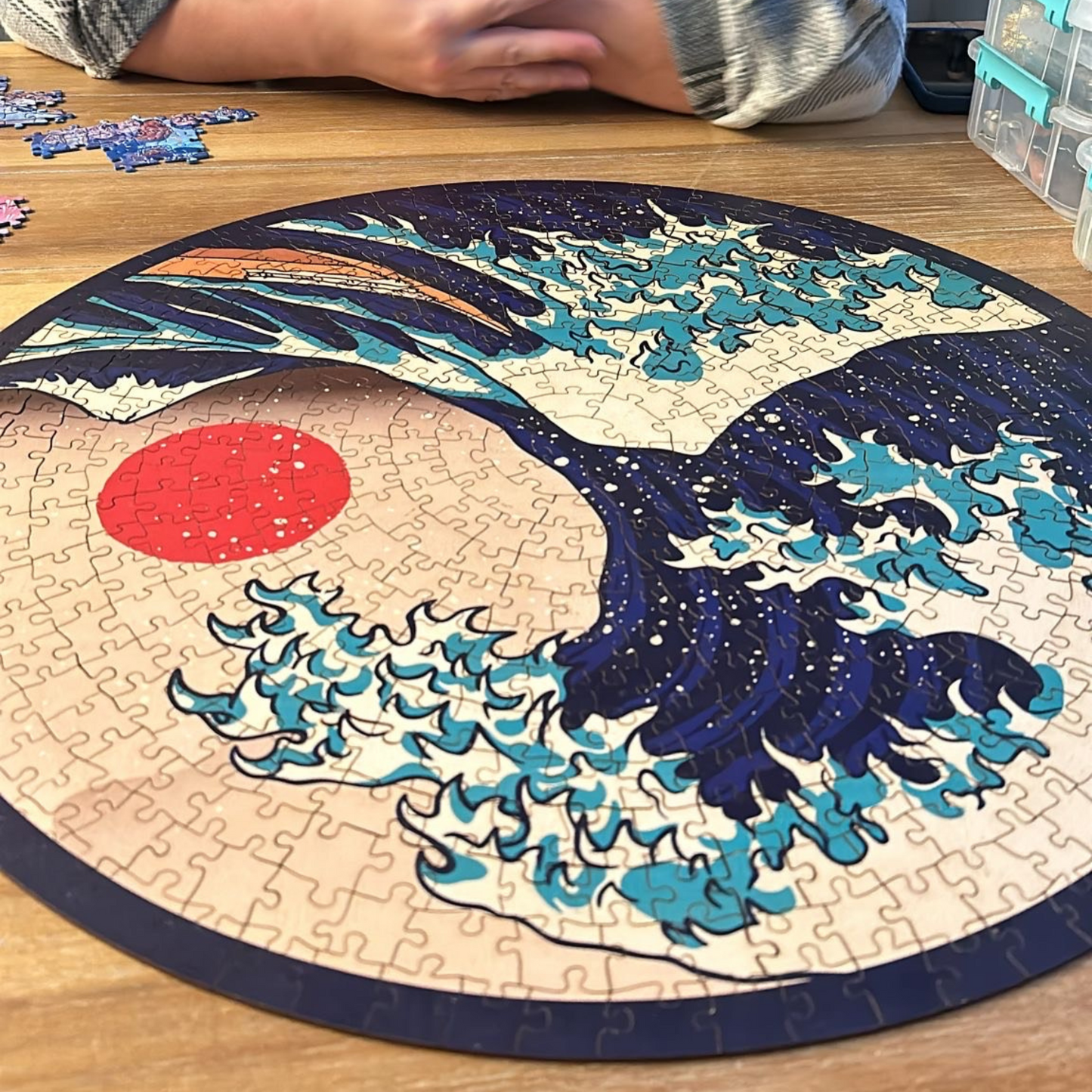
The traditional grid cut keeps the solving honest. Pieces connect cleanly, with a tactile snap that novelty shapes rarely achieve. When the puzzle is done, it goes into a handcrafted wooden box built as furniture, not packaging. Most people keep the box on a shelf after the puzzle is framed. Made to order means your puzzle doesn't exist until you buy it, which also means no factory overrun sitting in a bin somewhere. The three to four week lead time is the cost of that.