
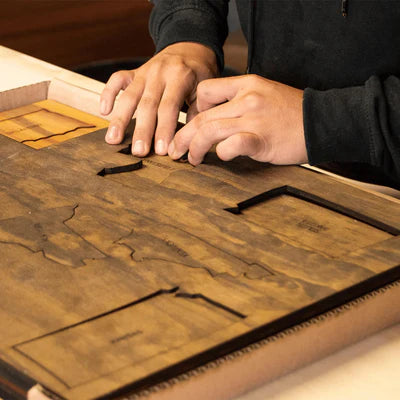


Langwith's Minnesota Map - Premium Wooden Jigsaw Puzzle
Langwith's Minnesota Map - Premium Wooden Jigsaw Puzzle
- Regular price
- Price: $115.00
- Regular price
- List Price:
- Sale price
- Price: $115.00
- Unit price
- per
Key Features:
Key Features:
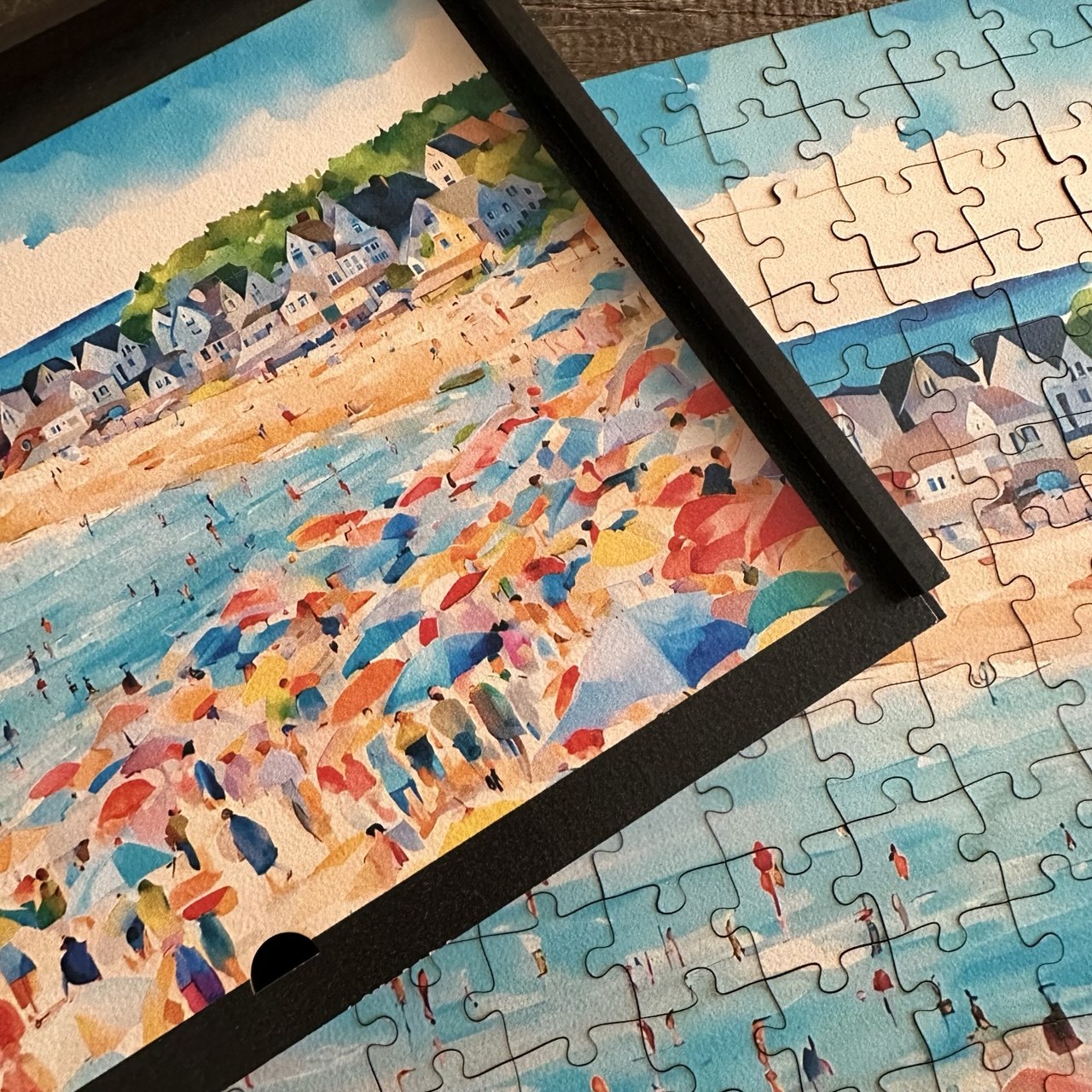
- Premium Quality: Crafted from durable 3mm (.14in) composite wood board for lasting enjoyment.
- Vibrant Imagery: High-resolution UV printing directly on the wood—no paper laminate—for stunning detail and vibrant colors.
- Eco-Conscious: Made with environmentally friendly materials.
- Heirloom Keepsake: Your puzzle arrives beautifully packaged in a handcrafted wooden box, perfect for gifting or storing your masterpiece.
Craftsmanship and Care:
Craftsmanship and Care:
Experience the satisfying click of perfectly interlocking pieces. Our state-of-the-art laser cutting ensures precise fit and a smooth, seamless puzzle-solving experience. The perfect upgrade from cardboard without breaking the bank.
- Natural Laser Residue: A small amount of harmless black residue from the laser cutting process may be present. Simply wipe it away with a damp cloth.
- Hand-Finished Details: Each puzzle board, each wooden box are all carefully hand-stained, painted, and glued.
Satisfaction Guaranteed:
Satisfaction Guaranteed:
We are confident in the quality of our puzzles. If you are not completely satisfied, we offer a full refund or exchange.
PLEASE NOTE:
Each puzzle is crafted to make the most of your chosen size. Artwork may be subtly adjusted to meet our material and production standards while honoring the original work. Planning to frame yours? Email info@whatawoodwork.com for final measurements.
Couldn't load pickup availability
In stock
 PRODUCT DESCRIPTION
Langwith's Pictorial Map: Minnesota, the Land of 10,000 Lakes — Wooden Jigsaw Puzzle
A.L. Langwith published this map around 1930 and sold it for $2.50 as a promotional ephemera — the kind of thing you'd pick up at a chamber of commerce counter and pin to a wall. Nobody expected it to last. It lasted.
📖 The Story Behind This Piece
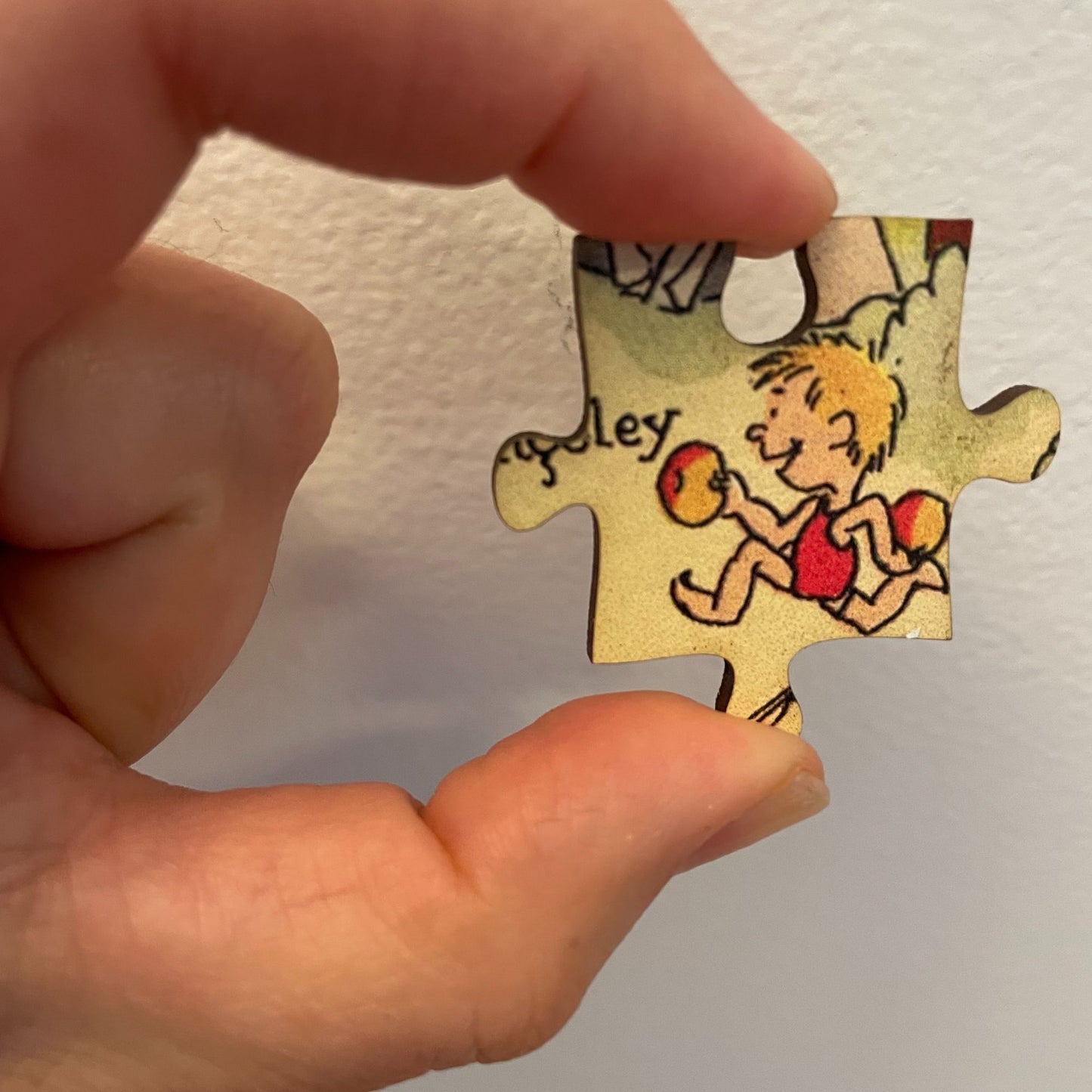
Langwith made this in Minneapolis, for Minneapolis, at a moment when Minnesota was actively selling itself. The early 1930s brought economic pressure and a parallel instinct to double down on regional identity. So the map doesn't just show where things are. It performs a version of Minnesota: cartoonish figures hauling fish, working timber, paddling through lake country.
🎁 Who Gets One of These
A few kinds of people buy this. They don't have much in common except that they tend to know exactly why they want it.
✔️ The Minnesota transplant — grew up there, moved away, owns a few pieces that make the connection visible; this map shows the state as it saw itself in 1930, which is a different thing than a modern print.
✔️ The map collector
✔️ The puzzle upgrader
✔️ The deliberate gift-giver — buying for someone with a Minnesota connection, wants something specific enough to show they paid attention, not just found a state-shaped cutting board.
🧩 Puzzle Specifications
✔️ Precision laser-cut wooden pieces
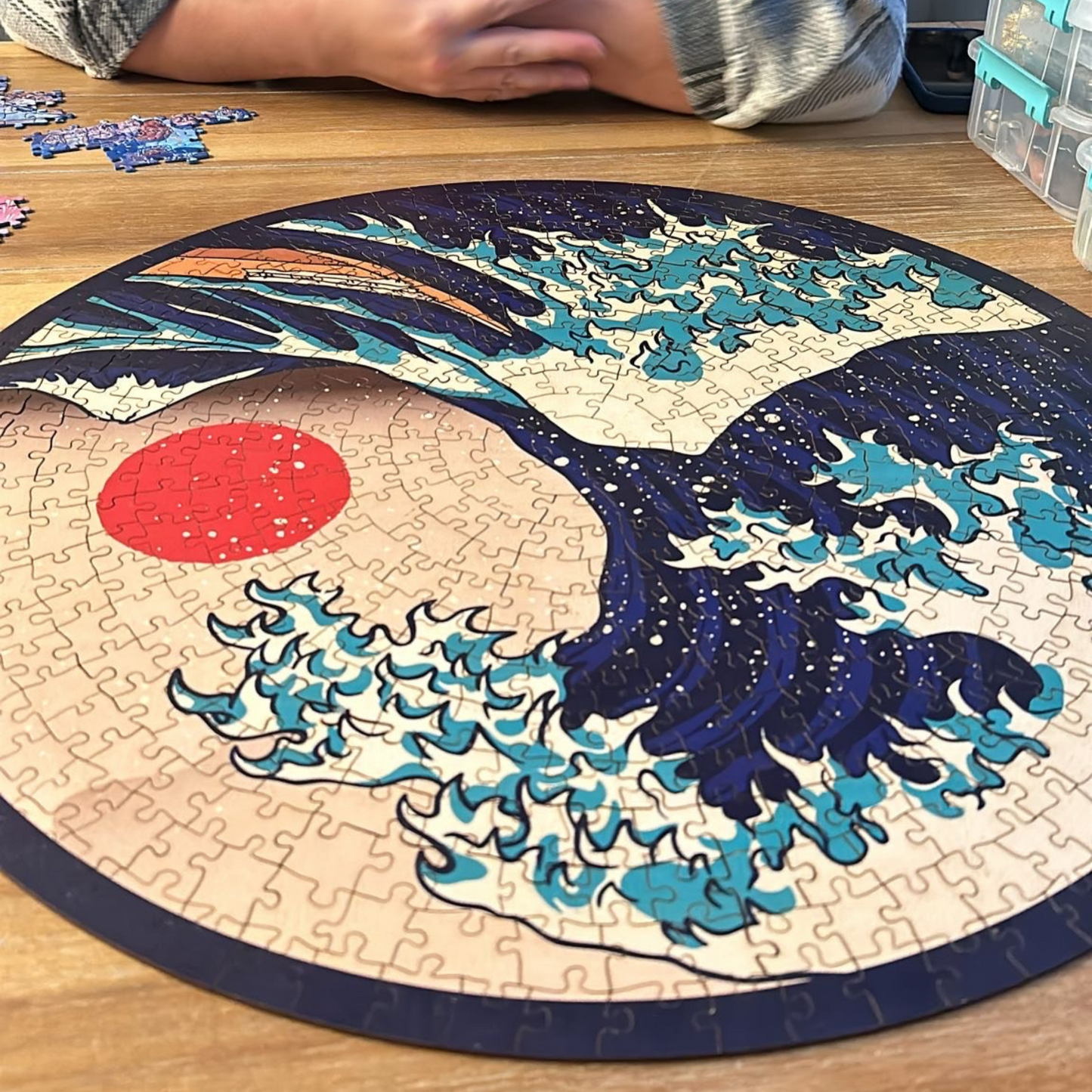
✔️ 3mm MDF core — rigid, warp-resistant, built to last
✔️ UV printing directly on wood — no paper laminate, no peeling
✔️ Traditional grid-cut design
✔️ Sizes: 15"x23", 23"x31"
✔️ Piece counts: 300–1000
✔️ Handcrafted wooden keepsake box included
✔️ Made to order — ships in 3–4 weeks
💎 Why This Puzzle Lasts
Museum-quality wooden puzzles from comparable brands run $300 to $500. WAWW makes the same thing for $115 to $170, by manufacturing directly and skipping wholesale entirely. The price is lower because the supply chain is shorter, not because anything was cut from the object itself.
The core is 3mm MDF, which means the pieces have real weight when you pick them up. Cardboard compresses at the edges over time and pieces start fitting loosely. MDF doesn't compress. A puzzle built on this core fits the same way in ten years as it does the first time you open the box. UV printing goes directly onto the wood surface, with no paper laminate sitting between the ink and the substrate. Paper laminates peel at corners and fade along fold lines. Without one, there's nothing to peel and no layer to fail.
The grid cut is traditional, which means the pieces interlock firmly and release cleanly. Some puzzle makers use irregular "whimsy" cuts that look interesting in marketing photos but create ambiguous fits during assembly. Every piece here has one correct position and you know when you've found it. After assembly, the puzzle stores in a handcrafted wooden box that functions as an object on its own. Most people keep it on a shelf. The box is part of the thing, not packaging around it. Each puzzle is made to order, which means no warehouse inventory and a 3 to 4 week lead time. The wait is a direct consequence of nothing being produced until someone wants it.
The 300-piece, 15"x23" starts at $115. The 1000-piece, 23"x31" runs $170.
🖼️ After You Finish It
Most people frame it. UV printing directly on wood means the colors won't shift over time the way paper prints do under light. Standard framing glass works fine. The image doesn't need UV-protective glass to stay stable, which removes the most expensive variable from framing. Hang it, store it, or leave it in the box. The object holds up either way.
⚠️ Important Notes
Puzzles may have light laser residue on the surface — a damp cloth handles it. There's a natural wood burnt scent when the box first opens; it fades within a few days. Made-to-order production means your puzzle ships in 3–4 weeks. If anything arrives damaged, we replace or refund. No questions.