


Latest War Map by Hadol - Premium Wooden Jigsaw Puzzle
Latest War Map by Hadol - Premium Wooden Jigsaw Puzzle
- Regular price
- Price: $115.00
- Regular price
- List Price: $0.00
- Sale price
- Price: $115.00
- Unit price
- per
Key Features:
Key Features:
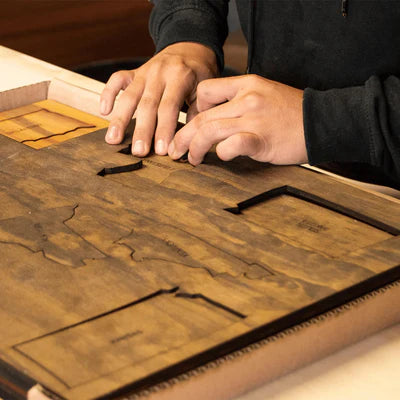
- Premium Quality: Crafted from durable 3mm (.14in) composite wood board for lasting enjoyment.
- Vibrant Imagery: High-resolution UV printing directly on the wood—no paper laminate—for stunning detail and vibrant colors.
- Eco-Conscious: Made with environmentally friendly materials.
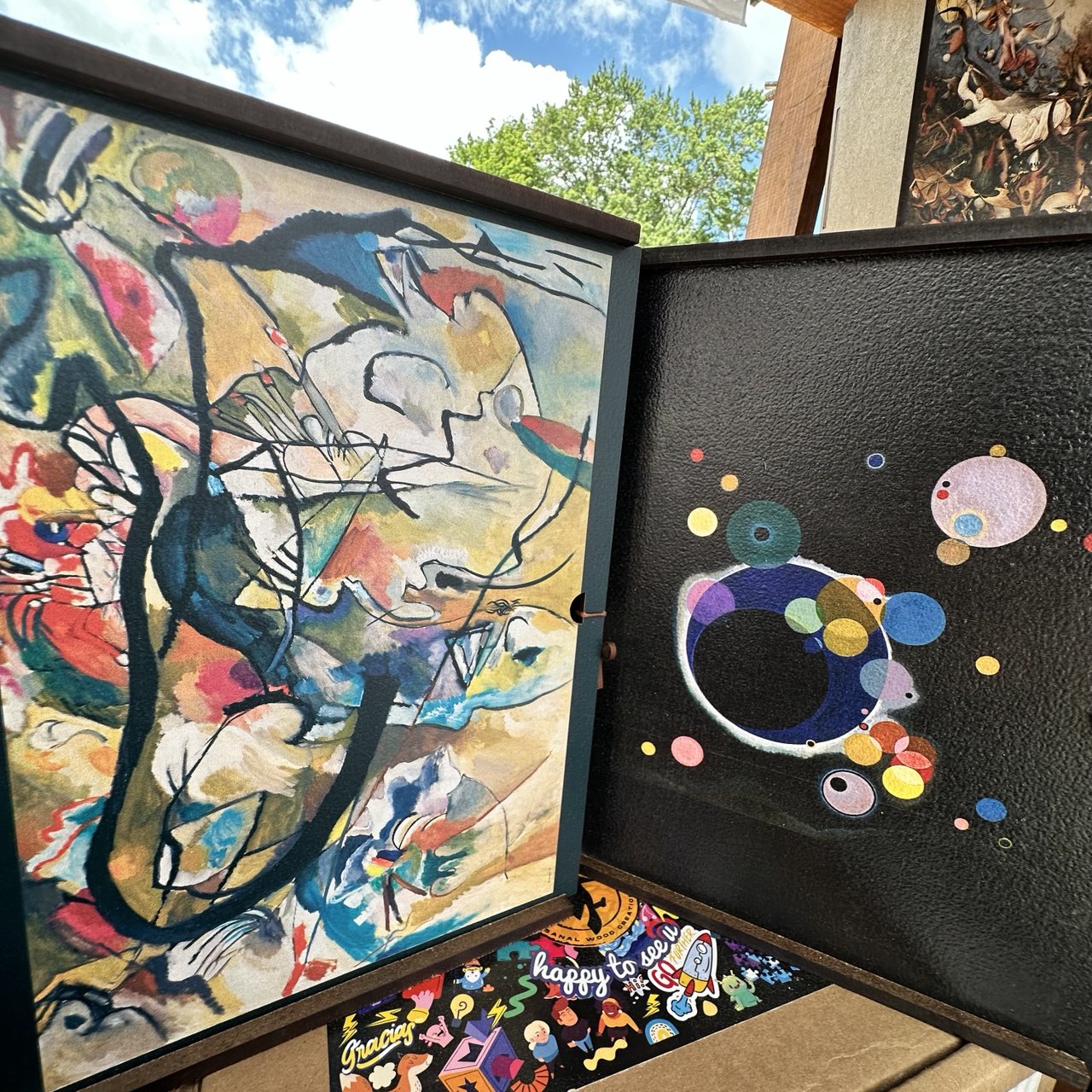
- Heirloom Keepsake: Your puzzle arrives beautifully packaged in a handcrafted wooden box, perfect for gifting or storing your masterpiece.
Craftsmanship and Care:
Craftsmanship and Care:
Experience the satisfying click of perfectly interlocking pieces. Our state-of-the-art laser cutting ensures precise fit and a smooth, seamless puzzle-solving experience. The perfect upgrade from cardboard without breaking the bank.
- Natural Laser Residue: A small amount of harmless black residue from the laser cutting process may be present. Simply wipe it away with a damp cloth.
- Hand-Finished Details: Each puzzle board, each wooden box are all carefully hand-stained, painted, and glued.
Satisfaction Guaranteed:
Satisfaction Guaranteed:
We are confident in the quality of our puzzles. If you are not completely satisfied, we offer a full refund or exchange.
PLEASE NOTE:
Each puzzle is crafted to make the most of your chosen size. Artwork may be subtly adjusted to meet our material and production standards while honoring the original work. Planning to frame yours? Email info@whatawoodwork.com for final measurements.
Couldn't load pickup availability
In stock
 PRODUCT DESCRIPTION
Latest War Map of Europe 1870 — Wooden Jigsaw Puzzle
Paul Hadol drew Prussia as Otto von Bismarck: a giant, arms stretched west toward the Netherlands, boot crushing Austria. He drew England as a furious old woman with a leashed bear labeled Ireland. He made this in Paris, in 1870, while Prussian troops were still mobilizing. L. Prang & Co. in Boston reproduced it for American audiences before the war was over. Satire printed faster than dispatches.
📖 The Story Behind This Piece
In the summer of 1870, France and Prussia went to war over a disputed succession to the Spanish throne. Hadol had the map out before the first major battle. Each country gets a body: France is a helmeted soldier, bayonet forward, jaw set. Russia is a shaggy bear coiled at the eastern edge. The Ottoman Empire slumps, visibly exhausted. Spain sleeps through all of it. The comedy is precise — every figure's posture is an editorial opinion on that nation's political situation in that specific season.
Hadol was a caricaturist by trade, not a cartographer. The decision that made this map work was his refusal to separate geography from opinion. He kept the actual borders roughly accurate and then filled them with bodies. The tension between functional map and political cartoon is what made it reproducible — newspapers could cite it, parlors could hang it, Bostonians could read it across an ocean as both news and entertainment. That dual purpose is why it survived.
During assembly, the map's border regions become genuinely puzzling in the best way. The color fields shift at political boundaries rather than topographic ones, so the eastern edge of the puzzle, where multiple empires press together, offers almost no contrast to anchor a section. You'll find yourself reading faces rather than landscapes to orient pieces. Under UV printing on wood, the ink sits in the grain rather than on top of it, so Hadol's hatching and cross-hatching — the marks that give each figure texture and shadow — read as drawn, not screened. The difference is small on screen. In hand, it's not.
🎁 Who Gets One of These
A few specific people come to mind immediately.
✔️ The history teacher who has explained the Franco-Prussian War for fifteen years — You know this conflict as the direct precursor to 1914. Hadol drew the fuse before it was lit. Having the map in three dimensions changes how you explain it.
✔️ The vintage map collector who has run out of wall space — The wooden keepsake box means it doesn't need a frame to be an object worth keeping. It lives on a shelf and still looks like something.
✔️ The person whose father has a study full of 19th-century European history books — He's read about Bismarck, the Austro-Prussian War, the unification of Germany. He's never held a contemporary satirical response to all of it.
✔️ The political cartoonist or editorial illustrator — Hadol was working in your genre, 155 years ago, and he was doing it at speed, under pressure, with a war starting outside. Worth examining closely.
✔️ The museum member who buys the catalog but skips the gift shop — You want the real thing, not merchandise. A puzzle made directly from the original print, on wood, at a price that doesn't require justification, is a different category of object.
Works well for Father's Day, retirement gifts, and significant birthdays for anyone with a serious interest in European history, political illustration, or antique cartography. The subject is specific enough that it means something to the right person.
🧩 Puzzle Specifications
✔️ Precision laser-cut wooden pieces
✔️ 3mm MDF core — rigid, warp-resistant, built to last
✔️ UV printing directly on wood — no paper laminate, no peeling
✔️ Traditional grid-cut design
✔️ Sizes: 15"x23", 18"x24", 23"x31"
✔️ Piece counts: 300–1000
✔️ Handcrafted wooden keepsake box included
✔️ Made to order — ships in 3–4 weeks
💎 Why This Puzzle Lasts
Most wooden puzzle makers charge $300–$500. The craft justifies it. WAWW gets there differently: direct manufacturing, no wholesale chain, made to order with no warehouse inventory. Same materials. The price difference is structural, not a compromise.
The 3mm MDF core is why a finished puzzle still clicks cleanly years later. Cardboard compresses and warps; MDF holds its shape. You notice it in the fit of the pieces — there's no give, no soft edge, no piece that only half-locks. UV printing goes directly into the wood rather than onto a paper laminate bonded over it. No laminate means nothing to peel, bubble, or fade. Hadol's original used heavy black outlines and dense hatching; on this surface, those lines stay sharp.
The traditional grid cut keeps the focus on the image rather than the piece shapes. Every connection is clean and purposeful. When the puzzle is finished, it goes into a handcrafted wooden box sized to hold it — not a sleeve, not a bag, a box that functions as a second object in the room. Made to order means your puzzle doesn't sit in a warehouse for six months before shipping. It's built when you buy it.
The 300-piece, 15"x23" starts at $115. The 1000-piece, 23"x31" runs $170.
🖼️ After You Finish It
Most people frame it. The wooden box ends up nearby, on a shelf or a desk, because it's too good to throw away. Visitors notice the image first — the Bismarck giant, the sleeping Spain, the leashed bear — and then ask where it came from. Hadol drew this in 1870 as a piece of wartime commentary. Reassembling it piece by piece is a slow way to read it, and a better one.
⚠️ Important Notes
Puzzles may have light laser residue on the surface — a damp cloth handles it. There's a natural wood scent when the box first opens; it fades within a few days. Made-to-order production means your puzzle ships in 3–4 weeks. If anything arrives damaged, we replace or refund. No questions.