


Henri Matisse Peonies and Irises Wooden Jigsaw Puzzle
Henri Matisse Peonies and Irises Wooden Jigsaw Puzzle
- Regular price
- Price: $115.00
- Regular price
- List Price: $0.00
- Sale price
- Price: $115.00
- Unit price
- per
Key Features:
Key Features:
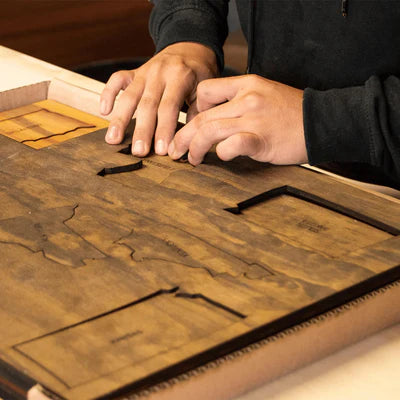
- Premium Quality: Crafted from durable 3mm (.14in) composite wood board for lasting enjoyment.
- Vibrant Imagery: High-resolution UV printing directly on the wood—no paper laminate—for stunning detail and vibrant colors.
- Eco-Conscious: Made with environmentally friendly materials.
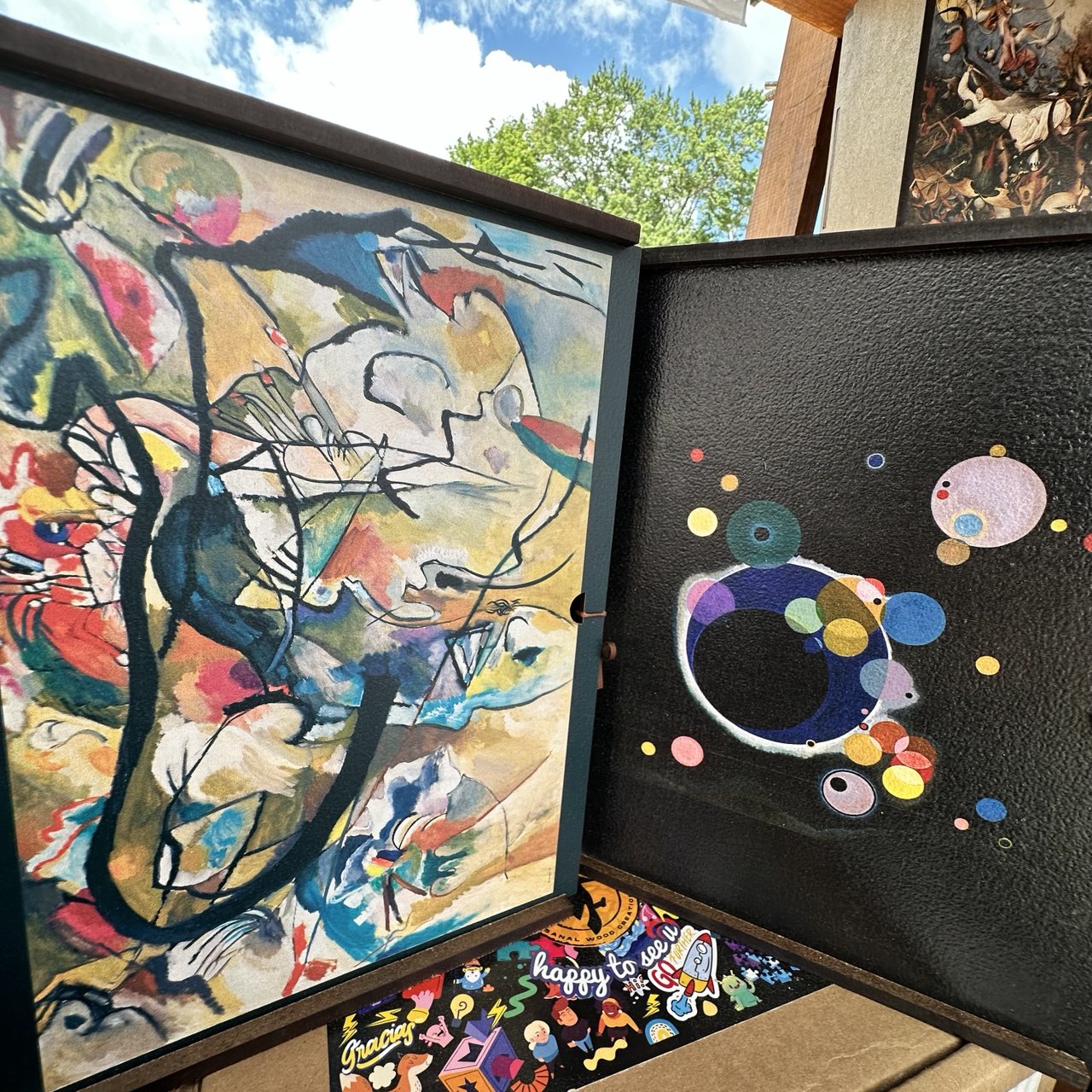
- Heirloom Keepsake: Your puzzle arrives beautifully packaged in a handcrafted wooden box, perfect for gifting or storing your masterpiece.
Craftsmanship and Care:
Craftsmanship and Care:
Experience the satisfying click of perfectly interlocking pieces. Our state-of-the-art laser cutting ensures precise fit and a smooth, seamless puzzle-solving experience. The perfect upgrade from cardboard without breaking the bank.
- Natural Laser Residue: A small amount of harmless black residue from the laser cutting process may be present. Simply wipe it away with a damp cloth.
- Hand-Finished Details: Each puzzle board, each wooden box are all carefully hand-stained, painted, and glued.
Satisfaction Guaranteed:
Satisfaction Guaranteed:
We are confident in the quality of our puzzles. If you are not completely satisfied, we offer a full refund or exchange.
PLEASE NOTE:
Each puzzle is crafted to make the most of your chosen size. Artwork may be subtly adjusted to meet our material and production standards while honoring the original work. Planning to frame yours? Email info@whatawoodwork.com for final measurements.
Couldn't load pickup availability
In stock
 PRODUCT DESCRIPTION
Henri Matisse "Les Pivoines" | Fauve Floral Fine Art Wooden Jigsaw Puzzle.
In 1907, Matisse created Les Pivoines while in Collioure, a small fishing town on the French coast near Spain. He had moved beyond Fauvism—not abandoning it, but outgrowing it. The vibrant magenta peonies and purple irises in a blue and white checkered vase reflect a process of experimentation. The flowers are rendered in full dimension, while the background remains nearly flat. These choices are intentional and create a dynamic tension throughout the canvas.
📖 The Story Behind This Piece
By 1907, Matisse had already made his name with color so aggressive it scandalized Paris critics. Les Pivoines is quieter than that reputation suggests, and stranger. The bouquet of magenta peonies and purple irises sits in a blue and white checkered vase on a table rendered in thick, slashing impasto strokes. Behind the flowers, the space flattens almost completely. Matisse was testing whether a painting could hold two spatial logics at once, three-dimensional objects in front of a surface that refuses to recede. Shortly after he finished it, the influential critic Félix Fénéon bought it directly from him for the Galerie Bernheim-Jeune in Paris.
Matisse had started painting seriously at 21, after his mother gave him a box of paints during a recovery from appendicitis. He said later it felt like entering a kind of paradise. That origin story matters for Les Pivoines specifically, because the painting has the quality of someone who still finds flowers genuinely worth looking at, not as subject matter, but as a formal problem he hasn't solved yet. The brushwork is restless. Nothing is decorative for decoration's sake.
The checkered vase is where assembly gets interesting. On a screen, the blue and white squares read as a simple repeating pattern. On wood with UV-printed ink sitting directly in the grain, the contrast between the cool geometry of the vase and the loose, layered strokes of the peonies above it becomes a physical problem: the vase pieces look sorted, then suddenly don't. The magenta blooms, meanwhile, separate into dozens of distinct micro-variations in hue that aren't visible at thumbnail size. UV printing preserves those gradations without the color shift that paper laminate introduces. You're solving the painting Fénéon saw, not a reproduction of it.
🎁 Who Gets One of These
A few types of people buy Les Pivoines, and they don't all overlap.
✔️ The Matisse collector who already owns a print — You know the difference between the Nice interiors and the Collioure work. A puzzle built from the 1907 transitional period is a different conversation than a late cutout.
✔️ The person who visited the Matisse Museum in Nice and bought nothing in the gift shop — The postcards weren't worth it. A laser-cut wooden puzzle of a painting Fénéon bought directly from the artist is.
✔️ The art history reader who owns the Hilary Spurling biography — You already know what Collioure meant to Matisse. Spending time with this painting in pieces is a different kind of close reading.
✔️ The puzzle buyer who has finished cardboard and won't go back — Wooden pieces feel different in the hand, click differently into place, and stay assembled without warping on a flat surface. Once you know, you know.
✔️ The gift-giver shopping for someone with a serious art collection — A wooden puzzle of a painting last auctioned at Christie's in 2012 is specific enough to feel considered. It won't get regifted.
Works well as a Mother's Day gift for someone with a real interest in modern art, not just botanical prints. Also strong for retirements from arts-adjacent careers, where the occasion calls for something more substantial than a card and dinner.
🧩 Puzzle Specifications
✔️ Precision laser-cut wooden pieces
✔️ 3mm MDF core — rigid, warp-resistant, built to last
✔️ UV printing directly on wood — no paper laminate, no peeling
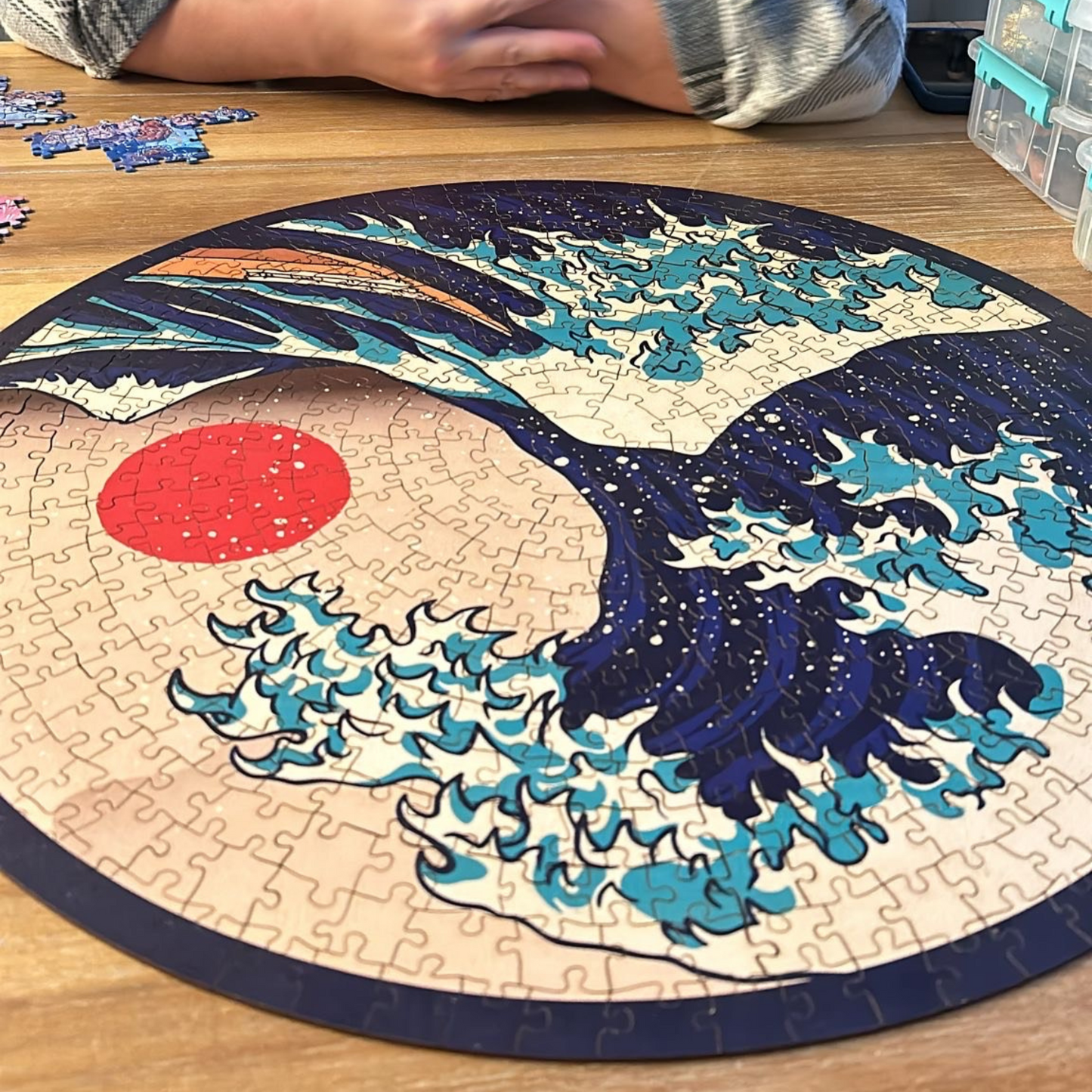
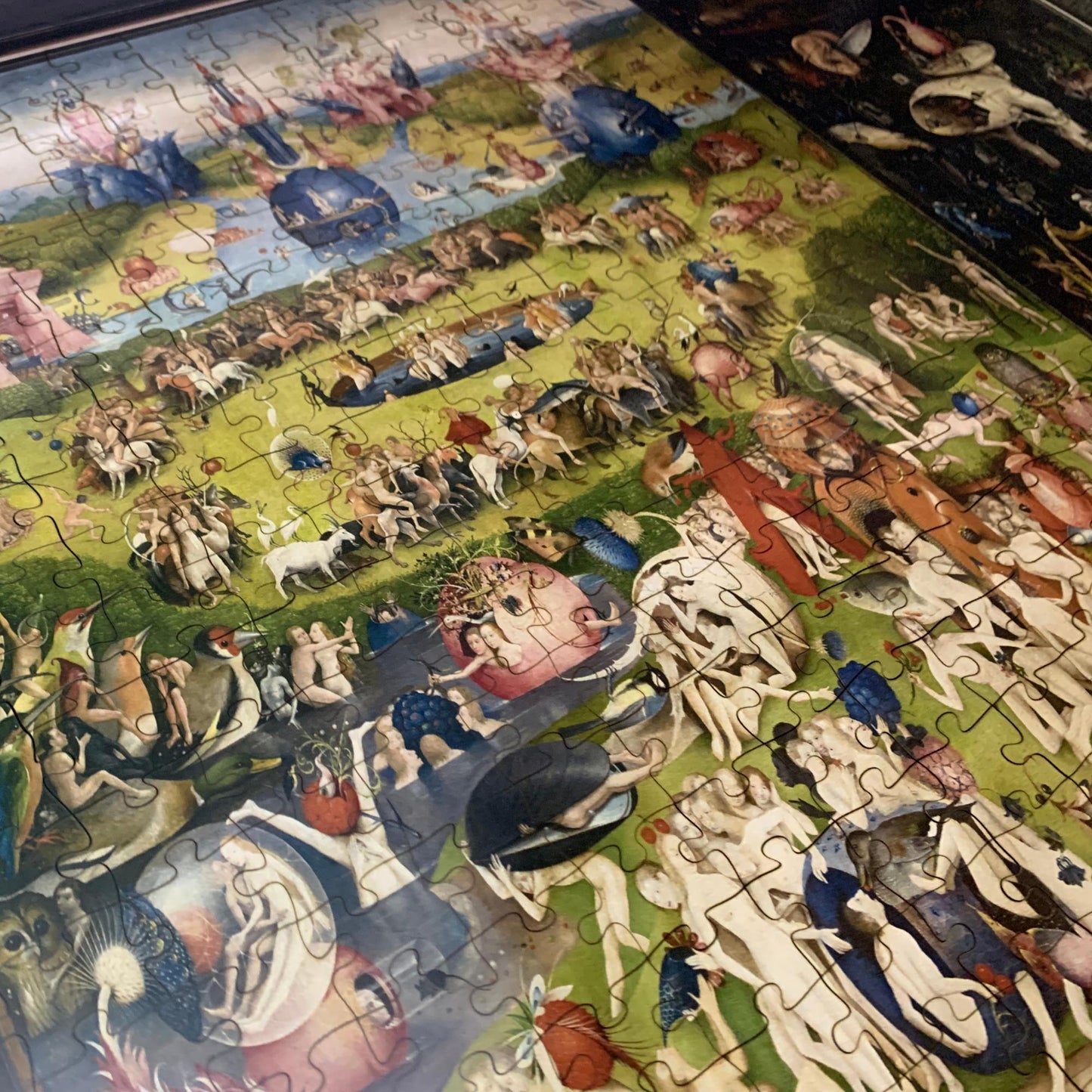
✔️ Traditional grid-cut design
✔️ Sizes: 15"x23", 18"x24", 23"x31"
✔️ Piece counts: 300–1000
✔️ Handcrafted wooden keepsake box included
✔️ Made to order — ships in 3–4 weeks
💎 Why This Puzzle Lasts
Most wooden puzzle makers charge $300–$500. The craft justifies it. WAWW gets there differently: direct manufacturing, no wholesale chain, made to order only. Same materials. No markup. The price reflects what the puzzle actually costs to make, not what the market will bear.
The 3mm MDF core is what separates this from a cardboard puzzle after five years. It doesn't warp, doesn't soften, and the pieces still seat cleanly after two decades of storage. A cardboard puzzle is a single-use object. A puzzle with this core is something you could hand down. UV printing works the same way for color: ink goes directly into the wood surface rather than onto a paper layer glued on top. No laminate means no peeling at the edges after reassembly, and no color shift between what the puzzle looked like in year one and what it looks like in year ten.
The traditional grid cut keeps the solving experience clean. No novelty shapes competing with the image, no pieces designed to frustrate. The satisfaction is in the painting, not the gimmick. The wooden keepsake box that comes with it isn't packaging — it's where the puzzle lives between assemblies, and it's built to the same standard as the puzzle itself. Most people put it on a shelf. And because every puzzle is made to order, nothing sits in a warehouse. Your puzzle is cut after you order it, which is why the 3–4 week lead time exists.
The 300-piece, 15"x23" starts at $115. The 1000-piece, 23"x31" runs $170.
🖼️ After You Finish It
Most people frame Les Pivoines. The wooden box stays nearby, usually on a shelf or a side table. Visitors notice the box before they notice what's in the frame, then they notice the painting, then someone asks whether that's a Matisse. It's a 1907 canvas that's been in private hands since Fénéon bought it from the artist directly. Rebuilding it yourself is one way to spend time with a painting most people have never been in the same room with.
⚠️ Important Notes
Puzzles may have light laser residue on the surface — a damp cloth handles it. There's a natural wood scent when the box first opens; it fades within a few days. Made-to-order production means your puzzle ships in 3–4 weeks. If anything arrives damaged, we replace or refund. No questions.