
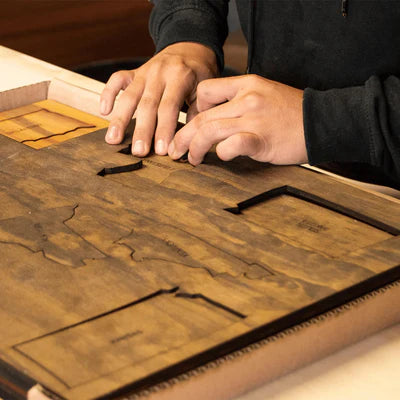


Japanese Monster Catalogue - Premium Bakemono Wooden Puzzle
Japanese Monster Catalogue - Premium Bakemono Wooden Puzzle
- Regular price
- Price: $115.00
- Regular price
- List Price: $0.00
- Sale price
- Price: $115.00
- Unit price
- per
Key Features:
Key Features:
- Premium Quality: Crafted from durable 3mm (.14in) composite wood board for lasting enjoyment.
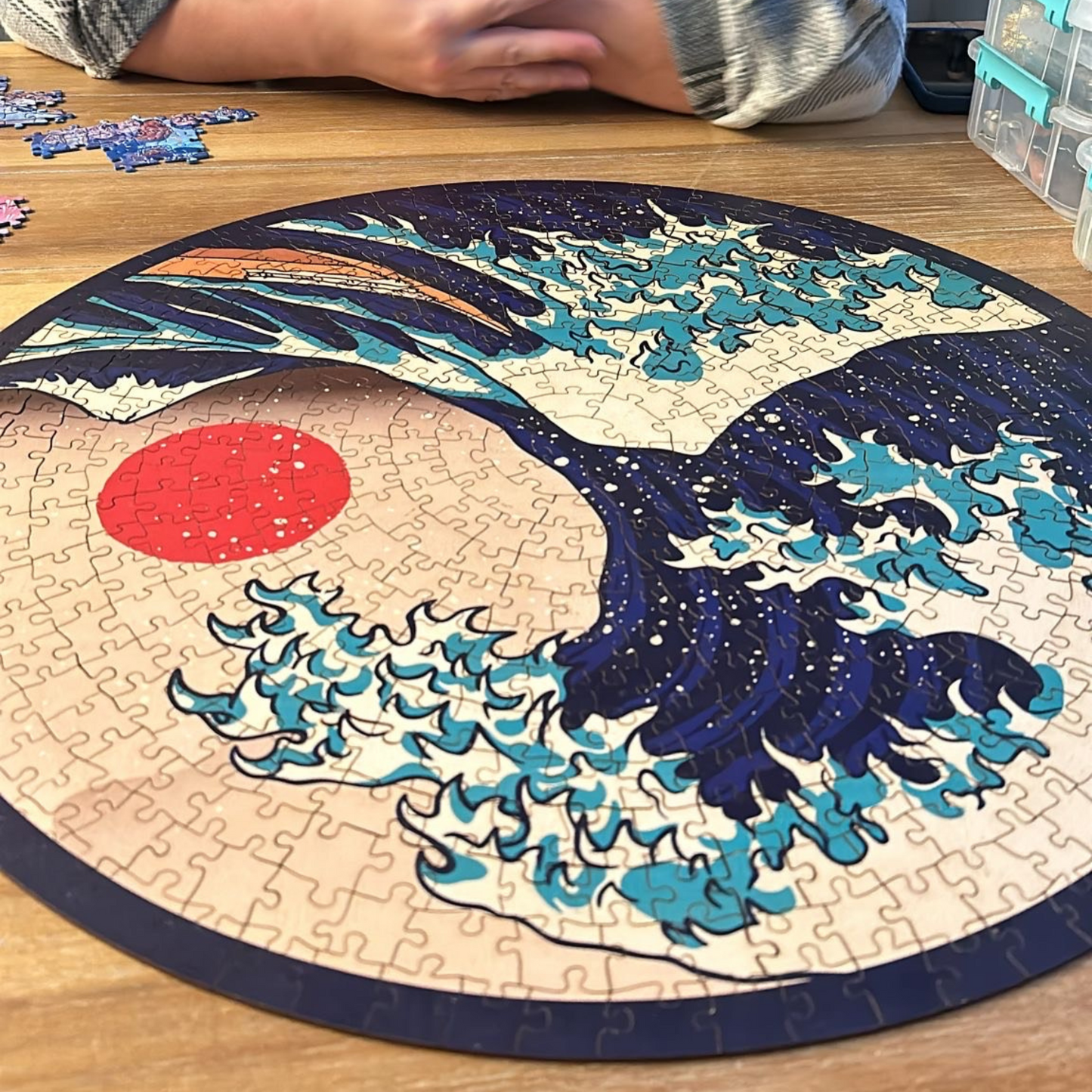
- Vibrant Imagery: High-resolution UV printing directly on the wood—no paper laminate—for stunning detail and vibrant colors.
- Eco-Conscious: Made with environmentally friendly materials.
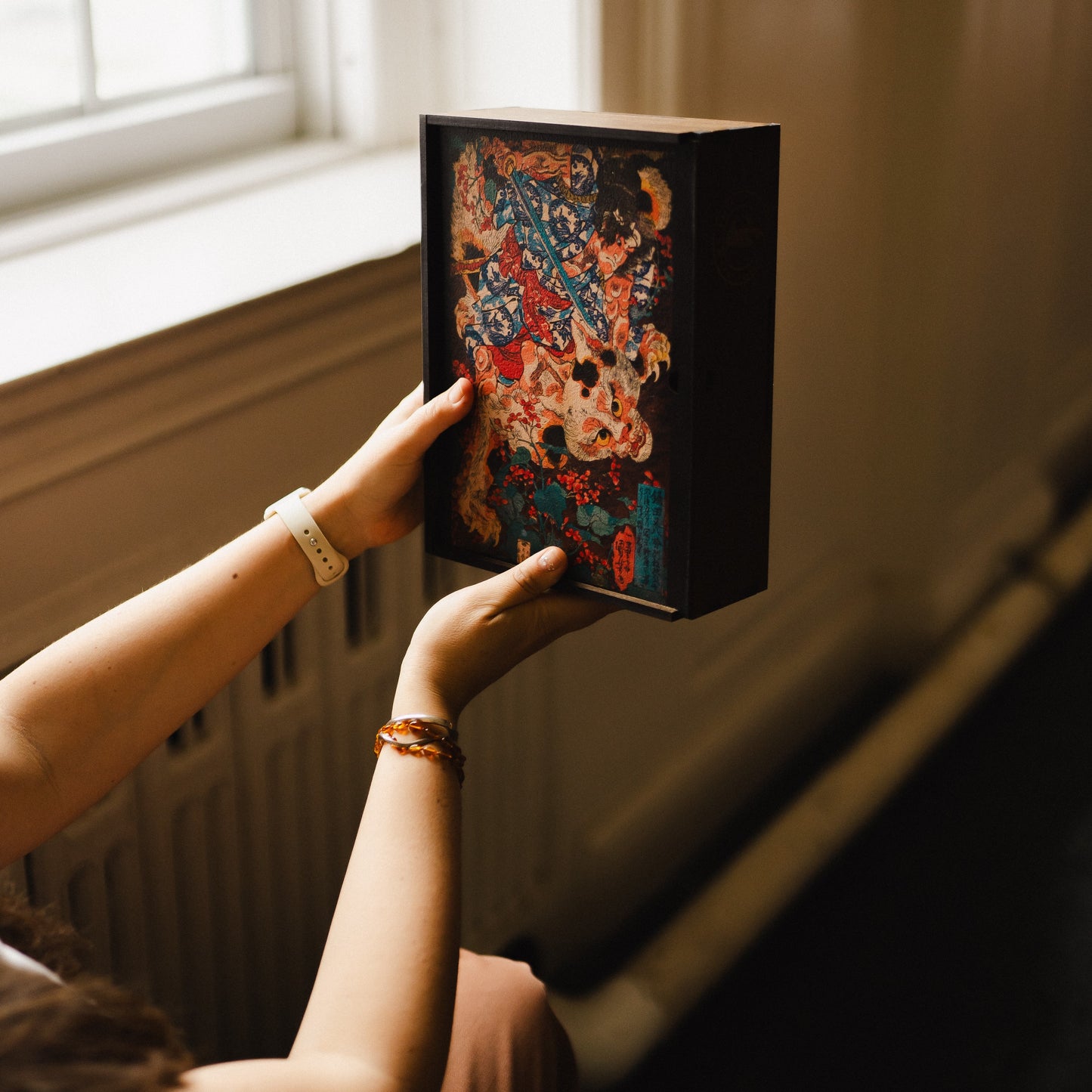
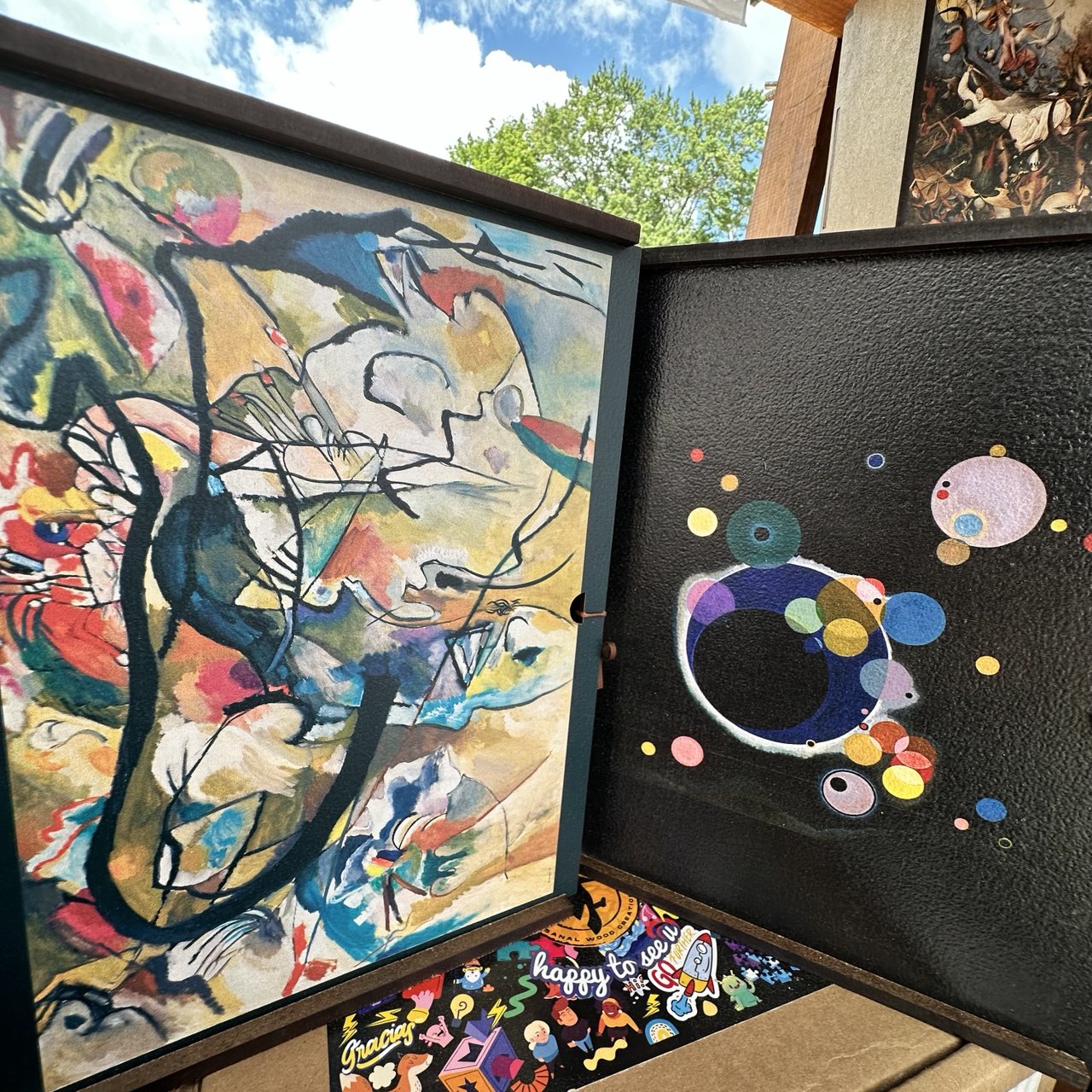
- Heirloom Keepsake: Your puzzle arrives beautifully packaged in a handcrafted wooden box, perfect for gifting or storing your masterpiece.
Craftsmanship and Care:
Craftsmanship and Care:
Experience the satisfying click of perfectly interlocking pieces. Our state-of-the-art laser cutting ensures precise fit and a smooth, seamless puzzle-solving experience. The perfect upgrade from cardboard without breaking the bank.
- Natural Laser Residue: A small amount of harmless black residue from the laser cutting process may be present. Simply wipe it away with a damp cloth.
- Hand-Finished Details: Each puzzle board, each wooden box are all carefully hand-stained, painted, and glued.
Satisfaction Guaranteed:
Satisfaction Guaranteed:
We are confident in the quality of our puzzles. If you are not completely satisfied, we offer a full refund or exchange.
PLEASE NOTE:
Each puzzle is crafted to make the most of your chosen size. Artwork may be subtly adjusted to meet our material and production standards while honoring the original work. Planning to frame yours? Email info@whatawoodwork.com for final measurements.
Couldn't load pickup availability
In stock
 PRODUCT DESCRIPTION
Bakemono Zukushi ("Monster" Scroll, 18th–19th Century) — Wooden Jigsaw Puzzle
Edo-period yōkai art existed in a strange middle space between horror and comedy — the Rokurokubi stretches her neck to improbable lengths, the Kami-kiri sneaks up on sleeping women to cut their hair, and the whole procession moves with the energy of a parade that knows it's being watched. The artist is unknown. The freight is not.
📖 The Story Behind This Piece
The Bakemono Zukushi scroll was made sometime in the 18th or 19th century, during the Edo period — roughly 250 years of enforced peace in Japan that produced an extraordinary amount of strange art. With the samurai class disarmed by stability, creative energy went sideways, into woodblock prints, kabuki theater, and an enormous body of yōkai illustration. The scroll presents 24 supernatural creatures in procession: the Yuki-onna, pale and spectral; the Rokurokubi, whose neck extends while she sleeps; the Kappa, dripping and unpleasant. The figures are rendered with a draughtsman's confidence and a comedian's timing. A similar scroll at Brigham Young University has 35 monsters. This one, archived at the International Research Center for Japanese Studies in Kyoto, has 24 — which means someone decided 24 was enough.
The artist's name was never recorded, and the occasional attribution to a figure named Suekichi Hokusai has never been confirmed. What the record does show is deep familiarity with yōkai conventions — the specific visual grammar that made Edo audiences recognize each creature on sight. Getting Rokurokubi wrong would have been noticed. Every proportion, every exaggerated feature, follows rules the artist knew cold. Anonymous craft at that level of exactness is its own kind of signature.
The scroll's dark ground and saturated creature colors are exactly what UV printing on wood handles best. When you're working through the Yuki-onna section, her white figure reads against a background that, in a digital version, looks nearly black. On wood, that near-black has a warmth that shifts it toward brown-charcoal — a tonal range that doesn't exist in a screen rendering. The boundary between figure and ground becomes a genuine visual problem. You'll sort pieces by color and find yourself holding two that look identical until the light catches the grain underneath differently.
🎁 Who Gets One of These
A few kinds of people reliably want this one.
✔️ The Japan Studies professor or serious enthusiast
✔️ The folklorist or mythology reader who came to yōkai through Lafcadio Hearn
✔️ The art collector who tracks Edo-period work — The scroll is publicly archived at Nichibunken in Kyoto.
✔️ The horror-adjacent gift buyer who wants something with depth behind it
✔️ The museum member who puzzles seriously
💎 Why This Puzzle Lasts
Most wooden puzzle makers charge $300–$500. The craft justifies it. We get there differently: direct manufacturing, no wholesale chain, made to order. Same materials. The $300 goes to the middlemen. Ours doesn't.
The 3mm MDF core stays flat. Cardboard absorbs humidity and warps; MDF doesn't flex with the seasons. A piece that clicked in 2025 clicks the same way in 2045. UV printing goes directly onto the wood surface, no paper layer between the ink and the substrate. Paper laminates crack, peel at corners, and fade unevenly. Here, the ink bonds to the wood. The Yuki-onna's whites stay white.
The traditional grid cut means pieces interlock cleanly and release cleanly. No hunting for a specific orientation on every piece — the logic is consistent, and you can focus on the image instead of the mechanism. The wooden keepsake box is built to the same standard as the puzzle itself; after assembly, it holds the pieces, sits on a shelf, and stops looking like packaging after about a week. Made to order means your puzzle doesn't sit in a warehouse. It gets made when you buy it, which is why the wait is three to four weeks and the quality doesn't vary.
🖼️ After You Finish It
Most people frame it. The Bakemono Zukushi has been circulating in Japanese folklore studies for two centuries. Assembling it piece by piece is a slower way to look at the same thing.