
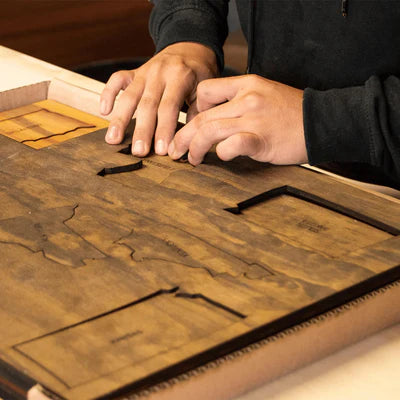


Muscinae a Moss vintage print by Ernst Haeckel - Premium Wooden Puzzle
Muscinae a Moss vintage print by Ernst Haeckel - Premium Wooden Puzzle
- Regular price
- Price: $115.00
- Regular price
- List Price: $0.00
- Sale price
- Price: $115.00
- Unit price
- per
Key Features:
Key Features:
- Premium Quality: Crafted from durable 3mm (.14in) composite wood board for lasting enjoyment.
- Vibrant Imagery: High-resolution UV printing directly on the wood—no paper laminate—for stunning detail and vibrant colors.
- Eco-Conscious: Made with environmentally friendly materials.
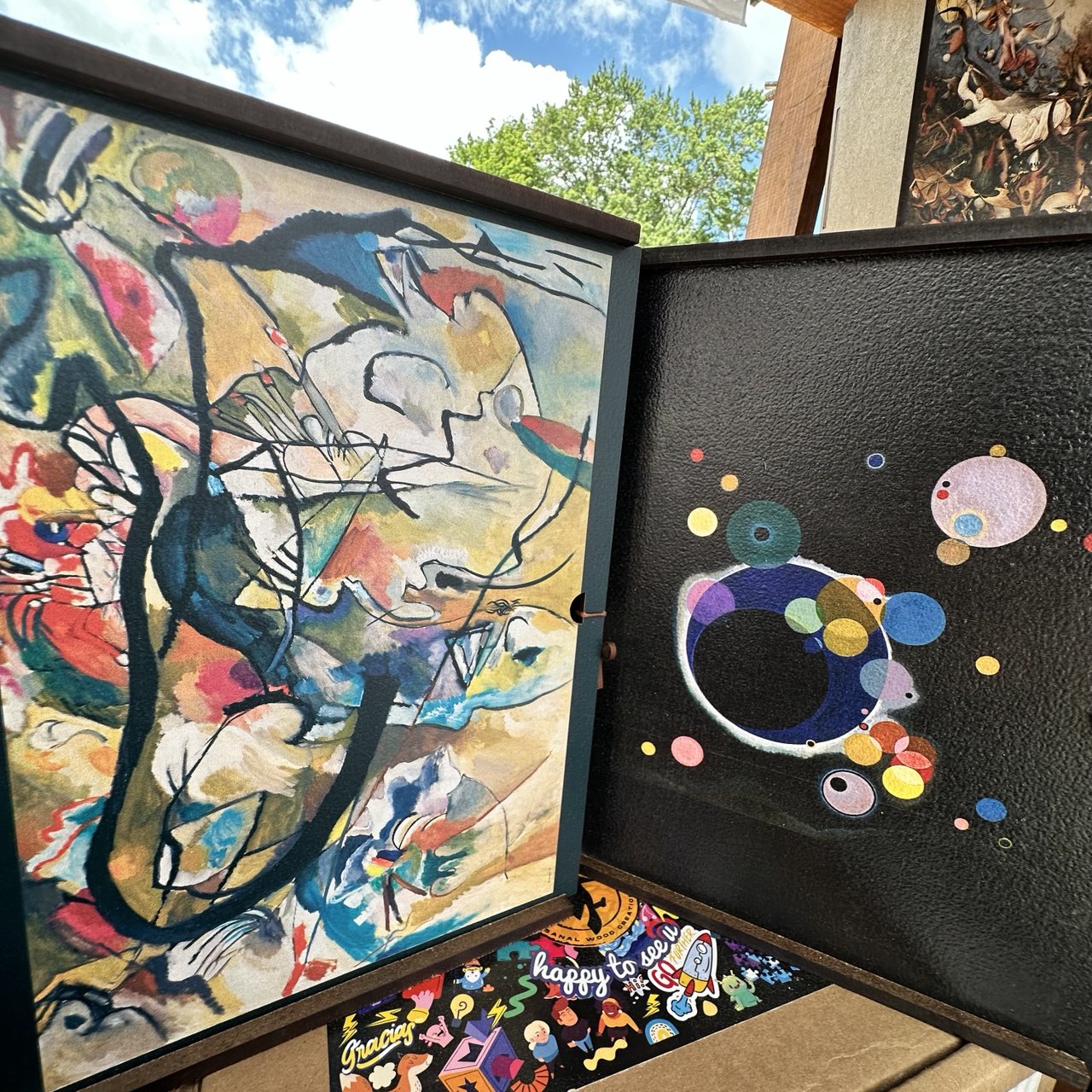
- Heirloom Keepsake: Your puzzle arrives beautifully packaged in a handcrafted wooden box, perfect for gifting or storing your masterpiece.
Craftsmanship and Care:
Craftsmanship and Care:
Experience the satisfying click of perfectly interlocking pieces. Our state-of-the-art laser cutting ensures precise fit and a smooth, seamless puzzle-solving experience. The perfect upgrade from cardboard without breaking the bank.
- Natural Laser Residue: A small amount of harmless black residue from the laser cutting process may be present. Simply wipe it away with a damp cloth.
- Hand-Finished Details: Each puzzle board, each wooden box are all carefully hand-stained, painted, and glued.
Satisfaction Guaranteed:
Satisfaction Guaranteed:
We are confident in the quality of our puzzles. If you are not completely satisfied, we offer a full refund or exchange.
PLEASE NOTE:
Each puzzle is crafted to make the most of your chosen size. Artwork may be subtly adjusted to meet our material and production standards while honoring the original work. Planning to frame yours? Email info@whatawoodwork.com for final measurements.
Couldn't load pickup availability
In stock
 PRODUCT DESCRIPTION
Muscinae — Wooden Jigsaw Puzzle. Haeckel drew moss. Not forests, not charismatic fauna, not the crowd-pleasing subjects that fill natural history museums. Moss.
Plate 72 of Kunstformen der Natur arranges Polytrichum, Sphagnum, and Mnium into a composition so geometrically ordered it looks designed rather than observed. Haeckel believed there was no difference between those two things.
📖 The Story Behind This Piece
In 1904, Ernst Haeckel published Kunstformen der Natur as a direct argument. His monistic philosophy held that symmetry and mathematical structure weren't just present in nature — they were nature's fundamental logic. Plate 72, "Muscinae," puts that argument on the page. The moss species arranged here weren't chosen for prettiness. They were chosen because their sporophytes, fronds, and capsules could be composed into a radial structure that made the philosophical point visible. The lithographic stones were cut by Adolf Giltsch, whose technical precision was the only reason Haeckel's vision transferred from sketch to print without losing its rigor.
Haeckel spent decades trying to reconcile Darwin's evolutionary theory with a unified view of nature as a single, self-organizing system. Kunstformen der Natur was his most popular attempt to make that reconciliation legible to non-scientists. The plates were widely reproduced and directly influenced Art Nouveau designers, who borrowed his organic geometries for architecture, jewelry, and typography. Haeckel considered that a category error. He was making a scientific argument. They were making decoration. Both are still in circulation.
Assembly starts simply enough — the white negative space at the plate's border resolves quickly, and the central cluster of Polytrichum capsules gives you a clear anchor. Then the mid-ground arrives: dozens of near-identical moss filaments radiating outward in muted green and amber, each fractionally different from the next. UV printing directly onto the 3mm wood surface means the fine tonal gradations between individual fronds hold their fidelity without the slight color shift that paper laminate introduces. You'll find yourself sorting pieces by the angle of a single stalk.
🎁 Who Gets One of These
A few specific people come back to this one.
Works well as a birthday gift for naturalists, botanists, or anyone with a serious interest in the history of scientific illustration. Earth Day lands in the right season for this one. Strong anniversary gift for two people who share a background in biology or design history.
🧩 Puzzle Specifications
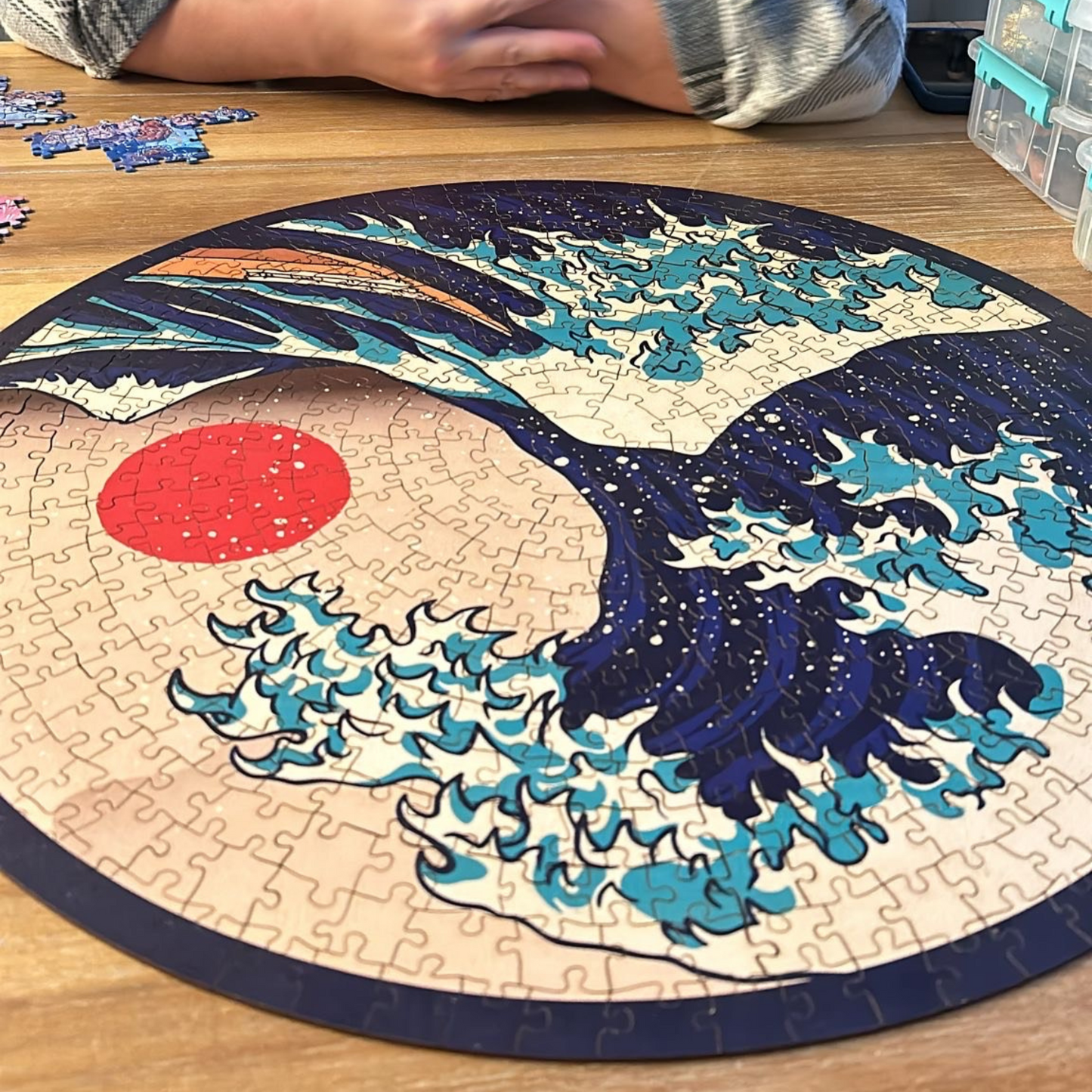
✔️ Precision laser-cut wooden pieces
✔️ 3mm MDF core — rigid, warp-resistant, built to last
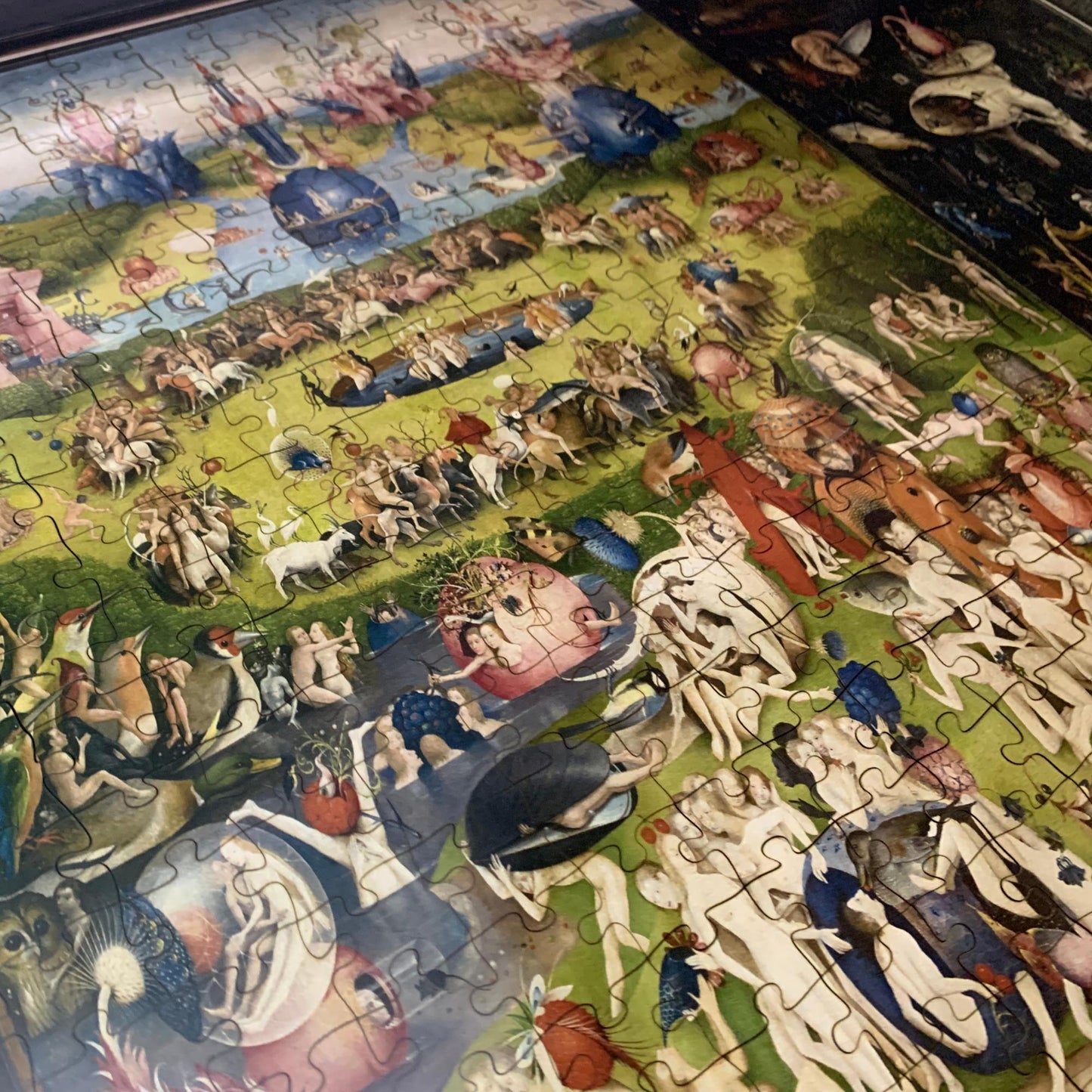
✔️ UV printing directly on wood — no paper laminate, no peeling
✔️ Traditional grid-cut design
✔️ Sizes: 15"x23", 18"x24", 23"x31"
✔️ Piece counts: 300–1000
✔️ Handcrafted wooden keepsake box included
✔️ Made to order — ships in 3–4 weeks
💎 Why This Puzzle Lasts
Most wooden puzzle makers charge $300–$500. The craft justifies it. WAWW gets to $115–$170 through direct manufacturing and no wholesale chain — not by changing the materials or cutting corners on the cut. Made to order means zero warehouse inventory. The savings pass through.
The 3mm MDF core is what separates a puzzle you keep from one you eventually throw out. Cardboard warps with humidity, and the interlocking tolerance degrades — pieces that clicked cleanly in year one start fitting loosely by year three. MDF holds its geometry. The pieces still seat with the same resistance two decades from now. UV printing works directly into the wood surface rather than onto a paper layer bonded over it. No laminate means no peeling at the edges, no color shift at the seams, and no loss of the fine tonal detail that makes Haeckel's gradations worth preserving in the first place.
The traditional grid cut feels cleaner to work with than novelty-shape cutting. Each piece has a clear orientation, which matters in an image where the visual differences between adjacent sections are subtle and deliberate. The handcrafted wooden keepsake box is sized to hold the finished pieces and built to sit on a shelf — most buyers find it ends up there permanently, alongside the framed puzzle or near it. Made to order means your puzzle doesn't exist until you buy it. The 3–4 week wait is the production window, not a shipping delay.
Haeckel's plates have been in continuous print for over a century, but most people encounter them as background texture in design history books. Rebuilding Plate 72 by hand is a slower, more specific kind of encounter.